
Norman First American UMC and McFarlin Memorial UMC
The relationship between Native American peoples and tribes and non-Native churches has been complex and, at times, fraught with intentional and unintentional harm. Historically, Christian missionary activity sought to evangelize Native peoples, often through a process of assimilation that minimized, dismissed or demonized Indigenous traditions and spiritualities. This colonial approach led to deep-seated mistrust. Today, the opportunity to rebuild these relationships through mutual respect and shared ministry presents a compelling vision for the church’s future.
In Oklahoma, Norman First American United Methodist Church (NFA) and McFarlin Memorial United Methodist Church (McFarlin) provide a case study in how Native and non-Native churches can engage in a transformative partnership. Their history of collaboration (2001-2011), disassociation (2012-2022), and re-engagement (2023) serves as a microcosm of broader interfaith and intercultural dynamics. By exploring historical tensions, past mistakes, and a path forward rooted in mutual learning and relational engagement, these two churches can offer a model for partnerships that honor cultural integrity while fostering Christian unity.
This project explores the evolving relationship between McFarlin UMC and Norman First American UMC using library research, semi-structured interviews, and focus groups. Interviews were conducted with key individuals, including past and present church leaders, to understand the partnership’s history and challenges. Focus groups provided further insights, drawing from members of both churches. Discussions centered on past collaboration, reasons for the ending of the relationship, and possibilities for renewal. The goal is to learn from the past and work towards developing a mutually beneficial partnership. Findings highlight shared experiences, concerns, and hopes for future collaboration, offering a foundation for strengthening this relationship moving forward.
Learning from Past Mistakes
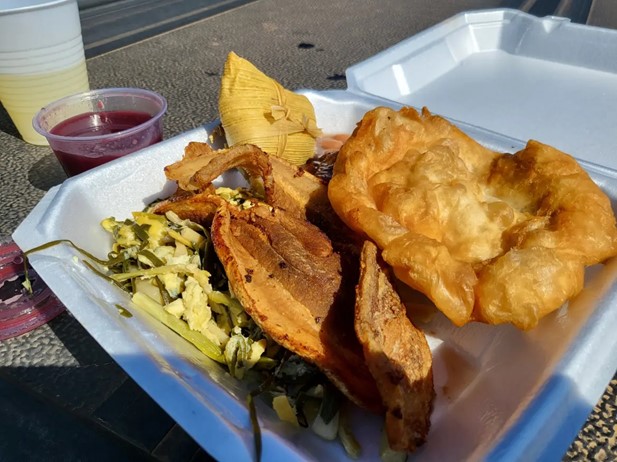
Photo Credit Louis Fowler, traditional wild onion dinner foods- wild onions with eggs, fry bread, salt pork, grape dumplings, and more
One pivotal moment in this fractured relationship occurred when McFarlin abruptly ceased hosting Norman First American’s wild onion dinners—an event of cultural and financial significance for NFA. The decision, made without consultation or explanation, left NFA members feeling confused about why the relationship ended. This incident exemplifies the pitfalls of transactional relationships, where one church acts as a benefactor without true relational investment.
Such decisions are emblematic of broader patterns in which dominant groups set the terms of engagement, maintaining control over inclusion and access. The lesson here is clear: without open dialogue, mutual decision-making, and cultural awareness, partnerships risk perpetuating historical harm rather than fostering respectful collaboration.
A Decolonial Approach to Church Partnerships
 To move forward and develop a relationship based on mutuality and respect, McFarlin and NFA must embrace a decolonial approach—one that critically reflects on the enduring reality of coloniality in politics, economics, religion, etc., and seeks a new way of being in relationship with one another. Decolonial partnerships are built on several key principles:
- Recognizing Historical Trauma: Understanding the historical and ongoing injustices faced by Native communities is essential for building authentic relationships. This includes acknowledging the church’s role in past harms and actively working toward reconciliation.
- Asking Different Questions: Rather than asking, “What must we do,” we ask, “What must be done to us?” Rather than asking, “What should we do to change the reality of [the other],” we ask, “How must we be changed so that we can fully participate in God’s reign?” Rather than asking, “What do we have to teach,” we ask, “What do we have to learn?”[1]
- Shifting from Transactional to Relational: True partnerships move beyond one-sided giving. Both churches must see themselves as co-equal participants in ministry, learning from and supporting one another.
Practical Steps for a Mutually Beneficial Partnership
A renewed partnership between McFarlin and NFA must be intentional, sustainable, and deeply relational. Below are practical recommendations for how these churches can walk together in faith and fellowship:
- Educational Initiatives
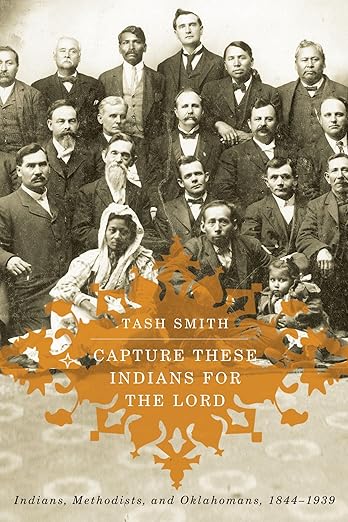
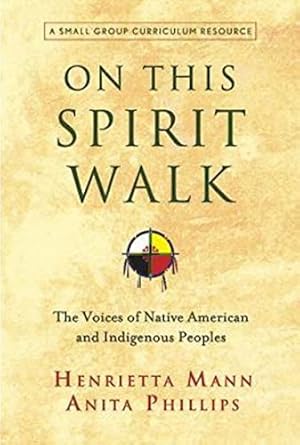 McFarlin can engage in structured learning opportunities to deepen its understanding of Native American history, Methodism’s role in colonization, and cultural competency. Suggested studies include:
- Capture These Indians for the Lord by Tash Smith, which examines the historical relationship between Methodism and Native Americans in Oklahoma.[2]
- The Intercultural Development Inventory, a tool for assessing and improving cultural competence.[3]
- On This Spirit Walk by Henrietta Mann and Anita Phillips, which explores Native Christian perspectives on faith, justice, and spirituality.[4]
- Collaborative Events and Gatherings
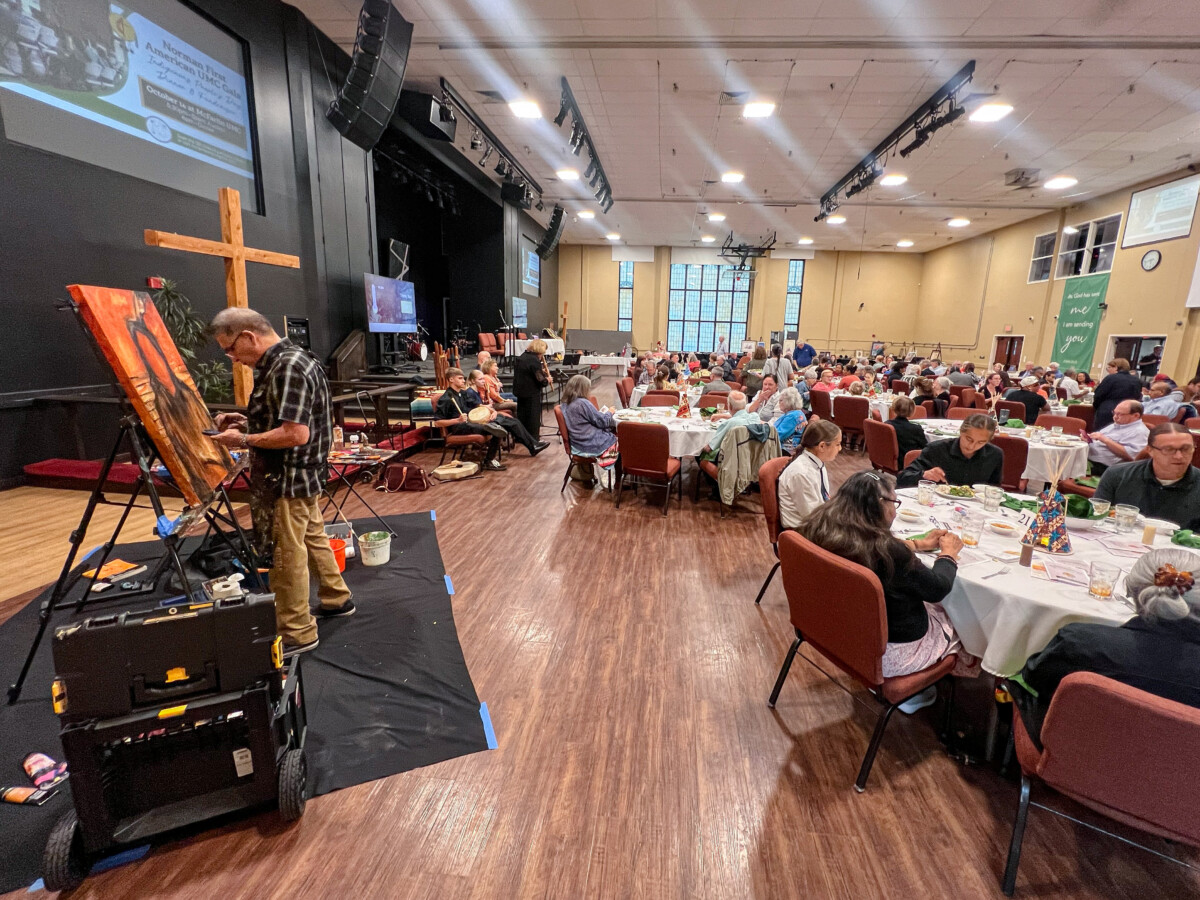
Photo Credit Kristen Howard
Regular, shared experiences can strengthen the relationship between these congregations:
- McFarlin members can participate in NFA’s cultural events, including community meals, classes, and stomp dances.
- NFA members can be invited to lead prayers, hymns, or offer cultural reflections in McFarlin’s worship services and small groups.
- Joint Bible studies or theological discussions can create spaces for mutual learning and deeper fellowship.
- Long-term Commitment and Relationship-Building
Partnerships require consistency and trust-building over time. Suggested actions include:
- Leadership Exchanges: Pulpit swaps where McFarlin clergy preach at NFA and vice versa.
- Travel: Traveling together on educational or mission trips for learning and relationship-building.
- Small-Group Fellowship: Encouraging members of both churches to share meals and personal stories in more intimate settings.
The Broader Implications for Church Partnerships
At a time when many denominations are reckoning with their colonial legacies, McFarlin and NFA have an opportunity to demonstrate how churches can move from transactional engagement to a mutually beneficial partnership.
Beyond Norman, this project invites all churches to consider:
- How can we listen more attentively to historically marginalized voices in our faith communities?
- What assumptions about power, leadership, and ministry need to be challenged to create equitable partnerships?
- In what ways can faith communities embody a theology of mutuality, where all members contribute and learn equally?
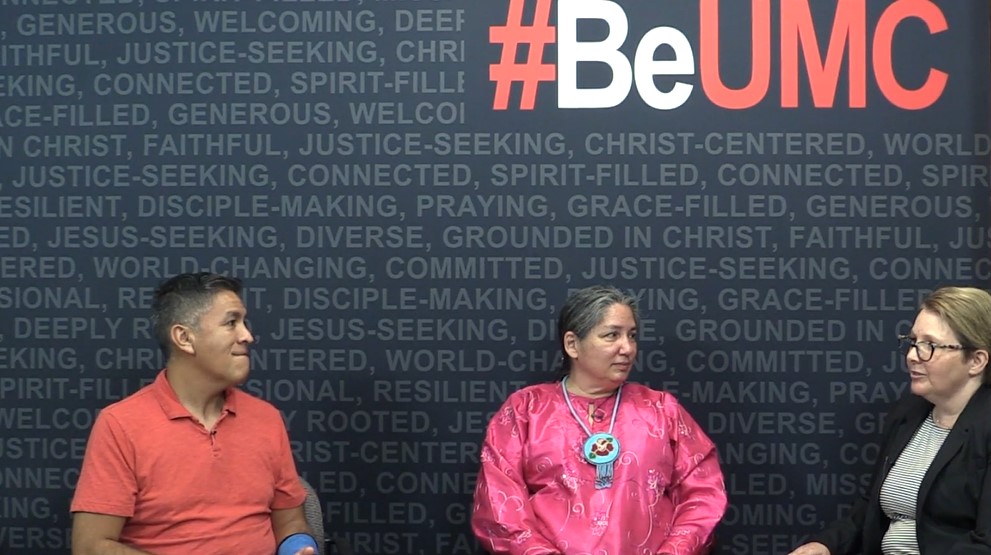 Rebuilding the relationship between McFarlin and NFA is not just about addressing past wounds—it’s about forging a new way forward in Christian ministry. By centering cultural awareness, shared leadership, and sustained engagement, these two churches can model a vision of unity that respects diversity while fostering deep spiritual connections.
At a time when divisions—both social and ecclesiastical—threaten to weaken the church’s witness, partnerships like this remind us of the power of connection. As these churches commit to sharing life together, they embody the biblical call to be one body in Christ, honoring the unique gifts and histories that each member brings to the table.
Additional Resources:
Elwood, Jimmy and Vanessa Andreotti with Sharon Stein. “Towards Braiding,” published by the authors with support from Musagetes, ISBN: 978-0-9877238-9-5, June 2019.
Kidwell, Clara Sue, Homer Noley, and George E. “Tink” Tinker. A Native American Theology, Maryknoll, NY: Orbis Books, 2001.
Noley, Homer. First White Frost: Native Americans and United Methodism. Nashville: Abingdon Press, 1991.
Citations
[1] Elizabeth Gandolfo and Laurel Marshall Potter. Re-Membering the Reign of God: The Decolonial Witness of El Salvador’s Church of the Poor. (Lanham, Maryland: Lexington Books, 2022), 4.
[2] Smith, Tash. Capture These Indians for the Lord: Indians, Methodists, and Oklahomans, 1844-1939. Tucson: The University of Arizona Press, 2014.
[3] https://www.idiinventory.com/
[4] Mann, Henrietta and Anita Phillips. On This Spirit Walk: The Voices of Native Americans and Indigenous Peoples, Native American Comprehensive Plan: Muscogee, OK, 2012.
Image 1: Image generated by Dream Lab, response to “rebuilding a partnership abstract no words,” Canva, March 22, 2025, https://www.canva.com/dream-lab.
Image 2: Fowler, Louis. “Glass Onion: The Native Traditions of the Wild Onion Dinner,” The Lost Ogle, accessed March 24, 2025, https://thelostogle.com/2023/03/09/glass-onion-the-native-traditions-of-the-wild-onion-dinner.
Image 3: Image generated by Dream Lab, response to “Include the question, ‘What Do We Have to Learn?’ abstract,” Canva, March 29, 2025, https://www.canva.com/dream-lab.
Image 4: Tash Smith. Capture These Indians for the Lord: Indians, Methodists, and Oklahomans, 18:44-1939. Tucson: The University of Arizona Press, 2014. Image accessed March 29, 2025, https://www.amazon.com/Capture-These-Indians-Lord-Methodists/dp/0816530882.
Image 5: Henrietta Mann and Anita Phillips. On This Spirit Walk: The Voices of Native Americans and Indigenous Peoples, Native American Comprehensive Plan: Muscogee, OK, 2012. Image accessed March 29, 2025, https://www.amazon.com/This-Spirit-Walk-American-Indigenous/dp/1426758413.
Image 6: Kristen Howard, Untitled, Oct. 14, 2024, “Reclaiming Our Voices…Telling Our Stories” Norman First American UMC Fundraising Gala Celebrating Indigenous Peoples Day, Oct. 14, 2024. McFarlin Memorial UMC Archives, Norman, OK.
Image 7: Andrew Himes, Untitled, Sept. 16, 2024, Podcast Video “Circuit Update First American OIMC Episode,” Oklahoma Annual Conference Communications Ministry, Oklahoma City, OK.