Creating an Engaging, Relational, and Formative Small Group Ministry in the Methodist Tradition
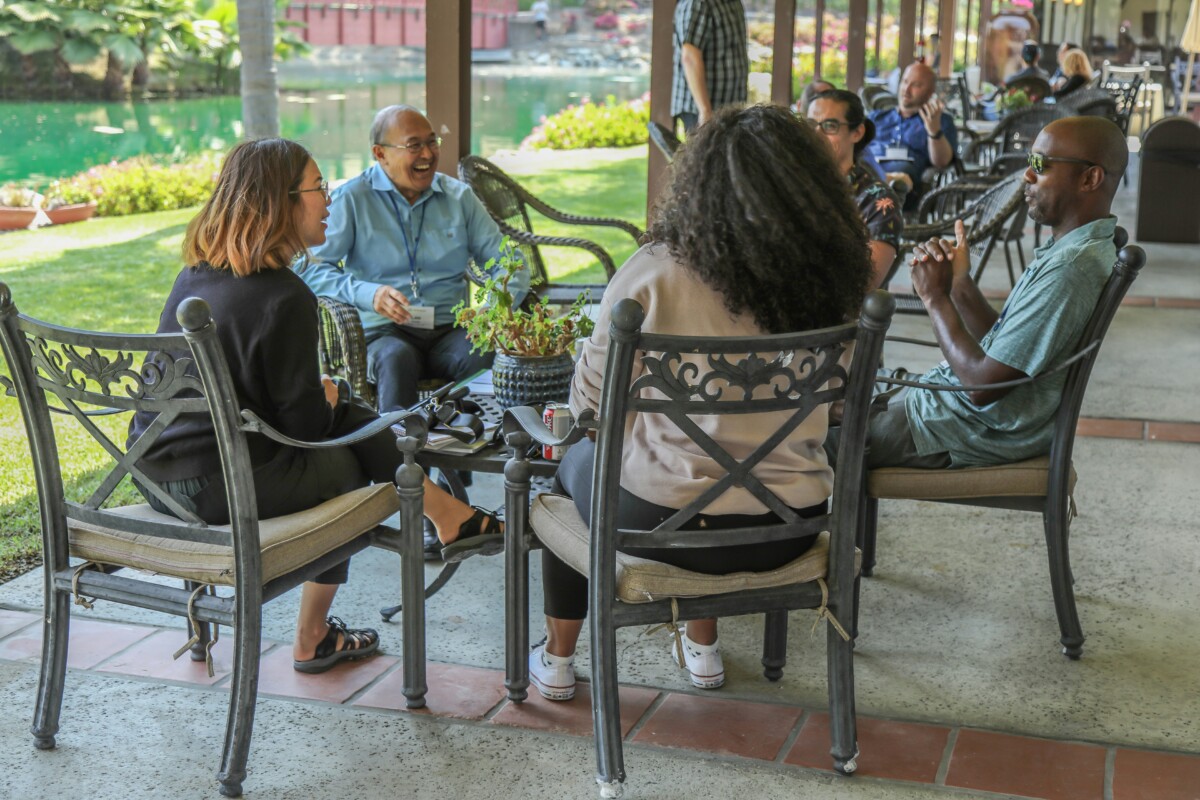
Photo by Small Group Network on Unsplash.
What are the main components of a church’s ministry? Alongside offerings like worship services and missions, pastors and church leaders often include small groups as a necessary part of a church’s ministry. Yet, small group ministries can sometimes be afterthoughts and exist in today’s churches in a wide variety of ways. Some churches use a more traditional “Sunday School” model offering classes before or after a Sunday morning worship service, while other churches may offer small groups which meet in homes during the week that go through Bible studies or discussion questions together. While small groups may be sometimes overlooked, they provide excellent ways to foster Christian community and encourage deep discipleship within congregations.
Small Groups in Methodism
For those of us in the Methodist tradition, a small group lies at the heart of the beginning of the Methodist movement: the Holy Club at Oxford. This group formed after a movement of religious societies began in England and John Wesley and his brother Charles were inspired to form a small group of their own. The Wesleys, as well as George Whitfield, illustrated what it means to participate in small groups through the Holy Club. These three along with others met regularly for Bible study, prayer, devotion, and other means of grace. They were also insistent on helping those around them as a part of their group participation. They visited the sick and those in the hospital, they visited with people in prison and gave food to people who were hungry. This early small group in 16th century England is what many today point to as the beginning of the Methodist movement.
When methodism moved to America, class meetings remained a central part of the Methodist practice. Methodists were still required to attend class meetings regularly, and failing to do so resulted in expulsion from Methodist membership.[1] The decline of traditional class meetings in American methodism coincides with the rise of the traditional Sunday school model. Sunday school quickly became the primary mode at all for Christian formation and education in American churches. Sunday school classes were not focused on group discussion but rather instruction from a teacher, usually using a curriculum. Over time this model of Christian education took the place of class meetings in Methodist congregations, and the Methodist Church focused on publishing Sunday school quarterly curriculums more than promoting traditional Methodist class meetings.
(re)Starting Small Groups

The North Floyd Group. Photo by Brenda Keene.
In Floyd United Methodist Church in Floyd, Virginia, a new push was made to encourage members to join small groups. The congregation, like many churches today, was seeking to find ways to deepen connections after the COVID-19 pandemic and to connect new members with others. The congregation reflects the broader community: it is a majority white congregation (97%), but it is diverse in that is intergenerational and people from all over the county have moved in to retire here. This means that helping people connect with each other is very needed. Instead of trying to convince people to join Sunday School classes, a new kind of group was offered. Community groups were small groups that met at times other than Sunday mornings, twice a month, and in the homes of church members.

The Young Adult Group. Photo by Linda King.
The congregation recruited people to volunteer to host a small group and then invited key church members to lead the groups. Group leaders were trained and given a guide (like to one linked at the bottom of this post), so that leaders understand their role and share the vision for the small group ministry. Three groups were formed: one for young adults that met on Sunday nights with childcare provided, a women’s that met on Tuesday mornings, and a group for adults on Tuesday nights just north of the town of Floyd (which became known as the “North Floyd Group”).
The Meeting Format
For the groups’ meetings a standardized, yet flexible, format was developed to create alignment while allowing the groups to be unique. The resulting format had four parts: gather, share, discover, and pray.

Graphic created by author using Canva Pro.
Gather
During the gather portion, group members have a meal or snacks, get to know each other with conversation, new people can be introduced to others in a casual way.
Share
During this part, group members are asked about how they are doing. Leaders go around and check in with everyone, or provide a question that all respond to such as “How is your walk with Christ?” This question is connected to the historical Methodist class meeting question: “How is it with your soul?”
Discover
Some groups may use a Bible study curriculum or book for this portion. At Floyd United Methodist Church, a new program was developed where people took turns sharing their testimony (by volunteer only). Then, later the group members took a spiritual gift inventory test and planned a service project based on their gifts and the needs of the surrounding community.[2]
Pray
The final part: a time for prayer. Prayer requests are collected and a prayer offered to end the gathering.
Evaluating & Replicating
It can be tempting to simply evaluate groups based on attendance. However, there is a greater goal for an effective small group ministry: deepening connection to Christ and a greater commitment to the church. These cannot be seen by simply looking at attendance numbers. At Floyd United Methodist Church, groups were evaluated using a survey which asked participants to rate on a scale from 1 to 10 the extent to which they identified with statements such as “My community group helped me grow closer to God” and “I feel like I belong in my community group.” A summary of the data is shown in the graphic below.

Graphic created by author using Canva Pro.
Replicating groups can also be difficult, but a small group that isn’t small…isn’t a small group! Once a group reaches 20 members, it needs to begin the process of dividing by finding more hosts and a second leader. While this is difficult for groups who have bonded, it is necessary to continue to grow deeper while inviting new people into the groups. One way to do this is give the groups a timeframe to meet (the fall or spring) and then reevaluate and relaunch the groups. If a group is too large or struggling, this gives a natural way to change things up.
Conclusion
These new groups turned out to be life-giving for Floyd United Methodist Church. While not everyone in the congregation participated, the ones that did felt a deeper sense of connection with both God and the church. This is the wonderful part of small groups—the connections that are made. This is why a shift away from classroom-style groups in the church is necessary (and indeed already happening) in churches today. True authentic community is found when we gather to engage not just our minds, but our hearts and hands also (as the early Methodists did) in the work of the church.
Resources
Download a Guide to Use in Your Church (PDF)
Further Reading
Leading Small Groups that Thrive by Ryan T. Hartwig, Courtney W. Davis, and Jason A. Sniff (Zondervan, 2020).
Disciples Making Disciples by Steven W. Manskar (Discipleship Resources, 2016).
Having Nothing, Possessing Everything by Michael Mather (Eerdmans, 2018).
The Early Methodist Class Meeting: Its Origins and Significance by David Lowes Watson (Discipleship Resources, 1985).
The Class Meeting by Kevin M. Watson (Seedbed, 2014).
Notes
[1] Kevin Watson, The Class Meeting: Reclaiming a Forgotten (and Essential) Small Group Experience, (Seedbed, 2018), 28–29.
[2] This section was based around asset mapping as explained by Michael Mathers in Having Nothing: Possessing Everything(Eerdmans, 2018) and by Cameron Harder in Discovering the Other: Asset-Based Approaches to Building Community Together (the Alban Institute, 2013).