• What makes some experimental films good? (what makes some bad?)

    *I discuss gross horror/”gore porn” films. I don’t show any particularly gory images, but the descriptions are still very gross.

    “What. The. ####. Is. This. Garbage?” <- one’s potential reaction to the above experimental poem

    Experimental film for the general population may seem pretentious, often criticized as being weird just to be different, and I strongly disagree. As with any medium, there are good pieces and bad pieces. I will give examples of both.

    The above are two experimental horror films that I, personally, did not find enjoyable at all. Begotten is a film about a god-like being who chooses to commit suicide, the biblical story of Genesis from the director’s perspective. While Slow Torture Puke Chamber is part of the Vomit Gore Trilogy, a sex worker with bulimia has hallucinations of hell, eventually having kids with satan himself. It should be noted that while Lucifer Valentine, the director, denies allegations of nonfictional abuse in the making of the trilogy, many critics believe that the actor in the films was a romantic partner who was abused for the film. This makes any viewing of the film a potential viewing of a real-life abuse case.

    Both films are experimental and follow most of Fred Camper’s characteristics of alternative film. However, both are also very hard watches. Begotten is mostly black-and-white, silent, and recorded on analog tape. This, of course, does not make a bad film, but in the case of Begotten, it does add to my negative viewing experience. Why is this? The film’s plot is very non-linear, adding to its alternativeness, but to the point of being nearly impossible to analyze. What’s more, the cinematography and editing style make the viewing experience very rough, with extreme graininess, frequent harsh cuts, and maximized contrast in every shot (exaggerated by the analog nature), taxing one’s eyes throughout the hour-long film. Furthermore, the lack of sound removes any aid in dissecting elements of the screen.

    Those who have taken on the task of analyzing the film make very compelling arguments about the plotline and overall themes of the film (Wikipedia has pretty good summaries); however, the displeasing viewing experience makes it hard to believe that anyone would enjoy the film as it stands. Analyzing Begotten, we learn that an experimental film cannot rely solely on its interesting characters or nonlinear plotline; it should also be watchable.

    *If you want to experience an auditory example of an unenjoyable alternative, please listen to this experimental album. Good Morning Good Night is another good example of why experimental media should be, at the very least, not unpleasant to one’s senses.

    Slow Torture Puke Chamber, which will be referred to as “STPC” from now on, is the opposite. I could not finish the film because of the story, gore, and the amount of vomit. The film itself and its easy-to-follow story include some admittedly interesting, discernible practical effects, unlike Begotten, so one might assume I would enjoy this film. The story is too edgy, as is the rest of the film, and the vomit is unnecessary. While I did feel intense emotions (mostly disgust and boredom, which I did not know could intertwine) watching the film, I do not believe this necessitates an artistic masterpiece.

    Experimental art, or art as a whole, is not good simply because it evokes emotions. To an arachnophobe, a video of a spider weaving for 10 hours might instill extreme fear, but is it artistic, a masterpiece? One should come to one’s own conclusion, but I would argue against it.

    So, what is a good experimental horror film with unique, gory, shock value that rivals Begotten and STPC?

    Salò, or the 120 Days of Sodom

    Salò, or the 120 Days of Sodom, is an Italian film where wealthy Italian fascists of the fascist Republic of Salò understand that after the fascist regime falls, they will most likely be put to jail, or even death. As a result, the rich fascists kidnap teenagers and proceed to torture them for 120 days. The plot is interesting and believable, as it is a political critique of fascism around the time of World War II, when the Nazi party of Germany conducted horrors which may have rivaled those seen in the film, and of neocapitalism, which the director saw on the rise in Italy. This already exceeds STPC in terms of storyline and use of gore/shocking imagery, as the horrors shown on screen contain reasons external to pure audience shock: a political statement/critique of fascism and neocapitalism, and the raw evil that comes as a result of those who partake.

    What’s more, the film is hauntingly beautiful. For fear of getting put on Emory’s naughty list, I will not include the most mind-blowing images from the film, but instead I will quote a John Waters’ opinion on the film.


    “That last shot, so simple, so depraved, so purely evil and beautiful. I cry every time I see it.”

    – John Waters

    As John Waters understands well, the beauty of Salò, or the 120 Days of Sodom does not stem solely from its gory scenes, beautiful visuals, or even its political stance, but from their harmony. Begotten and STPC both exhibited characteristics of good filmmaking (maybe STPC less so), but they were overshadowed by a lack of harmony between shock, beauty, and story. So, as my final sentence, I’ll restate my claim for this post: the difference between a great and terrible experimental film lies not in its uniqueness, but in how it presents itself with the rest of the project.

    Begotten can be found on YouTube

    Please do not watch Slow Torture Puke Chamber

    Salò, or the 120 Days of Sodom can be watched

  • Searcher: Carax’s distaste of interviews

    Resource Link: Q&A: Leos Carax Explains ‘Holy Motors’ and Why He Wants to Make a Superhero Movie

    Not to sound omniscient, but I fullheartidly believe the first-hand account of “authorial expressivity” that Bordwell defines as a cornerstoen of the art cinema is a worthwhile reason as to why any student would find the inveriew with Leos Carax so fascinating.

    Carax is unkind to the inverview process, and his reluctance to provide clear-cut answers makes the resource unusual; he explicitly states that he mostly doesnt submit to talking about his work. This resistance is not just a personality trait but acts as a formal extension of the film’s ambiguity, reinforcing Bordwell’s claim that art cinema encourages viewers to read for such “max ambiguity” rather than searching for a one true meaning.

    Additionally in the interview, the film’s cinematography and technology is impossible to ignore. Carax discusses his use of digital cameras, a technology he claims to “despise” but uses as a tool to explore an “increasingly virtual world” where real experiences and actions are gradually disappearing. In terms of themes, it is worth it to mention the “extinction” of visible machines is reflected in the film’s mise-en-scene, specifically on the “showy and tacky” sketch that serves as the “motor” of the action.

    Furthermore, I want to enrich this discussion by describing Carax and his protagonist of his story, Oscar, as a shadowy character who journeys from one life to the next, this all aligns with the psycholoigical realism of the film art, where characters are seen to often dirft or lack defined desires or goals.

    By attempting to have a whole range of human experiences in a day without using flashbacks or classical structures as pointed out in the interview (“indiefilms.com”), Carax pushes the boundaries of the medium towards the “willfully nonconformist” nature of experimental film.

    Ultimately it can be said that this resource is an essential look at how artists work within art cinema mode of practice to actively challenge viewer expectations and prioritize “the beauty of the act” over narrative closure!

  • Genre and Why It’s More Than Just Categories


    While looking into genre this week, I found this video that gives a pretty clear breakdown of how genres actually work beyond just labels:

    What I found useful about this video is that it explains genre as something more structured than just “types of movies.” It breaks genre down into elements like plot, characters, and visual style, and shows how these patterns repeat across films. That connects well to what we’ve been reading about genre conventions and how they help shape audience expectations before a film even starts  .

    At the same time, the video also emphasizes that genres are not fixed and that filmmakers often try to subvert those conventions. I think this is where the video is most interesting, because it shows that genre is not just about repetition, but also about variation and change over time. That idea lines up with the reading, but the video presents it in a more simplified way.

    One limitation, though, is that the video makes genre feel a bit too clean and organized. In reality, genres overlap a lot and films often don’t fit neatly into one category. The video acknowledges this, but still leans toward a more structured explanation than what we’ve been discussing in class.

    Overall, I think it’s a solid resource because it gives a clear foundation for understanding genre, especially how conventions and expectations work. At the same time, it’s helpful to question it a bit, since genre in practice seems more flexible and less defined than the video suggests.

  • Holy Motors: Searching For Meaning

    I think I can easily say that Holy Motors is the weirdest film I have ever seen, and there is no way to prepare for it. But that didn’t make it a waste of my time. I actually found it very fascinating how someone was able to come up with a story that doesn’t seem to have any meaning and make it so intriguing. I found a YouTube video called “The Beauty of Holy Motors.” It doesn’t explain the movie in any way; it simply replays some of the iconic shots and scenes from the movie in a sort of montage.

    While the video didn’t explain anything we had just watched, it refreshed our minds on the crazy images we were exposed to during the film. It also allows for a sense of reassurance, so that you can tell yourself, “I did see that right.” There is a beauty in not understanding what you are watching. To some people, they can’t stand the idea of not getting something or not understanding material. Once in a while, getting to experience a movie like Holy Motors is like a treat, to allow your brain to wander and wonder. Trying to solve an unsolvable Rubik’s Cube is how I would describe watching this movie. It is slightly humorous, violent, uncomfortable, and obviously very confusing.

    Seeing the short clip on YouTube reminded me of how it felt to sit through the film and just stare at the screen. I couldn’t really describe how or what I was feeling, but it was quite enjoyable.

    The meaning I was able to come away from the movie with was that it was an over-the-top rendition of life. Obviously, Oscar’s different characters were unlike anything we have ever seen, but there was some meaning behind each of them. I think that this movie is trying to show how everyday people put on different acts and performances, without being in front of an audience. Just like Oscar, we all act differently when we’re in public versus with our friends, family, etc. I guess you could consider yourself an actor, because you act so differently in all the different settings. You wouldn’t act how you would at a bar with your friends in front of your grandparents, necessarily. Yet, we put on these “acts” to fit in and navigate life.

    https://www.youtube.com/watch?v=Nh8YeJy2Wmg

  • Understanding The Modern Alternative

    Alternative media is a bastardized term used for many things in our current climate. For some, it means watching Joe Rogan over FOX. For others, it means listening to Good Morning (2004) and lying about how enjoyable it is (no offense if you actually enjoy it; it simply hurts my ears). For Fred Camper, it’s NOT a list; it’s a couple of characteristics that are pervasive across most alternative films. This leads me to one of my favorite alternative film projects: Don’t Hug Me I’m Scared

    While Fred Camper’s argument towards what is Alternative film is NOT a checklist, he argues that “a film that most… would agree is “avant-garde” or “experimental” will pass[check off] most of them”. As such, I will go over what makes Don’t Hug Me I’m Scared (DHMIS) Alternative.

    1. Minuscule budget.

    DHMIS makes an incredible stretch of a dollar, or should I say euros, as the producers had 104,000 euros to work with in their budget from a Kickstarter campaign (for the first season, they had a greater budget to work with later on). The quality, however, doesn’t take a hit. Clean, simple, and extremely well thought out. These are words that describe why a minuscule budget didn’t make this film project weak.

    2. “The filmmaker is the producer, director, scriptwriter, director of photography, cameraperson, editor, sound recordist, and sound editor, or performs at least half of those functions” – Fred Camper.

    The creators, producers, animators, directors, and writers, Joseph Pelling and Becky Sloan, clearly fulfill this. As established, the budget for this show was really near nothing initially. Logically, this leads to an inability to hire artists, so they did it themselves. Even later on, when the project gained popularity, they continued to do much of the work, as a larger budget didn’t mean a big budget. This led to a very important lesson, “Keep the show small”.

    4. “It makes conscious use of the materials of cinema in a way that calls attention to the medium, and does not do so in scenes bracketed by others in a more realistic mode that would isolate the “experimental” scenes as dream or fantasy sequences.” – Fred Camper

    If I were to tell you these shots were taken from a kids’ learning show, not dissimilar to Sesame Street or Bluey, would you believe me? DHMIS understands what it is, an alternative twist to a kids’ show. As a result, the more unique/unexpected scenes, such as a hostage negotiation or a bloody craft shot, are treated as somewhat normal. What does this mean for DHMIS as an alternative film project? It means that, as Mr. Camper argues, we are made hyperaware of the medium, as, unlike a dream sequence, the sequences are treated the same as any other.

    6. It doesn’t offer a clear, univalent “message.” More than mainstream films, it is fraught with conscious ambiguities, encourages multiple interpretations, and marshals paradoxical and contradictory techniques and subject-matter to create a work that requires the active participation of the viewer.

    While I and most who study/follow the project have our own theories about the “message” of DHMIS, there is no single true answer. A simple Google search for “Don’t Hug Me I’m Scared Explained” returns Reddit threads, YouTube analysis, articles, essays, personal blogs, and almost every other type of media to express one’s own analysis of the show. While there is a theme throughout these analytic showings, no two are exactly the same. Other than the fact that it would be redundant to post an already existing theory, the ambiguity of many aspects makes it such that a single reading between two people of different existence is almost impossible. For this, the reason may be the project’s format: short, 5-10-minute releases. As DHMIS follows a “less is more” framework, many of the symbolic shots aren’t clear in their reason, forcing one’s cognition to connect the dots, allowing for the previously mentioned rainbow of theories.

    Please watch Don’t Touch Me I’m Scared. Either as a subject of study or simply for pleasure. As an example of alternative film, I believe I’ve outlined how it meets 4 of the 6 characteristics identified by Fred Camper. As the list is not a checklist, but a general rule of thumb, DHMIS can be categorized as an alternative, experimental, art, whatever term you prefer, film project.

    Link to View:

    https://www.youtube.com/@donthugmeimscared

    Fred Camper’s Blog Post:

    fredcamper.com/Film/AvantGardeDefinition.html

  • Searcher: Holy Motors

    “Even though this scene is presented as something other than an appointment and the two are not playing the characters they are costumed as, traces of lingering irreality still pepper this scene. It is theatrical, but feels deeper than performance – love and death threaten the spell of the dream for just a moment.”

    For this week’s post, I’ve chosen to dive into a recently published article from Senses of Cinema, written by Faith Everard. I was most intrigued by her point about the theatricality of the film vs the real emotions that made the theatrical elements appear inauthentic.

    Throughout the film, I was incredibly impressed by Monsieur Oscar’s remarkable ability to shapeshift from one appointment to the next. At no point (from his beggar performance all the way up to the old man dying) did his performance seem unconvincing or inauthentic. He successfully and convincingly morphed from character to character, as a great and talented actor should do. However, the film took a different turn when we were introduced to Jean, and for a moment, Oscar was no longer acting (or was he?).

    While the scene between Jean and Oscar may not have been an “appointment”, it still was, as Everard put it, “peppered with traces of lingering irreality”. Just when we thought we were about to experience a moment of connection between the two, Jean broke out into song, which felt straight out of La La Land and seemed to confuse and disorient the audience. I felt that this moment emphasized the nightmarish and cyclical nature of Monseiur Oscar’s life – just when he finally feels like he’s moving past the spectacle layer of his job and experiencing something real or meaningful, something always whisks him away from it, whether that be an untimely musical number or a call from Céline telling him he has to get back in the limousine.

    Towards the end of her piece, Everard touches on the capitalist themes that arise towards the end of the film, and the metaphor presented of how cinema has slowly become more of a commodity than an art form. Monsieur Oscar tells the Man that he continues to work all because of “the beauty of the act”, but the man replies that “beauty is in the eye of the beholder”. Everard points out the relationship between the artist (Oscar) and the business (the Man), in which the business seeks “only profit from the exploitation of the artist’s body and mind.” Everard points out that despite this, the artist will continue, as there is “nothing else that will quench his thirst for self-expression”. In this way, Oscar’s dedication to his craft can be viewed as both admirable and tragic, since he continues to perform not entirely out of freedom, but because his life is profoundly incomplete without it.

    Sources: https://www.sensesofcinema.com/2026/cteq/holy-motors/

  • Holy Motors Review

    “What?” That’s all I was able to say before, during, and after watching Holy Motors. I was lost the entire time, and in the moments when I thought I understood what was happening, the film went in a completely new direction. Rather than having a singular plot, I viewed the film as more of a compilation of different stories combined into one. Mr. Oscar takes on the roles of many individuals, such as a gangster, a band member, a homeless man, and many more. The film does a phenomenal job of going against mainstream aspects of cinema, providing a confusing but undeniably unique experience for both me and my classmates.

    I viewed the film’s message as the loss of one’s identity and sense of reality. I came to this conclusion because, even while watching the film, I began to question my own life and reality (yes, I was that confused). I developed this interpretation due to the constant stream of “appointments” Oscar attended, each one requiring him to become a different character, never allowing the audience to truly understand who he really is. As the film progresses, you can see how Oscar has completely lost himself and become consumed by his work. This is especially evident in his conversation with the Man with the Birthmark, where he explains that he began all of this for the beauty of the act and admits that he misses the nostalgic feeling of the large cameras. He is also upset that this mysterious “audience” no longer believes in the authenticity of his work, despite the fact that it is all he is and everything he dedicates his life to through these ever-changing roles.

    The part that particularly stood out to me was the spontaneous song sung by Jean as she sings about her and Oscar’s past. As she sings, she repeats the words “Who are we,” which again emphasizes the message that they have become so consumed in this fake reality of “appointments” that they have lost their sense of identity and the people who truly meant a lot to them. That is why, before she commits suicide, she takes off the wig and embraces her true identity before she ends it all to escape this distorted reality of appointments and trying to please this unknown audience. This can connect to the world because every day we play these roles, many times to please the ones around us, not embracing our full identity out of fear or judgment, or even feeling like we have to play a role we believe we need to play. I feel like that is also why the film opens with the audience, to show how we are constantly being watched in our day-to-day lives, and we all believe we have this reputation we must uphold, sometimes becoming our own distorted version of reality.

    Overall, this film was extremely challenging for me to evaluate because of its non-mainstream approach to filmmaking. However, I believe all the decisions put into the film help portray the idea of identity and reality, expressing that life is one ongoing performance until one embraces their true self. As the audience, we still don’t know who Oscar is, despite the film being almost two hours long; however, this is just my interpretation. My final question is: do you think that we, as people, have become so consumed with trying to please those around us that we can never be our fully authentic selves, or that we are in the process of losing who we truly are?

  • Holy Motors: Viewer Post

    Going into Holy Motors, I expected something confusing, but what stood out to me most was how quickly the film made me stop trying to “figure it out” in a traditional sense. Instead of following a clear narrative, it felt like I was watching a series of performance that didn’t need to connect logically, but were still linked by something deeper, like maybe the idea of identity itself/

    One of my main insights is that the film seems less interested in who Oscar is and more interested in the idea that he might not have a stable identity at all. Each appointment is so fully realized that it feels like the version of him is completely real in the moment, but then he immediately moves on and that identity disappears. It made me think about whether the film is suggesting that identity is something we constantly perform depending on the situation rather than something fixed.

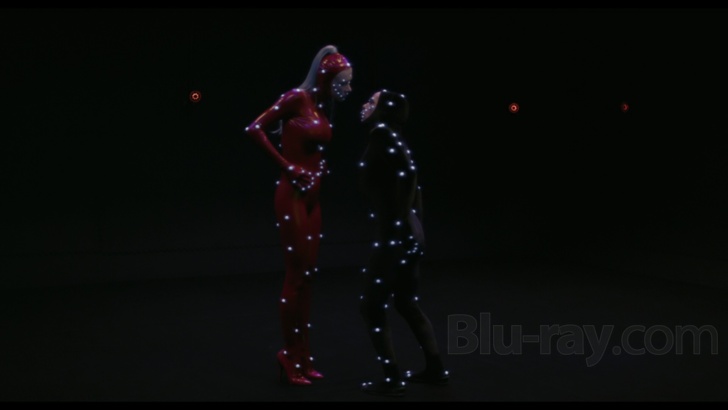
    Another thing I noticed is how important the idea of performance is, especially in relation to cinema. The motion-capture scene felt like a direct reference to modern filmmaking, where physical acting is transformed into something digital. At the same time, many of Oscar’s other roles rely heavily on physical transformation and presence. This contrast made me wonder if the film is highlighting on how cinema itself is changing, and what might be lost in that process.

    https://images.static-bluray.com/reviews/25487_1.jpg

    I was also really struck by the idea of the audience. At the beginning, we see a silent theater, and Oscar later talks about performing for invisible cameras. It made me question whether performance (and even identity) only has meaning when someone is watching. If there’s no clear audience, what is the purpose of these roles he’s playing?

    The limo felt like an important space too because it’s where Oscar prepares for each role, but it doesn’t feel like a place where he becomes his “true self.” If anything, it seems like just another layer of performance, Even moments that seem personal don’t convince me that we’re seeing anything real. So I wonder: Why does the film emphasize the disappearance (or invisibility) of the audience? What does that say about the meaning of performance?

  • Holy Motors: Viewer Post

    When speaking about this film in class before watching it, the way Professor Zinman talked about experimental and art films made me come to the strong conclusion that I would not enjoy the ambiguity within this film. While viewing, however, I was mesmerized and incredibly interested in this film. The ambiguity was what made the film entertaining. From the beginning of the film, the idea of contrast/conflict appeared in my head, and the film put this idea in my head for the entirety of watching it. There was a contrast from one of Oscar’s identities to the next, a contrast from outside the limo versus the inside, and what he’s doing versus who the film makes you believe who he is. The film begins with Oscar waking up in a dark room in pajamas and finding a wall with enchanted forest wallpaper on it. This begins the conflict, as this paper is out of place, or out of the norm within this room. 

    Then we see Oscar as a banker, saying goodbye to his family and leaving his home then entering a white limo. A black car follows the white limo at the beginning of the film, both the sizes and colors of the cars contrasting each other. Oscar’s next character is a beggar, completely conflicting with the previous character we saw. Then he becomes an acrobatic actor in a motion-capture setting. In this scene, his previous character conflicts with his new one, but the color of outfits between himself and the female in the room also conflict, red and black. He’s a father, a musician, a killer, an old man dying, and a lover. It’s extremely difficult, even impossible, to make sense of Oscar. Why is he doing what he’s doing? What is his job? Who is he actually? I attempted during the film and following it to answer these questions and to connect each of his characters/appointments and make sense of them but I couldn’t. Each identity completely contrasts with the previous one. The idea of opposition also appears within the limo. Limo’s represent wealth, superiority or high distinction. In this film, the outside of the limo completely contrasts what’s occurring inside. It looks simple and explainable yet it’s cluttered with costuming for different identities, and where Oscar changes costumes and makeups and switches between roles.

    Another scene offers him eating sushi while wearing costuming and makeup that reflects the opposite of fancy. This makes me question which side is his true identity. This idea of contrast and contradiction that appears within the film makes it challenging to understand what is to come next. These juxtapositions make me question whether the film is stating ideas about how identity isn’t fixed because life has a series of roles or masks that we wear. A constant performance is required. I believe the film is purposely making it challenging to understand Oscar’s true identity by challenging the idea that an individual only has one true self and instead is shaped by the context of situations and who surrounds them. A question that came up for me is: What are the multitudes and huge contrasts in Oscar’s roles saying about identity and how society impacts it?

  • Viewer: Holy Motors

    I walked into the film with the understanding that it was more or less going to be about performance in our everyday lives. I, however, was not prepared to see how Leos Carax would depict this. During Jean’s musical sequence, she repeats, “Who are we? Who have we become? Who were we when we knew who we were?” This summed up the overall message that Leos Carax is seemingly attempting to convey. In the world of the film, people have lost themselves. Mr. Oscar transforms from one person into the next as he goes through his appointments, but he does so in such a way that his actual identity becomes unrecognizable. The version of Mr. Oscar leaving a large modern house is not his true self, and neither is that of him in the car with his supposed daughter. This alludes to the idea that humans do not have a continuous, stable identity. We are always performing in our lives, adapting ourselves for each individual we come across. Like Mr. Oscar, humans have become, and possibly always have been a mere collection of roles. Even when we think we know who we are, we are simply putting up an act for each context we find ourselves in. After Jean sings this score, she commits suicide. The film never explains this, but I interpreted it as a critique of life without a stable identity. Jean goes from act to act, losing any sense of identity in the process. It seems to ask viewers what the purpose of life is if we have no understanding of who we are.

    The film opens with a view of a sleeping audience in a theater. This seems to point toward the gradual death of classical cinema. There is no active audience anymore, nor is there a clear representation of what is an act of performance and what is real life. There is no active spectatorship, rather, life is always a performance. As cinema has transformed, it no longer serves as a refuge from our daily lives, but it has possibly become our lives.

    In the limousine, Mr. Oscar utters, “Beauty is in the eye of the beholder, and if there is no beholder?” Mr. Oscar is saying that without an audience, identity has no grounding foundation. Beauty is only created when there is an active audience, but what happens when this disappears? The Merde scene, where Mr. Oscar has turned into someone unrecognizable reminds viewers that there is no stable self below the performance when no one appears to be watching. If identity depends on an audience, there may be nothing without a beholder.

    At the beginning of the film, Mr. Oscar mentions how he has nine appointments scheduled for the day. As the film progressed, I could not pinpoint Mr. Oscar’s true self. This is what the film directly stresses, we have no true core self. How did you feel when you realized any perception of what we perceived as Mr. Oscar’s real self was indeed not real? Do you think Celine goes home to her true self after she exits the limo at the end of the film? When the limousines are in dialogue, they say, “We’re becoming inadequate.” What does this say about the larger purpose of human life?