Blog

  • Why Watching RRR Felt Like an Event

    https://newlinesmag.com/spotlight/decoding-indian-film-rrrs-popularity-in-the-west

    I chose to focus on this article because it centers on the audience and their reactions to the film. What stood out to me most while watching RRR was my own audible reactions, as well as those of everyone around me. I kept catching myself gasping or laughing out loud, and nearly everyone else in the room was doing the same.

    I don’t watch movies in theaters very often, but even when I do, there usually is not much of an audible response from the audience. The only other recent times I can remember this happening in a way that truly impacted my experience as a viewer were when I watched Top Gun: Maverick and Avengers: Endgame. I remember thinking how special that felt, and watching our class react so strongly to RRR gave me a very similar experience.

    I think this only happens when a movie genuinely takes you on a journey. While watching RRR, I felt like I lived six different lives, and by the middle of the three-hour film, I was so invested that it felt impossible not to react to what was happening on screen. It really does feel like an explosion in your mind. There is so much happening at once, good, evil, frightening, and exciting, that you are forced to stay fully engaged and constantly process everything unfolding in front of you.

    The article describes the film as “an epic action drama that feels like a ‘party’”, which I think captures it perfectly. The author includes audience reactions such as: “‘It felt like a Marvel movie,’ said another. “Marvel on steroids, perhaps?’ agreed the third. ‘I loved the characters with superhuman abilities; they just wouldn’t die,’ chimed in the fourth.” That was exactly how I felt while watching it, and it explains why RRR reminded me so strongly of my Avengers: Endgame viewing experience.

    Overall, this resource is useful because it shows how RRR is not just a movie people watch, but a movie people experience together. The audience reaction becomes part of the film’s meaning, turning spectatorship itself into something worth analyzing.

  • The Linguistic Politics of RRR

    We are all very familiar with the intense Hindu nationalist propaganda throughout RRR. There is an immense amount of very in-your-face Indian and Hindu pride, as well as a subversion of Islam, a very prominent religion in India both at the time during which the movie is set and in present times. What I thought was really interesting was how this staunchly anti-colonial film can still involve so much colonial/imperialist sentiment in its production. Professor Zinman mentioned that the film is originally done in Telugu, a prominent southern Indian language, but was dubbed over in Hindi for the Netflix version. The following Al Jazeera article delineates disputes raised by Prime Minister Modi, targeted at officials from the Tamil Nadu state.

    https://www.aljazeera.com/news/2025/4/10/indias-language-war-why-is-hindi-causing-a-north-south-divide

    This article centers the rising issue of Hindi imposition. Hindi is mainly spoken in north India, with other languages like Telugu being spoken in the southern part. The national government has pushed Hindi southwards for so long, incorporating it deeply into school curricula out of displayed intention of linguistically unifying India. Several Telugu, Tamil, Bengali, and Marathi speakers are completely against this, however. This Hindi imposition is less of a force for unification and moreso a vehicle of linguistic conformity and erasure of so many Indian subcultures.

    This nationalistic desire of a fully Hindu, Hindi-speaking country is reflected in RRR. Bheem appears as a soft and fragile Muslim at first, but when he admits his Hinduism he is portrayed as a literal God. RRR bigoted-ly posits that Islam is delicate, but Hinduism is a source of true strength. In this related Hindi imposition, Telugu and other South Indian languages take that subverted role, facing propaganda and legislative action promoting the use of Hindi instead of the language of their own cultures. RRR was such an entertaining movie and I felt so horrible at times for leaning into the propaganda at times, because they show this Hinduism intertwined with Indian identity as such a powerful thing. This becomes a weapon against British colonizers, and I obviously love their opposition to their colonizers, but portraying India as a one dimensional, Hindi-speaking and Hinduism-practicing country is extremely problematic for such a populous diverse community.

  • Politics, Spectacle, and RRR

    Resource: Simon Abrams, “The Man Behind India’s Controversial Global Blockbuster RRR” – The New Yorker (interview with S. S. Rajamouli) https://www.newyorker.com/culture/the-new-yorker-interview/the-man-behind-indias-controversial-global-blockbuster-rrr-s-s-rajamouli

    For my Searcher post, I chose a New Yorker interview with S. S. Rajamouli, the director of RRR. I like this piece because it goes way beyond the usual “wow, what a fun action movie” take and really sits in the tension between RRR as a joyful, maximalist anti-colonial fantasy and RRR as a film loaded with uncomfortable politics. The interviewer brings up criticisms from Indian writers who see the movie as a kind of Hindu-nationalist, caste-flattening rewrite of history, especially in how it elevates Raju (from a dominant caste) over Bheem (an Adivasi leader) and in who gets celebrated in the patriotic finale. Rajamouli, meanwhile, keeps insisting he’s “just” making entertainment, distancing himself from ideology, and framing himself as someone who cares mostly about audience emotion and spectacle.What makes the resource especially worthwhile is that it kind of exposes the gap between what a filmmaker thinks they are doing and what their film actually ends up doing in the world. Rajamouli talks a lot about craft—how he builds action set pieces from emotional stakes, his love of epics like the Mahabharata and Ramayana, his admiration for Braveheart, Ayn Rand, and James Cameron, and his obsession with watching his movies repeatedly with audiences to read their reactions. At the same time, the article refuses to let him off the hook: it reminds us of his father’s work on an R.S.S.-commissioned film, the selective use of nationalist icons in RRR, and the way some viewers see Bheem as a “noble savage” figure. I think that tension—between Rajamouli’s self-image as an apolitical entertainer and the very political ways people read his films—is what makes this interview so useful. It’s not just a fan piece; it’s a reminder that style, myth, and spectacle are never neutral, especially when a movie is as massive and globally visible as RRR.

  • Dream Logic in The Boy and the Heron (2023)

    I used to watch a lot of Studio Ghibli films when I was younger, so over break I gave The Boy and the Heron a try since Robert Pattinson had a voice role. I expected something soft and familiar, but the film moves through its world like a dream that keeps shifting shape. The story feels simple on the surface, but the images pull you into something deeper.

    The animation creates that dream logic. Scenes drift from one environment to another without clear transitions. Characters appear and disappear as if the world rearranges itself based on emotion instead of cause and effect. I noticed how the colors change with Mahito’s mental state. Warm tones fade into colder ones the moment he enters the other world, and the creatures look strange but delicate, which made the environment feel both threatening and inviting.

    This movie resists the usual Ghibli rhythm. It holds silence longer and lets images take over the narrative. I felt myself piecing together the emotional meaning instead of waiting for the plot to explain anything. The dream logic lets the film treat grief as something fluid rather than something a character solves.

    By the end, I understood why people call this a late career reflection for Miyazaki. The film uses fantasy to explore memory and loss in a way only animation can. It left me with feelings that I could follow even when the story refused to guide me step by step.

  • Following Hitchcock Into Vertigo’s Shifting Genres

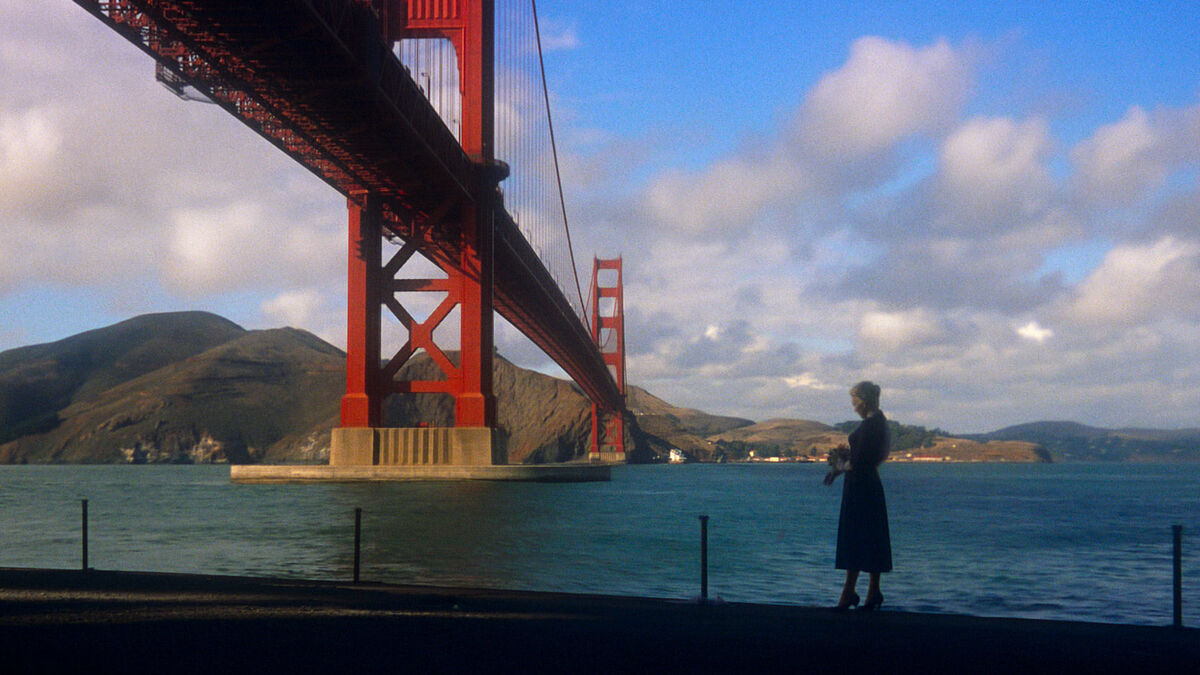
    I wanted to get into more older films as we’ve seen them this semester, especially Hitchcock’s films, so I watched Vertigo. I knew it was famous, but I did not expect how strange and layered it feels. The movie moves between thriller, romance, and psychological drama, and each shift changes how I saw Scottie and Madeleine. Hitchcock keeps adjusting the tone until the viewer feels as unstable as Scottie does.
    The early sections play like a detective story, with wide shots of San Francisco and slow, careful movement. Then the film tilts into something more romantic and obsessive, and the framing tightens around Madeleine. I noticed how the colors grow more intense as Scottie falls deeper into his fixation. Green becomes this haunting presence. When she steps out of the hotel room surrounded by green light, the moment feels unreal.

    The later part of the film surprised me the most. It turns into a story about control and identity. The shift in genre makes that control easier to see. Scottie becomes less of a detective and more of a director who tries to rebuild Judy into the fantasy he cannot let go. That change in tone makes the ending feel tragic instead of suspenseful.
    Watching Vertigo now, I realize how many films I’ve seen throughout my life that have borrowed from it. Hitchcock used genre as a way to expose obsession rather than hide it, and it was a bold shift.

    Vertigo (1958) directed by Alfred Hitchcock • Reviews, film + cast •  Letterboxd
  • Reading the Metaphors in Zootopia 2

    My little cousins wanted to see Zootopia 2 over break, so I ended up in the theater. I went in expecting a simple sequel, but the film surprised me with how much it tried to update its ideas about prejudice and policing. The first movie created that whole “species equals race” metaphor, and the sequel pushes it into new territory by showing how public fear and political messaging shape the city’s identity.
    I kept noticing how the animation supports those ideas. When the city changes tone, the colors dim and the lighting gets sharper. The film uses that shift to show how tension spreads even when the characters do not talk about it. I paid a lot of attention to the crowd scenes because the animators fill them with tiny reactions that show anxiety moving through the population. Even kids around me gasped when everyone pulled away from each other.

    But I will say, the movie does still struggle with the limits of its metaphor. Disney is the studio after all. It wants to teach tolerance, but it also avoids talking about who holds power in a system like this. Still, the animation and pacing made the emotional beats clear and easy to follow. I walked out thinking that the film communicates its ideas most clearly when it stops explaining them and lets the world design express the pressure the characters feel.

  • Weapons (2025)

    Not too long ago, I watched the horror film Weapons with my friends. I found the film to be very interesting in the way that it kept cutting to different characters and timelines. I had to try to order the events in my mind so that I could make sense of what was happening. It reminded me of Holy Motors in that way; both films make you create your own meaning instead of giving you a straightforward explanation.

  • Grey Gardens

    While watching this documentary film, Grey Gardens, I felt like I was getting a look into the lives of the characters (Little Edie and Big Edie); their true personalities were being expressed without any filter. They said whatever came to mind and acted however they wanted. Women in the mid-1970s were not “supposed” to act this way on camera, which is why viewers originally thought the film must have been scripted. Their bickering even feels comedic. They are performing, but only because they like to perform, not for money. Long takes and no narration suggest a direct cinema style, but the actors’ performances turn it into a theater performance.

    Like the decaying house, it is clear to the viewers that their lives are becoming less and less interesting. They are constantly talking about regrets and memories, reliving the moments again and again. Psychologically, the Edies live in a bubble of the past. Little Edie keeps saying she wants to leave, but the moment she’s with her mother, she becomes a “Little Girl”. They’re unreliable narrators of their own histories, but it is a part of the film’s attraction, making it more entertaining and theatrical.

    The house and the chaos of objects inside it symbolize the internal chaos in their minds.  The physical disarray mirrors the emotional chaos of their relationship, which includes dependency, resentment, affection, and nostalgia. Still, they stayed together.

  • How Good Time (2017) Turns Panic Into Style

    Good Time begins with a jolt and never slows down. The film grabs you from the first scene and refuses to slow down, every shot and cut pushing the viewer deeper into Connie’s spiraling night. The style builds that tension. The handheld camera, the close-ups, the neon lights, and the nonstop movement trap the viewer inside Connie’s perspective. I felt myself reacting before I could think, which says a lot about how aggressively the movie pushes its pacing.

    The style turns simple actions into moments of panic. Connie runs, begs, schemes, lies, and the camera follows him with almost no distance. The editing cuts before you can process what just happened. The sound also plays into this because the score pulses under everything and keeps the scenes tight. I noticed that the film uses almost no quiet moments, and when they appear, they only highlight how unstable Connie’s world is.
    What makes the style work is how it reflects the character.

    Connie never stops moving because he has no real plan. I started to see the pacing as his mindset. The urgency is not just a thriller technique. It becomes the story of someone who builds disaster while trying to escape it. Pattinson’s performance fits perfectly with this because he plays Connie with total conviction, even when the choices make no sense. The movie kept me anxious the entire time, and I think that tension is the point.

    Watching this movie reminded me of the story about Matt Reeves seeing this performance and instantly knowing Pattinson could carry The Batman. It makes sense now that I’ve finally seen Good Time, because the same restless energy that drives Connie feels so similar to the Bruce Wayne he later played in 2022.

  • Shampoo: Politics, Gender, and Sexuality

    The film Shampoo (1975) addresses the themes of politics, gender, and sexuality through comedy. It shows how the politics and the sexual revolution of the time were very disingenuous, and it shows this through the deceptive words of the main character (George) and through the use of irony. The film makes us feel as though we are guilty because we know of George’s promiscuous acts long before the women he is with do. It does this by using dramatic irony; we know the true nature of the main character, while the female character Jill is completely in the dark about him. At the same time as viewers, we are scared of her finding out the truth, as we do not want to soil her innocence and trust.

    The movie depicts the messy and promiscuous love life of the main character, who is a hairdresser shown to be self-centered and oblivious. He is always trying to go somewhere (always chasing something), but we never know where or why. He is very dishonest, even with himself. The uncertainty of the times politically matches the uncertainty in his personal life, which makes his aimlessness feel even more intentional in the film’s narrative.

    Many sexual innuendos appear throughout the film to bring comedy and further express his carefree nature. We dislike him at the beginning because he is with so many women behind his wife’s back and because he doesn’t seem to take anything anyone else says seriously. He even claims he felt “immortal” when sleeping with many people, which shows how disconnected he is from the emotional weight of his choices. However, by the end, we end up feeling bad for him. He loses everything that was actually important to him. He didn’t know what he wanted until it was too late, and it is very ironic that someone who was always chasing everything ends up completely alone.

    My favorite scene of the movie was the party scene. The party scene is similar to the political and social chaos that was happening during the time of the film’s creation. The party scene is an example of how the film uses mise-en-scène to build tension. The loud music and the aggressive flashing lights create a sense of conflict and emotional overload. The loud atmosphere and hectic lighting reflect how unstable his life is becoming, with the women so close to finding out about his promiscuous ways. Viewers become very anxious, and the suspense builds as the truth about the main character is so close to be revealed to others, it is nerve-wreaking to watch, but it is hard to look away. The scene keeps shifting from George with a woman to his wife (Jill) slowly approaching. We feel anxious as she almost misses the truth, walking by the area where George is in the act of intercourse with another woman.