While last week’s reading helped us understand mise-en-scene and the artistic components in front of the camera, this week’s reading explains what tools are used behind the camera to shape what we see and how we see it.
I’d like to focus on three aspects of cinematography that were covered in this chapter: depth of field, image duration, and camera angles.
Depth of field describes the “range of distances within which objects can be photographed in sharp focus” (Film Art: An Introduction, 13th Edition). A shallow depth of field, for example, blurs the foreground and the background and keeps the sole subject in focus whereas a deep depth of field allows a larger range of the image to be sharp and in focus. The following scene in Ryan Coogler’s Sinners is a great example of this concept:
Sammie (the guy with the guitar), is in focus in the foreground while everyone else behind him is blurred in the background. This use of shallow depth of field brings all the attention onto Sammie and forces the viewer to focus on him. As the scene progresses, a similar use of depth of field is used to guide the viewer through the crowd of dancers and focus in on specific characters that are meant to represent various eras of music and dance through the years. At minute 3:00, a rockstar-looking man appears in frame (meant to represent afro-futurism) and although a crowd surrounds him, he is the only one in focus while everyone else blurs into the background. The repetitive use of this technique during the scene helps tell the viewer what they should pay attention to.
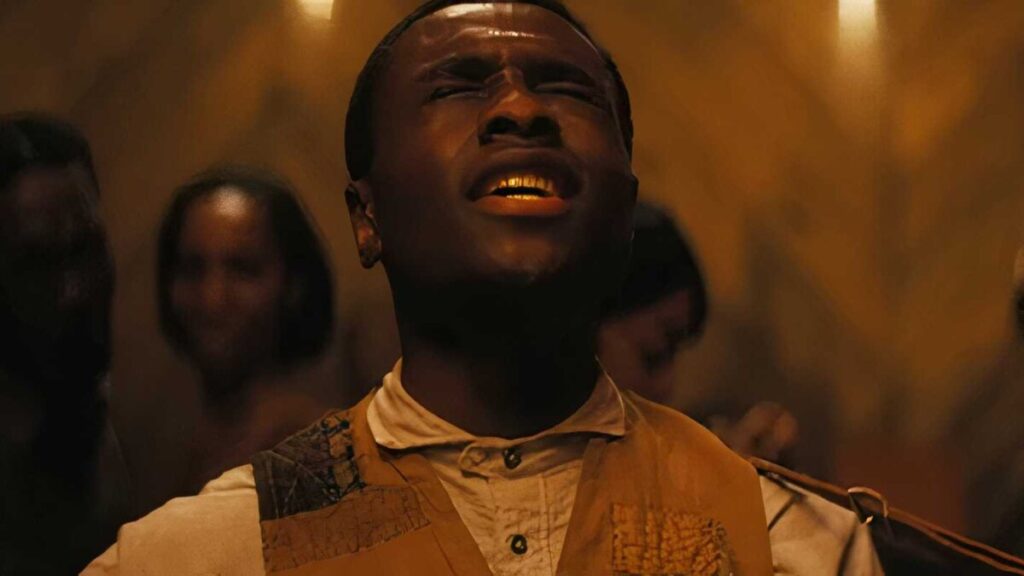
This scene of Sinners also provides a visual example of image duration. Image duration refers to the length of a single continuous shot. Starting at minute 2:37, a long take begins and in just one continuous progression, the camera immerses us into the crowd, panning to various subjects instead of using cuts. The continuity of the shot underscores the theme in the movie that music transcends time. All the different eras and cultures of music- hip hop, rock, African Zaouli and traditional Chinese dancing- shown with no interruptions emphasizes their unity and interconnectedness, a key point in the film.
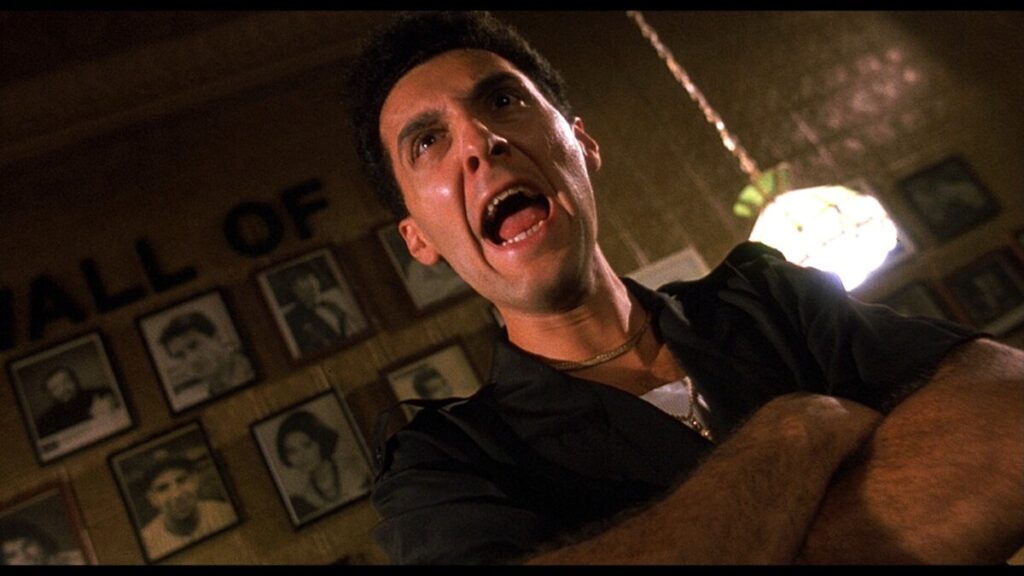
The final technique I’d like to explore is the use of camera angles: the location and/or orientation of the camera relative to the subject. In Spike Lee’s Do The Right Thing, Buggin Out, Radio Raheem, and Smiley barge into Sal’s pizza shop, demanding that Sal put pictures of Black people on his precious “wall of fame” given that most of his clientele is Black. In this scene,Lee uses canted framing (also known as a “Dutch angle”) to disorient the viewer and visually emphasize the tension of the confrontation. Lee also combines these tilted shots with low-angle perspectives to further emphasize the unstable dynamic of the characters.

A key takeaway from this chapter is that cinematography plays a significant role in adding meaning to a shot and serves to enhance the mise-en-scène to form one emotional, stylistic image. I also now better understand that although they overlap, mise-en-scène focuses on what appears within the shot, while cinematography focuses on how the shot is captured.
Leave a Reply