While watching All that Heaven Allows (1955), I kept thinking about how it was supposed to be a “bad movie”. It is a “weepie”, it is unserious, it is “trash” (as director Sirk would positively call it later). I was so interested in the Sirk quote we looked at together—about crazy trash being much closer to high art than we’d like to think—that I went looking for more of his interviews.
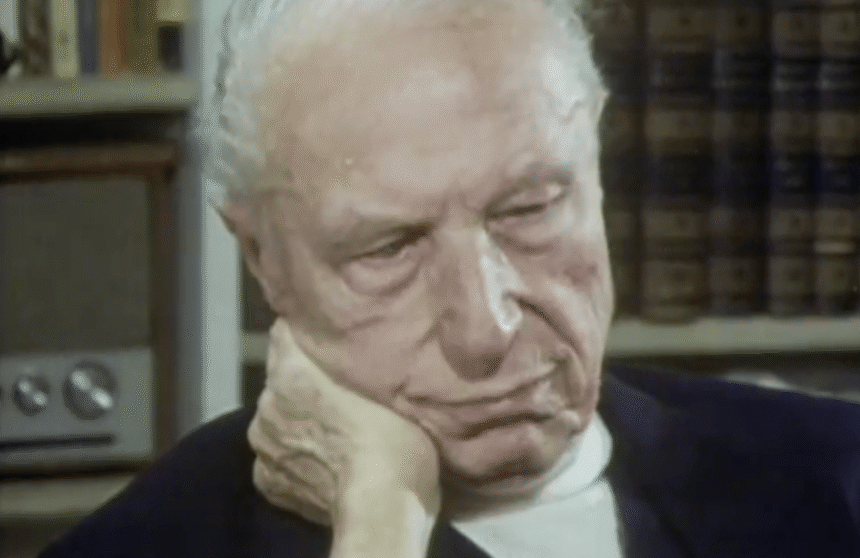
I found an absolutely fascinating 1-minute interview clip on the Criterion Collection’s website. It’s linked here: https://youtu.be/z02M_qbTbDA?si=-BiYflIbLpltSTne
This interview, while not directly concerning All that Heaven Allows, is very much a commentary on it, and Sirk’s other “bad films”. He rebukes this “bad” claim, offering his own set of criteria as to what makes a film good or bad: it must have imagination, must be interesting, must have a theme, must be consistent, and must trust the audience just enough (which is to say, not at all).
What I like the most about this clip, and his criteria, are how they end. Sirk moves from talking about imagination—that every film must have one, that a film without one is a waste, or not even a true film (piece of art) at all—to talking about why he makes “bad movies”. According to him, he makes “preaching” movies: the antithesis of bad.
”The moment you stop preaching in a film, the moment you want to teach your audience, you’re making a bad film.”
Sirk seems, here, to be eschewing the concept of subtlety in film, and based on All that Heaven Allows, it seems that he followed that command. Whether it is the treacherousness and turn-facedness of the children, the incessant nature of the friends, or the unending charm of Mr. Kirby, nothing in AtHA is subtle. Every emotion and character is a metaphorical brick to the face of whatever emotion Sirk wants you to feel. It calls back to something else he said in the interview
“[A movie] should have its own kind of finish, its own kind of theme”.
All that Heaven Allows has finish. It has a theme. And it’s certainly enjoyable to watch. In the wake of AtHA, can we really deny Sirk’s definition of good and bad? And if we enjoy AtHA, why would we?
Leave a Reply