It’s always a great day when I get to talk about “La La Land”, so what a perfect opportunity it is to be assigned to talk about a movie that encapsulates different elements of sound. While it obviously has the greatest soundtrack of all time (in my opinion), it uses a plethora of sound techniques to help make that part of the movie come to life.
The most notable one for me is their use of nondiegetic sound / music, which is sound that comes from a source outside of the story world. In the “Planetarium” sequence, Mia and Sebastian waltz around a building and through the stars and clouds to a song that only seems to exist in their imaginations. I remember showing my mom this movie for the first time, and her immediate reaction to this scene was something along the lines of “this is way too unrealistic, I don’t get it”; but that’s the whole point! Nothing about it is realistic, but that’s what makes us feel all of the unexpected romance of their new connection. By using nondiegetic music, along with them dancing in space, it shows that they are, literally, having an “out of world” experience. It gives a more fantastical, unrealistic touch to the scene, and it helps add to the idea of them being in “La La Land”.

Another sound technique that they used with the movie’s musical scenes where the actors are singing, is they had them lip sync to prerecorded tracks. Then during the editing process, they put the sound and image together to get the final product. Most movies add the soundtracks in during postproduction, not in the moments of shooting. As noted in the textbook, “even dancers’ footwork, like taps or stomps, will already be on the playback”. That way the sound can be more consistent and clear than if they had people trying to sing on camera during big numbers like “Another Day Of Sun”, when there’s already so much going on.

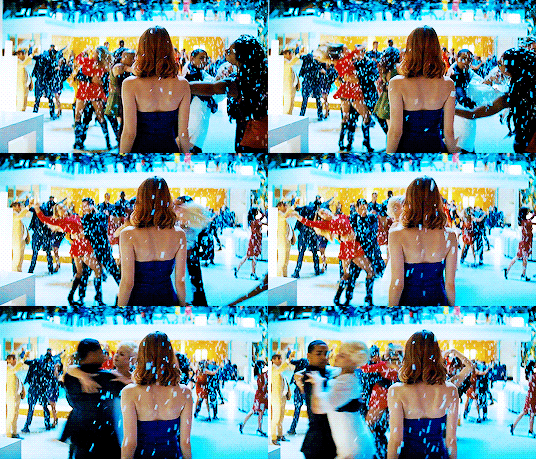
During “Someone In The Crowd”, Chazelle uses rhythm and tempo to blend the song and imaging of the dance sequence together. After Mia has her solo moment in the bathroom mirror, she walks out to a slow paced beat of music. She steps with the same rhythm of the song, and the dancers around her also dance at that same pace. As the tempo of the song gets faster, her walking and their dancing does as well, all leading up to the finale of everyone jumping in the pool and dancing and singing much faster. He uses that combined visual and audible rhythm to build up anticipation to that final segment of the song.
My initial question from the reading is how do we differentiate between loudness and pitch?
Leave a Reply