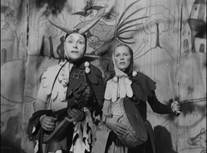
The Seventh Seal is a classic 1957 movie by Ingmar Bergman. It raises many existential, philosophical questions related to faith, death, and the meaning of life. I was struck by the powerful scene of a religious procession. The film cross-cuts between a noisy, merry crowd enjoying an acting troupe’s performance and a grim religious procession through the village. This creates a sharp contrast of juxtaposed images of merry drunkards and lines of fearful, mournful figures in black who are dragging their feet and beating themselves with whips.
The contrasting scenes show two ways people coped with life during the Black Plague, and neither looks attractive. Some people engage in partying and drinking to forget themselves. Others self-punish themselves even further (perhaps to feel a bit more in control, as if they choose their suffering). The diegetic sound suddenly shifts from the laughter and loud chatter of the crowd to the chanting and drums of the flagellants, with the actors and crowd going silent as if in fear or awe of the procession that may remind them of God and their sins, or of Death.
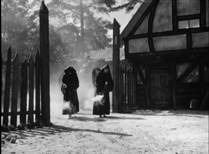
The shot of the religious procession entering through the frame of the wooden gate may be symbolic. They are crossing a threshold into the everyday world of the villagers. The framing of dark bodies against light fumes and dust turns the figures into symbolic silhouettes (not real people), as if the fear is entering the village with people caught in a wild party.
The movie still speaks to people, after so many years, because people still confront traumatic experiences (such as a pandemic) in the same ways. We either distract ourselves with noise and activity or turn to fanaticism/extremism, religious or otherwise, trying to impose order in a world full of uncertainty.
Leave a Reply