Author: Brendan Deparra

  • I’ve Been Changed For Good: How Professor Zinman Ruined my Perception of Media Forever! 

    Hope that got your attention! Have you ever noticed someone on campus for the first time and then, suddenly, you keep seeing them everywhere? Or maybe you’ve noticed a specific number once, and afterward it seems to appear constantly. If so, you’ve experienced the Baader–Meinhof phenomenon, also known as the frequency illusion, which Psychology Today describes as a “cognitive bias in which someone learns a novel word or concept—and then ‘suddenly’ encounters it everywhere.” That phenomenon is essentially what I’m experiencing, but with every piece of media I consume.

    Film and media have always been interests of mine since childhood. I used to beg my parents to take me to the movies, even though I wasn’t allowed to go out on school nights, and I would stay up late watching the behind-the-scenes features of almost every Disney Channel show released between 2002 and 2013. Without doing much analytical research on filmmaking, I assumed all that behind-the-scenes content I consumed would somehow turn me into a great movie critic. Combined with my growing passion for cinematography, cameras, and the evolving world of content creation, I truly thought I knew everything there was to know, not just about watching movies, but about eventually creating one of my own.

    That belief remained strong until I took this class. Taking the time to read Film Art every week and diving deep into various genres has made me view all upcoming blockbusters in a completely different light. Movies I’ve watched in the past now feel changed when I revisit them with this new perspective on viewership. Even the slightest bit of cinematography I see in a TikTok or instagram post has me questioning the mise-en-scene of it all. 

    An experience that I had recently that reinforced this phenomenon was my when I watched the movie Wicked: For Good. Having studied the elements of a musical along with the mise-en-scene from Dancing In The Rain, I spent a good chunk of the movie hyper focusing on the costume choice, dialogue, and various whip pan transitions of Elphaba screamign about Fiyero while flying around Oz on her broomstick. In that moment, I realized how much this class really reshaped how I engage with storytelling. Every film, every scene, every quick-cut TikTok suddenly feels layered with intention, style, and technique that I never would have noticed before. The frequency illusion has ultimately enriched the way I see things, and while a part of me misses having the ability to watch things “just for fun” I’m grateful that I’m now able to analyze the craft I’ve had a passion for. The lessons taught within this course have shown me the artistry and patience woven into every frame, upholding the child in me. 

  • The Ultimate Death Race: Consistent Narrative From 1975 to 2008

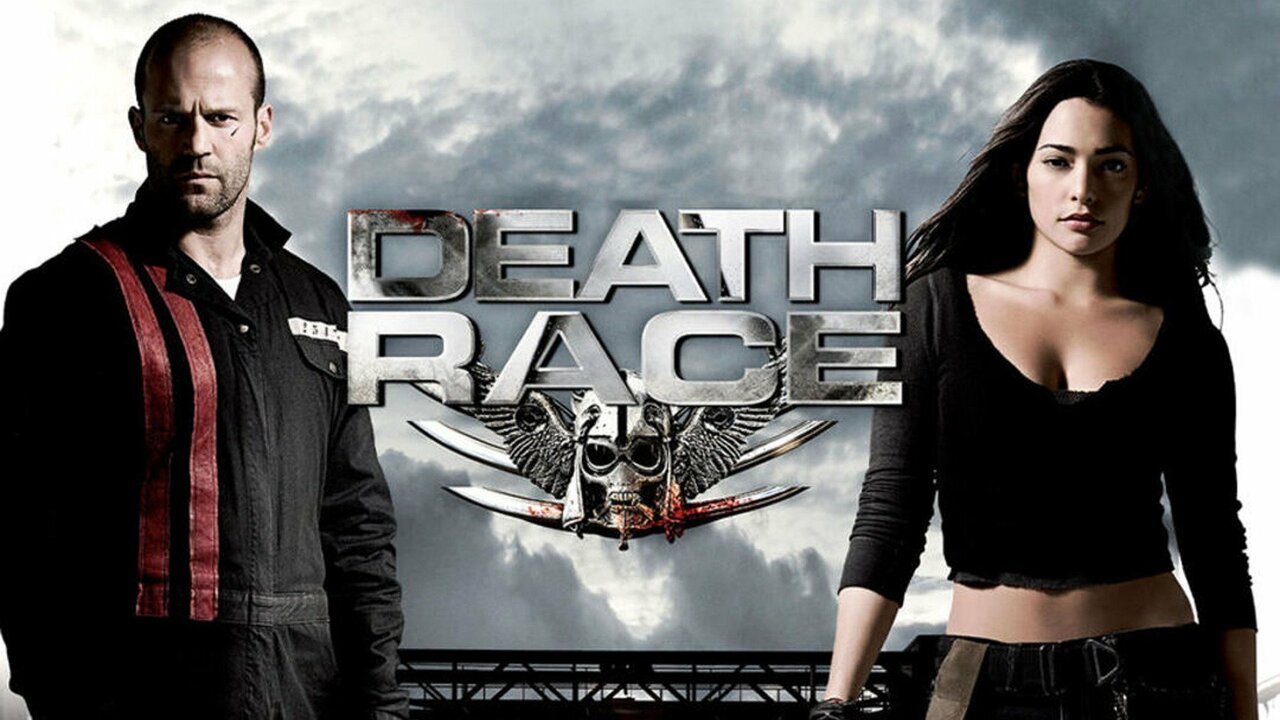
    When I first heard they were playing Death Race at the cinematheque, I was excited. Growing up, I always watched Death Race starring Jason Statham; however, I completely forgot that the cinematheque only shows movies from 1975. That’s when I realized we would be viewing a completely different movie, but I still remained hopeful about seeing similarities between the one released in 2008 and the one from 1975.

    When the movie first started, I was initially attracted to the general aesthetic and underlying theme. The play on a somewhat futuristic society focused on the horrific mutilation of civilians for the satisfaction of corporate giants and the wealthy is a theme that can be seen throughout various films in recent years. Its placement in the year 2000 shows the rather exaggerated expectations of what the future holds for society and the harsh displacement of current generations.

    Death Race 2000 (1975)

    The film uses the plot of race-car drivers equipped with weaponized vehicles rushing from the East Coast all the way to the West, gaining points from killing seemingly innocent individuals they encounter on the road. The car that crosses the finish line with the most points ultimately wins. In comparison to the 2008 depiction, the main character, named Frankenstein, is incarcerated on a murder charge and is facing life in prison. However, he is given a chance at freedom if he races against other criminals through a deadly track, also with weaponized vehicles, and whoever survives to the finish is set free. While all of this is playing out, the building of their cars, the prisoners’ contemplation, there remains the spectatorship of the wealthy, who gain a sense of fulfillment from such horrible destruction.

    The two storylines offer an entertaining experience of gore and thrill but still maintain the narrative of the wealthy’s disconnection from society and their over reliance on spectating dehumanizing events to gain satisfaction. This narrative can be seen through movies and TV shows like Squid Game, Get Out, Blink Twice, etc.

    Death Race - Movie - Where To Watch
  • Do the Right Analysis

    This week’s reading from Film Art focused on film criticism and walked us through a sample analysis of a film directed by Spike Lee, Do the Right Thing. What stood out to me during the readings was the mention of the film’s plot disconnecting from traditional storytelling and classical usage. Instead of having clear, cause-and-effect action or movement that pushes the plot forward in a traditional way, the film steps outside of that structure. At the same time, it still taps into certain elements of American cinema, just in its own style and on its own terms. This approach allows the film to feel both familiar and completely original, creating space for the social and emotional weight of the story to take priority over a strict narrative.

    Do the Right Thing' Review: Movie (1989)

    Throughout the film, Lee makes an effort to incorporate and seamlessly show the connections among several sequences that hold their own stories and lead back to the central theme of respecting the community. In the beginning of the film, there is a brief introduction of the man on the radio, which establishes the setting of the town and ultimately binds together the relationships presented. Lee’s ability to utilize setting helps hold the characters and their actions together. With the radio man speaking about the heat wave currently affecting the residents of the neighborhood, there is space for the feeling of irritability and tension that leads to the climax later in the film. Lee is also able to detach slightly from traditional filmmaking and touch on elements of experimental film in the way he stitches these scenes together. This creates a rhythm that mirrors real life, where smaller moments slowly build toward larger conflicts, making the film feel grounded, intentional, and socially aware.

    In addition, the reading also discusses Lee’s choice to incorporate various camera positions to evoke emotion throughout different scenes. For example, it highlights his use of high angles and the shot of a man walking over a child’s drawing, which helps convey a sense of self-absorption within the narrative. This further underscores his reliance on classical usage.

  • Holy Perspective

    Holy Motors is a film that takes the concept of perception and viewing yourself from someone else’s point of view, analyzing how differently your behaviors and mannerisms change based on who you are interacting with. Upon viewing the first couple of minutes of the movie, I thought the plot and understanding of the movie’s progression would be easy to follow. However, as the movie continued past its opening scene, things started to get a little interesting. The main character is tasked with juggling nine appointments throughout the film, where each appointment requires him to not only drastically change his appearance but also shift the way he carries himself and interacts with each individual.

    holy motors | ombre

    We see him go from an actor in a developing video game to a hostile leprechaun, all while only making these adjustments in the limo he is being driven around in. One thing that truly stuck out to me was the scene when he was tasked with essentially assassinating someone, and in the end, the person ended up being himself in a different costume. After completing the task, he proceeds to change the seemingly lifeless body out of its current attire and make it look more like what he was currently wearing. In the end, the body ends up coming back to life and killing him. While a lot of things in this movie did not make much sense to me, the question I propose is: throughout all the appointments and costume changes, what do you think him essentially killing himself represents in the context of this movie being based on one’s perspective of you?

  • Interesting Moves

    When the movie first started, I had a hard time understanding the direction it was heading in. As it progressed, I began to get a better grasp of what was happening, but not necessarily why it was happening or why certain choices were made. I wasn’t sure if it was the way it was filmed or if those choices were meant to convey a deeper message or contribute to the narrative. Arthur Penn’s Night Moves (1975) is a neo-noir film that follows the ultimate downfall of a detective dealing with marital issues who distracts himself by taking on the case of a runaway teenage girl. While this general plot can be found in many summaries online, I personally found it difficult to follow when the story jumped between Harry’s broken home and the unfolding murder mystery.

    Night Moves (1975) Trailer HD
  • Do You Think OJ died?

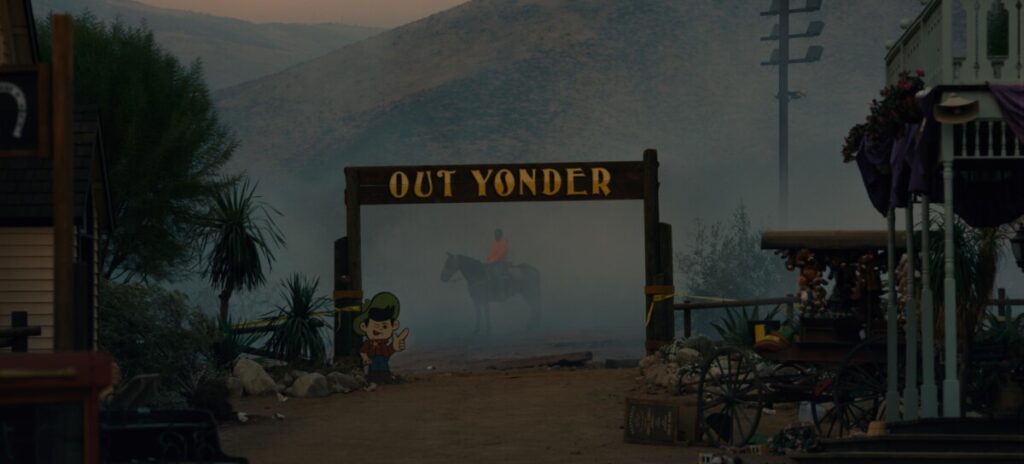
    When discussing with a friend after class, there was a little bit of a debate on whether OJ was consumed by Jean Jacket or he miraculously got away in time. There was belief that OJ appearing at the end of the film in the hazy white smoke could be symbolic of his death, with the sine “out yonder” contributing to the belief of him being gone.

    However, I believe that he is still alive mainly because of the trope “if you don’t see them die on screen, they are still alive”. This suggests not seeing any clips of OJ actually getting sucked up by Jean Jacket supports my claim that he is still alive. 

    Do you think he is dead or alive?

  • “And Spits You Out”: Representation of Spectacle in NOPE!


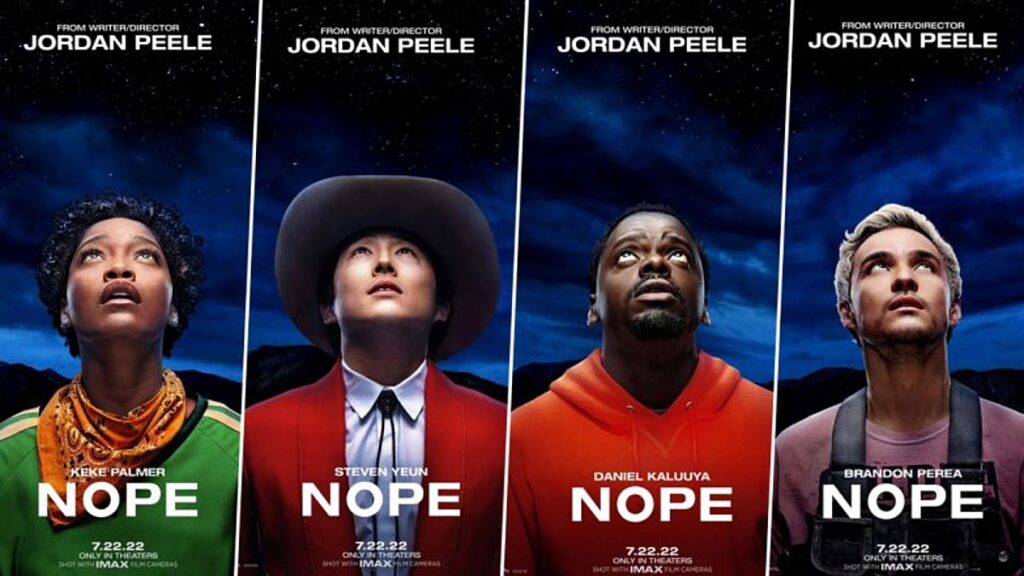
    When I first watched Nope by Jordan Peele, I went in completely blind. I didn’t even take the chance to watch the trailer. I just got in the car with my brother and sat in the theater, expecting something similar to Peele’s previous projects, Get Out and Us: a psychological thriller. After the first viewing, I was blown away by his shift toward an astrological horror theme. However, taking into account count the deeper meaning of having two black leads and reflecting on the film’s exploration of “spectacle” and Black visibility in Hollywood, I began to see it as a powerful commentary on what it truly means to be Black in Show Business. 

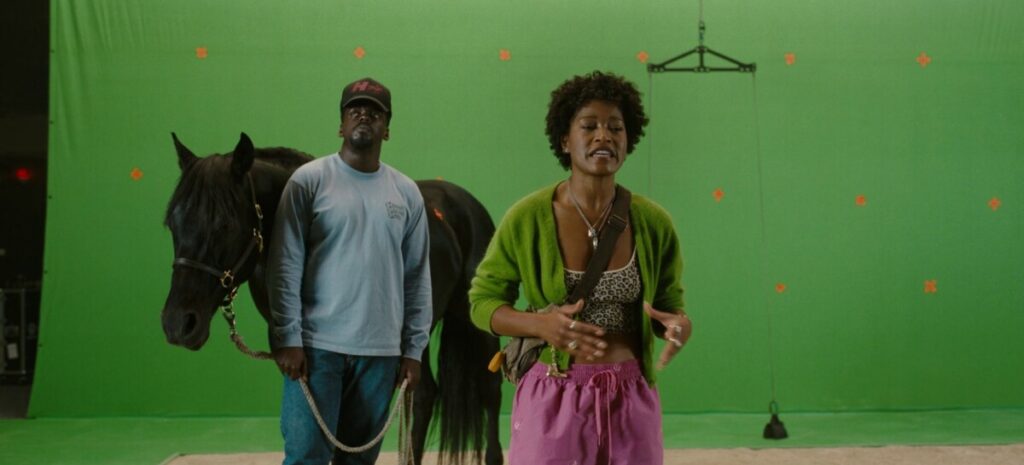
    In one of the major scenes where both protagonists stand in front of a green screen, we get an early glimpse into how Black performers are often treated within the film industry. Taking into account the main characters’ family history, particularly their connection to one of the first moving pictures, featuring their great (3x) grandfather riding a horse, the crew’s reaction to their presence feels heavily anticlimactic. This moment of what seems like simple oversight, is rooted in the historical disregard of Black contributions to cinema, aligned with the siblings’ late father’s horse ranch, which serves as a foundation for the two. The way their labor and resources are used with minimal acknowledgement or recognition encapsulates the broader experience of many Black and minority group whose efforts often go unseen beyond the screen. 

    This theme of exploitation and invisibility is further explored in articles like WATCH: THE MEANING BEHIND JORDAN PEELE’S ‘NOPE’: THE DANGERS OF PURSUING SPECTACLE which provides insight into Peele’s effort to create a film that ultimately subverts the minds of the audience and plants several ideas how a spectacle can change one’s perception.

    Using the characters as hosts to display the different elements that can stem from spectating. With Jean Jacket, the flying alien entity being the main spectacle, there is an understanding of what the inevitable path is when accepting a greater power which is symbolic of the not only the film industry, but the Industry as a whole. 

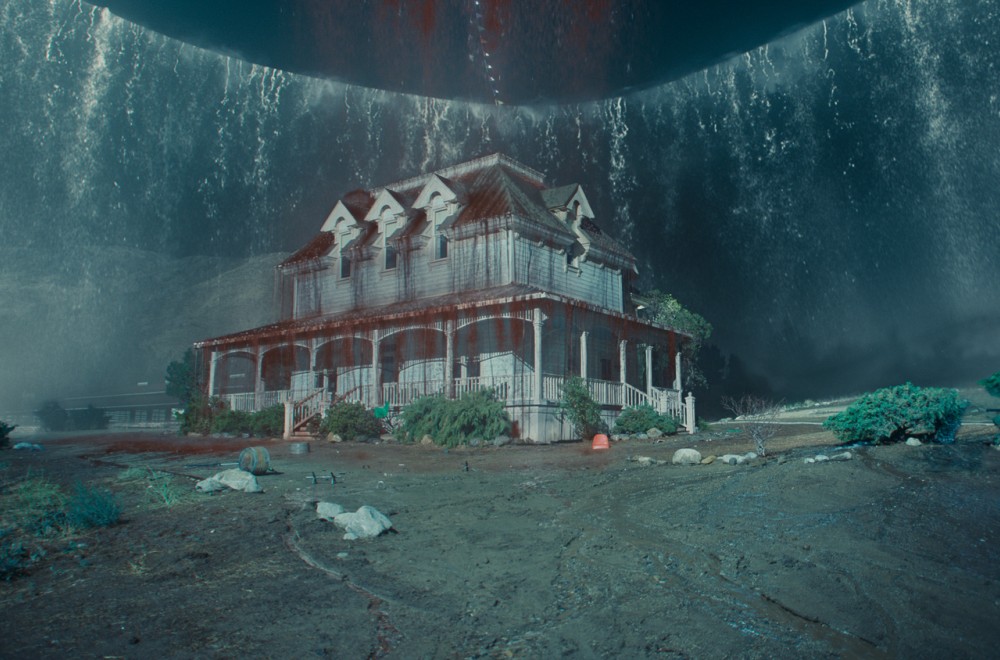
    The article goes on to discuss characters like Emerald, who tries to use the spectacle for money, Ricky, who uses it for fame, and Angel, who seeks recognition. These motivations reflect what often drives viewers and people within minority groups. The film suggests that when you focus too much on proving yourself or showcasing your worth to the industry, you risk being consumed and discarded, which is shown in the scene where Jean Jacket rains blood over the ranch house

  • The Emotional Volume of Malcolm and Marie

    The movie Malcolm and Marie tells the story of a successful filmmaker and his lover who return home from his movie premiere and engage in a heated argument about the film’s inspiration. The film focuses on the life of a woman recovering from a history of drug abuse, and Marie believes the movie is based on her life. She feels neglected because Malcolm did not mention her during his speech at the premiere. The setting of the movie is a large, seemingly secluded house, featuring only these two characters, which creates a “close-proximity relationship” between the actors and the audience. Additionally, the movie is entirely in black and white, further reducing distractions and directing the viewer’s attention to what is happening in each scene, and most importantly, to the sound.

    When discussing the sound complexity within this film, it is important to focus on the speech, music, and noise. With the entire setting taking place within the couple’s home, the dialogue between the two allows for deeper understanding, the musical choices convey intense emotions, and the noises (sound effects) reinforce a sense of fidelity. The movie heavily relies on diegetic sound to evoke a sense of realism that places viewers in the position of feeling present within the home.

    The movie opens with an establishing shot of what we assume to be the couple’s car slowly approaching their home. The proximity of the camera to the sound source suggests the use of added sound effects created through the Foley process to imitate the noise of a car inching closer. This opening shot introduces the concept of sound perspective, which is present throughout the film. As the car approaches the camera, the volume gradually increases. The scene then cuts to the couple entering their home. Marie heads to the bathroom while Malcolm goes to the bar and begins playing “Down and Out in New York City” by James Brown.

    With the distance between the characters in this scene, we can observe how the loudness is distributed across the cuts. This scene features a large sound bridge that connects the shots and maintains continuity. The medium shots focused on Malcolm are louder due to his proximity to the speakers in the bar, while the shots of Marie in the bathroom are more muffled and distant, creating a sense of depth and separation. There is minimal verbal communication throughout this musical aspect, however, the addition of automated dialogue replacement (ADR) in post-production helps blend the music and dialogue, illustrating the connection between the two within a loud environment. 

    This scene also effectively demonstrates the manipulation of volume for intelligibility, setting the tone for the relationship dysfunction that unfolds later in the film. Malcolm is portrayed as loud and overpowering, while Marie remains more subdued, yet equally passionate and intense.

    As we approach the halfway point of the movie, the dynamic characteristics of the characters truly come to life. When another argument is introduced into the sequence, we hear the reintroduction of the song “Down and Out in New York City” through Marie, who expresses, “As if a song written 50 years ago about a different f****** girl would somehow make me feel better about our relationship.” This suggests that the song initially served to engage the audience in the opening scene, but its later reappearance provides a foundation for understanding the emotional complexity between the couple. While Malcolm uses the music to uplift his spirits and celebrate his accomplishments, Marie perceives it as boastful and dismissive of her feelings.

    After reading chapter 7 on sound, I can say that I viewed this movie in a completely different light. Placing my attention on the little sound adjustments and music choices make me appreciate the time that was put into creating this film. Also, it invites a deeper level of understanding and love for the characters once analyzing how these things not only serve the audience, but how they play a role in character development.

  • Zone of Focus

    The film Zone of Interest opens with a long black screen accompanied only by background noises. The extended black screen at the start left me momentarily confused, thinking, “Professor Zinman should check if the site is working,” until the image of a family sitting in the grass appeared. That was the moment I realized the film demanded a deeper level of attention to be fully understood.

    Much of the movie consists of wide long shots, often framed in the same setting from different angles. With minimal sound, the only noises come from the subjects within each scene. With prior knowledge of the Holocaust, the silences felt overwhelmingly loud. Everyday details, the greenhouse, white picket fence, and breakfast on the table, revealed the unsettling coexistence of ordinary life with unspeakable horror. What seemed silent was never truly silent. The depth of realism within this film creates a space for the viewer that refuses to acknowledge the events happening around them. One scene shows an older woman lying in bed as the entire room becomes submerged in a red tint, followed by her sitting at the window, looking out at the camp located in the backyard of the home. All that could be heard was the noises of misery in the distance.

    Making Zone of Interest: Framing Holocaust Through 21st Century Lens:
    not the scene mentioned in the paragraph***

    Do you believe that individuals without much prior knowledge of the events of this time period would still be able to understand the severity of the quiet moments?

  • Portrait of a Lady Burning Blue

    The Portrait of a Lady on Fire is a film dedicated to the fixation of the female gaze; two women, one a painter, Marianne, the other a muse, Héloïse, fall deeply in love after the painter was initially hired by the muse’s mother to follow her around and paint a portrait of her. Following her around was the main task due to the muse’s main issue: she hated being painted.

    With the introduction of the film, I was immediately presented with close-ups of several little girls with a heavy depth of view to focus closely on their features. They were being instructed by a voice: “Not too fast,” “Take time to look at me.” Without yet seeing the instructor, the audience can still identify it was a woman speaking. While this plays a huge role in contributing to the overall theme, the female gaze, a classroom filled with little girls trying their best to capture every single detail of their female muse, that is not the premise of this blog. It is to analyze and understand how color theory heavily contributes to the plot and emotions of the main characters.

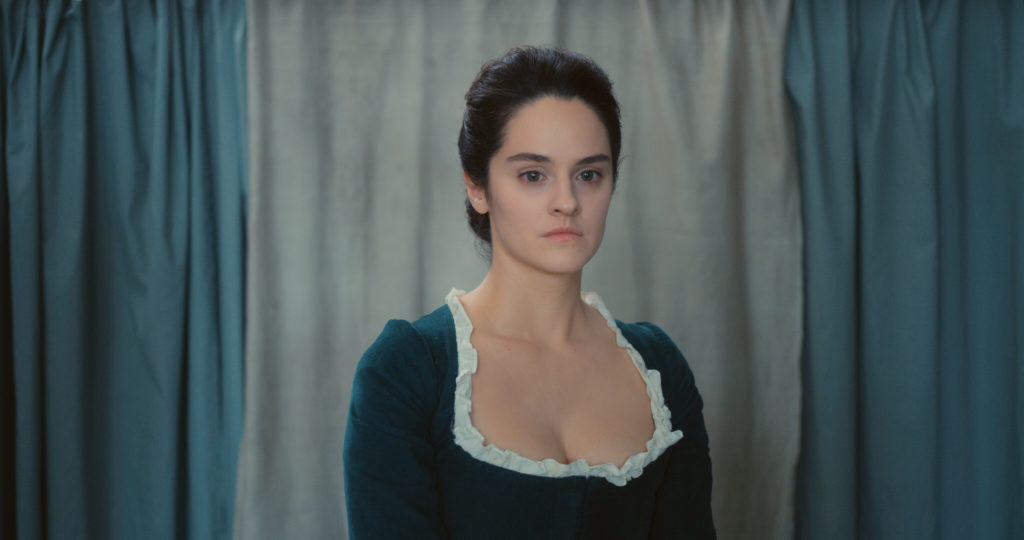
    Once the camera shifted from the perspective of the muse to the perspective of the painter’s, there was a silent moment of the muse sitting still in a deep blue gown in front of blue drapes. As if her head and arms were floating in an open sea. This scene and color scheme evoke a sense of yearning and sadness, as this is often associated with the color. After doing a deep dive into the science of color theory, Forbes magazine produced an article on How The Neuroscience Of Color Impacts Consumer Behavior that stated, “Blue has been shown to increase productivity and focus, making it a popular choice for office spaces and study environments.” This invites a new way of thinking, as it places the little girls painting the muse into a state of focus. Marianne gaining all the attention from their gaze while inducing a sense of despair in the audience.

    From this point on, Marianne begins to tell the story of one of her paintings, where we travel back in time to a point when she went to the home of a mother, anguished at the fact that she couldn’t get a portrait of her daughter. Throughout the film, the daughter, Héloïse, is wearing a blue gown similar to the one Marianne had on in the opening scene, which contributes to her overall task at hand. She was hired to follow Héloïse around and create a portrait of her. Based on the plot, she is just doing her job, but incorporating the knowledge of what certain colors can do to your brain, she quite literally is focusing on Héloïse not only for her beauty, but because of the color she wears. At the time the story is being told, Marianne is wearing a red gown, “shown to increase heart rate and arousal in the brain,” while representing passion and love. While watching the movie, I can say I did not feel that initial arousal from Marianne, but it certainly puts me in the position to understand the thoughts and feelings Héloïse felt throughout the movie as her admiration for Marianne grew stronger.

    Color theory within the media industry plays a huge role in developing a deep connection to what is being presented to society. Colors that evoke a sense of wanting are what grab people’s attention and draw them in to consume.

    An example of this being used within a different medium is in the song Burning Blue by Mariah the Scientist, a popular singer among the younger generation. She released this song, singing the post-chorus: “I couldn’t care less as long as you’re burning blue… I’m burning blue.” She sings of a significant other being her main focus: “I’ll forget what everyone else said.” She implies her lover represents the embodiment of the color blue, increasing her focus on them while having a burning passion for them.

    While deviating from the film, this connection sat heavy on my mind as I watched the scene of Héloïse burning in her blue dress.