Author: Duncan Ostrower

  • Bullying, Acceptance, and Zombies – Paranorman (Butler, Fell, 2012)

    Paranorman is a childhood classic of mine. It’s funny, honestly kind of scary, and beautifully animated. It took me until a recent rewatch, however, to truly uncover some of the messages that the film tries to send youth across the world. The film features many references to classic horror conventions and gives nods to many legends such as John Carpenter. However, as directors Chris Butler and Sam Fell discuss in this interview (https://www.starburstmagazine.com/features/interview-chris-butler-a-sam-fell-directors-of-paranorman/), the movie can’t be labeled as a horror movie or simply a kids movie. Instead, the film uses zombies as a way to look introspectively at Norman himself, turning the film into much more of a character study. The directors discuss how the zombies act as an unusual comfort in the life of Norman. While theoretically he should be scared of the undead, he has come to fear social pressures and bullying far more.

    Similarly, the directors choose to reveal towards the end of the film that one of the main characters, Mitch, is openly gay. This plays into the concept of misdirection since Mitch is initially portrayed as a classically straight, intimidating jock. This is a parallel to the misdirection of the zombies. What should be scary isn’t. What we assume to be true about Mitch’s identity isn’t either. The directors describe this as the ‘idea of making the audience complicit in [the film] and then pulling the rug out from under them.’ Overall, Paranorman, while cosplaying as a “horror” movie, really dives deep into the social anxiety of a high schooler through the unusual use of zombies.

  • The Writing Process of Holy Motors

    This interview, linked here is a discussion with Leos Carax about his own process developing the twisted ideas behind Holy Motors. Leos Carax described his emotional state when entering the writing process of Holy Motors as “rage”. Having been unable to develop, fund, or shoot a film in years, Carax found himself questioning filming location, language, and methods of funding for future films. That is why, when beginning to write Holy Motors, he found himself writing unconsciously, which I think is very clear in the viewing of the film. As the movie progresses, the viewer gets the feeling that there is an accumulation of something, although its hard to figure out what. Each different “appointment” is separated, yet we feel like each is somehow building on eachother to reach some sort of accumulation. He described writing it as “you don’t react to what you’re doing, you just do it”. For example, he talks about how he initially wanted to play the part of the man with the birthmark in the car, as he was the “director”. However, as the film came together, Carax realized that that character was in fact not the director, but some looming professional, dictating the flow of art, therefore being closer to a producer. Therefore, he replaced himself as the actor with Michel Piccoli. This is a good example of Carax reacting to the film as he creates it, just as he does with most of his films, starting them with combinations of images and seeing what feelings those images invoke.

    Carax goes on to say that Holy Motors stands alone in his filmography, meaning it was not inspired by any of his other films. He views the film as a representation of reality and what it means to be alive, and therefore didn’t want it to have any aspects of a replication of something else. This is a concept I think is extremely interesting, since most directors at least develop some strand of style that stays consistent throughout their films. He goes on to further examine the films themes of performance for performance’s sake and the disappearance of physical film in cinema history, but I interpreted the interview as Carax saying that Holy Motors is about life and how we choose to live it and how difficult it is to be authentic in a digital age.

  • The Attica Prison Uprising and Dog Day Afternoon

    There is a distinct moment in Dog Day Afternoon (Lumet, 1975) when the tides turn and you start to feel some hope for Sonny Wortzik. That moment occurs when he invigorates a crowd of onlookers by yelling “Attica! Attica!”. I, along with many people, had no clue what this meant and was confused with its’ obvious and immediate impact in the film. After some research, however, I realized that the moment is symbolic of a larger theme in the film of an individual’s role in the collective to fight against an oppressive system.

    “Attica!” refers to the Attica Prison Riots of 1971, when prisoners collaborated to take staff and guards hostage, demanding better conditions, better food, better medical care, and better treatment from guards. It resulted in a clash between prisoners and National Guard, ending 43 lives. Sonny invokes this image to a crowd of onlookers to reframe his crime. Instead of a robbery for personal gain and a few bucks, Sonny wants to be remembered as the man who resisted authority, and fought back against an oppressive system. While his goal is not to protest prison conditions, he is trying to send a message that each individual has a responsibility to the greater collective to stand up and do their part to contradict men like Murphy, men “who kill people like me (Sonny)”.

    His speech goes beyond simple uprising against an unjust police force. Sonny also represents the voice of the queer man in the 1970’s, a voice that was widely dejected and cast aside. The robbery itself is an attempt to pay for his husband’s gender reassignment surgery. The entire film is Sonny wanting to live authentically in society, and the police force, the governing body, is what’s holding him back from that. Therefore, “Attica!” further represents his struggle against the confining forces of society.

  • Chapter 9 and the Meaning of Genre

    I always thought the idea of genre and sub genres is interesting in movies. Humans have an innate desire to categorize things (Genre of music, type of food, species of animal). Film is no exception. Although films just stem from an idea in a single human’s brain, we feel the need to categorize it into something boiled down. Chapter 9 discusses how to recognize those categories, and gives a few examples of its’ own.The chapter describes genre as a a category of films that share conventions such as plot structures, character types, setting, themes, etc. We learn to recognize genres by associating specific elements with larger groups. For example, the idea of revenge is often associated with Westerns, the theme of loyalty is associated with martial arts fils, and even specific symbols like a Tommy Gun is associated with gangster films.

    The chapter also discusses the concept of life cycles within genre, which I found to be very interesting. The idea is that there seems to be a clear arc when it comes to some genres: An emergence of the genre, a rise, a peak, and a decline. Such examples include the introduction and eventual over saturation of disaster movies, large scale fantasy movies, and dystopias. I think that some genres have definitely proved to withstand the test of time, but I find it interesting that film genres are as much of a trend as fashion or food. Film makers learn from one another, leading to certain trends and eventual ends of trends.

    The chapter also gives us a case study on four genres: The Western, the horror film, musicals, and sports movies. The chapter discusses how Westerns, for example are derived large in part from reality, and displays common themes of order vs. lawlessness. Westerns are also widely recognized from their iconography: Railroads, spurs, horses, wagons, etc. Horror films are less recognizable by iconography, and more definable by emotions. Specifically, horror films evoke feelings of disgust and fear. Musicals, on the other hand, are an example of technological development. As we saw in Singin’ in the Rain (Kelly, 1952), the implementation of music and dialogue in film was revolutionary, and the concept of the Musical was defining of that innovation. Lastly, sports films are largely categorized by their use of a ‘Big Game’, a win or lose moment between the ‘good guys and bad guys’. They often feature underdogs, and end in joyful, unexpected success. These are just some ways that films can be categorized, and how we recognize them.

  • Funny Games (1997, Haneke) and our Everyday Complicity in Violence

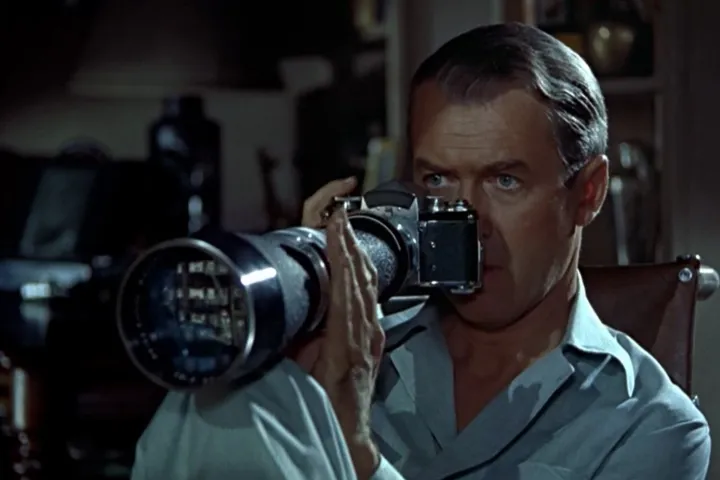
    Funny Games (1997, Haneke) is a disturbing tale of violence and intrusion. Following 2 men who invade a family’s vacation home and put them through a series of twisted and lethal “games”, the film creates a similar commentary on voyeurism and complicity in violence as is present in Rear Window (1954, Hitchcock). As we have discussed in class, Rear Windows places the viewer into the role of voyeur, mirroring our actions with L.B. Jefferies, a man literally incapable of movement and action. Rear Window asks the viewer about their willingness and implicit desire to watch and spy on others. Jefferies’ camera becomes symbolic of the movie screen itself, showing how he, and the viewer, are separated from physical harm, but gain a natural excitement from learning about the private lives of others. The murder of Thornwald’s wife is simply a method for the viewer to excuse and justify their voyeuristic actions.

    Funny Games adds on to this conversation of voyeurism and natural desire to watch violence. However, Haneke definitely punishes the viewer for their viewership of violence, while Hitchcock mainly just asks the question if its wrong. Funny Games starts as a reasonably normal thriller with frightening antagonists and a strong sense of suspense. That is, until one of the home-invaders, Paul, stares directly into the camera after the family learns a terrible truth.

    I was shocked by this moment, and initially very confused about the meaning behind it. Overtime, I came to an understanding that this film is not about 2 men torturing a normal family, but actually about torturing the audience. Haneke is literally punishing the audience for having any interest in watching such a movie. Following horrifying act after horrifying act, the audience is finally given a moment of justice and a glimpse of joy. It is then immediately taken away by Haneke through breaking every rule of cinema. A film that started completely in reality is then complicated with time travel and reality manipulation. All of this is done just to take our moment of justice away, and put us back into pain. Additionally, there are multiple minute long scenes of us simply watching the characters sit in silence, suffering in both physical and emotional pain. Overall, there isn’t a comfortable moment in the entire movie, and that is the point. Haneke takes Hitchcock’s commentary on complicity in violence and turns it into blame; blaming the audience for having any desire to watch.

  • The use of mirrors in Citizen Kane

    The famous final sequence, when Kane walks through the corridor of mirrors, is not simply a stylistic and aesthetic choice. Instead, this choice actually resembles one of the primary themes of the films, which is the presence of fractured and fabricated identity. The “many Kanes” that appear because of the mirrored hall shows that there is no true Charles Kane, but instead countless versions of himself that he has portrayed to the general public and been interpreted as. Even Jerry Thompson, who spent weeks studying the life of Kane, could only ever understand him through the fragmented and often unreliable tales told to him by the people closest to Kane.

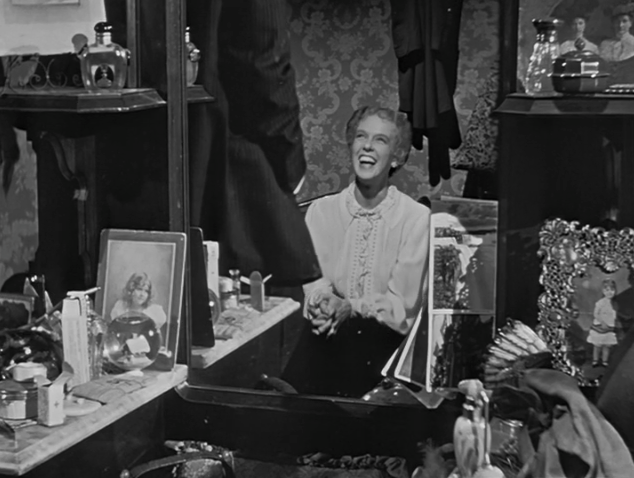
    The mirrors also offer a deep sense of isolation. In Kane’s final days, he spends time not surrounded by loved ones and friends, but by reflections of himself. He has spent years trying to surround himself with people who “love” him, accidentally surrounding himself with people who try and praise him in exchange for power. This isolation can be seen earlier in the film as well, when Susan Alexander sits at her wardrobe, we gaze at her reflection through a mirror. The reflection stands as a confrontation of her loneliness and isolation.

    In totality, mirrors and reflections are used throughout Citizen Kane to establish the distorted nature of life these characters are experiencing. Nothing is genuine, not the people they surround themselves with or the stories they tell. Even the story itself goes through multiple levels of connection (a friend, a manager, etc), leading to a convoluted tale that never truly lets us get a good look at who Charles Kane was. And in his final days, he understands that he doesn’t know either.

  • Under the Skin’s use of Non-Actors

    As we began to explore in class, Jonathon Glazer, to the best of his ability, implements a level of attempted reality in his films. In The Zone of Interest, Glazer used secret cameras and microphones to keep actors from acting in a certain direction, worrying about their positioning, etc. The sense of realism is extremely effective in the film, as it allows us to understand the fact that the Höss family, and especially Rudolf, were real people and not just puppets of the system following orders. Rudolf was a real individual who understood the implications of his actions and carried them out anyway. I believe that although some people criticize the film for being too sympathetic towards the family, the hidden microphones and cameras actually contribute to the better understanding of their atrocities. Glazer’s desire to attain a real, untouched feeling that distances itself from “acting” extends past The Zone of Interest, as his 2013 film Under the Skin actually takes it a step further. Under the Skin is an unsettling horror film starring Scarlett Johansson. The reason that the film is so unsettling is that many of the characters were being played by people who didn’t know they were being filmed. The film follows an alien (played by Scarlett Johansson) as she seduces and captures unsuspecting men (played by non-actors)

    This 1 minute 38 second long interview (https://www.youtube.com/watch?v=S8MbvKqHWM0) with Jonathon Glazer breaks down an individual scene in which Scarlett Johansson interacts with real people walking down a Glasgow street. Glazer describes his reasoning of using non-actors as to show “human kindness and how we help each other up when we fall”. However, another reason for his use of non-actors is to show human temptation and how easily we are willing to give into it. This is interesting to me because it is clearly mirrored in The Zone of Interest. I think a large part of why Glazer used similar techniques in The Zone of Interest was to establish an unsettling sense of kindness and family values that exist within the Höss family, but then at its core, the realism that exists within the Höss home also shows how unforgiving their actions are. So the realism that Glazer implements in both films demonstrates the double-edged sword that is humanity.

  • Chapter 5: “The shot: Cinematography”

    This chapter covered a wide range of different cinematic techniques, including the use of lighting and perspective. The chapter breaks up into 3 main categories with subcategories:

    1. The photographic Image
      • Tonalities
      • Speed of motion
      • Perspective
    2. Framing
      • Frame dimensions and shape
      • Onscreen and offscreen space
      • Camera Position
      • Camera Movement
    3. Duration of the image
      • The long Take

    I thought that this chapter did a great job in giving even a glimpse into the wide scope of cinematography. 3 categories are further broken into 8 subcategories, each containing pages of information. The main lesson I took away from this chapter is the wide range of things that one can do just with changing a few things on a camera, each resulting in a totally new shot with a new feel.

    As I was starting this chapter by reading about contrast, the film that jumped to mind (and specific shot) was Paths of Glory (1957, Kubrick). This shot specifically uses a high contrast to be able to visualize the light shining in on the prisoner from outside, representing the light he is gaining from the priest in his final moments. The shot also uses negative space to scream in the viewers face that the prisoner is isolated and lonely. Shot in black and white, this shot uses low-key lighting compared to the rest of the film to emphasize the character’s internal darkness.

    Another movie that is filled with absolutely beautiful cinematography is 2001: A Space Odyssey (1968, Kubrick). Another Kubrick masterpiece consistently demonstrates how cinematography adds to the story of a film. In this specific shot, a character’s lips are being read, as he speaks in private to his crewmate. The shot is silent, but with the use of masking, the viewer’s attention is drawn to the character’s lips, telling us that they are the object of interest. This is a perfect demonstration of how masking combined with a close-up shot can perfectly attract a viewer’s attention to a certain specific plot point.

    When reading the chapter on focal length, my mind immediately jumped to The Killing of a Sacred Deer (2017, Lanthimos). The incredibly unnatural and off-putting vibe of the film is mirrored by Lanthimos’ use of wide angle, short focal length cinematography, creating a strong feeling of isolation and distortion. The technique is used throughout, and it makes the characters seem like they are almost unable to create connections with one another as they, themselves are unimportant.

  • Barry Lyndon: Why Does No One Ever Have Fun Playing Cards?

    I recently was able to see Barry Lyndon (1975, Stanley Kubrick) through the Emory Cinematheque. Riddled with powdered wigs, layers and layers of makeup, paintings that fill entire walls, and shots that actually resemble real paintings from the era, Barry Lyndon’s use of mise en scène transports us directly into the late 1700’s. However, that is not what I want to talk about in this blog post. Instead, I was intrigued by a certain recurring motif in the film: Playing Cards.

    The film as a whole is an argument between fate and self-determination, with Redmond Barry’s life-altering adventure seemingly starting from one lustful, impulsive decision. Playing Cards and Barry’s cheating habits act as a miniature representation of his own life, representing how one often has little control over their own destiny, yet must risk it all anyway. What confused me however is that every time anyone is seen playing cards in the film (which is quite a few times), they seem absolutely miserable. While it is not the happiest film of all time, there are many moments of comedy and smiles. None of these ever occur during a game of cards. I believe that this is probably to communicate how even though Barry tends to win at cards, they are a marker of inevitable doom and demonstrate the futility of trying to climb the social ladder of life. I would be curious to whether this is entirely purposeful by Kubrick or if it just shook out to be that way.

    I mean look how miserable they are.

  • Wes Anderson’s Grand Budapest Hotel and our loyalty to “all we know”

    Before I say anything remotely analytical about this movie, I wanted to note that this is one of the most visually appealing films of all time. On par with some of my favorite movies to just look at like Under the Skin(2013), 2001: A Space Odyssey(1968), and Drive (2011), Wes Anderson’s use of painting-like imagery with the background compressed against the foreground makes this a simply stunning movie.

    Throughout the movie, I feel like Wes Anderson was screaming at me that this film is about loyalty. But although there is the obvious loyal relationship between Zero and Gustave, the theme extends far past an individual’s loyalty for another. I think this film is really trying to communicate how as individuals, we tend to be ferociously loyal to the things that have always been; the constants in our lives. We see this every day in the United States. According to the Pew Research Center, 89% of teens from Democratic households also vote for Democratic candidates (81% for Republican households). I believe that this is not actually about the values of the child, but about an individual’s loyalty to their parent’s values, since that is all they have known since birth. Wes Anderson throws this theme in our face throughout Grand Budapest Hotel. Introduced early in the film, Zero is alone. When asked whether he has a family, he replies with ‘none’. Immediately, Gustave is a father figure. Whether he likes it or not, Gustave is in a position of instructional and literal power over Zero, causing Zero to latch on almost instantaneously. I don’t believe that this is because Zero respects Gustave (Gustave is a deeply flawed and sometimes ridiculous person), rather that Gustave and the values he stands for becomes literally the only thing in Zero’s life, and therefore the only thing he has to learn from.

    However, this theme of loyalty extends past Zero’s relationship to Gustave. Gustave himself is a character literally defined by his loyalty. All we ever know about his character is his mastery of the concierge arts. For all the audience knows, this is all Gustave has been, and all he ever will be. His loyalty is not only to the women he takes care of and the young men he takes under his wing, but the literal act of being a concierge. In prison of all places, Gustave brings a cart around from cell to cell handing out soup. He won’t ever stop being a concierge because he literally can’t. Like Zero’s relationship to him, Gustave can’t give up being a concierge because it is actually the only thing he knows. Again, towards the end, when the hotel is crawling with policemen looking for him and a psycho killer trying to take his life, Gustave enters the Grand Budapest Hotel disguised as a bakery delivery man. It is possible to look at this from the perspective of his loyalty to Zero and Zero’s relationship to Agatha, but I think Wes Anderson intended this to be a representation of Gustave’s inability to part with the hotel. The hotel is his life, and he would rather die than be apart from the only thing he has ever known.

    This is not a film about love or belonging, but instead about humans’ loyalty and almost obsession with retaining constants in our lives. Zero, even in his old age and the Grand Budapest’s failure, is fiercely loyal to it and Gustave. My one question about this film is: Does Wes Anderson hate Zero and Gustave for being so loyal, eventually killing one of them and dooming the other to eternal loneliness? Or does he actually respect and value their obsessions?