Author: Ethan Curtis

  • The Tech-Takeover of the Modern Film Industry

    It is an unfortunate fact that we as a society have stopped going to the movie theaters as much. With the introduction of large-scale media streaming on platforms such as Netflix, Disney+, HBO Max, etc., there is simply less incentive to go to a movie theater when there are plenty of accessible options at home. These companies, now with their dominant influence in this revolutionized industry, have begun to produce their own movies that will go straight to streaming rather than traditional cinematic screenings. Now, as Professor Zinman brought up on Monday, it is important to acknowledge that these companies like Netflix are NOT filmmaking companies, they are tech companies. When a big business like Apple or Amazon takes over the production of a movie, it begins to feel like an advertisement instead of a creative work. When the discussion of this tech-takeover was taking place on Monday, I could not get the recent Amazon Prime exclusive, War of the Worlds, out of my head.

    Check out this clip:

    This is a real scene in this movie. The product placement is absolutely ridiculous in War of the Worlds. A man risks his entire life for a 1000$ Amazon gift card, there is a scene of the main character ordering a USB drive on the Amazon website, and Devon Bostick’s character is literally just an Amazon delivery driver. In the broader narrative of this movie, the Amazon company essentially saves the entire world. This movie just feels like an hour and a half long ad. What’s funnier is that the producer of War of the Worlds, Patrick Aiello, denies any sort of Amazon product placement in this movie. (https://www.msn.com/en-us/entertainment/news/war-of-the-worlds-producer-insists-there-isnt-any-product-placement-in-the-widely-panned-reboot-we-never-intended-for-amazon-to-release-the-movie/ar-AA1LrATe)

    Overall, it is very important to recognize and appreciate the artistic value that comes from an authentic movie producer like Warner Bros or 20th Century Studios. As previously mentioned, movies coming from large tech companies often do not receive theatrical release and go straight to streaming. This practice is a large factor in the modern decline of theater-going. To keep the love of movie-going alive, keep this message in mind.

  • Art Cinema Today: Enemy

    When figuring out what I wanted to write about for this week’s blog post, I noticed many were interpreting the reading from this week in a modern context. To add on to that trend, in a perfect way to talk about a very underrated movie, I would like to emphasize the artistic efforts from Enemy (2013, Denis Villeneuve).

    According to David Bordwell, the author behind the Art Cinema Essay, some of the aspects that make up art cinema, contrary to a standard Hollywood movie, are key stylistic inputs that don’t exist in the overdone Hollywood blockbuster. Even though Bordwell’s argument was released in 1979, this notion still holds up to this day. With sequels and big name brand movies dominating Hollywood, it is a treat for audiences to find a movie nowadays that tries something unique or different. Enemy is one of those movies that does exactly that, and unfortunately did not translate to the box office.

    First off, Bordwell notes in his essay that artistic films often include morally ambiguous, confused characters that progress throughout the film. The protagonist of Enemy, Adam/Anthony Bell, is a man who is discovering his morality throughout the entirety of the film. The basis for the plot of this movie is that Adam is fighting against an “enemy” version of himself. He interprets his life as he is fighting against a clone, however in reality, it is just himself in a different conscious. The longer the movie goes on and the more that Adam finds about his other self, the more that his morals develop from the blank slate that he is in the beginning of the film.

    Secondly, an art film must explore philosophical or social themes that tell the audience something about the human condition. At its simplest form, this movie is about a man who finds an enemy version of himself. However, this movie covers interesting themes of marriage and responsibility in a very interesting way: a massive spider. All throughout this movie, Villeneuve continues to cut to scenes of a massive spider towering over the city that Adam lives in. In no casual Hollywood movie would this occur as it confuses the audience. On my first watch of Enemy, I had absolutely zero idea what the spider the size of a skyscraper meant towards the plot of the movie, or even why the characters weren’t discussing this plot point. In reality, the spider represents the main character’s fear of commitment to his marriage and is an encapsulation of the feeling of being trapped by his wife. Adam simply can’t stop himself from giving into lust and the spider getting larger and larger over the city is representation of that.

    One last aspect of Enemy that I appreciate very much is the open-endedness of the ending. Bordwell highlights the importance of a film with unanswered questions at the end. Now, if Enemy is known for one thing, it might be its confusing ending. After Adam has successfully defeated his other self and everything seems to fit for a perfect, happy ending, the movie simply ends with Adam staring at a massive tarantula spider in his bed room that jumps away from him. For viewers expecting a simple ending that a typical Hollywood picture would deliver, this ending makes absolutely no sense and calls for open discussion and speculation as to the meaning of what the comically large spider in the bedroom represents. A clear indication of the artistic value that Denis Villeneuve put into this movie.

    Overall, Enemy is a very underrated movie that didn’t do too well at the box office, most likely because of the very artistic and metaphorical decisions that Villeneuve added to the movie. To me, this movie perfectly fits the art film that Bordwell talks about in his essay. However, an artistic movie doesn’t always have to fail at the box office and in popularity. Are there any ways to imbue artistic filmmaking according to Bordwell into a movie while still making it digestible to the average watcher? or is that impossible because it is meant to be viewed by someone with an appreciate of the art of filmmaking?

  • Paris is Burning: Through a Modern Lense

    There was one main thought I had in my mind while watching Paris is Burning…why do these people from 1985 remind me so much of modern-day influencers? Though it might be a stretch, a community for those rejected by 80s society shows shocking similarities to the way that we see influencer in modern-day society. It is important to contextualize what I mean about modern-day influencers that might be similar to the ballroom culture of Harlem. First, the houses. I found the different houses fascinating in this watch. Ballroom participants rally behind a representative/Mother of the house and let that house form their culture and identity of their performance. To me, this shockingly resembled online consumer and fan bases to online celebrities. For example, I constantly see different fan bases for different celebrities create their own fanbase name and create an identity behind that influencer (like “Swifties” for Taylor Swift). Not only was this idea of the house/fanbase mimicked in Paris is Burning, but I found another comparison with the whole notion of “Realness” at the ballroom shows. It is narrated in the documentary that “Realness” is the attempt to mimic a “normal”, straight, wealthy white person as a dress up for the social rejects of the ballrooms. Doing this and successfully mimicking a “normal” person would result in good voting from the judges. With the whole idea of pretending to be something that you are not to pander to an audience, I see a striking similarity to modern-day influencers and the artificial persona that they demonstrate to their audiences. In the digital age, celebrities are not able to live to be their authentic selves. They have PR managers, agents, and fans that judge their every single move – similar to the judging in the 1980s ballrooms.

    Overall, this might be a stretch, but I find odd similarities in the way that ballrooms are structured in comparison to modern-day influencers. Do influencers live every day putting up a performance as part of their identity? Do influencers mimic ballrooms from the 80s, except they earn likes and shares instead of clapping from the audience? When making these connections one can truly understand the social and cultural impact of the LGTBQ of 1980s Harlem.

  • Creativity and its Limits: Citizen Kane

    (73) Orson Welles on Watching Too Many Films – YouTube

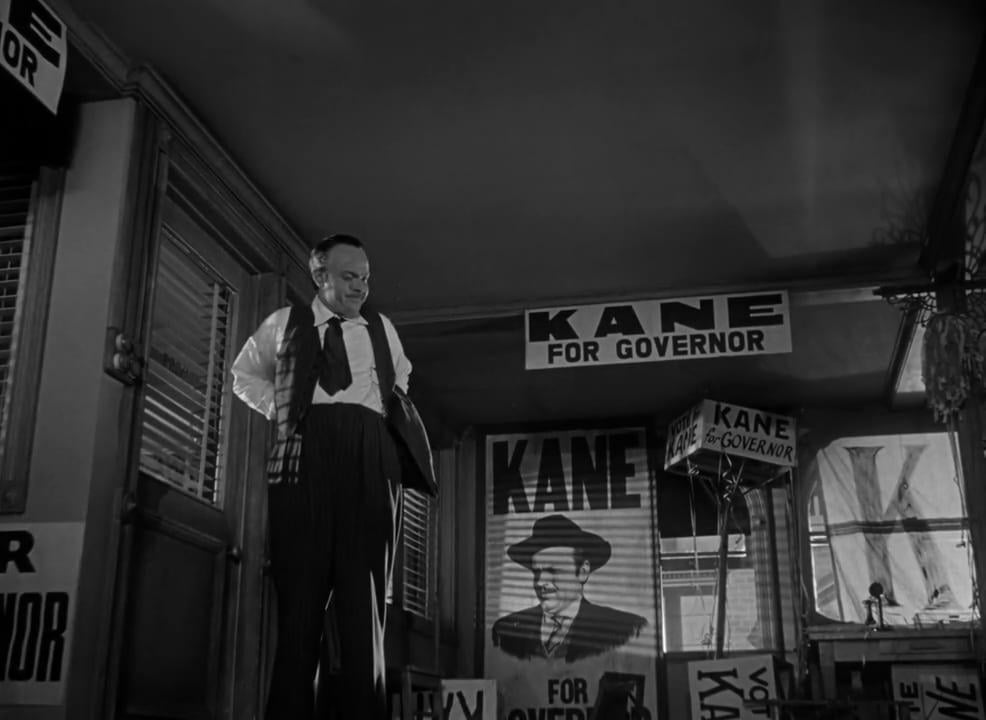
    There will always be a debate towards what the “best” movie of all time is. However, there is no debate that Citizen Kane is one of the most culturally and cinematically impactful movies ever created. Orson Welles, with his first ever time directing a film, forever changed the way that cinema was created. New ideas on how to portray lighting, focus, narrative, among many others, were created in Citizen Kane for one key reason: Welles had no idea what he was doing.

    When I say that Orson Welles had no idea what he was doing, of course Welles had a conceptual vision for what he wanted his first direct film to become, but Welles had no preconceptions on what was and wasn’t possible in the process of creating film. That was his greatest strength.

    In an interview with Orson Welles (linked above), he notes that you mustn’t “soak yourself in film.” What he means by this is that you shouldn’t dive too deep into what is and isn’t possible in filmmaking. Welles’ creativity stemmed from the fact that he had no idea on what was possible at the time. Gregg Toland, the working cinematographer on Citizen Kane, brought Welles’ radical-at-the-time ideas to life.

    For example, the low shots in the film were a radical new idea at the time. Cloth ceilings were integrated into the set of Citizen Kane to give more of a realism effect. Cinematographer Gregg Toland adds “The Citizen Kane sets have ceilings because we wanted reality, and we felt that it would be easier to believe a room was a room if its ceilings could be seen in the picture.” The confidence to pull off such a revolutionary idea at the time came from the unbounded creativity of a director who had no idea what the “rules” were.

    Even though Welles’ belief to not “soak yourself in film” sounds good in prospect, it is important to mention the anomaly that is Citizen Kane. Welles mentions it himself in the interview, that most brilliant filmmakers in the next generations will already know the ins and outs of the filmmaking process. It is simply unlikely that a masterpiece will be created just because the creative vision has no prior experience in the creation of a new subject, Orson Welles was simply an anomaly. Overall, even though it is highly unlikely to create genius from nothing like Welles, it is still possible. New filmmakers in the next generation shouldn’t bound their creativity to what is already known, but towards what hasn’t been done. That’s how great films like Citizen Kane are created.

  • An Idea vs. Realism: Biopics

    In Eisenstein’s A Dialectic Approach to Film Form, a large portion of this essay’s argument relates to conflict and surrealist portrayal. The essence of the tension and action, according to Eisenstein, is through stark contrast: “The incongruence in contour of the first picture-already impressed on the mind – with the
    subsequently perceived second picture engenders, in conflict, the feeling of motion.”

    Bazin’s argument, however, follows a much different path than Eisenstein. To Bazin, film is a manner of recreating our own reality itself. Bazin’s argument largely stems from his notion that the “cinematic illusion” had always existed in humans – even before the technology to produce film had been created. “In any case, there was not a single inventor who did not try to combine sound and relief with animation of the image – whether it be Edison
    with his kinetoscope made to be attached to a phonograph, or Demenay and his talking portraits…”

    In essence, these two point of views contrast against each other. Eisenstein is arguing for the complete intellectual intervention in film space to create tension and meaning, whereas Bazin attempts to create an environment that mimics reality to achieve tension and meaning.

    These two different point of views made me think of current-day biopics, or dramatizations of real-world people in the form of cinema. In concept, one might associate biopics with Bazin’s form of film creation, attempting to mimic a real-life counterpart to a historical figure in the form of film. However, modern biopics such as Oppenheimer and The Wolf of Wall Street integrate very specific and dramatic changes that portray the type of contrast that Eisenstein refers to. In Oppenheimer, monochrome scenes are placed all throughout the movie to express the harsh historical experiences that Oppenheimer went through, whereas the colorful imaging represented his goals and aspirations. Had the monochrome filter not been added, the viewer wouldn’t be able to understand the same feeling that Oppenheimer had been when encountering the dark aspects of his story.

    The same can be said for The Wolf of Wall Street. In the iconic scene where Jordan Belfort proclaims that he will not be leaving the company, he is portrayed as a “savior-like figure” with his arms in the shape of a cross, standing on a higher level than all of his subordinates. This artistic decision was specifically implemented by director Martin Scorsese to portray an overall narrative and meaning to the story that wouldn’t be present if the scene was simply based on accurate recounts.

    Overall, do you find more meaning in reality, or when an artistic decision is implemented to convey a narrative? Can a biopic be completely true if it decides to drastically dramatize its subject for a larger meaning?

  • All That Heaven Allows and its Title

    The film, All That Heaven Allows, was at first seen as a melodramatic love story that was catered to women during the 1950s. However, unlike many other romcom titles during the 1950s like Singin’ in the Rain (1952) and Roman Holiday (1953), the title All That Heaven Allows, poses narratives and societal questions that may not appear to the average viewer on first watch.

    With the film officially releasing in 1955, it is important to preface that All That Heaven Allows takes place within the 1950s. Just years following the Second World War, the United States saw a massive economic boom and a sense of optimism (Why the 1950s Are Called the Golden Era – Vintage Lifestyle). This sense of greatness that existed in 1950s America seems to be contrasted by the repressive and constraining narrative that is portrayed in All That Heaven Allows. The seemingly “perfect” society of the 1950s is portrayed in a toxic light according to Douglas Sirk. In this film, all instances of American society seem to be portrayed in a negative light. The love between Ron and Cary, an innately problematic relationship by 1950s standards, is only attacked when in an urban setting. When in the natural countryside, all members of Ron’s family are completely accepting of Cary’s relationship.

    A clear difference is established between the human experience of that in an urban and rural setting. In my point of view, Sirk establishes the natural countryside as a sort of “Heaven” where both Ron and Cary can choose to be themselves and live life to their fullest, whereas the urban lifestyle is resemblant of a “Hell” that represses Cary and her desires.

    Overall, even though it may be a stretch to compare the idea of optimism and greatness during the 1950s to a sort of “Hell,” how do you consider the dichotomy between nature and urban culture in relation to the title? Is Sirk making a broader commentary towards the culture of the 1950s?

  • The Grand Budapest Hotel: The Effect of Nostalgia

    (3558) How The Grand Budapest Hotel Uses Colour To Tell a Story – YouTube

    Reading about mise-en-scene drastically changed my second viewing of The Grand Budapest Hotel. In the past, I brushed off Wes Anderson’s unique style as simply aesthetics, not completely understanding the importance of mise-en-scene. Now after a deeper look into what many consider Anderson’s magnum opus, I have learned about the essentiality of the coloring within these uniquely created movies. Specifically, the theming of nostalgia in The Grand Budapest Hotel, goes hand-in-hand with the coloring of the overall narrative. This idea of nostalgia and storytelling is explained explicitly in the video above. The video details the fact that the opening scene is gray and monotonous for a certain purpose…to mirror the actual universe of the viewer. It is only when reality get turned to stories and then to memories does more and more color get imbued. In the 1980s (the period that the intro scene takes place in) there is little color variety whatsoever, just focusing on the bland white, gray, and brown aspects of the scene.

    The second layer of the story takes place in the 1960s, even though this era of the story is still largely depressing, color is imbued to the story through the morose orange in the hotel and yellow trees outside. This increase of color, as the video explains, can be attributed towards the theming of storytelling and nostalgia within The Grand Budapest Hotel. The original author that writes the book about the hotel is still recalling a story that he experienced over 20 years ago. It is simply human nature to romanticize and associate past memories in the positive, even if they weren’t.

    This idea is even further supported with the 1930s version of the hotel, the third and final layer that is narrated to the viewer by Zero.

    In just a 30-year timespan, the entire coloring of both the hotel and its surroundings have completely changed from a colorful and vibrant landscape to a dull, orange, and dying environment. Overall, I find a great argument from the video above regarding the theme of nostalgia and facades within The Grand Budapest Hotel. Instances of facades such as Gustave living through a false existence as a cultured savant, Zero hiding his traumatic past through acting as a silent lobby boy, or the film hiding its fascist subplot to focus on trivial matters like the painting “Boy with Apple” are all examples in accordance with the facade theming. The hotel and surrounding environment didn’t magically change in 30 years, it is a purposeful addition to the mise-en-scene to demonstrate the idea that we romanticize the past.