Author: Lauren Walsh

  • Every Feature We Have Seen This Semester: Ranked

    First of all, wow we have seen some great films this semester. When I started making this list I hadn’t realized just how many fabulous movies we’ve gotten to watch this year, but I seriously loved all of them. With that being said, here’s my personal least favorite to favorite features that we have seen this semester!

    #12 – All That Heaven Allows

    All That Heaven Allows just wasn’t my cup of tea. I remember the colors being very pretty and fall-ish, so it was enjoyable to watch, but I just wasn’t a huge fan of the plot and the old lady falling for the young, hot tree man.

    #11 – Citizen Kane
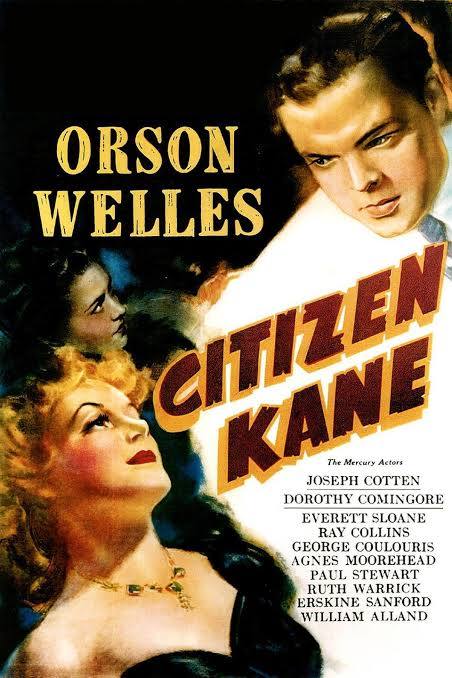
    Citizen Kane has obviously had a huge impact on film and is seen as one of the greatest movies of all time. It was clear why it is held in such high regards, but it just wasn’t my personal favorite. The filming techniques and use of lightning were so good, but I just wouldn’t just at the chance to watch it again.

    #10 – Portrait Of A Lady On Fire

    Portrait Of A Lady On Fire was BEAUTIFUL. The cinematography and colors uses throughout the movie were absolutely incredible. It was very much so a slow burn kind of film, which was wonderful and they did a great job with it, but it was just a little too none eventful for me. Still very visually appealing though and it was also very nice to see a lesbian relationship as the main focus of a movie for once.

    #9 – RRR

    RRR was so good, those three hours flew by for me. I came in with a negative mindset towards the movie but by the end I did a complete 180. Even with all of the unrealistic parts, it was crazy entertaining and I couldn’t take my eyes off of the screen.

    #8 – The Zone Of Interest

    The Zone Of Interest was incredible. I loved how different it was from other Holocaust movies that I’ve seen, with the attention on the officer’s lives instead of the actual prisoners and how eerie and uncomfortable it felt the whole time because of that. With all of the horrible stuff happening in the background, it was just an amazing film that is still very much relevant to our world today.

    #7 – Paris Is Burning
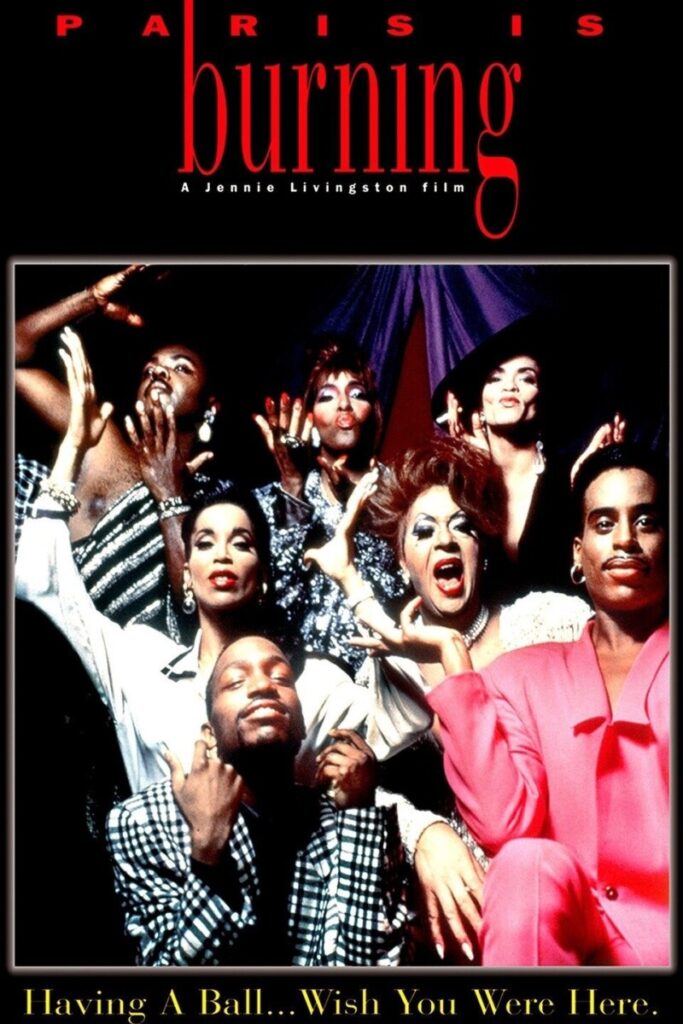
    Paris Is Burning took me from not knowing anything about ballroom culture to loving it within less than two hours. This documentary was an insight into a community that I otherwise would’ve never known about, and although it was exploitative and morally not great (invite the cast to the premieres, come on!), I still really really enjoyed seeing it.

    #6 – The Grand Budapest Hotel
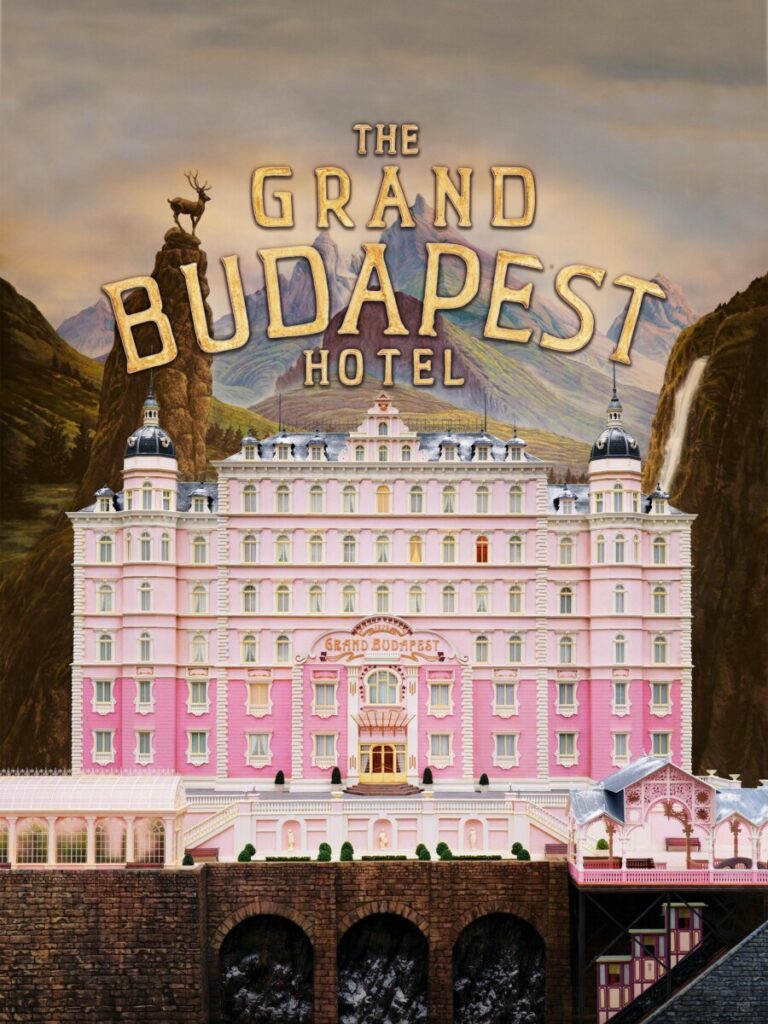
    The Grand Budapest Hotel was one of, if not the most visually appealing movie that we watched this semester. Wes Anderson is obviously the GOAT of making aesthetic and colorful movies with beautiful messages, and this film did exactly that.

    #5 – Rear Window

    Rear Window was such a great first movie to see for this class. The jump scare of Mr. Thorwald spotting Jeff will stay with me forever, so good.

    #4 – NOPE

    NOPE was just another classic by Jordan Peele. He is such an incredible director and I have never seen any kind of work of his that I didn’t absolutely love. I was literally on the edge of my seat the whole time.

    #3 – Holy Motors
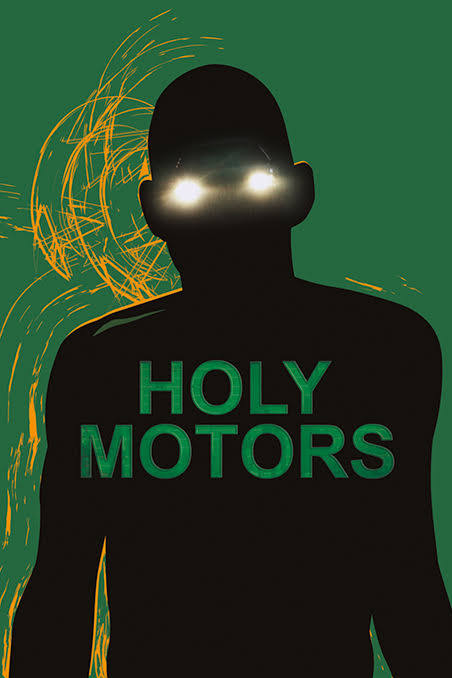
    Holy Motors was SO WEIRD and that is why I loved it so much. I had such a great time watching this movie and I have told so many people about it already. I haven’t laughed that much from a film in a while, and I genuinely just enjoyed every single crazy moment of it.

    #2 – Do The Right Thing

    Do The Right Thing was a masterpiece, no other way to describe it. I love all of Spike Lee’s movies and his messages in his films are always so important and still relevant today, and he always delivers it in the perfect way.

    #1 – Singin’ In The Rain

    Singin’ In The Rain is the musical of all musicals. I thought that this was going to be super corny and unenjoyable to watch, but wow I really really loved it. The singing and dancing was just so fun, and I had no idea that it would be as funny as it was either. I’ve already rewatched it several times and now that I’ve seen it, I’ve noticed how much of an influence that it has had on other musicals. Just simply amazing.

  • The Relevance Of Do The Right Thing’s Fight Scene

    Even though Spike Lee’s “Do The Right Thing” was released in 1989, the themes that occurred throughout the movie are still extremely relevant today in 2025. The fight scene in particular was obviously a very hard part to watch, but super important. This video that I found has Spike Lee talking through that scene and certain aspects and inspirations that helped it come together.

    Radio Raheem and his death was based on the real murder of Michael Stewart, who was strangled to death by a group of 11 NYC police officers. But even though this film was made over 30 years ago, there are still multiple instances of black people getting killed by police in this exact same way. So while Do The Right Thing is a movie, it is also very real at the same time. The costume designer was tasked with making everyone super sweaty to emphasize the hot day and tension rising, and during the scene there wasn’t a great stunt coordinator so some actors actually got hurt. He talked about the moment of silence right after Sal smashed Radio Raheem’s radio as a “quiet before the storm” and how it felt like a personal attack at Radio Raheem since he had been carrying it around with him the entire movie. When the fight eventually went outside, they shot the rest of the block getting involved and did a crane shot from the fight to a view of the whole street. Then the cops came, and even though Sal was the one who started the fight, Spike comments “now you know if there’s a fight, who are they gonna grab”. The other thing about this scene that he talks about at the end of the video is the ground shot of Radio Raheem after he’s killed. It shows him laying on the concrete with the “Love” brass knuckle in the frame – I thought that that was an interesting choice between “Love” and “Hate” to put in the camera, especially after what just happened to him and everyone else in the community. I recommend watching this video because it’s a great highlight of the scene and showcases how important and relevant that it truly is.

  • More of Maya Deren: At Land

    Meshes Of The Afternoon was one of my favorite things that we watched all semester, so I was curious to see what some of Maya Deren’s other work looks like. I decided to watch her 1944 short film, At Land, which did not disappoint.

    There were a lot of similarities between At Land and Meshes Of The Afternoon. They both incorporate the ocean into their stories, At Land more so since she wakes up washed onto shore and is most shot at the beach, and there are multiple versions of Maya again. Instead of chasing a key like she was in Meshes Of The Afternoon, she was chasing the pawn of a chess set. The scene of the pawn falling down the cracks with water was just like the one of the key dropping down the stairs. I’m also not 100% sure if the music was part of the original film or if it was just added on by someone else, but the sound helped add to the suspense that I felt in both of her shorts that I’ve seen now too. You’re never totally sure what’s going to come next. There were also scenes in both films of a person walking or running away. The one scene that I was most curious about was when Maya came across two girls playing chess on the beach, and she ended up rubbing their hair and all of them were smiling (pretty sure she bit her lip in there at some point too). I know she was unhappy with her marriage in Meshes Of The Afternoon, so I was kind of curious what this part was saying. Another one of my favorite scenes was when she was crawling on the table and imagined moving the chess pieces at the end with her eyes – it was very Queen’s Gambit coded and I thought it was a very interesting moment. Overall, I really really liked it and I would highly recommend it to anyone else who enjoyed Meshes Of The Afternoon!

  • RRR: Really Really Really Not What I Was Expecting (In The Best Way)

    In all honesty, I did not come into the screening for RRR with an open mind. Professor Zinman tried his best to hype the movie up to us in class but I already knew that there was no way that I would like, or more importantly even stay awake, during a three hour long film in a foreign language; so I brought a full water bottle of Diet Coke with me to help me try to get through it with caffeine. Little did I know how much of a banger this movie was going to be. Once again, Professor Zinman gave us an absolute gem and I loved all 187 minutes of it. I had a very skeptical idea of what the movie would be like, especially after the video we watched in class of the two men singing a song in another Indian film… wasn’t my cup of tea, and I didn’t think I could handle a whole screening of that. But every song and dance, war scene, bad CGI, everything was so beyond entertaining in RRR. I was smiling the whole time, and in hindsight, I would’ve been just fine without my caffeine. One of my favorite scenes was their big dance performance at the castle party, so for my searcher research I found a video of the director talking about the process of putting the Naatu Naatu scene together. It was so elaborate and exciting to watch, so I think it was super interesting to hear about the choreography and thoughts behind the creation of that specific scene. He talked about the use of costumes, like snapping the suspenders, and how even though it was a great upbeat song for the audience, that it was also a fight scene between the groups and how the choreographer used that concept. Just an incredibly interesting video about how much effort went into that moment and how many different aspects were intertwined to make it such a great movie.

  • Holy Motors: I Laughed More Than I Think I Was Supposed To

    Holy Motors was 100x more strange & confusing than I imagined it would be, even after Professor Zinman’s cautionary introduction of the film. I can genuinely recall at least a dozen times where I out loud said to myself while watching “what the heck is going on”; & honestly, I still don’t know. Maybe that’s why I found the film so entertaining to watch – because I was so utterly lost the entire time that all I could do was laugh. I’m guessing that wasn’t everyone else’s first impression, which is valid since there was obviously a lot of violent & strangely dark stuff occurring throughout the movie as well, but around half way through the movie I accepted that it wouldn’t make any sense to me, so I just decided to laugh through the confusion. In honor of that, instead of attempting to do a probably unsuccessful analysis of what Carax was trying to say with this film, I thought it would be more enjoyable to reflect on some of my favorite funny (kind of) moments of Holy Motors that I had from our viewing.

    This scene for me definitely set the stage for the rest of the weirdness that I was about to witness in this movie. I was quite uncomfortable watching the other parts of this scene, but when the animation came on I just lost it. This was my first memorable “what the heck is happening?” & laugh it off, because still thinking back to it, what the heck was I watching.

    This scene was actually funny; certainly strange, but funny. Other parts got a quick laugh out of me, but Monsieur Oscar eating the flowers & then eating the girls fingers was so uncalled for that I was laughing the entire time. Was the girls fingers getting eaten funny? No. But the randomness of it? Absolutely. I’ve got to hand it to Carax because this was by far one of the oddest scenes that I’ve ever seen but I loved it.

    Like any typical movie, what do we do after a long hour & a half of fake killing people & slowly dying? Break out into singing of course! Just when I felt like I had a grip on what kind of movie this was, I get caught off guard by a musical number. I definitely didn’t hate it, but just another “where did this come from” with a laugh.

    I felt like this was a fabulous ending to the movie & it definitely helped me put into perspective what message that Carax was trying to convey, but talking cars was far from how I imagined he would do it. Very clever, & it got a chuckle out of me too – 10/10, no notes.

    My biggest question throughout the duration of the whole film was how were we supposed to differentiate between what was real or not? Or was any of it real? Specifically in the scene with his daughter in the car, it felt real & I thought that it was him outside of his work life, but who actually knows because there weren’t any cameras to be seen to help me figure out what was acting & what wasn’t.

  • Sound & The Influence of Steven Spielberg’s “Jaws” on “Nope”

    In one of his interviews, Jordan Peele claims that he got a lot of inspiration from Steven Spielberg’s “Jaws” for his movie “Nope”. The correlation between the two films didn’t quite register with me at first, but after watching this YouTube video that breaks down specific scenes and sounds from both movies, it’s a super cool comparison and you can definitely see the similarities that they share.

    A major focus of the video is the sound aspect of Nope – it consists of mostly diegetic sound throughout the film, which adds to the realistic feel of the movie and makes us feel more immersed in the events that take place. During the beach scene in Jaws, the audience is on edge knowing that there is a shark attack brewing. The background noise consists of normal sounds that you would hear on a beach, people talking, waves crashing, radios playing, etc. But then we hear a scream coming from the water and our anxiety rises, thinking that it’s the shark’s new victim. We quickly find out that it’s just a girl screaming because her boyfriend lifted her up out of the water, but that sound triggers us to think of the worst and adds to the suspense. The same can be said about the scene in Nope where OJ is standing outside in the dark with Ghost. It has an eerie wind sound, the horse sneezing, and overall it’s quiet but diegetic and normal; then a loud noise comes from the house, which again makes us frightened about what that means. We see that it’s just Emerald playing music to dance to, but that sudden introduction of a new sound scares the audience and keeps them on edge for something horrible to occur. The diegetic sound and focus on otherwise overlooked day-to-day noises heightens our senses and gives us a “calm before the storm”.

    Another cool part of the sound in Nope was the creation of the noise coming from the alien thing (I’m still not exactly sure what to call that creature). It was supposedly a combination of screams like you are on a roller coaster, and screams like you are getting eaten by some mysterious entity that flies around like a hungry UFO, which makes for a very uncomfortable noise. At first from a distance the sound could be interpreted as just wind, or the normal noise that a flying saucer would make, but as the story goes on, we learn that it’s much more than that and gives the sound more attention and meaning. It eventually conditions the audience to start to feel anxious whenever that noise sounds in the film and it’s a super cool addition to the already creepy creature.

    Overall, the video has great insight into the movie and certain elements that I definitely missed on the first watch, so I highly recommend watching it!

  • The Sounds of La La Land

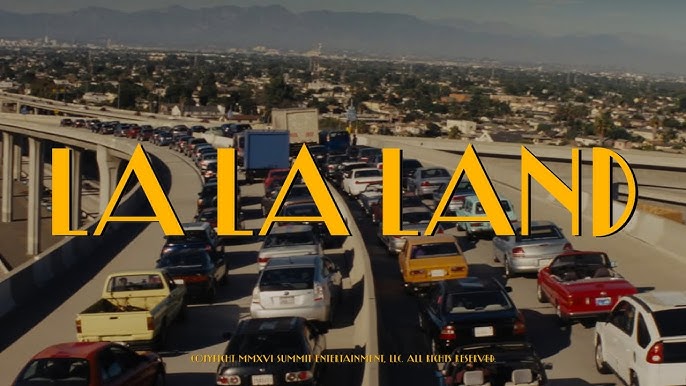
    It’s always a great day when I get to talk about “La La Land”, so what a perfect opportunity it is to be assigned to talk about a movie that encapsulates different elements of sound. While it obviously has the greatest soundtrack of all time (in my opinion), it uses a plethora of sound techniques to help make that part of the movie come to life.

    The most notable one for me is their use of nondiegetic sound / music, which is sound that comes from a source outside of the story world. In the “Planetarium” sequence, Mia and Sebastian waltz around a building and through the stars and clouds to a song that only seems to exist in their imaginations. I remember showing my mom this movie for the first time, and her immediate reaction to this scene was something along the lines of “this is way too unrealistic, I don’t get it”; but that’s the whole point! Nothing about it is realistic, but that’s what makes us feel all of the unexpected romance of their new connection. By using nondiegetic music, along with them dancing in space, it shows that they are, literally, having an “out of world” experience. It gives a more fantastical, unrealistic touch to the scene, and it helps add to the idea of them being in “La La Land”.

    Another sound technique that they used with the movie’s musical scenes where the actors are singing, is they had them lip sync to prerecorded tracks. Then during the editing process, they put the sound and image together to get the final product. Most movies add the soundtracks in during postproduction, not in the moments of shooting. As noted in the textbook, “even dancers’ footwork, like taps or stomps, will already be on the playback”. That way the sound can be more consistent and clear than if they had people trying to sing on camera during big numbers like “Another Day Of Sun”, when there’s already so much going on.

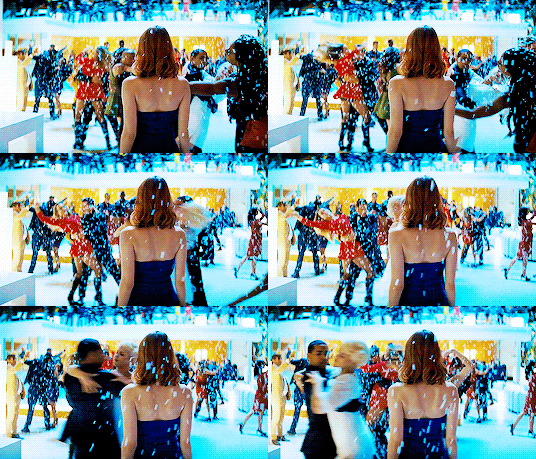
    During “Someone In The Crowd”, Chazelle uses rhythm and tempo to blend the song and imaging of the dance sequence together. After Mia has her solo moment in the bathroom mirror, she walks out to a slow paced beat of music. She steps with the same rhythm of the song, and the dancers around her also dance at that same pace. As the tempo of the song gets faster, her walking and their dancing does as well, all leading up to the finale of everyone jumping in the pool and dancing and singing much faster. He uses that combined visual and audible rhythm to build up anticipation to that final segment of the song.

    My initial question from the reading is how do we differentiate between loudness and pitch?

  • The Zone of Interest, The Sound of Interest, And The Importance of Children In Holocaust Movies

    The Zone of Interest will probably be a one-time watch for me; not because I didn’t think the movie was good, but on the contrary, because it was too well done. That was truly one of the more chilling films that I’ve ever seen, but it was also just so original and wonderfully made, I couldn’t keep my eyes off of it even though it was about such a hard topic.

    I thought that it had to be an exaggeration that the sound would have such a large impact on the movie, but to my surprise it actually did; it made the entire film. The movie itself and the sound in it are two stories in complete opposition of each other. What is mostly shown on the screen is just a regular seeming family in a regular looking home. Emphasis on mostly, as there are obviously wide shots and quick moments where we see the horrors happening next door too. The sound however, leaves you with a sick, scary feeling as soon as the movie starts. I like the way that the director chose to leave the screen black at the beginning of the film and have just the sound playing, because it sets the tone and creates that eerie feeling right off of the bat for us. This way, even with the most regular and simple of scenes, you always feel aware of the presence of the camp, even if you can’t see it. That’s what I think I liked most about this whole movie – it reminded us that it’s always going to be there, even if we don’t want to see it or acknowledge it. When we talk about an artist’s responsibility to history and making artwork about events like the Holocaust, I think this film did a beautiful job of it and left an important impression. It’s an ugly part of history, and we don’t want to see it or even think about it at times because of how horrible it was; but even if we don’t want to see it, it will always be there. Even when we couldn’t see anything happening in the camps throughout the film, we could hear it, and worse, we could feel it. They couldn’t have done a better job approaching it in my opinion, and the sound is what keeps you with that feeling throughout the entire thing.

    During the film, I also saw a scene that reminded me of another one of my only-one-watch favorites, The Boy In The Striped Pajamas. Both scenes are of the family’s children in their rooms with Hitler / Nazi symbols present. For The Zone of Interest, the son is wearing an outfit with the Swastika on it, and for The Boy In The Striped Pajamas, the daughter had put up posters with Nazi propaganda on it. It always feels like such an interesting part of these movies to add in scenes with children, because it shows how negatively those beliefs can spread to the next generations, especially in households where their families were involved in running the camps. However, the one scene with children that stood out in this movie from every other Holocaust-related one that I have seen, was the garden room scene with the two brothers. The older brother in his usual outfit picks his screaming little brother up, throws him in the garden room, and locks him in as he’s begging to get out. Meanwhile in the background, you can see the smoke coming out of the camp, where literally that exact same situation is happening, but in a much more serious sense. Seeing them doing that playfully, repeating what their parents have done, with it occurring in real time only a couple yards or so away, spoke volumes. It was a perfect parallel and honestly, one of the most terrifying scenes out of the whole movie for me.

    In terms of lingering questions, I’d love to figure out more about the significance of the Hansel and Gretel story in the film. It’s been a while since I brushed up on my fairytale knowledge, but it was clearly a very important part of the movie that I have yet to fully understand.

  • Everything You Don’t See: Wes Anderson’s “The Grand Budapest Hotel”

    To put it simply, I’ve never seen a Wes Anderson movie that wasn’t an absolute visual masterpiece; The Grand Budapest Hotel is certainly no exception. It is so aesthetically pleasing and unique, thanks to his creative use of color, filming techniques, and overall detail to the mise-en-scène of the movie.

    As an aspiring director, I always find it very exciting to see the behind the scenes of how certain scenes were shot and how certain ideas came to life in front of the camera. The video that I have attached above shows a glimpse into that process. It shows a variety of moments during the filming where Wes was discussing his visions for specific shots, set design and how they pulled off certain scenes, and makeup and costume procedures. I was surprised to see just how much effort and manpower goes into scenes that at first may seem more simplistic. During even a basic walking scene there were 5-6 people behind the camera carrying lights, microphones, and other important things for it to come out as good as it does. Or during a sit down conversation in the movie where the camera had to be spun around in certain way. It made me appreciate the movie and all the beautiful parts of it even more, because there was so much thought and passion put into it that most of the time we don’t get to see. It’s much more effective to see it than read about it, but I do strongly suggest to watch it if you’re interested in that area of film.