To be honest, I didn’t love this movie as much as I thought I was going to. With 96% on rotten tomatoes, and over a 4 on Letterboxd, I thought that I would walk out of this movie thinking it was one of the best films I’d ever seen but instead I left with the ultimate consensus that I do not like action movies and some questions. After reading this article, I began to wonder how the writers thought including a love story subplot between the woman holding Malli captive and the man trying to get her back was a good idea. This film constantly is pushing this anti colonial message with both main characters fighting against the oppressive system they are in in their own ways, however during Rams revolutionary fight, he catches feelings for the woman holding Malli hostage. What made it harder to watch was the fact that they didn’t even speak the same language and there were countless scenes of her just talking..at him. He would frequently respond that he couldn’t understand her at all but she would keep talking, it was honestly sad. It felt like she caught those feelings because people don’t really listen to her so she enjoyed having someone who was “listening” to her. This article explores the dangers of watching this movie with a close eye because of the political issues within it that someone with no context would totally miss. It brought to my attention how violence is used in this movie, it makes note of the fact that when British characters are hit it is cartoonish and doesn’t have nearly as much realism as the violence against Indians, while also noting the hints of Hindu nationalism within the film. Overall, this article begs watchers to pay attention to the history and politics in India and pay attention to the messages being shown throughout the movie instead of just simply watching it.
Ive only ever had one exposure to Spike Lee, and it was from my dad who worked on set with him and said he was horrible to him- so of course ive never watched any of his stuff and have to mention that whenever someone bring him up now. I have thought about watching Do the Right Thing for the same reason as everyone else, it has 4.4 stars on letterboxed. However, based on the reading this week I feel like I already have seen the whole film. They broke down the scenes and talked about the unique style of the film that helps make it so popular today. Specifically the notion that, “Lee weaves his many stories into a whole.” This seems to be a key definer of this movie, whether on letterboxed or the reading – people are praising how Lee was able to put so many ideas together into one and make it work. Along with this the reading goes on to praise the community within the film, and says that despite there being so many characters to focus on – Lee did a great job of using a formal narrative structure on each one. This reading is a praise of how Spike Lee was able to balance multiple characters and their stories and weave them all into one to create a fluid story about community and life within their neighborhood while also battling conflicts. It goes on to compliment Spikes ability to stay on the 180 degree line and utilize continuity editing despite the switch in focuses. The film is seemingly revered very highly as the reading talks about the flow in and out of traditional narrative structure by mentioning how Spike, despite having 8 main characters, was able to give each a conflict and goal as if it was just 1 character. Then talks about how Spike fades out of narrative structure by not giving all 8 of the main characters “clear cut” goals that bring them to a conflict. I believe based off this reading that the because Spike deviates from the norm, the film is what it is and is so well received, he has created something that people were not used to seeing, it was unique. By doing that, this movie has remained something that people all these years later still are shocked if you have not seen it because of its lasting relevance. Spike Lee, despite being rude to my dad, seemed to have a vision and it is one I can appreciate as he utilizes these aspects of film making to produce a movie that navigates complex themes while using complex film and narrative structures, which is (unfortunately, always got to side with my dad) very very impressive.
When watching this film, the only question circling through my mind consistently was – “What is going on right now.” Before the film we were all prepped with the notion that you may leave this film having absolutely no clue what the point of it was, instead of taking that as a suggestion I took it as a challenge. Throughout the screening I consistently wrote in my notes what I thought it was about and where it could possibly be going and every time I did that, the next scene would be something I would have never expected. This feeling of shock after feeling like I was getting a grip on what was going on stood out to me the most when he was dressed as a leprechaun and then genuinely bit that woman’s finger off. I was appalled and totally confused.
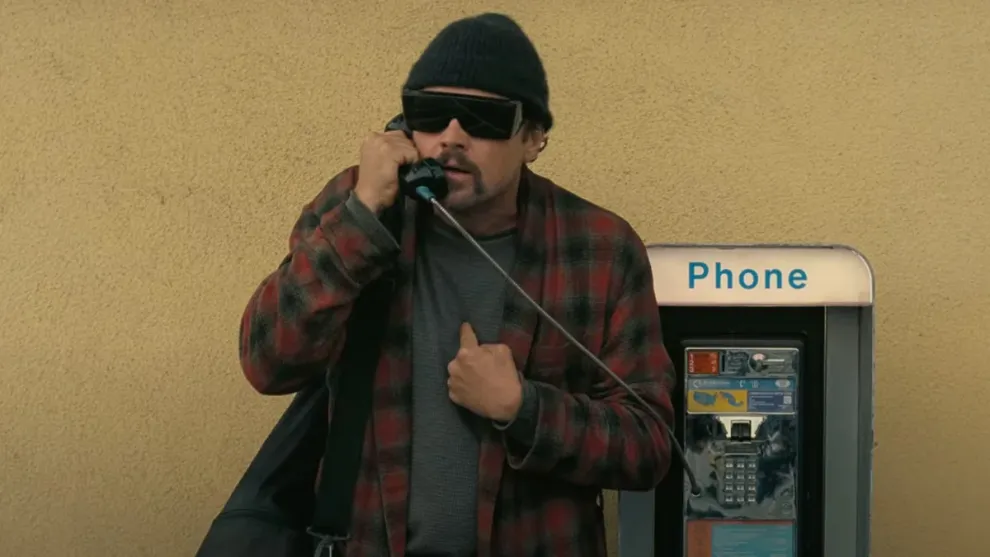
After the screening, I walked back to my dorm in the cold and I still was trying to wrap my head around what I just saw. I came to 3 conclusions. The only consistent thing in that movie was his emotions in the car. We saw this through the moments where he was taking off his masks and clothes and he would smoke a cigarette or just simply look pretty aimless. It was clear that he was simply a prop. At the beginning of this screening I remember hearing that this was a movie about an actor, post screening I thought that this was a film that tried to encompass the emotions performers feel as the characters they portray consume their lives. Because if you think about it, how many times have you watched a movie with an actor and simply started to refer to that actor as the character they played. Even though the filming is “over” they cannot escape the role, which probably leads to identity issues like he faced within the car and spells of depression.
My next conclusion was that he was able to play these roles by murdering these people who looked like him and taking their spots but the death of one of his roles comes from framing the dead character he is taking to look like how he looked before. That became clear to me after we watched him kill the guy and started framing him to look like how he looked currently. That was trippy. In that moment I felt like I was watching someone try to explain phases of emotions and life. When someone is “reborn”, which is a common phrase nowadays as people seek restarting more and more, what does that entail? Does it mean completely killing that version of yourself and beginning to be someone new? Thats the question that swirled through my head while watching him lie next to himself while bleeding out.
My final conclusion was that this was a commentary on beauty standards and unrealistic expectations. While watching the VERY weird scene with the leprechaun and then finally seeing the dedication at the end, it was like a lightbulb went off in my head. Every character that he played was distinctly different, some were crazy, some were completely normal, and some were old rich men and gangsters, he put himself in every “shoe” possible; while still at his core being the same guy. When I saw the scene of him smoking a cigarette with this model and her taking off her wig and letting her hair out while being literally underground, it made me think that this movie was about who we would be if nobody knew who we were? We technically would be free to be whoever we wanted, we could be deranged or rich or an accordion player, because nobody would be there to police us or critique us on how we live our lives. As he covered the model in a traditional burqa I thought, “now this is insane, because he saw her a bit nude he decided she would look best fully covered? ” Unfortunately upon further thinking I believe I missed the mark initially. I believe this scene was about expectation and recognizing the comfort in not having to worry about how you look since you are covered, something that directly contrasted her entire livelihood as a model. When he laid next to her nude and she sang to him, I thought it was a continuation of the “search for a perfect photo” with both of them that was previously brought up as the photographer tried to pull him from the crowd. Two very different people, however at the core, not very different at all. Both are covered, one by a burqa and one by an absolutely fake persona. Both underground, both vulnerable, and two people who (based off how quickly she took off her wig) don’t feel like themselves during their jobs.
Based on my conclusions and the dedication, I feel a bit qualified to take a shot at what I believe this movie is about. Though I believe it does touch on multiple things, I think it was about how one can find comfort in not having any harsh expectations set for them, and in turn who we become when we are being watched vs we feel like we aren’t being watched at all. We hear this when Mr.Oscar expresses disinterest in his job because he feels like the cameras are “too small”, how they used to be bigger than our heads, but now they are so small we can’t even see them anymore. I believe this was also a comment about being watched/ judged, I think his company wasn’t for movies- I think it was to create spectacle for people so they could have something to film and post. I think the “too small cameras” are eyes. A part of me thinks he is also being exploited. Which could be another theme of this movie(actor exploitation) since he talks about how he once acted and is met with a lack of interest. Confirming that the world now is his “stage” meaning he is performing all the time. Many actors face this as they get bombarded by paparazzi just going on walks. He faces an extreme lack of comfort, based on the movie we never see him stop. We saw him only really relax when he was underground with the model, in bed playing an old dying man, and when he was inside the car. Whenever he came out the car, peopled filmed what he did, stared at him, or left with a story to tell. So to conclude, even though I could talk about this longer, I believe this was a critique on what we as people do when we are being viewed, it also implores you to think about who you would be if nobody saw you at all.
While doing my searching this week for Nope, I stumbled along this video of Jordan Peele himself breaking down what he believes the central theme of his movie “Nope” is.
Within this video he breaks down how he believes Nope to not just be about race, but to also be acknowledgement to the people who came before them in this industry. He speaks about how this movie could not have been made 5 years ago and it brings into question as a viewer if by simply existing are you defying stereotypes. Jordan Peele would say yes. He believes that this movie is defiance against norms in the film industry. By having this movie star mainly people of color while also being created by people of color, its credit scene alone is acknowledgment of the fact that they are pushing boundaries. Jordan Peele challenges us to go beyond thinking that this movie is strictly about what’s in front of our face and asks us to look deeper in the fact that every single characters role and meaning to the movie is a commentary on the film industry’s stereotypes and restrictions.
For him he feels as if this movie is a nod to all the black entertainers who have been snubbed while their white counterparts get the spotlight. Along with this theme he talks about how this movie isn’t just about spectacles and what we will do to see them, but also about what we will do to be seen. It’s a reminder that there is always someone behind the camera and what they went through to get the shot they desired should not be ignored. We see this continuously throughout the movie as they Em and Oj talk about wanting to get the shot for the money, they want the recognition that comes along with capturing something otherworldly on film. You also blatantly see it when the TMZ reporter asks to be filmed despite having broken numerous bones.
Finally he ends the video by saying he really hoped to have immersed people in the film, and that he wishes that everyone would have left the movie feeling as if they had been near a UFO because it is something so many of us have thought about before. Although he is unable to pinpoint one central theme, he highlights that no movie is really able to be summed up into one jist, there are multiple layers to every good movie. Whether it be about breaking stereotypes or immersing people fully into something genuinely horrifying,
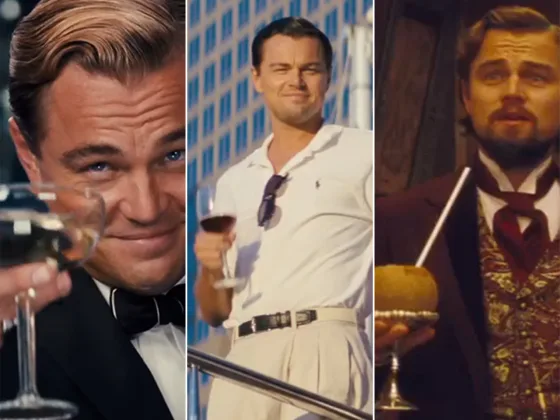
Over break, I went to see One Battle After Another at North Dekalb. I walked into it well aware of my feelings about Leonardo Di-I only date women under 25-rio but I decided I would put those feelings aside and treat him as just any other actor. I walked out of it, still disliking him as a person but man can he act. His performance in this movie helped make the movie what it is. He was angry, depressed, chaotic, and surprisingly funny.
Before I saw the movie I saw the scene of him screaming, “Viva la revolution” and believed that this must be coming from a scene that was powerful, however to my shock it was comedic. The whole theater busted out laughing and thats when I started to really understand the themes of this movie.
The movie, despite being a blatant commentary about how every individual is constantly facing their own battles, was a movie about the people we put on the front lines of revolutions. If you look online you’ll quickly find memes of people saying “you know you’re safe at a protest if a white girl is there” or jokes about sending your white friend to talk to authoritative figures because you know they’ll be treated better. That’s what this movie felt like. Leonardo was the white friend.
At the beginning of this movie there was a scene where he was kissing Teyana Taylor in a car full of people, and she said “do y’all think he likes black girls??” and he replied “I like black girls, you know I like black girls.” In the moment I cringed, and thought it was such a weird thing to say. It felt performative and weird and it had the same energy as him screaming, viva la revolution. It felt like his tastes, his preferences, his romantic relationships, how he approached his job in the revolution, was performative and defiant simply to be defiant, not for a greater cause. Because what revolution was he fighting for? He screams “Viva La Revolution” which in English means long live the revolution, to a Mexican man, it felt like being American and saying “gracias” at a Mexican restaurant. Despite him being the father of a black woman, he is hilariously detached in our eyes because what revolution is a straight white man in America fighting for? What revolution is Leonardo Dicaprio, a white man worth hundreds of millions of dollars known and loved around the world, screaming about? His whole character was ironic, casting him was deliberate.
We as people have these preconceived ideas about gender and racial roles and how people should be doing certain things that correlate with those roles but this movie rips that apart. The sensei of a dojo in this movie is Mexican. The person who comes to save his daughter is a Black woman. The person who leaves Leonardo and Teyanas relationship, is Teyana. The people who save Leonardo are hispanic. This movie pokes fun at the ideas of what we believe a person should be doing, making us question why we have those ideas at all. So in that moment, where Leonardo was frantic because he had found out where his daughter was going, the police were raiding where he was, and he yelled out, “VIVA LA REVOLUTION” to the sensei who was helping a bunch of immigrants who he was housing not be seen by the police, in reality wasn’t a joke. He meant that. But it was comedic, it felt ridiculous, and as a person of color I laughed extra hard. Often times in revolutions it feels like white people get there last, it takes something happening to them for them to realize and have empathy for something many of us have been fighting for years. So it was perfect to me, that the sensei simply put his fist in the air. An acknowledgment of the fight, but a toned down one. Because in reality, white people are often given more space to be loud, to be defiant, while people of color are expected to be quieter in their revolts. Him silently putting his fist up while Leonardo screamed it, was telling of that.
This movie was a great commentary on society and there was so much in it that it would literally be impossible to sum it up in one blog post because of how wonderfully layered it was. This one scene stood out to me because of the comedy and irony of a seemingly serious moment, I still laugh now seeing clips of it. This movie is worth the 3 hour watch, it’s riveting and a commentary on the world we live in now that people need to hear.
Not to see the beautiful visuals but to pay attention to the sound!
When tasked with creating an entire world out of nothing, although what we see is so important to creating the unique whimsy of Oz, what we hear cements us in the film even more.
This film beautifully uses the synchronization of senses to help put us into their shoes. As they do their musical numbers and dance, we hear every movement perfectly timed with the visuals and it makes you feel like a fellow student of Shiz University. Sound is an element they have to rely on heavily to help bring this fictional land to life, from hearing the animals, to the loud creeks of doors, to the sound of Glinda tossing her hair. Sound makes these simple movements we would ignore everyday, seem so important and whimsical- making everything in Oz feel alive.
The movie utilizes diegetic sound wonderfully with the musical scenes. We are able to see how the students of Shiz University react to music and it gives us a better understanding of the whole world they are in and how students perceive Elphaba vs Glinda. Specifically in the scenes during a Wizard and I vs Popular- we see Elphaba singing and her peers reacting to her as she sings, they look disgusted and run away from her, yet when Glinda sings they all flock to her. Because of our understanding that music and singing are welcomed in Shiz, we know it has nothing to do with them randomly bursting out into song and everything to do with how the students at Shiz view them. Diegetic sound plays a crucial role in this movie because it helps us understand how the characters interact and how music plays a key role in their fairytale land.
Along with this, composer Stephen Schwartz uses timbre, the unique quality or color of a sound used to heighten the experience of the film. In Wicked, this element is used heavily. With Elphaba her timbre is used to show how powerful of a character she is since her singing comes from a more alto and stronger place (sometimes seen as a “Chest Voice”,) while with Glinda her vocal performance is often characterized by a bright light to show her bubbly personality. Timbre is throughout this movie, bringing the characters to life and showing us how sound is important for telling us about the characters personalities and influence on the people around them.
Overall, sound is one of the most important elements of this film. Without it, we would struggle to understand Glinda and Elphaba’s relationship dynamic or how they fit into the world around them. Sound reveals another layer of the world of Oz, allowing us to experience its deeper nuances. As mentioned earlier, because of these things, the whimsical sounds of Oz help us connect with the movie and fall in love with this magical world.
This film opened with a piercing sound sequence that set the stage for this film. At first, I watched this scene thinking that the screen in White Hall 105 had failed us and that we weren’t seeing the visuals, because of course, for a sound this intimidating there had to be visuals. However, I was wrong and for about 2 minutes the room was pitch black and filled with this horrifying siren noise that then, turned into the sounds of birds singing. The sound in this film is impossible to ignore, horrific to hear, and hard to talk about. It’s hard to call the depictions of such a horrifying event “a well done piece of work,” it feels wrong knowing these were the sounds of real people. However, to pick apart this movie we must acknowledge such a strong piece of it and the fact that they managed to paint a completely vivid image of something we never saw.
“I wanted viewers to realise that they’re submerging,” the director, Jonathan Glazer, told Rolling Stone about the intro of this film, “It was a way of tuning your ears [in] before you tune your eyes to what you’re about to view.”
Sound shaped how we all viewed this movie, if it weren’t for the sound we would believe that this film was about a happyish family who just got a nice new house. However, the message becomes clear to us in the scenes where we are showed a pretty flower but the background audio is people screaming or when we would see the family going through daily actions and the sound would be replaced by an overwhelming sound of pain. This movie made it impossible to feel comfortable with anything that this family was doing, it made their ignorance apparent and made it clear that despite the “happy” atomic family imagery, there was a true horror happening across that wall.
While watching it, it also felt like the director was almost making a commentary on the viewers as well, it felt like I was complicit. I was sat there, watching a family go through mundane actions, while people were genuinely suffering, and all we could do was listen. It added onto the overall feeling that this movie was a massive political commentary on how we as people often excuse horrors simply because we do not see them first hand. We too are complicit in horrors when we become indifferent to blatant pain and suffering, and this movie felt like it was screaming that in our faces. Because as these people were being burned alive across the wall, despite breathing in their ashes constantly, this family remained disgustingly indifferent.
Throughout this movie there were 2 other scenes with the overwhelming sounds we heard in the intro, except they weren’t black outs- they were a red and white out. Although these scenes were also used to direct our attention back to the sound in these moments, they were also used to symbolize the atrocities happening off screen. The white out was used after they talked about expanding the camps so they could burn more people, and the director noted that it was supposed to be used to direct our attention back to the sounds of people screaming. Then they used the red out after a close up of a red rose, this seemingly beautiful thing is actually born out of misery. In this garden we are shown a scene of a boy using ashes to fertilize the garden, so even a simple thing in nature we would normally look at and enjoy- is a genuine representation of blood and suffrage. So when the scene goes to the red out, we hear the screams of these people, we hear the pain.
The sound is the movie, The Zone of Interest pushed the boundaries of how to portray something historically devastating and still managed to leave viewers with a feeling of deep reflection. Are we doing this everyday? Do we too sit in a nice house while ignoring the blatant suffrage of others across the walls?
Over the weekend, my friends and I piled into a car and took a 15 minute drive to AMC North Dekalb to watch “A Long Walk.” If you know anything about North Dekalb, you would know it’s a movie theater on the side of a mall that is being completely renovated and the seats are anything but modern. So as we sat down, tried to get comfortable, and the opening ads all had us thinking we were in for a horror movie, I was surprised to leave that theater with a soaking wet face and red eyes. As we as a society continue marching towards a future that is remise of 75 years ago, movies like this feel like a wake up call. As this review continues, I will try to not give a lot of spoilers, but to properly discuss it I need to talk about some important scenes within it. So this is your warning!
This movie was jarring, for a bit of context- this movie follows a group of 50 men who were chosen to participate in “The Long Walk,” which is a government competition where you have to walk until only 1 person remains, either you die of natural causes or they kill you for going below the set pace or stepping out of the boundaries, and when you win, you get more riches than you can imagine and one golden wish. A Long Walk is a political wake up call, the movie does not show the title card until almost 10 minutes into the movie. It follows the first death, an 18 year old boy who caught a cramp while walking, even though people tried to help him keep walking, we get an utterly graphic image of him as he drops to his knees and the guards who walk with them, literally blow his face off with a carbine rifle. Some contestants looked happy because their odds went up, others looked mortified knowing they could face the same fate.
This scene sets the tone for the movie, this is not something they all will walk away from, 1 person will end this bearing the weight of having to watch 49 other men go through the hardest moments of their lives before, and they did this with everyone, getting shot in the head. As the movie progresses, Ray begins talking negatively about the whole competition, people yell at him to be quiet, waring him that talking negatively about the system will get him murdered. Free speech is a thing of the past here, they are cattle being controlled.
This idea of the civilians in this movie being cattle is a main theme, the guards follow them on this walk as if they are herding dogs. They keep them in line, and punish them for going out of line. They wear number tags and are referred to only as their number. In a flashback, we see Ray and his family stepping outside their home and being faced with what looks like a 50ft tall metal wall, an enclosure. My first thought was what this scene looked like zoomed out, and the main image was a rat maze.
Along with this, the language they use in this movie is as if they aren’t people at all. They warn other people to stay on pace so they don’t get their “ticket.” In a flash back we hear an executor say that because a person was going against the state by speaking negatively about it, they will face “deactivation.”
This movie continued to feel like a fierce political commentary as despite being warned for denouncing the competition and speaking poorly about the Major, we get a scene of Ray screaming “Fuck the long walk! Fuck the major!” As he does this, other people slowly join in, we get scenes of “tougher” characters having faint smiles creep onto their faces before joining in and for the first time in this movie, we hear music. One of the 50 men, holds his little pocket radio up to the sky and we hear this electric music erupt from it as they chant and cheer. The camera pans out, and the feeling of them being revolutionaries filled the theater, but if you look closely you’ll realize despite this feeling, they are still just men, in the system, doing exactly what they want, with guards who have their guns pointed right at them. Have they really broken free of anything? It raises this amazing question of if we protest, are we doing anything at all or are we still just within their system, doing what they expect us to do as they continue controlling us?
As they continue marching on, they talk more and more and we get a glimpse into their reality outside of this competition. This country is completely unstable, economically depressed, heavily surveyed, and controlled. Despite this world they are in feeling so different than how we live now, it feels like the film makers are giving us a warning, that if we continue trying to reduce free speech and are okay with giving away our freedoms, this impossible reality will become possible. This movie ends with 2 people in tears, this brotherhood they have built the entire movie is forcibly going to have to end. They walk as they approach a crowd of spectators, all of them anticipating that one of them will stop soon. One does, and as he is brutally executed 5ft away from all these people, the spectators cheer and fireworks go off, as our winner is on his knees sobbing. “A Long Walk” is a really engaging and well done commentary on patriotism, how governments control us, and how empathy is becoming a thing of the past. It reminds us to continue fighting for our freedoms, to speak up even when things feel hard, and above all, to lead with love and not forget the things that bind us all together. We are one people, on the same journey of life.
“A manifesto about the female gaze”that is how Director Céline Sciamma describes Portrait of a Lady on Fire. This theme was ever present throughout the entire movie and is so important for how we as viewer perceive the entire film and the characters within it. I believe to fully understand the power of having a movie be in the female gaze we first have to contrast it with a direct opposite. I want to contrast this movie for a second with a movie that I believe is “the male gaze” personified. The Wolf of Wall Street, in this movie women are merely props used to show the desires of men. They have no real purpose other than fulfilling fantasies teenage boys would have and it literally fails the Bechdel test, which if you don’t know is the criteria of having two named female characters speak to each other about something other than a man. The women are soulless, lacking depth in their characters as most of the time a woman is shown in this movie, they are either a hooker, stripper, or trophy wife. Of course, this movie was written and directed by 2 white men, that feeling that comes along with watching a movie where you can just feel that a woman had little to no input in the way women were portrayed in the film is overwhelming in this. It is the complete opposite of the beautiful, Portrait of a Lady on Fire.
Portrait of a Lady on Fire, takes us on a journey of gazing. From when Marianne first looked at Héloïse as her hood fell and she turned back to her posing for a portrait, to her being drawn while sleeping, to the very end when Héloïse called out for her to turn around and face her. This movie is all about how the artist views their subject, how a look can mean more than words can allow, and it feels like we are watching a subject, turn into a muse.
I watched this 12 minute breakdown video about “the gaze”within this film and this video creator quoted Jean Paul Sartre, a French philosopher, to help explain that she believes that the gaze always objectifies whatever we are looking at. Sartre said, “…we can not perceive the world and at the same time apprehend a look fastened upon us; it must be either one or the other. This is because to perceive is to look at, and to apprehend a look is not to apprehend a look-as-object in the world; it is the consciousness of being looked at.” In this movie, Marianne begins as just a painter, someone who is used to watching without really being seen herself. As her relationship with Héloïse progresses she strips Marianne of just being “the painter” she humanizes her. We learn about Marianne, we perceive her. One of my favorite scenes in this movie was when Héloïse asked her to come look from her perspective while she was posing, and it cemented our understanding that there is always 2 sides, as we look, we are also being looked at.
However, as we look at each other our predispositions, our stereotypes, our assumptions are being imposed onto whoever our subject is. Even if they are the complete opposite of who we initially think they are, we can’t help but to assume. As a woman, the female gaze in media has always seemed softer, more forgiving, more loving, more honest, more real. I watch movies made by men that have shallow interpretations of female characters, and maybe that’s how they view women. However, when I watch movies directed by women, they never strip the men of their depth and the women always feel more real, like someone you’ve met. I think this theme is ever present in this movie, because the women have life. They fall in love but they are more than just “love interests”, they have hobbies, passions, backstories, monologues, deep thoughts, they are themselves before they are lovers and I often think that movies made in the male gaze portray women as just props for love, sex, and heartbreak, as if all we can do in this life is be loved. Portrait of a Lady on Fire is important because it shows the female gaze so well. It shows the love, the empathy, and the understanding of one woman to another that is unspoken, yet perfectly understood. Along with this, we see women in a time period that is so restrictive, being free.
Our professor for this class said something about this movie that stuck with me throughout the entire screening, “this movie uses lighting in a way that is unique, the light looks like it’s coming from them, not at them.” I believe that is the female gaze in this movie, light coming from them, despite being in a oppressive time period, despite not being able to fully be in a relationship, despite knowing their fates, light comes from them, not at them. These 2 women (like all women) are incredible and resilient, deep and poetic, and fostered love in a circumstance that would normally breed anger and hate. That too, is the female gaze at work and it matters so much in media because women are more than just props for what men are going through. Women are multifaceted and they deserve to be shown on screen as such. This film is brilliant, I hope more directors use the female gaze, it is wonderful to see on screen!