Author: Sidd Kilaru

  • Dream Logic in The Boy and the Heron (2023)

    I used to watch a lot of Studio Ghibli films when I was younger, so over break I gave The Boy and the Heron a try since Robert Pattinson had a voice role. I expected something soft and familiar, but the film moves through its world like a dream that keeps shifting shape. The story feels simple on the surface, but the images pull you into something deeper.

    The animation creates that dream logic. Scenes drift from one environment to another without clear transitions. Characters appear and disappear as if the world rearranges itself based on emotion instead of cause and effect. I noticed how the colors change with Mahito’s mental state. Warm tones fade into colder ones the moment he enters the other world, and the creatures look strange but delicate, which made the environment feel both threatening and inviting.

    This movie resists the usual Ghibli rhythm. It holds silence longer and lets images take over the narrative. I felt myself piecing together the emotional meaning instead of waiting for the plot to explain anything. The dream logic lets the film treat grief as something fluid rather than something a character solves.

    By the end, I understood why people call this a late career reflection for Miyazaki. The film uses fantasy to explore memory and loss in a way only animation can. It left me with feelings that I could follow even when the story refused to guide me step by step.

  • Following Hitchcock Into Vertigo’s Shifting Genres

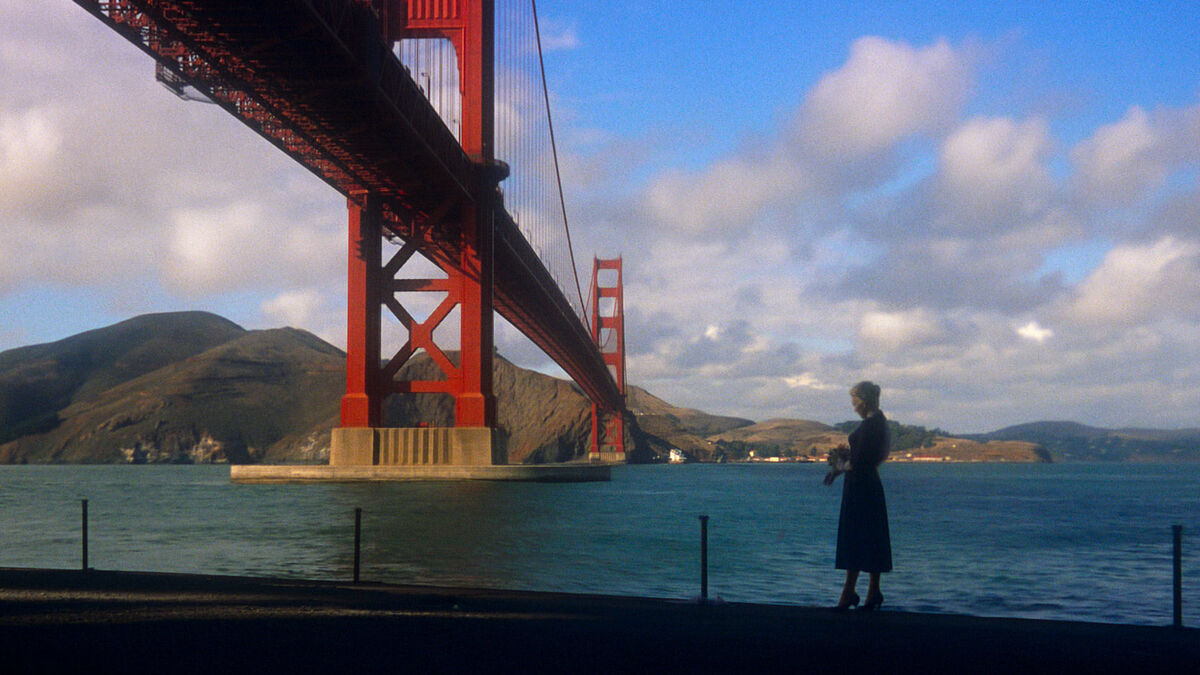
    I wanted to get into more older films as we’ve seen them this semester, especially Hitchcock’s films, so I watched Vertigo. I knew it was famous, but I did not expect how strange and layered it feels. The movie moves between thriller, romance, and psychological drama, and each shift changes how I saw Scottie and Madeleine. Hitchcock keeps adjusting the tone until the viewer feels as unstable as Scottie does.
    The early sections play like a detective story, with wide shots of San Francisco and slow, careful movement. Then the film tilts into something more romantic and obsessive, and the framing tightens around Madeleine. I noticed how the colors grow more intense as Scottie falls deeper into his fixation. Green becomes this haunting presence. When she steps out of the hotel room surrounded by green light, the moment feels unreal.

    The later part of the film surprised me the most. It turns into a story about control and identity. The shift in genre makes that control easier to see. Scottie becomes less of a detective and more of a director who tries to rebuild Judy into the fantasy he cannot let go. That change in tone makes the ending feel tragic instead of suspenseful.
    Watching Vertigo now, I realize how many films I’ve seen throughout my life that have borrowed from it. Hitchcock used genre as a way to expose obsession rather than hide it, and it was a bold shift.

    Vertigo (1958) directed by Alfred Hitchcock • Reviews, film + cast •  Letterboxd
  • Reading the Metaphors in Zootopia 2

    My little cousins wanted to see Zootopia 2 over break, so I ended up in the theater. I went in expecting a simple sequel, but the film surprised me with how much it tried to update its ideas about prejudice and policing. The first movie created that whole “species equals race” metaphor, and the sequel pushes it into new territory by showing how public fear and political messaging shape the city’s identity.
    I kept noticing how the animation supports those ideas. When the city changes tone, the colors dim and the lighting gets sharper. The film uses that shift to show how tension spreads even when the characters do not talk about it. I paid a lot of attention to the crowd scenes because the animators fill them with tiny reactions that show anxiety moving through the population. Even kids around me gasped when everyone pulled away from each other.

    But I will say, the movie does still struggle with the limits of its metaphor. Disney is the studio after all. It wants to teach tolerance, but it also avoids talking about who holds power in a system like this. Still, the animation and pacing made the emotional beats clear and easy to follow. I walked out thinking that the film communicates its ideas most clearly when it stops explaining them and lets the world design express the pressure the characters feel.

  • How Good Time (2017) Turns Panic Into Style

    Good Time begins with a jolt and never slows down. The film grabs you from the first scene and refuses to slow down, every shot and cut pushing the viewer deeper into Connie’s spiraling night. The style builds that tension. The handheld camera, the close-ups, the neon lights, and the nonstop movement trap the viewer inside Connie’s perspective. I felt myself reacting before I could think, which says a lot about how aggressively the movie pushes its pacing.

    The style turns simple actions into moments of panic. Connie runs, begs, schemes, lies, and the camera follows him with almost no distance. The editing cuts before you can process what just happened. The sound also plays into this because the score pulses under everything and keeps the scenes tight. I noticed that the film uses almost no quiet moments, and when they appear, they only highlight how unstable Connie’s world is.
    What makes the style work is how it reflects the character.

    Connie never stops moving because he has no real plan. I started to see the pacing as his mindset. The urgency is not just a thriller technique. It becomes the story of someone who builds disaster while trying to escape it. Pattinson’s performance fits perfectly with this because he plays Connie with total conviction, even when the choices make no sense. The movie kept me anxious the entire time, and I think that tension is the point.

    Watching this movie reminded me of the story about Matt Reeves seeing this performance and instantly knowing Pattinson could carry The Batman. It makes sense now that I’ve finally seen Good Time, because the same restless energy that drives Connie feels so similar to the Bruce Wayne he later played in 2022.

  • The City That Won’t Hold Still Chungking Express (1994)

    Chungking Express throws you into a version of Hong Kong that feels alive and unstable at the same time. The film follows two loosely connected stories that drift through the city with a mix of romance, melancholy, and impulse. The editing is what stands out in this film. The step printing and the fragmented cuts make ordinary moments feel stretched out or compressed, almost like the characters experience the city in a different rhythm than everyone around them.

    The style gave me a sense of drifting with them. The cops, the woman in the blonde wig, Faye in the snack bar, they all move through the city with a kind of emotional blur. The editing captures that feeling better than dialogue ever could. Even when nothing important happens, the images keep shifting. Faces smear across the screen and the city lights streak behind moving bodies. That technique turns loneliness into something visible.


    I liked how the film breaks itself in half too. The two stories do not connect in a traditional way, but the editing creates a link through mood. Hong Kong feels crowded and bright but also strangely empty. The film makes that contradiction work because the cuts never let the viewer settle into a stable sense of time. I finished the movie with the feeling that its form expresses something the characters cannot say. The fractured structure becomes the story.

  • Stardom & Masculinity in Telugu Cinema

    Pushpa has been a big name in my family for years. Everyone watched it when it first came out, but I never got around to it until this break. I grew up seeing Allu Arjun in roles that lean toward humor or charm, so this film felt like a shift. The movie builds Pushpa’s masculinity through “swagger,” labor, and defiance, and the style of the film supports that version of him.

    The biggest thing I noticed how much the camera treats him like a star. It gives him controlled entrances, slow movements, and gestures that turn into instant signature moments. The film builds its rhythm around these beats. The songs also help with this because they highlight his confidence and turn simple actions into a sort of “mythmaking.” I watched this with the sense that I was supposed to admire him before I even learned everything about him, which fits how Telugu cinema often constructs larger-than-life heroes.

    The film anchors his rise in physical labor and class struggle, but it also turns that struggle into a fantasy about what a man should look like. Pushpa never doubts himself and never loses control, and the movie treats that stability as strength. I found myself wanting the story to challenge him, because the version of masculinity on screen feels inflated.

    Telugu cinema often does lift its male leads into myth, but here it feels a little too eager to protect him. Watching Allu Arjun play this harsher role made me think less about his transformation and more about how tightly the film holds onto a specific idea of manhood. It pushes the character upward without ever asking what that kind of masculinity costs.

  • Makeup and World-Building as Narrative Tools in Planet of the Apes (1968)

    I have always been a huge fan of Matt Reeves’s Planet of the Apes films, so over Thanksgiving break I finally sat down with the original. I expected something slower and older, but the world pulled me in almost immediately. The makeup and the physicality of the ape characters create a full society that feels lived in. I found myself paying more attention to how their faces moved than the plot in the first few scenes because the design gives them so much presence.

    What surprised me most is how the makeup does more than provide surface realism. It shapes the entire meaning of the film. The ape hierarchy becomes believable because the design signals power and status before the characters even speak. The world works because it looks consistent. The costumes, the sets, and the prosthetics link together and guide the viewer to read this world as a mirror of our own.

    The makeup also affects how the story hits at the end. When the film reveals what happened to Earth, the ape world suddenly feels like a warning. I already believed in it because of the design, so the twist lands with more weight. It turns the apes into a reflection of human failures, not a random sci-fi civilization. Watching it now, after growing up with the new trilogy, made me appreciate how much world-building shapes the message rather than just the visuals.

  • Rajamouli, Baahubali, and the Politics of Myth

    This week, I revisited Baahubali in light of my earlier conversation about RRR and the troubling politics in the work of S. S. Rajamouli. I found a critical essay titled “The Problem With Baahubali’s Casteist, Supremacist Logic” in The Quint that argues the film normalizes hierarchy and caste-based supremacy. The writer claims the film portrays its fair-skinned heroes and heroines as civilized defenders of order, while dark-skinned tribal villains evoke “savage” barbarism. That contrast signals a clear racial and caste gradient embedded in the fantasy world. The article helped me see how spectacle and visual design in Baahubali do more than create fantasy: they reinforce a social order that treats inequality as natural.

    The critique points out how the “tribal” Kalakeyas appear as monstrous, dark-skinned, and “other,” while protagonists align with Aryan-supremacist tropes. The film reportedly uses a harsh invented language for the Kalakeyas, modeled after Tamil, to imply primitiveness. Even female characters like the warrior heroine and the queen mother end up having their power defined by caste or by their role in supporting male lineage. Watching Baahubali again with this context made me realize how visuals, casting, and narrative all shape viewers’ sympathies toward “civilized” rulers and away from the “barbaric” outsiders.

    The article does not engage much with the economic or production-side politics behind Baahubali, though that would be a valuable angle. Still, as someone from a Telugu background who has admired Rajamouli’s films for years without noticing casteism, I find this critique important. It provides a lens to question what I once accepted as mythic or heroic spectacle. After our class discussion of RRR’s politics, this piece shows that Baahubali too deserves scrutiny: behind its grandeur lies an inherited hierarchy that cinema packages in the name of myth and entertainment.

  • How Style Shapes Tension

    This week’s reading on Do the Right Thing made me think a lot about how filmmakers use form to create meaning, especially when the story contains dozens of characters and a constantly shifting flow of small moments. Spike Lee builds a film that looks loose on the surface, but the chapter shows how carefully he organizes it through restricted narration, recurring visual and sonic motifs, and a flexible continuity system that still keeps us oriented. Those ideas helped me see the film less as chaotic and more as deliberately unified.

    I found the discussion of restricted narration especially interesting. Even though the movie jumps between characters, Lee often limits what we know in a given moment, which builds tension inside the neighborhood. We may understand the community, but we don’t always know where the next spark will come from. That gap mirrors the instability inside the block itself—one heated moment away from exploding.

    The reading also highlights how motifs pull everything together. Mister Señor Love Daddy’s radio presence becomes the neighborhood’s heartbeat, stitching scenes together through sound. Even Mookie repeatedly stepping over the girl’s chalk drawing becomes a small but sharp reminder of how disconnected he feels from the community he lives in.

    To connect this to something I’ve watched recently, I kept thinking about La La Land. It is totally different tonally, but it uses motifs in a similar way—like the recurring musical theme that reappears each time Mia and Sebastian confront a new stage in their relationship. It also blends classical continuity with more stylized moments, just as Lee does. In both films, those choices subtly control how we experience character conflict.

    Overall, this week’s reading pushed me to look past plot and pay more attention to the craft that shapes how stories hit us emotionally.

  • Holy Motors and the Disappearing Reality

    Holy Motors feels like a film about film itself, or maybe about what’s left of it. Léos Carax immerses us in a world where the boundaries between performance and reality are blurred. Mr. Oscar (played by Denis Lavant) moves from one “appointment” to another, assuming new identities in each, yet there’s no visible audience or camera to justify his transformations. That absence makes the performances feel strangely hollow, as if he’s acting purely because he has to – a slave to the “invisible machines” Carax mentions in his interview.

    Carax’s distrust of digital technology seems to haunt every scene. The old “visible machines” of cinema (cameras, projectors, cars) are fading, replaced by something more virtual, impersonal. Even the limo, which carries Oscar between his appointments, becomes a symbol of this transition: a kind of impossible, in-between space where he prepares to become someone else. It’s home, but not in the comforting sense. It’s more like a place of regression or exhaustion after too many lives lived.

    As an experimental film, Holy Motors rejects conventional storytelling. It doesn’t explain itself. Instead, it drifts through moods and genres (e.g., tragedy, absurdity, musical, horror) like flipping through channels on TV. The accordion interlude midway through feels like the only true burst of life. It’s spontaneous and rhythmic, feels almost rebellious against the film’s growing artificiality.

    Is Mr. Oscar an actor, or just a person conditioned by an over-mediated world? How does the film comment on our relationship to technology and authenticity? If the limo is “home,” what does that say about the way we live between screens, constantly switching roles?