Author: Sidd Kilaru

  • Violence, Myth, and Resistance in Dev Patel’s Monkey Man

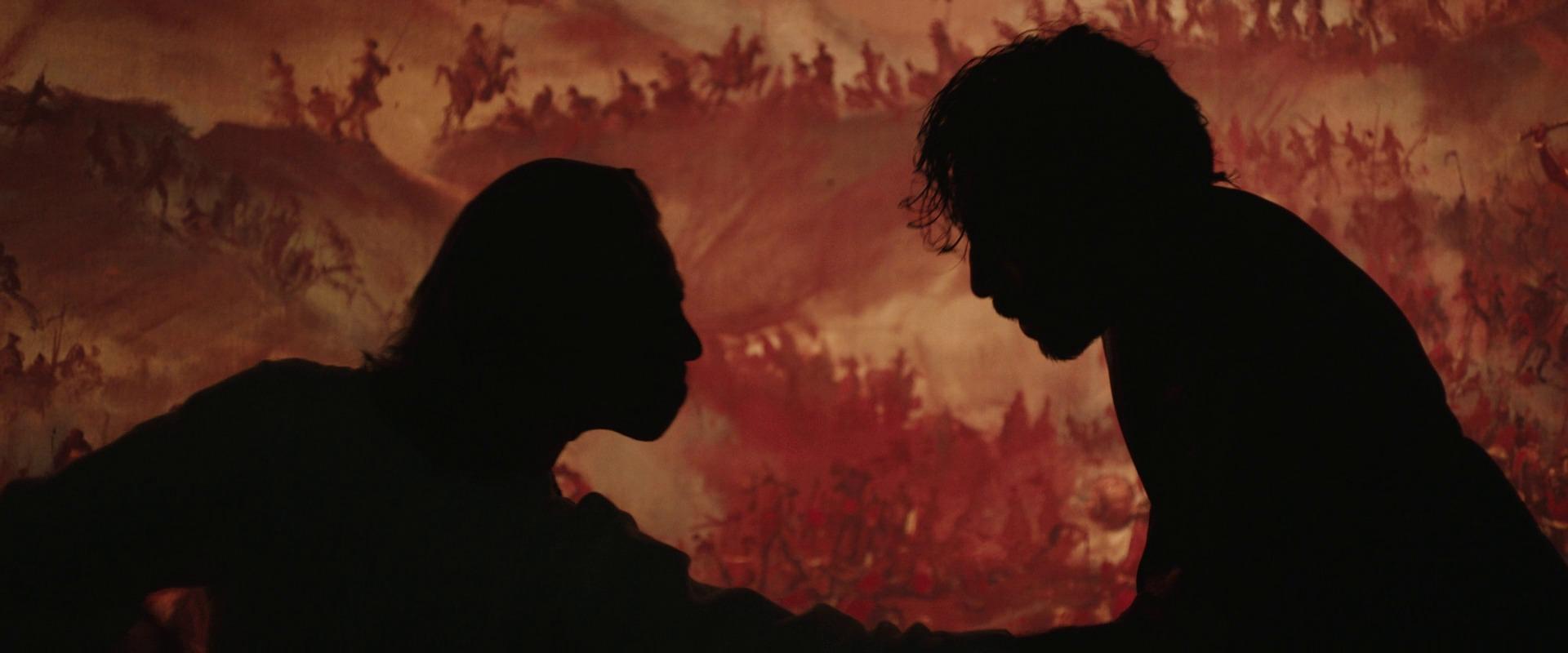
    From the moment the camera prowls through the slum and the underground fight arena in Monkey Man, Patel forces us to see India’s stacked system of power not as a distant cultural curiosity, but as a brutal architecture. The cinematography does heavy lifting: oppressive low-angles, jagged handheld shots, stark contrast between light and shadow. All of it works to embed the caste system, not just thematically but physically. As Patel himself explains: “I was like, ‘I can use a genre that I love so dearly … to talk about the caste system of India.’” When you see the hero fighting through kitchen floors, back rooms, then penthouses, it isn’t just spectacle. It’s a visual indictment, and not one that’s a subtle allegory; it is loud and unapologetic.

    The editing amplifies that critique. Cut to raw bones, cut to ritual, cut to violence. Each transition hits like a message: the exploited become beasts, the gods become corrupt lords, and the viewer is forced to track this movement. The film doesn’t lull into comfort. Instead, it jumps—from clandestine matches to inflated political rallies, from masks to megaphones. Patel says he wanted “real violence … real trauma …” The timing of edits emphasises that the system’s brutality is cyclical. The oppressed fight, they ascend; the ascendants become oppressors. The cut-and-paste structure of action becomes the mirror of systemic churn.
    Castle (@CastleDead) / X

    Genre is where Patel earns his argument. He takes the revenge-action template (think John Wick) and injects it with mythology (the monkey-god Hanuman) and with the very real politics of caste and corruption. He says the hero isn’t “the guy who you knew was going to take on a hundred men.” He’s the marginalised. The underdog. That choice says everything. Genre serves the critique: spectacle draws in the mainstream; the content punches back. It refuses to let violence be pure adrenaline—it makes it a statement. And by doing so, the film picks a side: the side of the oppressed against the entrenched elite.

    Which brings us to the real-world stakes: Monkey Man is not just set in India; it is speaking to India—and the backlash proves the point. The film’s theatrical release in India remains stalled, amid reports that the Central Board of Film Certification has delayed or avoided screenings because the content is politically charged. Patel links this delay to real frustration: “We’re talking about religion and how religion can weaponise a large mass of people … it came from a place of rage too, against what was happening in India.” In other words, the system this film critiques is still fighting for control over the narrative. The censorship becomes part of the message. The elite refuse to let the message out—and that refusal confirms the film’s point.

  • The Wizard of Oz and the Birth of Genre Hybridity

    This week’s reading described genres as living systems that balance convention and innovation. That idea came to mind while reading Alex Sergeant’s essay “Scrutinizing the Rainbow: Fantastic Space in The Wizard of Oz (1939)” (Alphaville: Journal of Film and Screen Media). Sergeant argues that The Wizard of Oz didn’t just use genre conventions, but that it invented the grammar of hybrid genre filmmaking. The film’s split between Kansas and Oz, realism and fantasy, black-and-white and Technicolor, turns genre into a kind of motion. Its “dual spatial focus,” as Sergeant calls it, grounds the viewer in the familiar before releasing them into wonder. That structure became Hollywood’s model for how to blend fantasy, musical, and adventure without losing coherence.

    Sergeant’s analysis captures what our reading describes as the “interplay of convention and innovation.” Oz takes familiar ingredients—the musical number, the quest, the fairytale moral—and merges them into one story of transformation. We recognize the comfort of genre, yet feel its edges blur. Looking at Oz in this way, I realized it’s the blueprint for so many “journey” films that bridge worlds: Star Wars, Pan’s Labyrinth, Harry Potter. Each one restages Dorothy’s passage through spectacle toward self-discovery. Sergeant calls Oz “perhaps the most watched example of classical Hollywood cinema,” but what keeps it alive is how it shows that genre moves. It isn’t a fixed category. It’s a rainbow that bends meaning across forms.

    That insight also ties directly to our feature, Nope (2022). Jordan Peele reworks genre the way Oz once did. He fuses the Western’s open landscape, the sci-fi invasion, and the horror monster movie into a single story about spectacle and control. Both films ask: what happens when wonder turns on the spectator? Sergeant’s essay, though written about 1939, helps explain why Nope feels familiar yet new. It’s the same path Dorothy walked, only now it’s lined with clouds and cameras instead of poppies and tin men. Genre, for Peele and Fleming alike, isn’t a set of boundaries, but a language that keeps rewriting itself.

  • What We Don’t See in The Zone of Interest

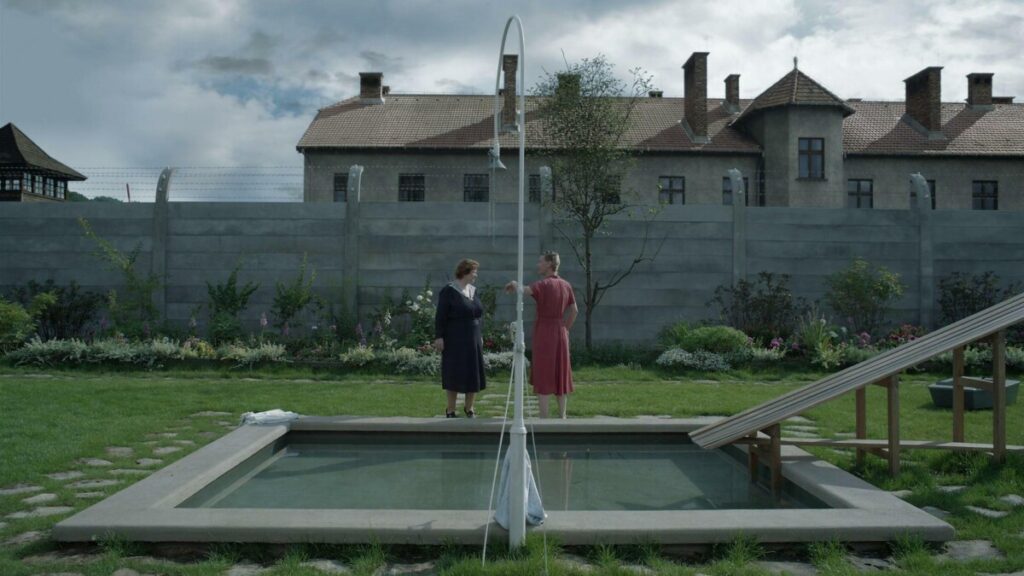
    I found The Zone of Interest upsetting, not for what we see, but for what it doesn’t show us. Although Holocaust movies generally face us with horror, Jonathan Glazer’s film creates much of its tension through absence or omission. The mise-en-scène is dominated by the family garden that has neat flower beds, a swimming pool, and bright summer light. It appears bucolic, almost rural advertisements for a country retreat. However, just beyond the wall of the garden, and out of view but heard, the machinery of Auschwitz operates. Perhaps the wall is the single most important “prop” in the film. It turns the setting into a “space of denial”: everything inside of it becomes a performance of normality, and everything outside of it becomes an unasked truth. It invites the viewer to divide attention between what is seen and what is only imagined.

    The cinematography really elevates this experience. The camera usually remains distant, presenting the Höss family in wide, static compositions. These extended, sweeping shots allow us to take in the entire composition, unlike the quick edits that usually direct or engage our focus, with our gaze wandering between, for example, the children and then the barely-there smoke in the back. The smoke stays in the distance, but we can’t escape its presence.

    The editing, or the lack of it, is just as remarkable. Several scenes play out in long takes, which invites a much heavier sensibility to time than we might expect from typical Hollywood filmmakers, who usually give us some rhythmic ‘relief’ by cutting scenes. When we do come to the cuts, they feel, and are, really jarring. For instance, consider the nighttime sey-gogging sequences, captured in infrared. The tonal shift creates a ghostly, documentary feel. These interruptions make us hyperaware of the film’s structure, like the director is forcing us to question how we are watching. Are we complicit, sitting comfortably on the inside of that wall?

    What struck me most in this movie was how ordinary the scenes inside the house felt. A mother selecting wallpaper, children splashing in a pool, a father leaving for work. The horror is how effortlessly those images are drawn into “normal” living, and how those same images coexist with mass murder. That is the film’s success: it doesn’t visually allow us to “see” the atrocity, but returns us to consider the comforts that enable it to happen.

  • Greig Fraser’s Cinematography in The Batman

    This week’s reading focused on the idea of cinematography not only being a practice of recording an event but also making choices based on light, framing, exposure, or movement, affecting how we see and feel a story. This notion came to mind while I was reading an interview with Greig Fraser, the cinematographer for The Batman (TheWrap). Fraser discusses how he approached the film as an “urban noir” in which darkness is not an absence; it’s an environment that is punctured strategically with small pockets of light. These choices are almost a textual study of tonality and exposure. Batman, for example, often emerges from darkness not because the frame is crudely underlit, but because Fraser provides just enough light on the eyes or the texture of the suit that gives us a presence we can read.

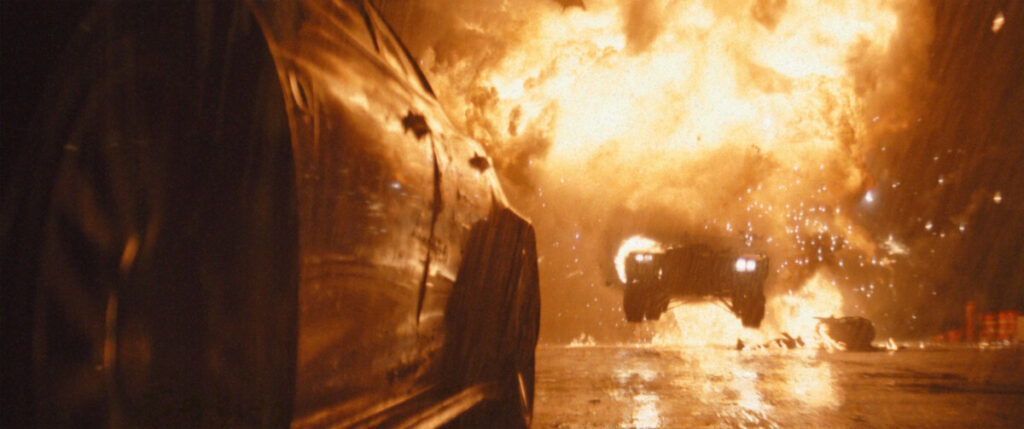
    What I find remarkable is how these choices orient our understanding. The reading indicated how framing and lens selection can shift our relation to the space to make you feel more included or excluded. Fraser anchors even the action sequences in point of view, for example the car chase scene, which doesn’t overwhelm with spectacle but places us inside the Penguin’s perspective (which in turn enhances the fear Batman’s character is supposed to embody in this movie). As a result, we are not only spectators of the action, but we are also more connected to the characters.

    Some reviewers claimed that the film was “too dark,” which shows the risk of pushing contrast and shadow too far. But Fraser’s work strengthens the principle that cinematography’s role is not decoration but narration. Light, contrast, and framing all become instruments of meaning: Batman as a figure always partially obscured and disclosed, someone we can glimpse but never fully know. The interview reveals how much craft undergirds that sensation, and it offers a good embodiment of what our reading this week refers to as “writing in movement.”