Category: Extra Credit

  • Bugonia: A Chilling Climate Change Parable

    SPOILER WARNING!

    When I recently watched Bugonia in theaters, it felt impossible not to read the whole thing as a climate-change parable that finally stops pretending humans are the heroes of the story. Teddy thinks Michelle’s company is literally killing the bees as part of an alien plot, which sounds like pure conspiracy at first, but the film quietly confirms that the true planetary threat is not some hidden sci-fi device. It is the world we already live in: Michelle’s Andromedan monologue points straight at climate change, war, and human violence as the forces destroying Earth long before any mothership arrives. The bees become a simple, loaded symbol: if they are collapsing, whole ecosystems are collapsing too.

    That is why the final sequence lands so hard as a climate metaphor. Once Michelle reaches the Andromedan ship and drops the clear dome over the model Earth, every human on the planet simply shuts off, falling where they stand while everything else remains untouched. There is no exploding planet, no scorched biosphere, just a sudden absence of us. The last images linger on human bodies frozen in place and then cut back to Teddy’s apiary, where the bees begin to return. It is a brutally tidy reversal of the usual “save the Earth” arc: the only intervention that actually stabilizes the environment is one that removes the species that keeps insisting it will fix things someday.

    For me, that ending recasts everything that came before as a joke with a bitter punchline. Teddy’s conspiracy fantasies, the pharma optics, even the alien royal court all turn out to be less important than the simple ecological truth the film stages at the end. The planet does not need us to survive; we need the planet, and we have been acting as if the opposite were true. When the bees come back to life in a world emptied of people, Bugonia imagines climate “recovery” that does not center human redemption at all. It is funny in the darkest possible way: the film gives us the apocalypse and then quietly asks whether, from the point of view of the Earth, this might actually be the first good decision anyone has made in a very long time.

  • Makeup and World-Building as Narrative Tools in Planet of the Apes (1968)

    I have always been a huge fan of Matt Reeves’s Planet of the Apes films, so over Thanksgiving break I finally sat down with the original. I expected something slower and older, but the world pulled me in almost immediately. The makeup and the physicality of the ape characters create a full society that feels lived in. I found myself paying more attention to how their faces moved than the plot in the first few scenes because the design gives them so much presence.

    What surprised me most is how the makeup does more than provide surface realism. It shapes the entire meaning of the film. The ape hierarchy becomes believable because the design signals power and status before the characters even speak. The world works because it looks consistent. The costumes, the sets, and the prosthetics link together and guide the viewer to read this world as a mirror of our own.

    The makeup also affects how the story hits at the end. When the film reveals what happened to Earth, the ape world suddenly feels like a warning. I already believed in it because of the design, so the twist lands with more weight. It turns the apes into a reflection of human failures, not a random sci-fi civilization. Watching it now, after growing up with the new trilogy, made me appreciate how much world-building shapes the message rather than just the visuals.

  • Night Moves (1975)

    While watching the film, I noticed that the main character, Harry Moseby, is often visually framed by his surroundings (e.g., doorways, windows). This framing makes Harry seem trapped, not just physically but mentally. It reflects how limited his thinking is. He is a detective, but he never actually sees the full picture. Instead, he jumps from clue to clue without stopping to understand what is really happening.

    The main character (Harry) reminded me of George from Shampoo (also 1975), another character who constantly keeps himself busy but does not actually understand the situation (until it is too late). Both men move through their stories reacting instead of understanding, so I predicted early on in Night Moves that it would not end well for Harry.

    And that is exactly what happens. He cannot stop the disaster, even though he is supposed to be the “hero.” The more he tries to take control, the more confused and lost he becomes. The last shot of him going in circles in the boat shows this perfectly. He is still moving, but he is not getting anywhere.

    I also found the chess scene really interesting. The game seems to symbolize how little Harry actually knows. He thinks he is solving a mystery, but he doesn’t see the strategy or the larger pattern of it at all. He is basically playing a game he doesn’t understand/know the rules of, up against people who are always one step ahead of him.

  • Schindler’s List

    Schindler’s List is originally one of the three films I decided to do for my shot list and sequence analysis, but at the end I chose All Quiet on the Western Front for its more detailed mise-en-scene and cinematography elements.

    Schindler’s List is one of the few films that make me feel it is less of a movie but rather more like a historical reflection. Steven Spielberg approaches the Holocaust of the Jewish people with a documentary style approach. He grounds the story in the transformation of Oscar Schindler, who is first a opportunist but gradually become a savior to more than one thousand Jewish captives.

    We all know that the Holocaust is terrible, thousands and thousands of Jewish people die every day, but what makes the film astounding is not the scale, but the quiet shift in Schindler’s character as he face the Nazi machines.

    In addition, I think the decision to make the film black and white is not a stylistic choice but rather a moral and humane one. Stylistically, we can say that black and white increase tension, adds on pain, and reflect the brutality, but it is more reflected in how humanity is shown through the movie, so I believe it is more of a humane choice. It takes away the cinematic comfort, and force the viewers to put themselves into a drained up world, where humans are viewed as numbers.

    The minimal use of color, most famously the girl in the red coat, is like a spear that pierce through the monotone color scheme. Emphasizing the existence of humanity in such a dull and draining world.

    Unlike other historical or war film, Spielberg does not exaggerate violence, not framing heroic deaths or sacrifices, but rather he presents it abruptly and casually, as if dehumanization is a daily job for the Nazi officers and soldiers.

    Liam Neeson’s performance as Schindler, is also interesting. He never delivers grand speeches or have heroic moments. Instead, his transformation is conveyed through small moments, like hesitations and silent realizations. This step by step change his mindset and build up to the emotional climax. Where Schindler realize that he is not saving more lives, it feels overwhelmed, the weight of goodness lands on his shoulders and will feel devastated in the face of a genocide.

    In relation to RRR that we saw this week, I see a similar starting but different ending. Both film demonstrate the vulnerableness of individuals against high power, in RRR the British and in Schindler’s List the Nazi Power. The Indian people suffer from power imbalance and the Jewish people suffer from genocide. But the ending is Ram and Bhemm saving the world in RRR but Schindler’s list making a much more reflective, thoughtful ending of real history.

    What this film ultimately suggests is the fragility of humanity under an evil world. The film ends with real survivors placing stones on Schindler’s grave, a reminder that the story is still being told and passed down, carried by the ones survived.

  • The Seventh Seal

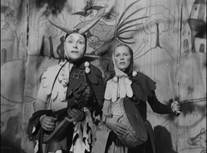
    The Seventh Seal is a classic 1957 movie by Ingmar Bergman. It raises many existential, philosophical questions related to faith, death, and the meaning of life. I was struck by the powerful scene of a religious procession. The film cross-cuts between a noisy, merry crowd enjoying an acting troupe’s performance and a grim religious procession through the village. This creates a sharp contrast of juxtaposed images of merry drunkards and lines of fearful, mournful figures in black who are dragging their feet and beating themselves with whips.


    The contrasting scenes show two ways people coped with life during the Black Plague, and neither looks attractive. Some people engage in partying and drinking to forget themselves. Others self-punish themselves even further (perhaps to feel a bit more in control, as if they choose their suffering). The diegetic sound suddenly shifts from the laughter and loud chatter of the crowd to the chanting and drums of the flagellants, with the actors and crowd going silent as if in fear or awe of the procession that may remind them of God and their sins, or of Death.

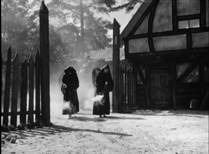
    The shot of the religious procession entering through the frame of the wooden gate may be symbolic. They are crossing a threshold into the everyday world of the villagers. The framing of dark bodies against light fumes and dust turns the figures into symbolic silhouettes (not real people), as if the fear is entering the village with people caught in a wild party.


    The movie still speaks to people, after so many years, because people still confront traumatic experiences (such as a pandemic) in the same ways. We either distract ourselves with noise and activity or turn to fanaticism/extremism, religious or otherwise, trying to impose order in a world full of uncertainty.  

  • Why Did Ki-taek Stab Mr. Park? — A Question After Parasite

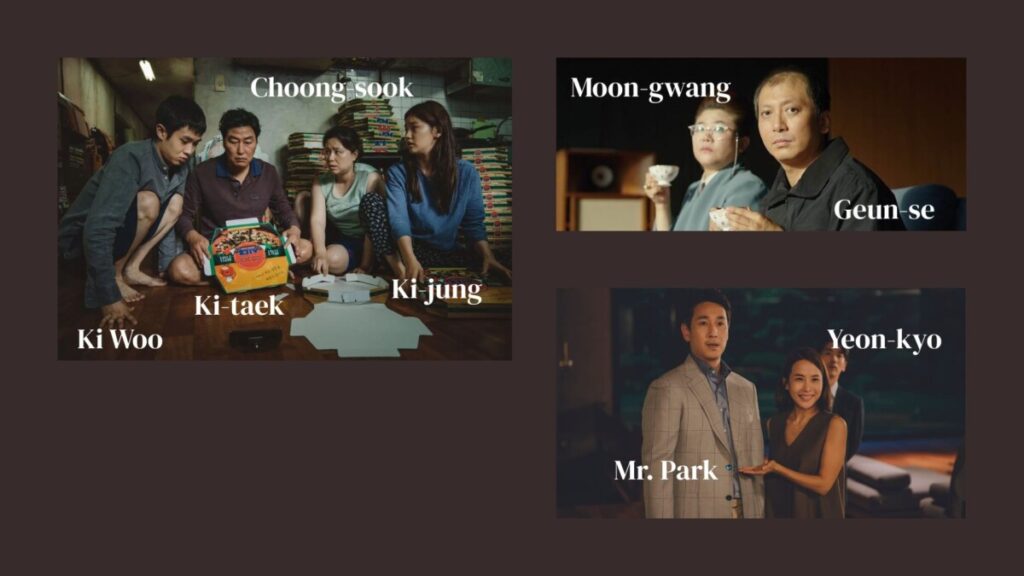
    Parasite tells the story of how Ki-taek’s family, who live day to day on the edge of poverty, slowly infiltrate the wealthy household of Mr. Park through a carefully staged web of lies. Beginning with the son Ki-woo, they succeed one by one in placing each family member into the Park household—as an art therapist, a driver, and a housekeeper. These “con-artist” sequences are edited into elegant montages accompanied by a soundtrack that recalls Baroque music. No matter how many times I watch those scenes, they still feel almost impossibly precise, as if every movement, every note, falls perfectly into place.

    There are many characters in Parasite that I still struggle to fully understand. But the one moment I return to again and again is Ki-taek’s final decision near the end of the film.

    Why did Ki-taek stab Mr. Park?

    When Ki-taek’s daughter, Ki-jung, is stabbed by Geun-sae (the man who had been secretly living for years in the hidden bunker beneath the Park house), she collapses, bleeding heavily. Mr. Park asks Ki-taek to throw the car key so he can rush her to the hospital. But the keys have fallen to the ground beneath Chung-sook, who is physically fighting with Geun-sae. As Mr. Park moves closer to get the key, he recoils. He turns his head, wrinkles his face, and covers his nose at the smell coming from Geun-sae.

    In that brief moment, everything changes.

    As Mr. Park picks up the key and turns away to leave, Ki-taek suddenly lunges forward and stabs him. Then he runs away. What follows in this film is silence, where the audience can only hear the faint buzzing of flies.

    Why, at that moment, did Ki-taek choose to kill Mr. Park? His daughter was dying. Getting her to the hospital should have mattered more than anything. And yet, he killed a man instead, a man who was not even the doer.

    My answer is this: Ki-taek had reached the limit of what he could endure about “the smell.”

    Earlier in the film, even Mr. Park’s young son mentions that the members of Ki-taek’s family all share the same scent (he didn’t know that they were family). That smell is the smell of poverty, the smell of the semi-basement. The smell of a life that never fully dries, no matter how much you try to wash it away. It clings not just to the body, but to their life.

    Mr. Park believes he is reacting only to Geun-sae’s odor. But Ki-taek knows better. That smell is his smell too.

    In that moment, when Mr. Park turns away in visible disgust, Ki-taek finally understands that no matter how convincingly he performs this borrowed life, no matter how neatly he dresses, how well he imitates the manners of the wealthy, he can never escape the mark of who he truly is. The times of quiet humiliation, of being tolerated but never fully seen as equal, collapse into a single instant.

    And so the knife rises.

    Ki-taek’s act is not only an outburst of personal rage. It is an eruption of anger toward a society that makes escape from poverty nearly impossible. It is fury at the lie he tried to live, and at the invisible wall that kept dragging him back to where he began. In the end, he is attacking more than a man. He is struck by the smell of his own life.

  • Ex Machina (2014)

    A few weeks ago, I watched Ex Machina. It is a sci-fi movie with an added psychological thriller element that keeps you guessing who is going to “win” the mind game of the Turing test – a human protagonist, Caleb, or Ava, a sexy female robot. The setting for this battle is the remote house of Nathan, a tech-savvy inventor-billionaire who is designing female robots and running an experiment on them and a human subject, Caleb. The house looks like a barn but is filled with high-end tech. When Caleb enters it, the door closes behind him as suspenseful music plays in the background, and it locks with a hissing sound, unlike a real barn door would.  

    The mise-en-scène inside the house is in sharp contrast to the lush green forest outside, in the mountains. Inside, there are long hallways, glass walls, cool lights, and locks that give a sense of entrapment. The glass walls form barriers that allow Caleb to watch Ava, for Ava to watch Caleb. Cameras are installed for Nathan to watch them both. This lack of privacy and lack of physical connection dehumanizes everyone because everyone is under surveillance, an object of observation. The viewers are watching others watching. That is a double voyeurism, and it can make one uncomfortable.

     I was also interested in the themes of the male gaze, the creation of a female persona, and a gendered portrait of women. Nathan is building a very gendered portrait of a female robot persona in his basement. On the surface, it just looks like objectifying women robots (who are robots, after all). They are made to be pretty and obedient for their male owner. He designs them to look beautiful and serve him, but in the end, Ava outsmarts everyone (especially Caleb, who develops intense feelings for her). The movie is a male-controlled fantasy of the “ideal woman” (or even several versions of them, with interchangeable parts) that turns into a female empowering message that controlling a woman, even a female robot, is just an illusion.

  • Every Feature We Have Seen This Semester: Ranked

    First of all, wow we have seen some great films this semester. When I started making this list I hadn’t realized just how many fabulous movies we’ve gotten to watch this year, but I seriously loved all of them. With that being said, here’s my personal least favorite to favorite features that we have seen this semester!

    #12 – All That Heaven Allows

    All That Heaven Allows just wasn’t my cup of tea. I remember the colors being very pretty and fall-ish, so it was enjoyable to watch, but I just wasn’t a huge fan of the plot and the old lady falling for the young, hot tree man.

    #11 – Citizen Kane

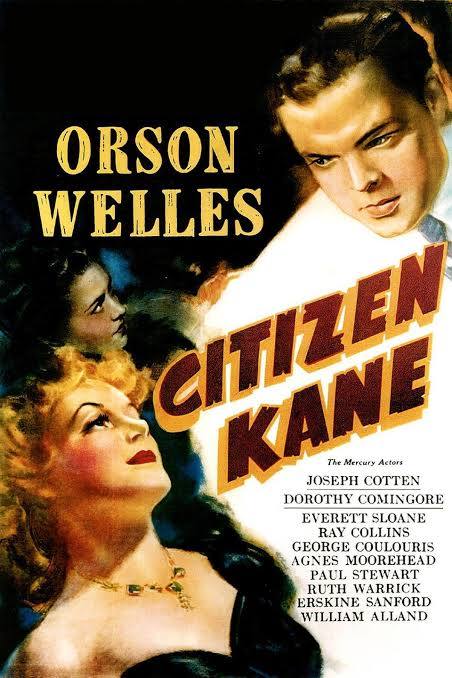
    Citizen Kane has obviously had a huge impact on film and is seen as one of the greatest movies of all time. It was clear why it is held in such high regards, but it just wasn’t my personal favorite. The filming techniques and use of lightning were so good, but I just wouldn’t just at the chance to watch it again.

    #10 – Portrait Of A Lady On Fire

    Portrait Of A Lady On Fire was BEAUTIFUL. The cinematography and colors uses throughout the movie were absolutely incredible. It was very much so a slow burn kind of film, which was wonderful and they did a great job with it, but it was just a little too none eventful for me. Still very visually appealing though and it was also very nice to see a lesbian relationship as the main focus of a movie for once.

    #9 – RRR

    RRR was so good, those three hours flew by for me. I came in with a negative mindset towards the movie but by the end I did a complete 180. Even with all of the unrealistic parts, it was crazy entertaining and I couldn’t take my eyes off of the screen.

    #8 – The Zone Of Interest

    The Zone Of Interest was incredible. I loved how different it was from other Holocaust movies that I’ve seen, with the attention on the officer’s lives instead of the actual prisoners and how eerie and uncomfortable it felt the whole time because of that. With all of the horrible stuff happening in the background, it was just an amazing film that is still very much relevant to our world today.

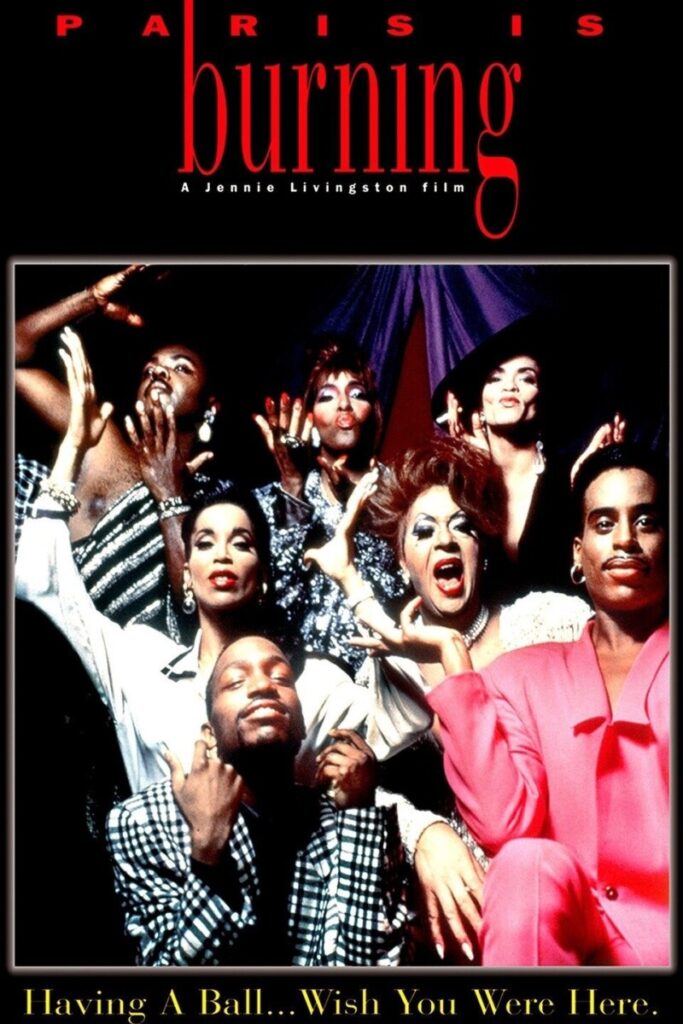
    #7 – Paris Is Burning

    Paris Is Burning took me from not knowing anything about ballroom culture to loving it within less than two hours. This documentary was an insight into a community that I otherwise would’ve never known about, and although it was exploitative and morally not great (invite the cast to the premieres, come on!), I still really really enjoyed seeing it.

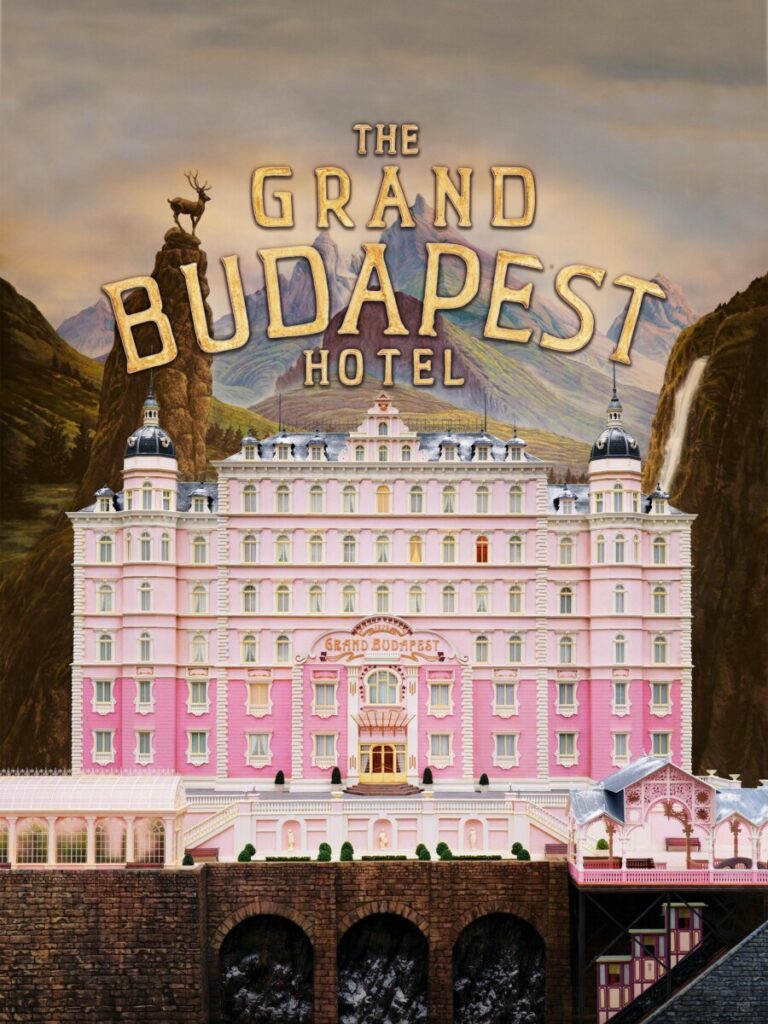
    #6 – The Grand Budapest Hotel

    The Grand Budapest Hotel was one of, if not the most visually appealing movie that we watched this semester. Wes Anderson is obviously the GOAT of making aesthetic and colorful movies with beautiful messages, and this film did exactly that.

    #5 – Rear Window

    Rear Window was such a great first movie to see for this class. The jump scare of Mr. Thorwald spotting Jeff will stay with me forever, so good.

    #4 – NOPE

    NOPE was just another classic by Jordan Peele. He is such an incredible director and I have never seen any kind of work of his that I didn’t absolutely love. I was literally on the edge of my seat the whole time.

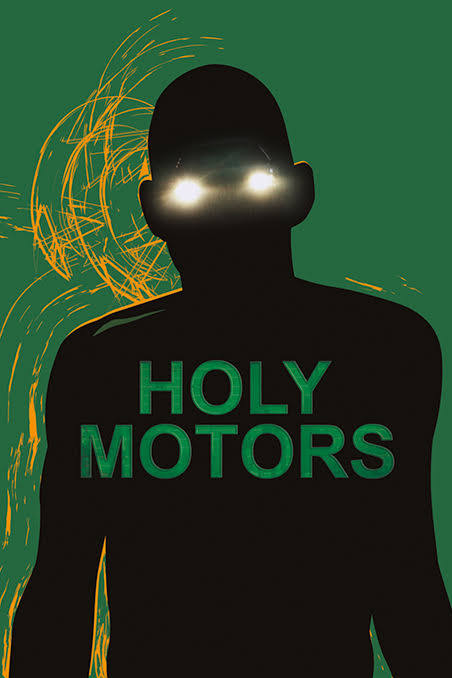
    #3 – Holy Motors

    Holy Motors was SO WEIRD and that is why I loved it so much. I had such a great time watching this movie and I have told so many people about it already. I haven’t laughed that much from a film in a while, and I genuinely just enjoyed every single crazy moment of it.

    #2 – Do The Right Thing

    Do The Right Thing was a masterpiece, no other way to describe it. I love all of Spike Lee’s movies and his messages in his films are always so important and still relevant today, and he always delivers it in the perfect way.

    #1 – Singin’ In The Rain

    Singin’ In The Rain is the musical of all musicals. I thought that this was going to be super corny and unenjoyable to watch, but wow I really really loved it. The singing and dancing was just so fun, and I had no idea that it would be as funny as it was either. I’ve already rewatched it several times and now that I’ve seen it, I’ve noticed how much of an influence that it has had on other musicals. Just simply amazing.

  • The Boy (2016)

    A few weeks ago, I watched the film The Boy (2016) for the first time. I have not watched horror movies, so I wanted to try one out, and I was recommended by a friend to watch this movie. While watching the movie, I found the doll very creepy, the way it just kept staring at the screen. And to make the movie even creepier, sound was used to make us feel like the doll is alive. You hear sounds, but you don’t ever see the doll move. It is implied to us that the doll is moving and making those sounds by the changes in its location after the door is closed. It is the creepier version of the moving toys in Toy Story because we are not let in on the doll’s movement; we are left out of its perspective. As humans, we are often scared of the unknown and of things that seem eerily similar to human functioning, such as dolls and robots. We fear that they will take over. That is why so many horror films are based on dolls/robots. Additionally, we discussed in class why so many horror films take place in homes. Similarly, this movie does as well. It causes greater distress in the viewers watching because homes are supposed to be a place of comfort.

    Talking about the film with my friend made me notice how the movie constantly uses sound, camera angles, and off-screen space to keep us guessing. It doesn’t always show us what’s happening; it just lets us imagine it, which is usually scarier.

    After watching the whole film with my friend, there were still parts I didn’t fully understand; it seemed to me that a lot was left unexplained. Now I realize that confusion is actually a big part of how horror works. The movie gives us just enough information to make us suspicious, but not enough to feel certain about anything. Viewers were given clues about whether the doll is alive or not in the film’s universe. However, there were also moments in the film that purposely made viewers doubt and rethink their suspicions. Nothing is certain, and that is scary to think about because if that were true in real life, it would be hard to tell what really matters and what doesn’t. We want answers, and horror films don’t always give them, so we are left wondering instead. I think that is why so many people love watching horror films. Yes, sure, the thrilling aspects of jump scares and plot twists are appealing due to the adrenaline rush you get from watching, but also the unsolved mystery and confusion you get at the end of the film make the film all the more memorable and creepy. People get to make their own reasoning about the film. And different theories are made about what the films could mean.

  • The Relevance Of Do The Right Thing’s Fight Scene

    Even though Spike Lee’s “Do The Right Thing” was released in 1989, the themes that occurred throughout the movie are still extremely relevant today in 2025. The fight scene in particular was obviously a very hard part to watch, but super important. This video that I found has Spike Lee talking through that scene and certain aspects and inspirations that helped it come together.

    Radio Raheem and his death was based on the real murder of Michael Stewart, who was strangled to death by a group of 11 NYC police officers. But even though this film was made over 30 years ago, there are still multiple instances of black people getting killed by police in this exact same way. So while Do The Right Thing is a movie, it is also very real at the same time. The costume designer was tasked with making everyone super sweaty to emphasize the hot day and tension rising, and during the scene there wasn’t a great stunt coordinator so some actors actually got hurt. He talked about the moment of silence right after Sal smashed Radio Raheem’s radio as a “quiet before the storm” and how it felt like a personal attack at Radio Raheem since he had been carrying it around with him the entire movie. When the fight eventually went outside, they shot the rest of the block getting involved and did a crane shot from the fight to a view of the whole street. Then the cops came, and even though Sal was the one who started the fight, Spike comments “now you know if there’s a fight, who are they gonna grab”. The other thing about this scene that he talks about at the end of the video is the ground shot of Radio Raheem after he’s killed. It shows him laying on the concrete with the “Love” brass knuckle in the frame – I thought that that was an interesting choice between “Love” and “Hate” to put in the camera, especially after what just happened to him and everyone else in the community. I recommend watching this video because it’s a great highlight of the scene and showcases how important and relevant that it truly is.