While scrolling through instagram after viewing Wicked: For Good, I stumbled upon a post that struck me. This film definitely reflects our current world whether intentional or not. It is interesting how similar things are.
Did you find any similarities in the movie? Let me know your thoughts!
I recently watched “The Handmaiden” directed by Park Chan-Wook and was struck by the differences and similarities to the other sapphic film we watched, “Portrait of a Lady on Fire.” Although very similar in its themes and plot points, “The Handmaiden” dives deeper into the effect of male centrism on queer relationships between women, which “Portrait of a Lady on Fire” keeps in the background instead of putting it front and center. Although I enjoyed both, I can recognize the differences between the two on its depictions on sapphic love.
“The Handmaiden” focuses on a rich heiress who is set to marry a man, but instead falls in love with her handmaiden and tricks the abusive men around them to elope with her. This is similar to “Portrait of a Lady on Fire,” but the woman that Heliose is set to marry is never shown and the two women do not defy the arranged marriage. This shows the difference between the two films, as “Portrait of a Lady on Fire” seems to depict the patriarchy as unmoving, while “The Handmaiden” depicts it as stifling, but escapable.
In the first parts of “The Handmaiden,” the two women are depicted beautifully, with respect to their characters and their quiet, intimate moments. As the movie progresses, their love becomes more and more dangerous and deceptive, culminating in a long and explicit sex scene. However, I as well as many other find issue with these scenes, as it feels like a performance for the audience, like pornography, instead of an intimate and personal relationship between the two characters. In the last part of the movie, the characters are clearly shot from the male gaze, focusing on their body parts in a voyeuristic way. This feels ironic considering the entire movie is about the two women escaping objectification by men. This notion is completely rejected in “Portrait of a Lady on Fire,” as the women’s nudity never feels objectifying or pornographic and their intimate scenes feel personal to them, instead of for the pleasure of the viewer.
Despite this, I can agree with the widespread acclaim and acceptance of “The Handmaiden” as a classic in the LGBTQ+ genre. The characters are complex, the romance is passionate and unashamed, and the theme of two women finding solace in a deeply misogynistic society is extremely touching. And most satisfyingly, the women win in the end and escape the patriarchy.
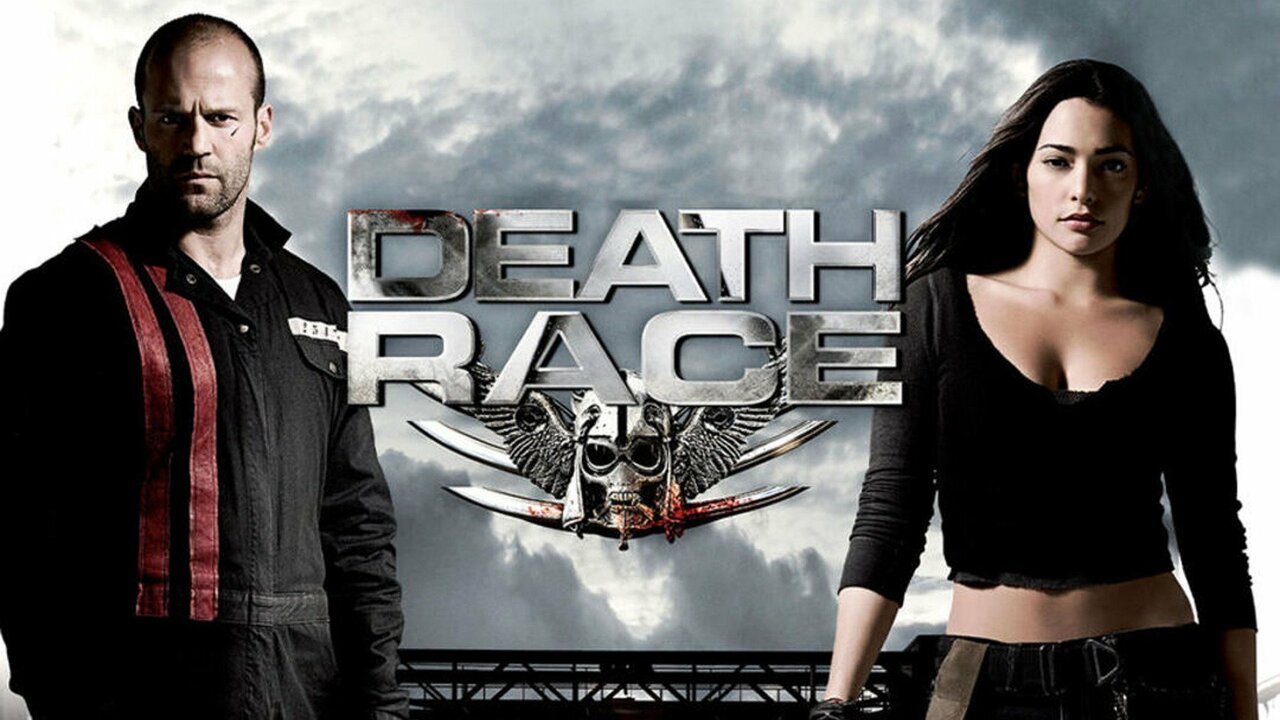
When I first heard they were playing Death Race at the cinematheque, I was excited. Growing up, I always watched Death Race starring Jason Statham; however, I completely forgot that the cinematheque only shows movies from 1975. That’s when I realized we would be viewing a completely different movie, but I still remained hopeful about seeing similarities between the one released in 2008 and the one from 1975.
When the movie first started, I was initially attracted to the general aesthetic and underlying theme. The play on a somewhat futuristic society focused on the horrific mutilation of civilians for the satisfaction of corporate giants and the wealthy is a theme that can be seen throughout various films in recent years. Its placement in the year 2000 shows the rather exaggerated expectations of what the future holds for society and the harsh displacement of current generations.
The film uses the plot of race-car drivers equipped with weaponized vehicles rushing from the East Coast all the way to the West, gaining points from killing seemingly innocent individuals they encounter on the road. The car that crosses the finish line with the most points ultimately wins. In comparison to the 2008 depiction, the main character, named Frankenstein, is incarcerated on a murder charge and is facing life in prison. However, he is given a chance at freedom if he races against other criminals through a deadly track, also with weaponized vehicles, and whoever survives to the finish is set free. While all of this is playing out, the building of their cars, the prisoners’ contemplation, there remains the spectatorship of the wealthy, who gain a sense of fulfillment from such horrible destruction.
The two storylines offer an entertaining experience of gore and thrill but still maintain the narrative of the wealthy’s disconnection from society and their over reliance on spectating dehumanizing events to gain satisfaction. This narrative can be seen through movies and TV shows like Squid Game, Get Out, Blink Twice, etc.
Recently, I watched Wicked: For Good and enjoyed the film overall, but one scene in particular stayed with me that I wanted to discuss. *Spoiler warning* During the moment when Elphaba considers joining forces with the Wizard, she challenges him to reveal to the citizens of Oz that he is essentially a fraud with no real magical power. His response was that he could admit to lying, and no one would care.
After our class discussions on ideology and similar matters, this line stood out because it touches on ideological saturation. When the Wizard says no one would care if he admitted to lying, he’s acknowledging that people’s loyalty is not tied to truth, but to a worldview he created. The lie is the ideology. The people have internalized it so completely that reality doesn’t matter anymore.
To break it down, his statement exposes one of ideology’s effects. Ideology can make people emotionally invested in beliefs regardless of whether they are true. The citizens don’t follow the Wizard because he is honest, they follow him because the version of reality he provides gives them comfort. In short, that emotional security is more compelling than the facts.
This made me wonder about ideology in the real world, specifically questioning whether people need ideology to get through life. I would argue yes. Ideology gives us frameworks that allow us to understand how the world works. But if ideology is needed, why do some argue that ideology traps individuals and prevents them from discovering truth?
People argue that ideology traps individuals because once a belief system becomes familiar and emotionally comforting, it becomes difficult to see beyond it. Ideology doesn’t always present itself as an option among many. It often disguises itself as common sense or the way things naturally are. When that happens, people stop noticing that they are operating within a constructed worldview. The comfort and stability ideology provides can make questioning it feel dangerous or “disloyal.” As a result, individuals may mistake the ideology for absolute truth rather than recognizing it as one interpretation of reality. This is where the “trap” begins and why some argue ideology is restricting. Ideology gives meaning, but it can also narrow perception, limiting what people are willing to consider true.
In short, ideology helps people navigate life, but it becomes restrictive when it makes one filter out anything that challenges it. It is not the existence of ideology that is the problem. The danger appears when ideology becomes invisible and unquestionable, because that is when it stops guiding people and starts defining them. This is presented in Wicked: for good, as the film overall asks its audience to question the stories they inherit rather than just accept them.
Last year in my high school French class, I watched Un Chien Andalou for the first time. What I remember most is the shocking scene where a razor slices through a woman’s eye. At the time, I saw it mainly as a bizarre product of avant-garde filmmaking. After our class discussion on Monday, however, I decided to rewatch it and look for deeper meaning in the film as a whole. Seeing it again after Holy Motors made me realize that both films use unsettling and absurd imagery not just to shock the audience, but to challenge how we watch and interpret what’s on screen.
The eye scene in Un Chien Andalou feels like a direct attack on the viewer’s sense of sight. It is disturbing but also symbolic, as if the film is forcing us to open our eyes to new ways of seeing. Holy Motors captures that same kind of shock with its random bursts of violence, like when Oscar kills a man who turns out to be himself. These scenes might feel random and unnecessary, but that is what makes them effective. They remind us that cinema can still surprise us and that meaning does not always have to come from logic.
Another parallel that stood out to me is the scene in Un Chien Andalou where a woman is hit by a car. The suspense builds as several cars narrowly miss her before one finally makes contact, and even then, the moment feels completely unprovoked. It reminded me of the quick, jarring deaths in Holy Motors that appear suddenly and are never explained. Both scenes deny viewers any sense of closure or reasoning. Instead, they reveal how unpredictable and empty violence can feel when it is removed from a clear narrative or purpose. Rewatching Un Chien Andalou helped me understand Holy Motors in a new way. Both films go against traditional storytelling, but that confusion is what makes them so captivating. They challenge us to keep watching even when we want to look away or are unsure of what we are supposed to feel.
Tonight, I went to an advance screening of Eternity (David Freyne, 2025) at Regal Cinemas. I want to thank Kate for giving me the opportunity to experience this movie in theaters before its official release on November 26th.
Eternity follows a woman named Joan who dies and must decide who to spend her afterlife with, her first husband, Luke, or her second husband, Larry. The movie balances comedy with a touching emotional center, and the set design of the afterlife world is well done. While the film struggles to settle on a clear distinct message, the plot is still better than many of the other A24 films I’ve seen this year. This is one of those movies you feel because if you start to think about it logically, it kind of falls apart. The acting is well done, and both Elizabeth Olsen and Miles Teller play their parts beautifully.
I definitely recommend this movie to anyone interested in romcoms or dramas. It’s a fun, whimsical time that will have you feeling the feels!
When the movie first started, I had a hard time understanding the direction it was heading in. As it progressed, I began to get a better grasp of what was happening, but not necessarily why it was happening or why certain choices were made. I wasn’t sure if it was the way it was filmed or if those choices were meant to convey a deeper message or contribute to the narrative. Arthur Penn’s Night Moves (1975) is a neo-noir film that follows the ultimate downfall of a detective dealing with marital issues who distracts himself by taking on the case of a runaway teenage girl. While this general plot can be found in many summaries online, I personally found it difficult to follow when the story jumped between Harry’s broken home and the unfolding murder mystery.
Watching Night Moves for the first time, especially as my first crime movie, is feel eye-opening.
The film’s slow tension and moral ambiguity show how crime stories aren’t always about action—they’re often about human conflict and hidden motives. The story follows private detective Harry Moseby as he investigates the disappearance of a teenage girl, but what starts as a simple missing case turns into a web of lies and betrayal. As the plot unfolds, the mystery becomes less about solving a crime and more about understanding people’s hidden motives.
It might make you realize how complex people’s decisions can be when faced with guilt and fear, leaving you thinking about what justice and truth really mean.
I did not know exactly what to expect from Arthur Penn’s Night Moves before I watched it, but I was pleasantly surprised when I realized it was not your average overdone crime film.The main character (Moseby) is not a genius detective that follows a trail throughout the film and is then rewarded by his big find at the end. Rather, he is not only flawed but actively misses clues throughout the story, culminating in an ending this is not satisfying but instead hopeless. He technically “solves” the case, but not purposefully, and fails to save anyone.
I really appreciated Moseby’s character. He is imperfect and painfully ignorant, but despite there being signs of this all around him, he still continues to try with good intentions. And yet, he gets a bad ending. It is depressing, but it is real: the story doesn’t try to glorify or glamorize this tragically human character.
Last night, I sat down to watch Little Women (Greta Gerwig, 2019) with very high expectations. It’s many peoples’ favorite movie, and now I understand why. Little Women follows the lives of the March sisters as they navigate what it means to be a woman in 19th century America.
One of the main themes in Little Women is that women are complex and their different priorities do not make them less of a woman. Jo wants to be a successful writer, Amy chases the life of an artist, and Meg dreams of living a life of luxury and riches. Each sister also has different views on love. Meg gives up the chance to marry rich for the man she loves, while Jo refuses to compromise her dreams for any man and believes she will never fall in love. Meanwhile, Amy originally views marriage as an economical transaction.
Willi Ninga dreams of being a famous dancerJo March wants to be a successful writer
I thought back to these ideas during our discussion today about Paris is Burning (Jennie Livingston, 1990). While in a different context, Little Women explores similar themes of wish fulfillment and dreaming of an unattainable life due to societal barriers. Both groups of people dream of fame, recognition, or riches. While the Harlem ball communities have an outlet to be whoever they want to be for a bit, the March sisters each end up having to compromise some of their values or dreams. This doesn’t make them any less of a woman, and they don’t need to be subservient to the societal expectations they face. Ultimately, both groups are looking to realize their dreams while remaining true to themselves.