Category: Extra Credit

  • Suzume: Doors and Disasters

    Makoto Shinkai’s Suzume is a road movie (?) with a heavy ritual influence. The teenager, Suzume, crosses Japan shutting supernatural “doors” that leak catastrophe into the present time. Each site she went to is a ruin, either school, bathroom, or amusement park. Those are places that everyday life was interrupted. By making Suzume kneel, touch the ground, and speak different names, the film literalize the act of remembrance as a public act rather than a private feeling. It makes Suzume a symbol of memory.

    Visually, Shinkai used this through recurring motifs: doors framed against the sky, also with short passages like operate like associational form inside a classical narrative.

    The character arc threads cleanly through the travel experience of Suzume. She begins her story as someone running: running late to school, and running late to process a childhood loss. Each stop she made pairs with a temporary caretaker and a “door” that must be closed. This story formation makes the help and repair intertwined. Sota’s transformation into a three-legged chair looks like a joke, but it is a symbol that shifts the theme from romantic into burden and compassion. Suzume must carry responsibility rather than be carried by an adult character. Daijin, the cat-like god, complicates things further: it wants love and attention, but also demands duty. That tension—affection versus obligation—maps onto Suzume’s choice to grow up.

    Technically, Suzume is a hybrid of hand-drawn and computer digital compositing. We can see its hand-drawn characters, but as well as the sky, water, fog, and all the background effect being computer generated. Shinkai also uses pockets of limited animation: held poses and micro-movements to stage stillness against richly rendered environments. Those holds let music and ambient sound carry emotion while the image rests, so when motion returns to the main component of the shot, it hits with force.

    Sound is also important in Suzume. Big moments often land on a sudden hush—right before a key turns or a “door” seals. That drop creates negative space so the next sound (a thud, a breath) carries emotional weight. Large amounts of diegetic sound is also used. Wind across grass, distant trains, , urban city and in each region Suzume visits. They’re mixed forward in quiet scenes so place feels alive even when the frame is still.

    Lastly, thematically, the film refuses to “erase” and part of the story. Closing the door doesn’t reset the ruin, but rather it honors it. The final scene returns Suzume to the origin of her loss and suffer, where she meets her younger self and offers the assurance she once needed. This loop Suzume underwent is the movie’s ethical thesis, that remembrance is the maintenance of memory, and the future is the willingness to keep moving forward nonstop.

  • Violence, Myth, and Resistance in Dev Patel’s Monkey Man

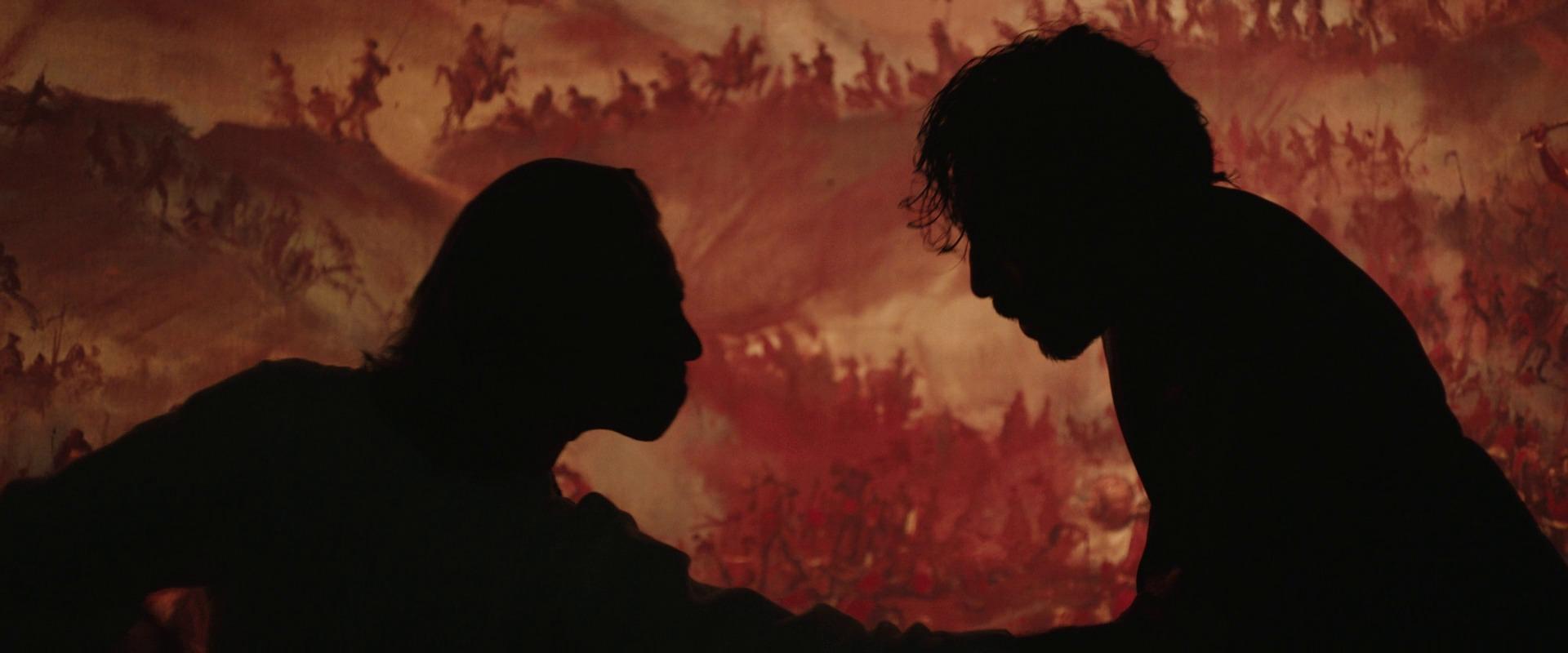
    From the moment the camera prowls through the slum and the underground fight arena in Monkey Man, Patel forces us to see India’s stacked system of power not as a distant cultural curiosity, but as a brutal architecture. The cinematography does heavy lifting: oppressive low-angles, jagged handheld shots, stark contrast between light and shadow. All of it works to embed the caste system, not just thematically but physically. As Patel himself explains: “I was like, ‘I can use a genre that I love so dearly … to talk about the caste system of India.’” When you see the hero fighting through kitchen floors, back rooms, then penthouses, it isn’t just spectacle. It’s a visual indictment, and not one that’s a subtle allegory; it is loud and unapologetic.

    The editing amplifies that critique. Cut to raw bones, cut to ritual, cut to violence. Each transition hits like a message: the exploited become beasts, the gods become corrupt lords, and the viewer is forced to track this movement. The film doesn’t lull into comfort. Instead, it jumps—from clandestine matches to inflated political rallies, from masks to megaphones. Patel says he wanted “real violence … real trauma …” The timing of edits emphasises that the system’s brutality is cyclical. The oppressed fight, they ascend; the ascendants become oppressors. The cut-and-paste structure of action becomes the mirror of systemic churn.

    Castle (@CastleDead) / X

    Genre is where Patel earns his argument. He takes the revenge-action template (think John Wick) and injects it with mythology (the monkey-god Hanuman) and with the very real politics of caste and corruption. He says the hero isn’t “the guy who you knew was going to take on a hundred men.” He’s the marginalised. The underdog. That choice says everything. Genre serves the critique: spectacle draws in the mainstream; the content punches back. It refuses to let violence be pure adrenaline—it makes it a statement. And by doing so, the film picks a side: the side of the oppressed against the entrenched elite.

    Which brings us to the real-world stakes: Monkey Man is not just set in India; it is speaking to India—and the backlash proves the point. The film’s theatrical release in India remains stalled, amid reports that the Central Board of Film Certification has delayed or avoided screenings because the content is politically charged. Patel links this delay to real frustration: “We’re talking about religion and how religion can weaponise a large mass of people … it came from a place of rage too, against what was happening in India.” In other words, the system this film critiques is still fighting for control over the narrative. The censorship becomes part of the message. The elite refuse to let the message out—and that refusal confirms the film’s point.

  • Documentary and Ethics in Grey Gardens

    Back in September, I attended the Emory Cinematheque’s screening of Grey Gardens (Maysles, 1975), and knew I wanted to wait until the week on documentary to fully unpack what I had witnessed. In only 95 minutes, viewers are taken into the home of Edith and Edie Beale, also known as Big and Little Edie, an eccentric mother and daughter duo who are relatives of Jackie Kennedy Onassis living in their run down Long Island estate. The pair argue, sing, perform, share stories from their past life, and seemingly ignore the garbage-filled mess that is surrounding them. Ralf Webb of the White Review discusses the use of direct cinema, the ethics of the film, its historical impact, and more in his 2018 review: https://www.thewhitereview.org/feature/film-direct-cinema-grey-gardens-summer/

    Still of Little Edie from Grey Gardens, 1975

    What is fascinating about this documentary, compared to any others that I have seen, is its commitment to direct cinema, in which they committed to be invisible to the object they were observing without narrative form or musical overlay. In the golden rule, direct cinema is where “interaction with the subjects should never evolve into direction” (Webb). This was exemplified through many shots of Little Edie being interrupted by the calls of Big Edie in the background, or through the subjects consistently talking to the film crews, presenting that they were not restating or asking questions until they got an acceptable answer. Watching this film reminded me of the ethics discussed in class during the first week on Rear Window, however, and how voyeuristic attitudes are only validated when what is being watched has a purpose. This mother and daughter were only relevant due to their cousin’s status, and throughout the cinematheque moviegoers laughed at their remarks, which admittedly were funny throughout the film. Still, there was a clear exposition of two women in crisis, living amongst rodents, and are now solidified in history as entertainers.

    Big Edie sits amongst her run down estate

    Their story is seen through the eyes of the documentarians, and what is told is manipulated by the production of those making the film, not themselves. The film raises ethical questions because “the Maysles, it seems, are acting in bad faith: they’ve gained the Beales’ trust, maneuvered into their private lives, and act innocently inquisitive, when, in actuality, they’re wise to the documentary gold in front of them. I could not help but think of this when watching Paris is Burning (Livingston, 1991) and wonder if my own entertainment and knowledge acquired throughout the film was ethical. Still, I believe that documentary holds a power in solidifying parts of history that may go underrepresented, and maintain the capacity to amplify voices in ways that would not be for forever. Big and Little Edie do get their stories told to the world, as do the subjects of Livignston’s Paris is Burning that would not be exposed to such a wide audience without the oppurtunity.

    Albert and David Maysles pose with Big and Little Edie

    Big and Little Edie have been remembered through movie adaptations, a Broadway show, and drag queen interpretations. After Grey Gardens‘ was released, Little Edie noted feeling accomplished in her portrayal of the film, “as though the power to partly construct a filmic version of her own reality gave her some freedom from it” (Webb). Theories like Webb’s remind us not to look too personally into the lives of the subjects we watch in these films. After spending an hour and a half with Big and Little Edie, it is easy to feel as though one can make generalizations about their lives as a whole. That is just an hour and a half of years of living in Grey Gardens, and the documentary could have been different if filmed at any other point in life.

    Grey Gardens (musical), 2006
  • Andor and Rogue One: The Merging of Spy Thriller with Space Fantasy

    When Andor (Tony Gilroy, 2022 – 2025) first came out, I dismissed it as another run-of-the-mill Star Wars show and didn’t touch it. It was only after some convincing that I picked up the show. Once I started watching, I binged the two seasons and capped it off with Rogue One (Gareth Edwards, 2016) as the thrilling finale. I promise that no review I write is going to do Andor justice; this is just a shameless plug for the show. Rogue One was also good, but the subject matter of Andor is quite relevant to current events and offers powerful commentary on our political climate.

    The events of Andor are set five years before the events of Rogue One. The show follows one of the side characters from Rogue One, Cassian Andor, and reveals how he became part of the Rebellion. No prior knowledge of the Star Wars universe is needed to watch it, which works to the story’s benefit and allows the general audience to connect and engage with the characters and world.

    Ghorman & Chandrila: Creating the Worlds of Andor Season 2 - Updated ...

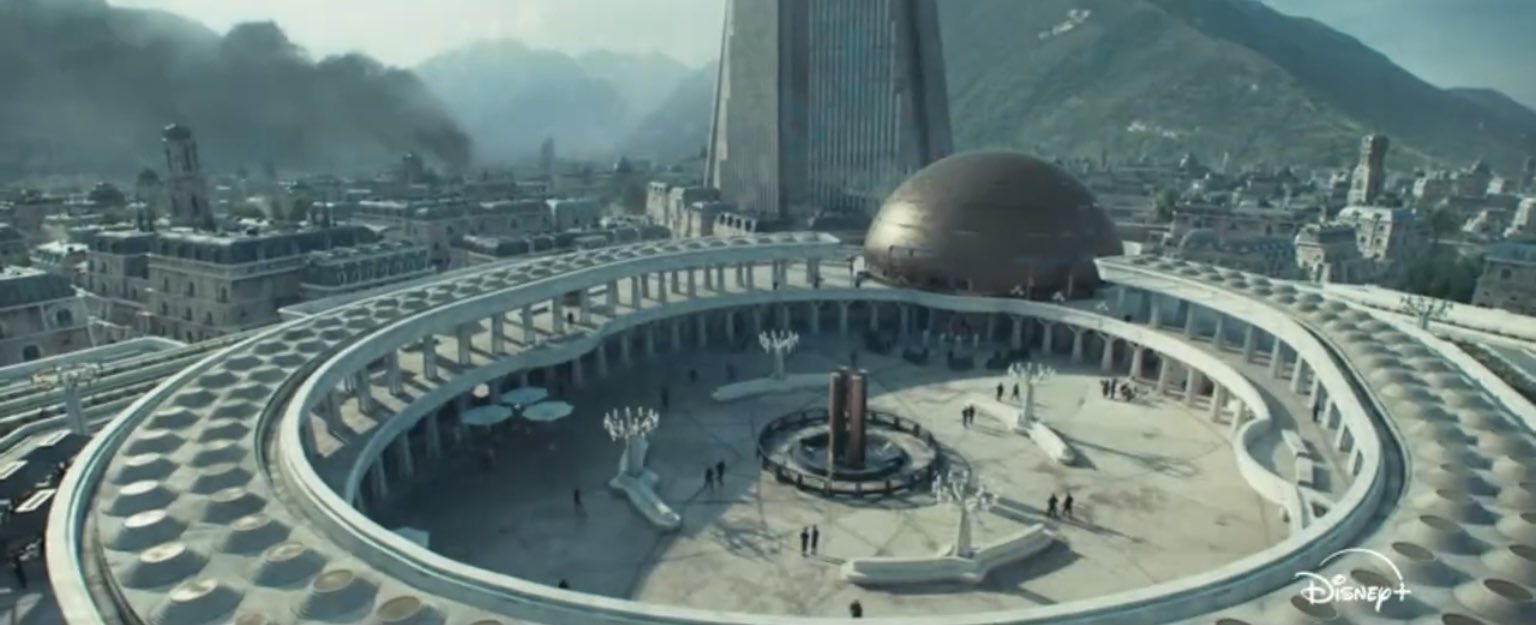
    On a technical level, both seasons of Andor are beautifully done, with the framing, costuming, and editing all working together to make the worlds come alive. The depth and worldbuilding of the different planets featured throughout the show is astonishing for how little screentime they get. All of the props, clothing, and makeup lend themselves to make the artifice of these fake planets a reality.

    Documentary techniques were considered in multiple scenes of season two specifically (being vague to avoid spoilers but its episode 8). Janus Metz, a documentary filmmaker, directed that particular episode and relied on his own experience and other documentary films to inform the cinematography.

    Palmo Plaza | Wookieepedia | Fandom

    Season one of Andor is definitely a more fleshed out narrative, both in themes and character development. It offers up a tumultuous political thriller in a sci- fi world with minimal space wizard magic. The dialogue is amazing and character-driven story is masterfully done. Plot doesn’t matter so much as Andor’s moral journey from an indifferent bystander to someone who has found their life’s purpose.

    Season two is a little more rushed, and the characters are a little under-utilized because the creators wanted to make more seasons. As a result, every three episodes chronicle a year in the Star Wars universe leading up to the events of Rogue One. Season two has a more involved plot and a more ambitious agenda, but continues to be extremely well done with impactful moments and some incredible monologues. The show ends right at the beginning of the events of Rogue One.

    Rogue One - SquidFlicks

    Rogue One was also a good watch, but the writing was not a good. The score, however, was phenomenal and the final climax was a spectacle to watch. Both Andor and Rogue One do such a good job of fleshing out the Star Wars universe and create striking parallels to reality. If you haven’t already, I highly recommend watching Andor and Rogue One.

  • The Attica Prison Uprising and Dog Day Afternoon

    There is a distinct moment in Dog Day Afternoon (Lumet, 1975) when the tides turn and you start to feel some hope for Sonny Wortzik. That moment occurs when he invigorates a crowd of onlookers by yelling “Attica! Attica!”. I, along with many people, had no clue what this meant and was confused with its’ obvious and immediate impact in the film. After some research, however, I realized that the moment is symbolic of a larger theme in the film of an individual’s role in the collective to fight against an oppressive system.

    “Attica!” refers to the Attica Prison Riots of 1971, when prisoners collaborated to take staff and guards hostage, demanding better conditions, better food, better medical care, and better treatment from guards. It resulted in a clash between prisoners and National Guard, ending 43 lives. Sonny invokes this image to a crowd of onlookers to reframe his crime. Instead of a robbery for personal gain and a few bucks, Sonny wants to be remembered as the man who resisted authority, and fought back against an oppressive system. While his goal is not to protest prison conditions, he is trying to send a message that each individual has a responsibility to the greater collective to stand up and do their part to contradict men like Murphy, men “who kill people like me (Sonny)”.

    His speech goes beyond simple uprising against an unjust police force. Sonny also represents the voice of the queer man in the 1970’s, a voice that was widely dejected and cast aside. The robbery itself is an attempt to pay for his husband’s gender reassignment surgery. The entire film is Sonny wanting to live authentically in society, and the police force, the governing body, is what’s holding him back from that. Therefore, “Attica!” further represents his struggle against the confining forces of society.

  • Emilia Pérez: When Representation Turns into Performance

    When I go to watch a movie, I always try to enter the theater with the mindset that I’m going to like it, doing my best to block out outside opinions (although, with a film as talked about as Emilia Pérez, it’s impossible not to go in with some bias).

    Emilia Pérez is an extremely ambitious vision from Jacques Audiard who, in my opinion, “bit off more than he could chew.” When you set out to tell a story that, while not the central focus of the narrative, involves themes that are so relevant and current in society, it’s essential for the filmmaker to study each of these themes in depth.

    And that’s where the film fails, in my view. How can a man who’s been on hormone therapy for two years still have a beard? Small details like this don’t align with the reality of a transition and bothered me throughout the story.

    Now, speaking from a musical perspective the film Emilia Pérez left a LOT to be desired. I’ll admit that I liked the first two songs, but as the movie went on, the songs felt increasingly out of place, as if they were an afterthought by the director, disconnected from the story. Their lyrics, unlike those of a good musical, didn’t complement the plot; they were shallow and repetitive.

    The duet between Zoe Saldaña and the doctor hit me as a failed attempt at “wokeness,” something that critics somehow bought into, believing they were promoting the kind of “diversity” long demanded by major awards (and honestly, that’s the only explanation I can find for the number of nominations this film received). 

    I also LOVED the choreography, especially in the benefit scene, which was, by the way, very well directed.

    Given the massive controversies surrounding the film, especially Karla Sofía Gascón, it’s hard to praise her—but it’s undeniable that her performance made the film powerful in many moments. I also can’t watch it without imagining how difficult it must have been for her, as a trans woman, to have to dress and act as a man in several scenes; the dysphoria must have been intense. (I’m not excusing the outrageous things she said, just pointing out something I found interesting.)

    Lastly, we can’t ignore the blatant stereotypes the film brings—not only about Mexican culture but also about trans issues—something that bothered me but also prompted important reflections about how certain clichés still dominate the minds of critics and voters today. How can these people realize that this isn’t reality when they live in an “Americanized” bubble where that’s the only perspective they know?

    Anyway, these are things I feel like the Academy will have to think about moving forward if it truly wants to represent the diverse realities that exist beyond such a limited lens.

  • Funny Games (1997, Haneke) and our Everyday Complicity in Violence

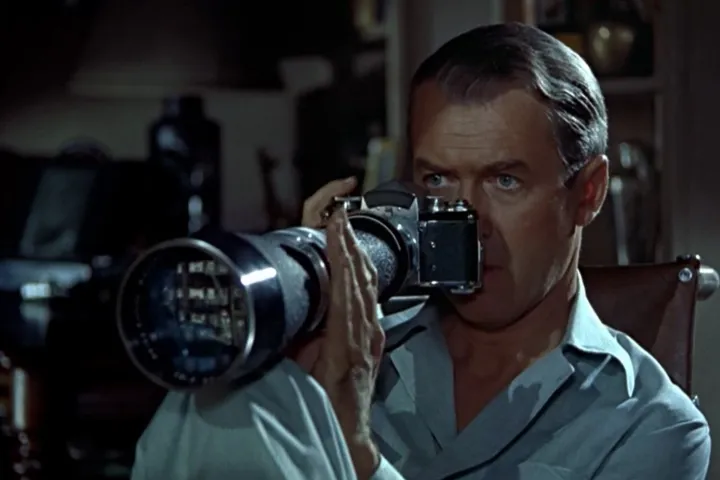
    Funny Games (1997, Haneke) is a disturbing tale of violence and intrusion. Following 2 men who invade a family’s vacation home and put them through a series of twisted and lethal “games”, the film creates a similar commentary on voyeurism and complicity in violence as is present in Rear Window (1954, Hitchcock). As we have discussed in class, Rear Windows places the viewer into the role of voyeur, mirroring our actions with L.B. Jefferies, a man literally incapable of movement and action. Rear Window asks the viewer about their willingness and implicit desire to watch and spy on others. Jefferies’ camera becomes symbolic of the movie screen itself, showing how he, and the viewer, are separated from physical harm, but gain a natural excitement from learning about the private lives of others. The murder of Thornwald’s wife is simply a method for the viewer to excuse and justify their voyeuristic actions.

    Funny Games adds on to this conversation of voyeurism and natural desire to watch violence. However, Haneke definitely punishes the viewer for their viewership of violence, while Hitchcock mainly just asks the question if its wrong. Funny Games starts as a reasonably normal thriller with frightening antagonists and a strong sense of suspense. That is, until one of the home-invaders, Paul, stares directly into the camera after the family learns a terrible truth.

    I was shocked by this moment, and initially very confused about the meaning behind it. Overtime, I came to an understanding that this film is not about 2 men torturing a normal family, but actually about torturing the audience. Haneke is literally punishing the audience for having any interest in watching such a movie. Following horrifying act after horrifying act, the audience is finally given a moment of justice and a glimpse of joy. It is then immediately taken away by Haneke through breaking every rule of cinema. A film that started completely in reality is then complicated with time travel and reality manipulation. All of this is done just to take our moment of justice away, and put us back into pain. Additionally, there are multiple minute long scenes of us simply watching the characters sit in silence, suffering in both physical and emotional pain. Overall, there isn’t a comfortable moment in the entire movie, and that is the point. Haneke takes Hitchcock’s commentary on complicity in violence and turns it into blame; blaming the audience for having any desire to watch.

  • Silence and Survival: The Pianist

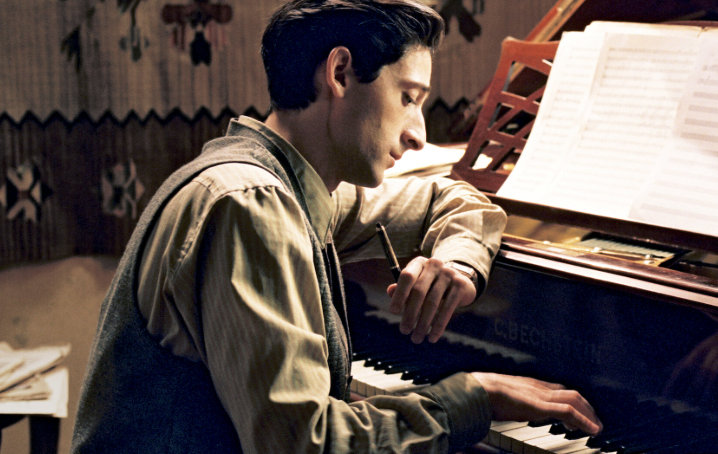
    I watched The Pianist last weekend. What makes it different from other war movies isn’t just its subject — it’s how Roman Polanski uses stillness, sound, and point of view to make you feel trapped inside the experience instead of just watching it. This isn’t a movie about fighting or victory. It’s about surviving when there’s nothing left to fight with. And don’t forget, it is a 2002 film.

    One of the techniques we talked about in class — the use of sound, or sometimes the lack of it — is what gives this film its emotional weight. For long stretches, there’s no music at all, which feels ironic for a movie about a pianist. The silence becomes unbearable, like it’s pressing down on you. You hear every footstep, every creak in the floorboards, every breath he takes when he’s hiding. When the piano finally does return, it doesn’t sound like a triumphant comeback. It sounds like a whisper of the person he used to be. Polanski manipulates diegetic and non-diegetic sound to show how music transforms from a source of joy to one of survival.

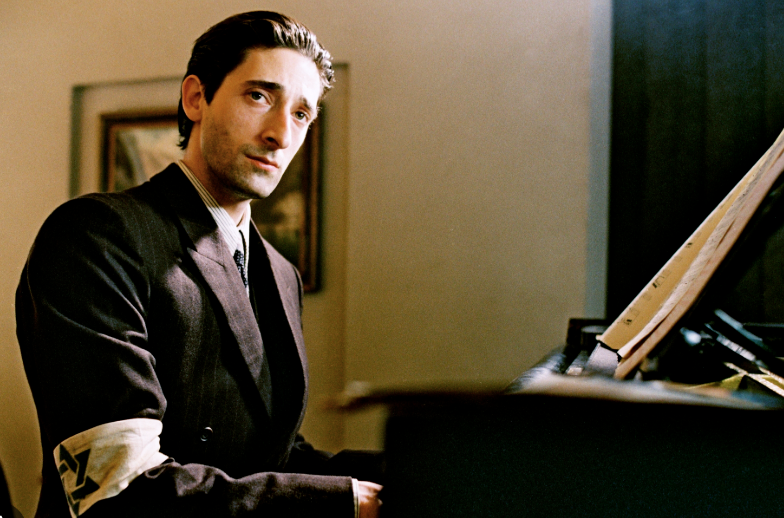
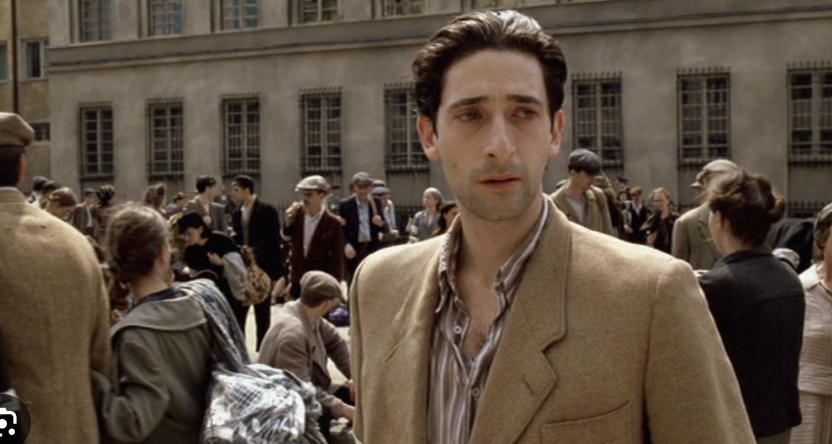
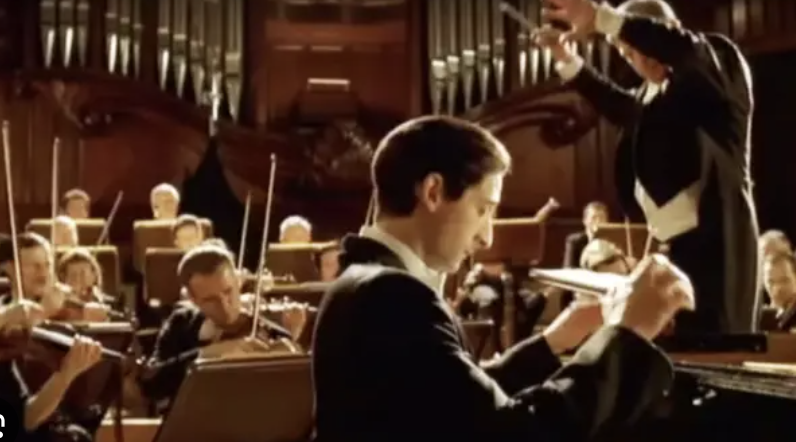
    Below wee see Szpilman in the beginning of the war and when caught by the Nazi official and playing the Piano for him. Two different scenes, the same people tortured by

    Another technique that stood out to me was Polanski’s use of camera perspective. We rarely see wide, establishing shots of the war; instead, the camera stays close to Szpilman, forcing us to see through his eyes. This first-person framing makes the destruction of Warsaw feel more intimate and claustrophobic — it’s not about the scale of tragedy, but about how it feels to live through it. There’s a particular scene when he’s watching from a window as people are beaten in the streets below. The camera doesn’t cut to close-ups of the violence. It just stays with him, silently watching. That restraint, that distance, actually makes the moment more horrifying.

    Lighting also plays a huge role in setting the tone. Early in the movie, the lighting is natural and warm, almost nostalgic. But as the war progresses, it shifts toward shadows and muted grays. By the end, everything feels drained — not just visually, but emotionally. The loss of color mirrors Szpilman’s loss of hope, and by the time he’s finally rescued, the lighting doesn’t shift back. It stays cold, like survival isn’t victory, just continuation.

    The Pianist isn’t an easy film to watch, but it’s essential. It uses the language of film — sound, perspective, and light — to tell a story that words alone couldn’t capture. It’s not just about what happened, but how it felt to live through it. And that’s what makes it worth watching.

  • One Battle After Another Review: Viva La Revolution & Leonardo Dicaprio

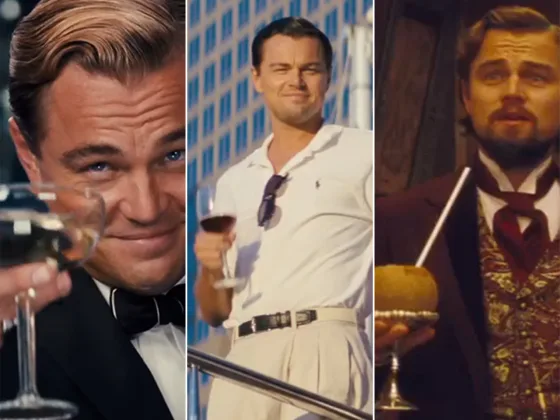
    Over break, I went to see One Battle After Another at North Dekalb. I walked into it well aware of my feelings about Leonardo Di-I only date women under 25-rio but I decided I would put those feelings aside and treat him as just any other actor. I walked out of it, still disliking him as a person but man can he act. His performance in this movie helped make the movie what it is. He was angry, depressed, chaotic, and surprisingly funny.

    Before I saw the movie I saw the scene of him screaming, “Viva la revolution” and believed that this must be coming from a scene that was powerful, however to my shock it was comedic. The whole theater busted out laughing and thats when I started to really understand the themes of this movie.

    The movie, despite being a blatant commentary about how every individual is constantly facing their own battles, was a movie about the people we put on the front lines of revolutions. If you look online you’ll quickly find memes of people saying “you know you’re safe at a protest if a white girl is there” or jokes about sending your white friend to talk to authoritative figures because you know they’ll be treated better. That’s what this movie felt like. Leonardo was the white friend.

    At the beginning of this movie there was a scene where he was kissing Teyana Taylor in a car full of people, and she said “do y’all think he likes black girls??” and he replied “I like black girls, you know I like black girls.” In the moment I cringed, and thought it was such a weird thing to say. It felt performative and weird and it had the same energy as him screaming, viva la revolution. It felt like his tastes, his preferences, his romantic relationships, how he approached his job in the revolution, was performative and defiant simply to be defiant, not for a greater cause. Because what revolution was he fighting for? He screams “Viva La Revolution” which in English means long live the revolution, to a Mexican man, it felt like being American and saying “gracias” at a Mexican restaurant. Despite him being the father of a black woman, he is hilariously detached in our eyes because what revolution is a straight white man in America fighting for? What revolution is Leonardo Dicaprio, a white man worth hundreds of millions of dollars known and loved around the world, screaming about? His whole character was ironic, casting him was deliberate.

    We as people have these preconceived ideas about gender and racial roles and how people should be doing certain things that correlate with those roles but this movie rips that apart. The sensei of a dojo in this movie is Mexican. The person who comes to save his daughter is a Black woman. The person who leaves Leonardo and Teyanas relationship, is Teyana. The people who save Leonardo are hispanic. This movie pokes fun at the ideas of what we believe a person should be doing, making us question why we have those ideas at all. So in that moment, where Leonardo was frantic because he had found out where his daughter was going, the police were raiding where he was, and he yelled out, “VIVA LA REVOLUTION” to the sensei who was helping a bunch of immigrants who he was housing not be seen by the police, in reality wasn’t a joke. He meant that. But it was comedic, it felt ridiculous, and as a person of color I laughed extra hard. Often times in revolutions it feels like white people get there last, it takes something happening to them for them to realize and have empathy for something many of us have been fighting for years. So it was perfect to me, that the sensei simply put his fist in the air. An acknowledgment of the fight, but a toned down one. Because in reality, white people are often given more space to be loud, to be defiant, while people of color are expected to be quieter in their revolts. Him silently putting his fist up while Leonardo screamed it, was telling of that.

    This movie was a great commentary on society and there was so much in it that it would literally be impossible to sum it up in one blog post because of how wonderfully layered it was. This one scene stood out to me because of the comedy and irony of a seemingly serious moment, I still laugh now seeing clips of it. This movie is worth the 3 hour watch, it’s riveting and a commentary on the world we live in now that people need to hear.

  • Cause and Effect in Fantastic Mr. Fox

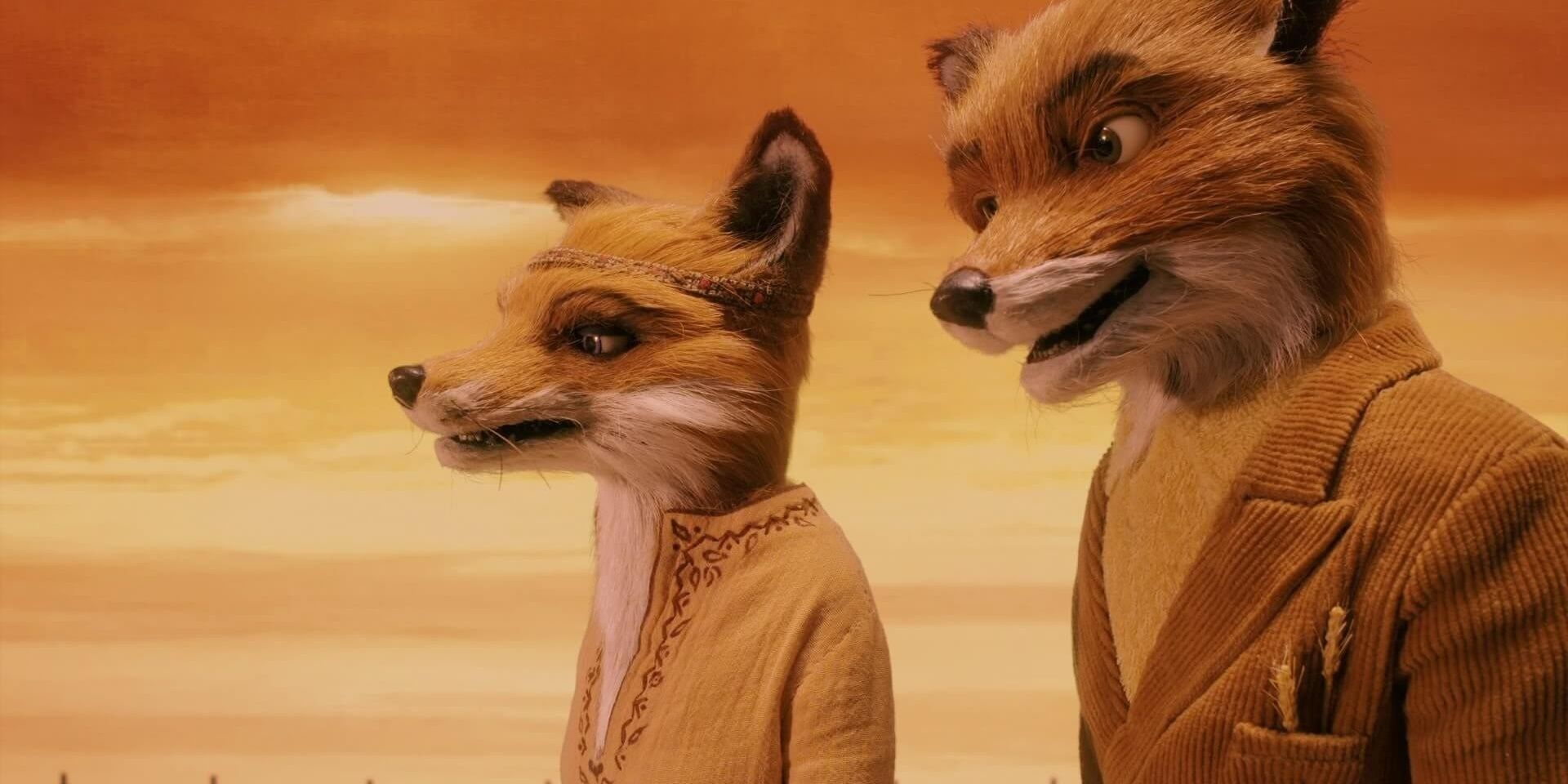
    This weekend, I sat down and finally watched Fantastic Mr. Fox (Wes Anderson 2009). This marks the second Wes Anderson film I have ever seen, and I must say, it was a delight to watch. As I sat through the film, it was impossible to ignore the causal role the characters played throughout the film.

    The plot is centered around Mr. Fox, a charismatic fellow who conspires to steal chickens and cider from the three mean farmers Boggis, Bunce, and Bean. This course of action directly goes against the promise Mr. Fox made to his wife, that he would never steal chickens again and find a new occupation.

    Fantastic Mr. Fox: 10 Behind-The-Scenes Facts About Wes Anderson's Movie
    Colorful Animation Expressions: Fantastic Mr. Fox: The Book (1/5)

    Robbing Boggis, Bunce, and Bean has consequences. In response to Mr. Fox’s thefts, the farmers go to his home and try to kill him, shooting off his tail and blowing up his house. Mr. Fox’s choices backfire on him. His lavish life is short-lived, and his family is forced back underground. Rather than call it quits, however, Mr. Fox decides to escalate the situation and steal everything from the farmers. The rest of the movie is spent dealing with the fallout of Mr. Fox’s thefts.

    wes anderson title cards | Title card, Fantastic mr fox, Wes anderson

    Fantastic Mr. Fox has an interesting way of showing the audience the passage of time. Usually, there will be a title card with text displaying how much time has passed. The way time is counted, however, varies. Sometimes, the time is displayed in normal hours or days, other times, in a special passage of time the movies calls “fox time”. These differences in the way the passage of time is shown convey the animals’ perception of time and contrast with the humans’ perception of time. It’s a gentle reminder that no matter how anthropomorphic the animals seem, they are not human.

    The idea that their true nature is that of a wild animal and that they can’t escape their natures is an overall theme woven into the action. We see this struggle particularly in Mr. Fox. He always wants more out of life, the desire to not live underground, the desire to steal chickens. His internal desires drive the story, and his actions affect his relationships. When his son barely escapes the farmers when trying to steal back his tail, Mr. Fox realizes his child is emulating him to try to gain his approval at the cost of his own safety. In some ways, Fantastic Mr. Fox is about selflessness vs. selfishness, putting the needs of others before yourself or giving into your desires. Mr. Fox’s choices connect the events of the film and create continuity by giving a clear line of cause and effect in the action and the narrative of the story.