Category: Extra Credit

  • “A Long Walk,” Its Politics, & Its Reminders

    Over the weekend, my friends and I piled into a car and took a 15 minute drive to AMC North Dekalb to watch “A Long Walk.” If you know anything about North Dekalb, you would know it’s a movie theater on the side of a mall that is being completely renovated and the seats are anything but modern. So as we sat down, tried to get comfortable, and the opening ads all had us thinking we were in for a horror movie, I was surprised to leave that theater with a soaking wet face and red eyes. As we as a society continue marching towards a future that is remise of 75 years ago, movies like this feel like a wake up call. As this review continues, I will try to not give a lot of spoilers, but to properly discuss it I need to talk about some important scenes within it. So this is your warning!

    This movie was jarring, for a bit of context- this movie follows a group of 50 men who were chosen to participate in “The Long Walk,” which is a government competition where you have to walk until only 1 person remains, either you die of natural causes or they kill you for going below the set pace or stepping out of the boundaries, and when you win, you get more riches than you can imagine and one golden wish. A Long Walk is a political wake up call, the movie does not show the title card until almost 10 minutes into the movie. It follows the first death, an 18 year old boy who caught a cramp while walking, even though people tried to help him keep walking, we get an utterly graphic image of him as he drops to his knees and the guards who walk with them, literally blow his face off with a carbine rifle. Some contestants looked happy because their odds went up, others looked mortified knowing they could face the same fate.

    This scene sets the tone for the movie, this is not something they all will walk away from, 1 person will end this bearing the weight of having to watch 49 other men go through the hardest moments of their lives before, and they did this with everyone, getting shot in the head. As the movie progresses, Ray begins talking negatively about the whole competition, people yell at him to be quiet, waring him that talking negatively about the system will get him murdered. Free speech is a thing of the past here, they are cattle being controlled.

    This idea of the civilians in this movie being cattle is a main theme, the guards follow them on this walk as if they are herding dogs. They keep them in line, and punish them for going out of line. They wear number tags and are referred to only as their number. In a flashback, we see Ray and his family stepping outside their home and being faced with what looks like a 50ft tall metal wall, an enclosure. My first thought was what this scene looked like zoomed out, and the main image was a rat maze.

    Along with this, the language they use in this movie is as if they aren’t people at all. They warn other people to stay on pace so they don’t get their “ticket.” In a flash back we hear an executor say that because a person was going against the state by speaking negatively about it, they will face “deactivation.”

    This movie continued to feel like a fierce political commentary as despite being warned for denouncing the competition and speaking poorly about the Major, we get a scene of Ray screaming “Fuck the long walk! Fuck the major!” As he does this, other people slowly join in, we get scenes of “tougher” characters having faint smiles creep onto their faces before joining in and for the first time in this movie, we hear music. One of the 50 men, holds his little pocket radio up to the sky and we hear this electric music erupt from it as they chant and cheer. The camera pans out, and the feeling of them being revolutionaries filled the theater, but if you look closely you’ll realize despite this feeling, they are still just men, in the system, doing exactly what they want, with guards who have their guns pointed right at them. Have they really broken free of anything? It raises this amazing question of if we protest, are we doing anything at all or are we still just within their system, doing what they expect us to do as they continue controlling us?

    As they continue marching on, they talk more and more and we get a glimpse into their reality outside of this competition. This country is completely unstable, economically depressed, heavily surveyed, and controlled. Despite this world they are in feeling so different than how we live now, it feels like the film makers are giving us a warning, that if we continue trying to reduce free speech and are okay with giving away our freedoms, this impossible reality will become possible. This movie ends with 2 people in tears, this brotherhood they have built the entire movie is forcibly going to have to end. They walk as they approach a crowd of spectators, all of them anticipating that one of them will stop soon. One does, and as he is brutally executed 5ft away from all these people, the spectators cheer and fireworks go off, as our winner is on his knees sobbing. “A Long Walk” is a really engaging and well done commentary on patriotism, how governments control us, and how empathy is becoming a thing of the past. It reminds us to continue fighting for our freedoms, to speak up even when things feel hard, and above all, to lead with love and not forget the things that bind us all together. We are one people, on the same journey of life.

  • How do we make sense of the universe?

    Mark Levinson’s The Universe in a Grain of Sand (2024) stems from one of the most fascinating questions that has been asked throughout human history: how do we make sense of the world we live in? The documentary combines the scientific explanations from IBM researchers, technological historians, computer scientists, and more with the works of artists in all fields ranging from sculptors, experimental filmmakers, and even famous painters such as Van Gogh or Picasso. The small selection of extraordinary individuals in this film represent the expansive amount of human contribution to answering the question of what our place in this world is, and how to understand how journey in this universe. It truly puts the viewer through an existential crisis of sorts, but reminds them of their capacity to learn.

    Levinson takes science and art, two fields notoriously different from one another, and argues for their necessity to collaborate. Without science, we cannot create memory banks to capture human progress, and create tools to better our society and our intrinsic curiosity of the world. Without art, we cannot capture the deeply human emotions that we feel and express that to others, and connect in ways that even the most advanced quantum computers can try. The artists featured in this film would likely never have guessed their work to be shown alongside explanations of complicated physics, but it is quite beautiful to remember that art can never mean one thing, and the meaning of the universe has no one answer. As said in the film, who would have thought that the sands of the deserts thousands of years ago could have brought up to the world we live in today?

  • Usage of background sound in The Universe in a Grain of Sand

    I forgot to take picture of the scene I am describing here, but I think people who went to the screening will get which part I am describing.

    While watching, I noticed that often whenever a new period of description or a demonstration of artworks start, there often accompanied a sequence of background sound. For example, the use of guitar sound when introducing electrons and how they move, and the Jazz music that played along when discussing the modern usage of electrons in precise instruments.

    These sounds often brings my attention back to what the artists or researchers are discussing. Also, that sound that play alonged with interview make me less prone to loss interest when watching the relatively less interesting interview. In addition, it smooth transitions between sections that could otherwise feel discontinuous.

    In week 7, we are going to discuss about sound, and I think I might expand more on the topic after studying more in depth.

  • Universe in a Grain of Sand

    I did not expect to enjoy this film as much as I did. At first, I went in skeptical, but the more I watched, the more I was drawn in. Learning that the director had a background in physics definitely helped in giving me an extra layer of trust in the script, helping me be confident that the film was grounded in real thought.

    What stood out the most was the way that art was used to explore scientific ideas. The artwork wasn’t there for aesthetics but was part of the storytelling, a way to create tension and curiosity. This mix of art and science, and the film, really comes to life and makes me think of experimenting with how to see knowledge.

    Another thing I loved about it was that it took four years to make. That choice paid off because it allowed the story to capture the evolution of quantum computing from abstract ideas to the actual development of these computers in 2024. While the technology isn’t ready for everyday use, the film highlighted something about how creativity and imagination, even through art and nature, can inspire innovation and help us grasp concepts that might be impossible to think of out of the blue.

    In the end, I was pleasantly surprised by how seamlessly the film bridged these worlds. Science doesn’t only advance in labs and equations, but grows through the world around you and human imagination.

  • Jaws: An Exploration of the “Great White” Unknown

    When I walked into Emory Cinematheque’s viewing of the 1975 blockbuster Jaws, I braced myself for two hours of bloody waters and jump scares. What I did not realize was that I was about to experience a tale of manhood, pride, and the deep effects that fear can have on not only an individual but a community as a whole. I would preface the rest of this blog post with a spoiler warning, but it seems as though I am one of the last people to have not seen Steven Spielberg’s groundbreaking summer blockbuster, which I learned was a pioneer for the film marketing industry. Even my seven-year-old camper, who spent an entire lunch block describing to me the genius of John Williams, was surprised at the news that I had yet to see Jaws.

    I must admit, however, my reasoning for not having seen this film in the first place is quite ironic now that I have seen it, as it contributes to the greater purpose of Jaws entirely. In its simplicity, the film concentrates on the fear of what is not seen. The most obvious fear is the shark attacking the community of Amity Island, which goes unseen for a large portion of the movie.

    The strategic decision to make the audience see the early attacks from the shark’s point of view builds suspense and leaves the horror of the creature to the imagination of the viewer. The use of framing throughout the film to show the expansiveness of the ocean reminds characters in the film and viewers alike of the isolated nature of boat life, and instills a sense of fear when the shark attacks.

    The fear in Jaws is not exclusive to the terror below the surface. The mayor fears the uncertainty of his town’s success without the summer crowd, leading him to continue allowing Fourth of July operations. Quint was afraid of displaying signs of weakness, destroying a radio that could have potentially given the men help. The confrontations of these men, learning when their pride is hiding their fear, there are moments of vulnerability and progress. Viewers may not be able to resonate with the experience of being attacked by sharks, but they can understand the effects that masculinity has on the confines of society.

    When confronting my own fear, which admittedly is horror movies, I can see the reason movies like Jaws have resonated with millions for 50 years. I was surprised by not only the largely comedic tone of the film but also the depth of the character building. One audience member commented on how horror movies of the present day focus more on the scare factor and less on the world-building, making the deaths of their characters less impactful to the overall film. Quint’s monologue about his experience on the USS Indianapolis, crafted with a shallow depth of field focus, leaves viewers to mourn his death in a way that they may not have had Jaws been made in 2025.

    I must be honest, I likely would have never gotten around to seeing Jaws if not for Emory Cinematheque’s feature. I was luckily reminded that the possibilities of fears, even small ones, can halt us from experiencing iconic pieces of cinematic history. This was an enjoyable night at the cinema, but also a reminder to confront what is under the surface in life, as even great whites can be fought.

  • The Impact of Contrast in Jaws

    Last night, I went to the Cinematheque presentation of Jaws (Spielberg 1975). It was quite the experience, and I’m very fortunate that I was able to view it on the big screen. Jaws is a horror movie directed by Steven Spielberg. The story centers around the Chief of Police, Brody, as he attempts to find and destroy a Great White shark threatening the lives of the people on Amity Island. Throughout the film, lighting, sound, and editing work together to amp up the fear factor by creating deep contrast between scenes.

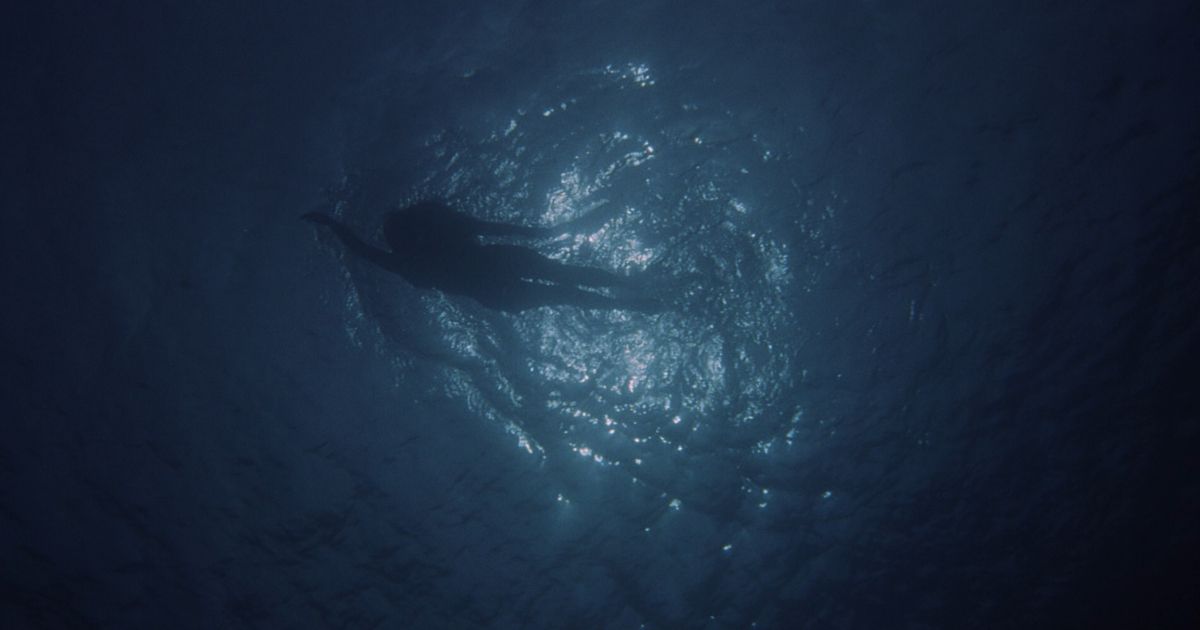
    The shots of the people on the beach use high key lighting, bright colors, and a cacophony of noise. In contrast, the POV shots of the shark moving underneath the water have a noticeable absence of sound, broken only by the “ba dum, ba dum, ba dum’ of John Williams’ score. The beach shots lull the viewer into a false sense of security. They let their guard down and relax. This established mood is what allows shark attack scenes to elicit a high level of fear. All of a sudden, the lighting is low key, the colors are dark blues, and the score grows ominous.

    jaws beach scene - Google Search | Cinematic photography, Beach scenes ...
    10 Thrillers with Incredible Openings Scenes

    This feeling grows stronger as the film goes on. The latter half of Jaws is filled with tension because the viewers can feel the absence of the Amity Island inhabitants. The characters are left alone with the shark out at sea. All sense of safety is gone and there is nowhere to run.

    Jaws (1975): The boat in which the main characters set out to hunt and ...

    Jaws was a hit summer blockbuster and won Oscars for Best Sound, Best Original Score, and Best Film Editing.

    What makes a movie like Jaws hold up so well in the modern day?

    Why do audiences like horror movies so much?

  • Behind the Scenes – Grand Budapest Hotel

    (39) Backstage for ” Grand Hotel Budapest” – YouTube

    While at first watch, the Grand Budapest Hotel looks like an almost fairy tale production, I came across this behind-the-scenes video that shows how resourceful Anderson’s team was during filming. The video reveals explicitly how the train sequences were staged, not with a complete train set, digital effects, or even a train cart, but instead with a simple hand-pushed trolley. With camera framing, later editing, and the seamless integration of different cuts, the filmmakers created the impression of a real moving train, despite the very minimal physical setup.

    What really blew my mind when I came across this was that it shows how budget limitations and stylistic choices can go hand in hand. I believe that Anderson spent $25 million on this film, and when you have these multi-million dollar films that love CGI, or a Christopher Nolan film where he crashes a real Boeing 747, Anderson somehow uses this innovative practical effect that not only saved money, but preserved his aesthetic, showing that sometimes “cheap” methods are actually the most artful.

    Sadly, the video does not analyse why Anderson prefers these practical solutions, and without content, it could seem like a random trick to save money. However, when paired with other readings that explore Anderson’s aesthetics and examine how he achieves such a distinct look by embracing miniatures, models, and old-school effects, this clip reinforces the team’s creative problem-solving and ingenuity.

    Adam Stockhausen on Creating the Vibrant World of The Grand Budapest Hotel

    It is not an isolated trick, and in an interview with KCRW, production designer Adam Stockhausen explains how the team consistently relied on practical thinking to build the fictional country. The hotel interior was an abandoned department store in Görlitz, Germany, for both the 1930s and 1960s versions. Stockhausen also mentioned that a lot of the backgrounds were painted skies or miniatures rather than digital effects, and the baker for Mendel’s pastry boxes was actually a local from Görlitz. When paired with the behind-the-scenes video of the train being nothing more than a hand-pushed trolley, Stockhausen’s interview not only further pushes the budget-conscious choices, but manages to give context that makes it almost inseparable from Anderson’s aesthetic, almost in a way that this fairy-tale world would not be as beautiful, unless approached from this way.

    It also made me appreciate the film even more when I started to understand its inner workings.

  • I tried to pay attention to mise-en-scene in the Rocky Horror Picture Show (a story of failure)

    (Capture from “The Time Warp”).

    Last friday, I went to see the LDOD shadowcast production of The Rocky Horror Picture Show at the Plaza Theater. I’d seen this movie a few years ago, but that was back in pandemic times. I wanted to refresh my memory, and in browsing through the Plaza’s website I found my opportunity.

    For the uninitiated (“Rocky Horror Virgins”), RHPC is a “midnight movie”––it was terribly panned at release in 1975, but quickly gained an extreme cult following (largely through midnight showings). The movie is an incredibly cheesy sci-fi comedy musical with intense Queer themes (quite the shock for 1975), including crossdressing, bisexuality, lots of gay sex, trans and gender non-conforming characters, and more. It was also made on a budget of just over a million dollars and was shot in less than a month.

    Knowing details of the production in advance, I decided I’d try to pay attention to how the producers of RHPC scrimped with their costumes and production design; if Star Trek can put a horn on a dog and call it an alien, surely the good people of Rocky Horror can pull something off.

    (The aforementioned cone dog.)

    I was able to get in two observations before I mind fell into the time warp itself.

    1. They definitely blew the entire budget getting Tim Curry to agree to do this movie. There is none left for anything else. Observe this laser effect. Also the “laser” is the head of an actual pitchfork.

    2. These cheesy costumes and bad effects are somewhere in the realm of purposeful. Faced with a tiny budget and absurd production schedule, the filmmakers chose to lean-in to camp and cheese. These special effects are terrible––this is one frame, but as the camera shakes in the scene, the special effects stay static. They were clearly drawn on in a great rush. What’s stranger, though, is that it also doesn’t draw us out of the story. If you’re at all willing to believe in the absolutely absurd reality of this film, then an actor who forgot to smooth their contour or a group costume that is quite literally a pack of birthday hats won’t pull you out.

    You know what will? Dozens of people in the theater shouting at the screen. And shooting water guns at each other. And acting out the movie. And being incessantly horny.

    These shows are an absolute ton of fun. High art? Absolutely not. But a great blend of terrible cinema, live theater, and the power of fifty years of cult fandom? Absolutely.

    The Rocky Horror Picture Show runs every Friday at 11pm at the Plaza Theater. Tickets are about $18. Go see it.

    Also they have raffles and I won a set of the game Clue.

  • Barry Lyndon: Why Does No One Ever Have Fun Playing Cards?

    I recently was able to see Barry Lyndon (1975, Stanley Kubrick) through the Emory Cinematheque. Riddled with powdered wigs, layers and layers of makeup, paintings that fill entire walls, and shots that actually resemble real paintings from the era, Barry Lyndon’s use of mise en scène transports us directly into the late 1700’s. However, that is not what I want to talk about in this blog post. Instead, I was intrigued by a certain recurring motif in the film: Playing Cards.

    The film as a whole is an argument between fate and self-determination, with Redmond Barry’s life-altering adventure seemingly starting from one lustful, impulsive decision. Playing Cards and Barry’s cheating habits act as a miniature representation of his own life, representing how one often has little control over their own destiny, yet must risk it all anyway. What confused me however is that every time anyone is seen playing cards in the film (which is quite a few times), they seem absolutely miserable. While it is not the happiest film of all time, there are many moments of comedy and smiles. None of these ever occur during a game of cards. I believe that this is probably to communicate how even though Barry tends to win at cards, they are a marker of inevitable doom and demonstrate the futility of trying to climb the social ladder of life. I would be curious to whether this is entirely purposeful by Kubrick or if it just shook out to be that way.

    I mean look how miserable they are.

  • Barry Lyndon – It’s a Comedy?

    Today I watched Barry Lyndon by Stanley Kubrick as part of the 1975: A Year in Cinema program.

    Beforehand I looked up the movie to see what it is about and what genre it belongs to. On Google it is listed as “War/Adventure.” Right from the beginning I was surprised by how many comedic moments – both visual and in dialogue – Barry Lyndon has. The first half feels almost like a comedy: Barry acting childish by throwing a glass at Captain John Quin, Barry getting robbed, and Captain Quin’s facial expressions during his duel with Barry.

    The second half, however, is much more serious and features some very dramatic scenes. Here I noticed the use of the main theme as a kind of introduction to death. Each time the main theme is played, somebody dies.

    Another thing that stood out to me was Kubrick’s use of zoom shots. Was he a pioneer in popularizing this technique?