Category: Reader

  • Modern Art Cinema- Celine Song’s Past Lives

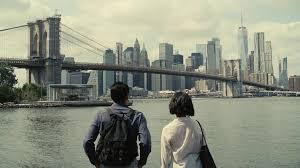
    After reading David Bordwell’s essay “The Art Cinema as a Mode of Film Practice”, I couldn’t help but try to compare what I had watched to every detail he described. Of course, it made me curious to figure out which modern movies pass the “test of art cinema.” I landed on Celine Song’s Past Lives. This movie is the textbook definition of precisely what art cinema is, possessing a definite historical existence, a set of formal conventions, and implicit viewing procedures.

    Song does not follow the classical Hollywood cinematic narratives of cause and effect. The narrative is driven by realism and authorial expressivity. We follow the main character, Nora, as she reunites with her childhood friend, Hae Sung. At the start of Past Lives, Song places us in the position of distant observers. Two unseen strangers watch Nora, Hae Sung, and Nora’s husband in a bar, whispering guesses about what their relationship might be: Lovers, friends, a triangle. This moment sets the tone for the entire film: we begin outside, speculating and interpreting, just as those commentators do.

    Past Lives': A Tour of New York City With Greta Lee and Celine Song

    The characters’ goals are emotional rather than external. We see some characters wander out & never reappear, and events that lead to nothing. We are on the outside, watching this story unfold, and a series of flashbacks and flashforwards drives the narrative. Unlike in a classical film, the spatial and temporal elements are constantly manipulated. Like Bordwell describes, the characters often “tell” us what connections mean through autobiographical recollection, as when Nora reflects on her childhood in Korea before emigrating to Canada. We see this in Past lives after the opening scene, where we flashback 28 years to young Nora in Korea with young Hae Sung. We recount her immigration to America, where we meet Hae Sung’s mom. There is a girl on the plane who practices English with young Nora. Then, we flash forward 12 years to an older, yet still young, Nora in New York.


    Nora reconnects with Hae Sung through Facebook. We follow their relationship over video calls in different time zones, switching perspectives between Nora and Hae Sung. Yet, as the movie progresses, we question who is telling the story. Song disrupts the fantasy early for the audience of “childhood friends turned lovers”, as Nora gets married to a White American man, and yet, it still feels like she is longing to be with Hae Sung or Hae Sung to be with her.
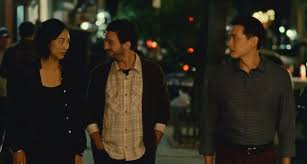
    Past Lives ends where it began, the same street, the same window, but our position has changed. We now see from inside, with a deeper understanding of the characters and their unspoken feelings. The final conversation between Nora and Hae Sung offers the illusion of closure while leaving us suspended in longing. In true art-cinema fashion, Song ends not with resolution but with interpretation. The question is not whether they end up together, but what their connection means to them and to us. In this way, Past Lives fulfills Bordwell’s vision of art cinema: realist, author-driven, and deeply ambiguous.

  • Forms That Teach Us How to Watch

    In this week’s reading of chapter 10. It gives us clear forms to think with while watching a particular movie. On the documentary side, rhetorical forms are filmmaking that aims to persuade the audience. This form addresses to us directly the problem and presents arguable claims. It leans on appeals to feeling, and ultimately asks us to take a side of the problem.

    Placing Jennie Livingston’s Paris Is Burning (1990) against this framework clarifies how rhetorical form can work without a narrator. The film’s interviews, ballroom sequences, and everyday scenes openly address us through testimony of the characters speak directly about safety, recognition, realness, class, and race.

    In contrast of the documentary, experimental work often turns into associational form. The shots and sounds are linked by analogy, contrast, and motif. Through this process we build meaning across juxtaposition of these elements rather than plot points or a thesis statement. For example, the book offered the film Koyaanisqatsi. It shows that ideas about technology and modern life without narration or a very clear line of argument. It structured our experience through segments and images of Philip Glass’s work.

    Finally it is the animation section. In cel animation, studios divide labor across drawing, coloring, and photography. It uses fine detail and capture movements, while limited animation only moves parts of the image. There is also computer animation that reshape the traditional animation film world. Film such as Toy Story establish a convention in the field of fully 3D cartoon world and improving way of making film. The book still stress that human work is necessary, such as modeling, keyframing, and lighting.

    During free time I watched Suzume by Makoto Shinkai. His film feel like chapter’s hybrid model in practice: hand-drawn character aesthetics integrated with digital composition for skies, water, light, and particulate depth, very much in the Mononoke vein the book describes.

    I also spot the strategic use of limited animation for emphasis. The hold and micro motion of the character agaginst the detailed environment aligns with the chapter’s point of limited versus full. It is not just budget constrain but rather a stylistic choice of Shinkai. I will also write a viewer post later this week to discuss about Suzume later this week.

    One question I would like to bring up is:

    Do hybrid animation change how we read movement as expressive. In other words, when do we attribute meaning to limited motion as style versus as a budget constrain?

  • Week 11: Documentary – constructing reality

    Before watching this week’s screening, chapter 10 of film art reshapes how I understand what makes a film a documentary. This section of the book is focused on emphasizing how documentaries do not simply capture reality but construct the way it wants us to perceive reality through a series of choices. And after reading the article about Livingston’s film it makes me reflect how the ballroom scene will inevitably blend observation and persuasion rather than just showing things as they are. 

    One of the themes that stood out to me in indexicality and the book describes it as the physical link between what the camera records and what existed before it while emphasizing that link is not the same as objectivity and accuracy. Just because images are real it does not mean that they are neutral and non staged. 

    The reading also explores two major types of organization: categorical and rhetorical form. Categorical form groups information thematically ( like a scientific or sociological study for example) while the rhetorical form uses facts and emotions to persuade the viewers of a viewpoint. 

    Finally, Bordwell and Thompson remind us that documentaries often stage or structure events (editing interviews, adding narration, asking subjects to repeat actions) to shape meaning. This idea complicates how we judge truth in non fiction and how can we discern reality from construction. 

    When I think about these ideas in relation to the documentary film The Salt of the Earth (a personal favorite) by Wim Wenders, the tension between documentation and interpretation becomes even clearer. This film relies heavily on indexicality as the photographs used in it are literal traces of real suffering, displacement and resilience. Yet the filmmakers use sound design, narration, and editing to guide our emotional response, transforming the images into a rhetorical form that advocates for compassion and ecological awareness.

    Formally, The Salt of the Earth alternates between still photographs taken by Sebastiao Salgado (the subject of the film) and present day footage of his travels creating something close to categorical form. But as the film progresses, it moves into rhetorical form as it persuades viewers to see beauty in devastation. This shift makes visible what Film Art calls “the filmmaker’s argument”: the shaping of real material to express a worldview.

    My questions for this week are: 1. Does Paris is Burning use both  categorical and rhetorical forms to shape meaning similarly to The Salt of the Earth? 2.  Can a film ever truly let its subjects speak for themselves or if it is always going to be an act of shaping reality?

  • “Film Art” Chapter 10 and Mixed Media

    This chapter of Film Art introduces documentary, experimental, and animated films. Documentary films interpret reality to tell what is meant to be a nonfiction story. This can be a nonpartisan organization of information or an attempt to persuade the viewer into believing something; these are defined as categorical and rhetorical. Experimental films do not follow traditional narrative rules, but rather may focus on patterns of sound or light and may have an unconventional narrative or no story at all.

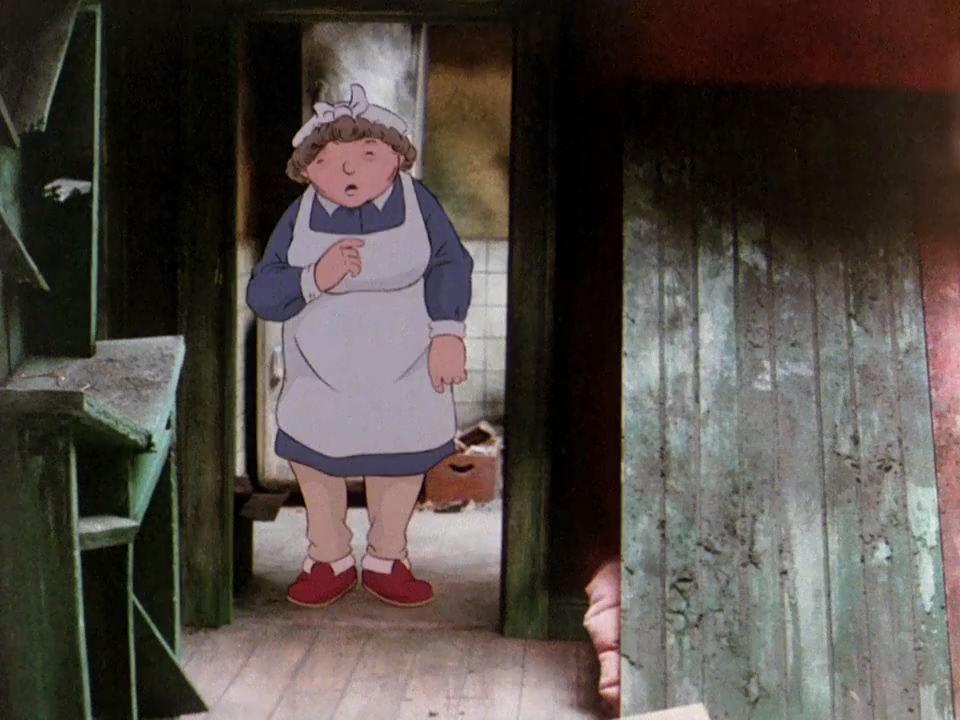
    There are many types of animated films, but their defining characteristic is that it constructs reality by drawing, computer generating, or manipulating objects frame-by-frame. When I read this section in Film Art, I reflected on how a lot of animated media uses multiple forms of animation. One film that came to mind was Jimmy Murakami’s 1986 war film When the Wind Blows.

    The film utilizes a mix of traditional and stop-motion animation, which creates a juxtaposing effect that is perfect for the message of the film. The two characters are drawn and animated with the process of cel animation. This is when clear sheets of celluloid (or “cels”) are drawn on and then layered and photographed. When these cels are shifted, it creates the illusion of movement. However, rather than a drawn background. This film uses sets made of real objects and adds the drawn characters in later. The objects in the set are animated to move as characters interact with them. This film is about the devastating impacts of nuclear warfare, but the characters are relatively oblivious to the danger they are in, which is displayed by the set around them mimicking reality as they remain drawn. There are even multiple live-action scenes in the film, such as when the bomb drops in the film. I don’t think this fully classifies as experimental but the use of mixed media definitely breaks traditional narrative rules.

    Another animated movie that came to mind was one of my favorite animated films, Satoshi Kon’s Paprika. This film blends hand-drawn imagery (cel animation) with CGI, which is computer-generated imagery. This is an extremely surrealist film with an extreme amount of detail, and the CGI is used to aid the drawn animation to aid this effect and be more efficient. (https://www.tboake.com/manipulation/yeung/4films/paprika.html)

    After reading the Guardian article about Paris is Burning, I think it raises a concern in documentary-making that I never considered. The documentary received backlash because the director is a white filmmaker making a film about a predominantly black/latino scene. This raised questions about cultural appropriation and lack of profit/recognition for participants in the film. This also highlights how, while documentaries are meant to be fully nonfiction, the experiences/identity of the filmmaker always matters as it can create bias.

  • Documentary, Experimental, and Animated Films

    This week, we read about three different types of films: documentaries, experimental films, and animated films. All of them differ from narrative film in some way.

    Documentary films claim to present factual information about the world. They have their own genres and often mix them to create a collage of records centered around a specific subject matter.

    Experimental films, on the other hand, are created to express a unique viewpoint or experience, convey a mood, show a physical quality, or explore possibilities of the medium. Narrative form tells a story with expressionistic features, but the two main forms of experimental films are abstract form and associational form. Abstract form emphasizes pictorial qualities such as shape, color, or texture. You can think of abstract form as art in the medium of film. Associational form suggests ideas and emotions to the viewer by assembling images and sounds that may not have any logical connection. You can think of associational form as poetry in the medium of film. The juxtaposition of images creates linkages that the viewer can interpret. One example of an experimental sequence in a film is from 28 Years Later, where war footage is intercut with the current scene.

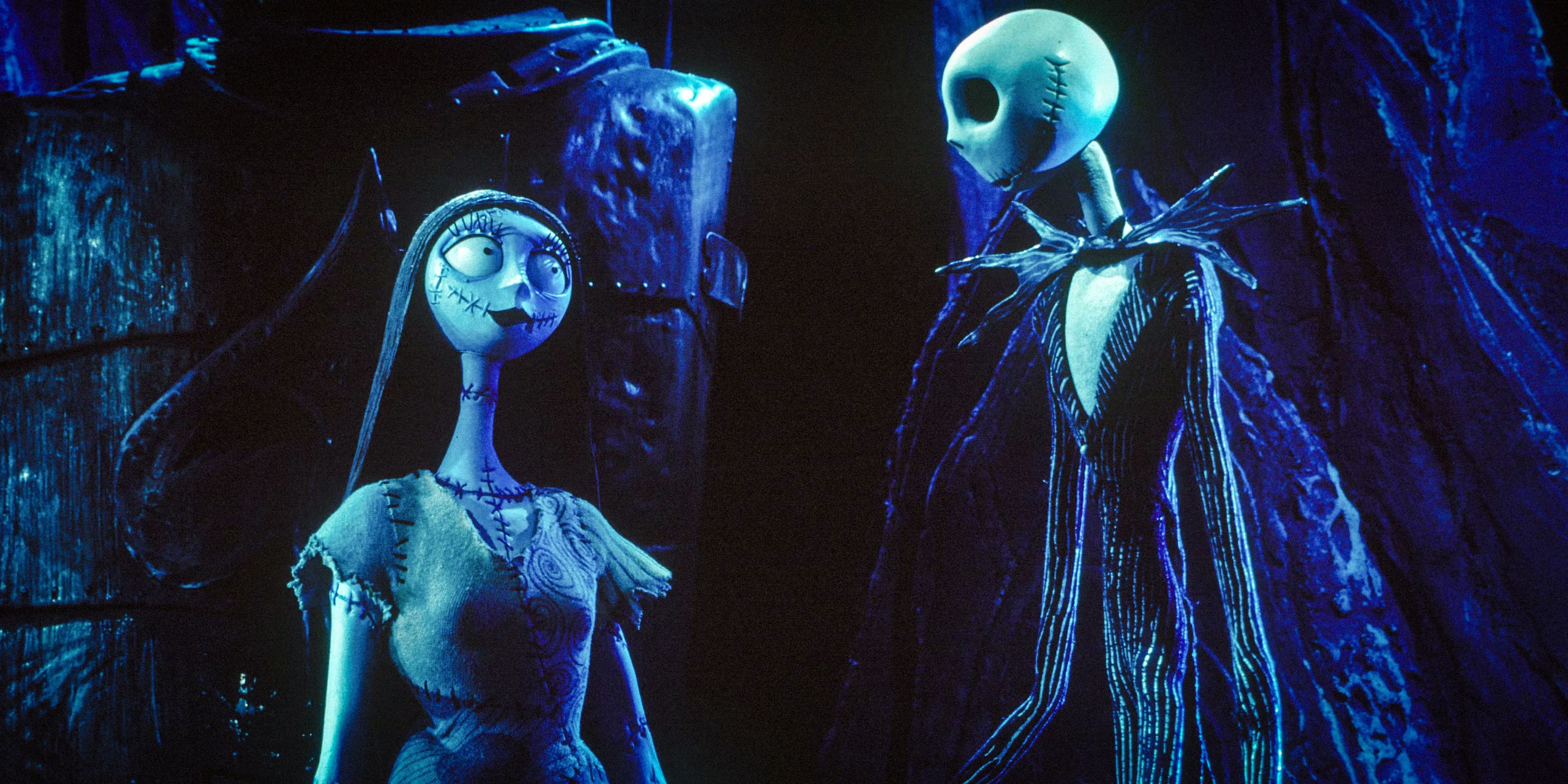
    Animated films are a series of images that are shot one frame at a time. They encompass a wide range of genres and types of films. You might see a narrative, documentary, or experimental animated film. Older animation techniques involved celluloid (or cels for short), layered animated drawings that created an illusion of movement. Other animation styles include cutouts, clay animation, or model/puppet animation. I recently watched A Nightmare Before Christmas (Henry Selick 1993), which was created in the puppet style of animation as a stop-motion musical.

    Tim Burton Crann

    In a lengthy process of two years, the animators had to pose the puppets for each frame of the movie. That added up to roughly 110,000 frames. In addition, the creative team built all of the sets and props from scratch, while Danny Elfman wrote all of the songs and was the singing voice for Jack Skellington. The result is a movie with a unique visual and musical identity that remains a beloved family film to this day.

    Another studio that is famous for puppet animation is Studio Laika. Coraline, Kubo and the Two Strings, and ParaNorman are some of the movies they have made. Their upcoming feature, Wildwood, released a first look documentary a few days ago.

  • Experimental Film in 2001: A Space Odyssey

    Experimental Film in 2001: A Space Odyssey

    This week, we’re discussing three distinct genres of film: documentary, experimental, and animated. Although I haven’t delved into the first two genres extensively, 2001: A Space Odyssey by Stanley Kubrick stood out to me immediately as an experimental film I’ve actually seen (so many films that are considered experimental have been on my watchlist for a LONG time, such as House and Stalker).

    Though not all of the film is considered “experimental”, the “Stargate” sequence definitely should be.

    At the beginning of the sequence, Bowman, our main character, is in space investigating one of the monoliths when he is pulled into a gateway of colorful lights.

    Throughout the rest of the sequence, we see tunnel-like flashes of light (shown above), with shots of Bowman in distress interspersed between. It’s worth noting that as the sequence continues, the shots of Bowman become motionless, his face frozen in horror and distress. As the sequence continues, we begin to see shots of blinking eyes (presumably Bowman’s?) with different color schemes, space phenomena, and landscapes of strange colors.

    This sequence is a version of what Film Art calls “associational form”. Using these images, Kubrick suggests ideas and emotions to the viewer, despite the images seemingly having no logical connection.

    Through the tunnel-esque design of the colors, we infer that Bowman is traveling somewhere. Then, using the short, shaky shots of Bowman in distress, along with the freeze-frames, we know that whatever journey Bowman is on is nowhere near pleasant. But on the other hand, some parts of this sequence are also abstract (the second form). The images aren’t necessarily used to convey a meaning; it’s up to the viewers themselves to find meaning within them. A good example of this in the sequence is the eyes or the space phenomena. Is Kubrick trying to show what Bowman is seeing as he travels?

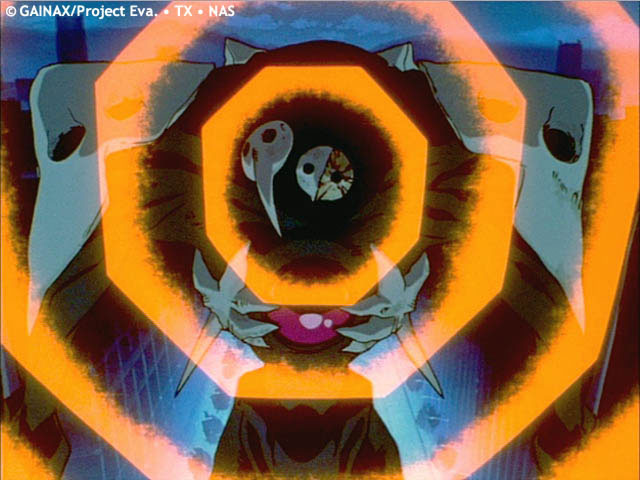
    On the topic of 2001, it’s also fun to see references to such an influential movie in other media. There were two pieces of media that came to mind immediately, which are the anime Neon Genesis Evangelion and one of my favorite video games of all time, Signalis.

  • Chapter 9 and the Meaning of Genre

    I always thought the idea of genre and sub genres is interesting in movies. Humans have an innate desire to categorize things (Genre of music, type of food, species of animal). Film is no exception. Although films just stem from an idea in a single human’s brain, we feel the need to categorize it into something boiled down. Chapter 9 discusses how to recognize those categories, and gives a few examples of its’ own.The chapter describes genre as a a category of films that share conventions such as plot structures, character types, setting, themes, etc. We learn to recognize genres by associating specific elements with larger groups. For example, the idea of revenge is often associated with Westerns, the theme of loyalty is associated with martial arts fils, and even specific symbols like a Tommy Gun is associated with gangster films.

    The chapter also discusses the concept of life cycles within genre, which I found to be very interesting. The idea is that there seems to be a clear arc when it comes to some genres: An emergence of the genre, a rise, a peak, and a decline. Such examples include the introduction and eventual over saturation of disaster movies, large scale fantasy movies, and dystopias. I think that some genres have definitely proved to withstand the test of time, but I find it interesting that film genres are as much of a trend as fashion or food. Film makers learn from one another, leading to certain trends and eventual ends of trends.

    The chapter also gives us a case study on four genres: The Western, the horror film, musicals, and sports movies. The chapter discusses how Westerns, for example are derived large in part from reality, and displays common themes of order vs. lawlessness. Westerns are also widely recognized from their iconography: Railroads, spurs, horses, wagons, etc. Horror films are less recognizable by iconography, and more definable by emotions. Specifically, horror films evoke feelings of disgust and fear. Musicals, on the other hand, are an example of technological development. As we saw in Singin’ in the Rain (Kelly, 1952), the implementation of music and dialogue in film was revolutionary, and the concept of the Musical was defining of that innovation. Lastly, sports films are largely categorized by their use of a ‘Big Game’, a win or lose moment between the ‘good guys and bad guys’. They often feature underdogs, and end in joyful, unexpected success. These are just some ways that films can be categorized, and how we recognize them.

  • The Genres of Chapter 9

    This week’s reading takes us away from the harder, technical knowledge of the class of editing, cinematography, and mise-en-scene, and towards more big-picture aspects of film: the film genre. This reading covered some history and logistics behind genres, as well as four of the main genres in American film: the Western, Horror, Musical, and Sports. I thought this was an interesting list–I figured rom-coms would be featured, but I figured wrong. This list was still very interesting to read, and covered in-depth descriptions of each genre type. Here’s a brief re-telling of the genres:

    The Western movie is a classic, born at the beginning of the 20th century, not so much later than the birth of film itself. I really liked the beginning of this description, the Western film displays the “conflict between civilized order and the lawless frontier.” Whenever I think about a Western, I consider the rebellious aspect of it a lot. Also, the standoffish nature of it all, with duels and the whole “this town ain’t big enough for the two of us” deal.

    Horror movies, as well as the Horror genre, are characterized very distinctly by their subjects, themes, and iconography. Iconography, especially, is prevalent in this genre. The Horror genre immediately elicits images of Jason’s mask from Halloween or the doll from Annabelle. All of these are very iconic examples of iconography.

    As a theatre kid, I’m very familiar with the musical genre–both onstage and onscreen. There are two types of musical films: the “backstage musical” and the “straight musical.” The backstage musical contains actors that perform for an audience in their story world, while a straight musical follows a typical narrative, just with singing and dancing throughout as a storytelling mechanism. A good example of a straight musical is Singin’ in the Rain!

    The last genre on the list is the sports movie. I haven’t seen many, but the first that comes to mind is a classic from my childhood, The Sandlot. This genre is characterized by not only sports-playing, but by competitions and tournaments and typically containing the big game at the story’s climax. Additionally, this is where the popular underdog narrative often takes place.

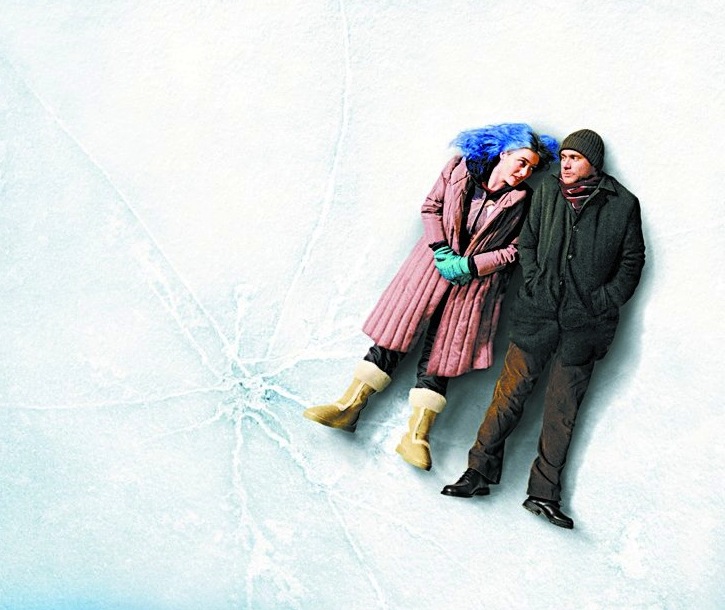
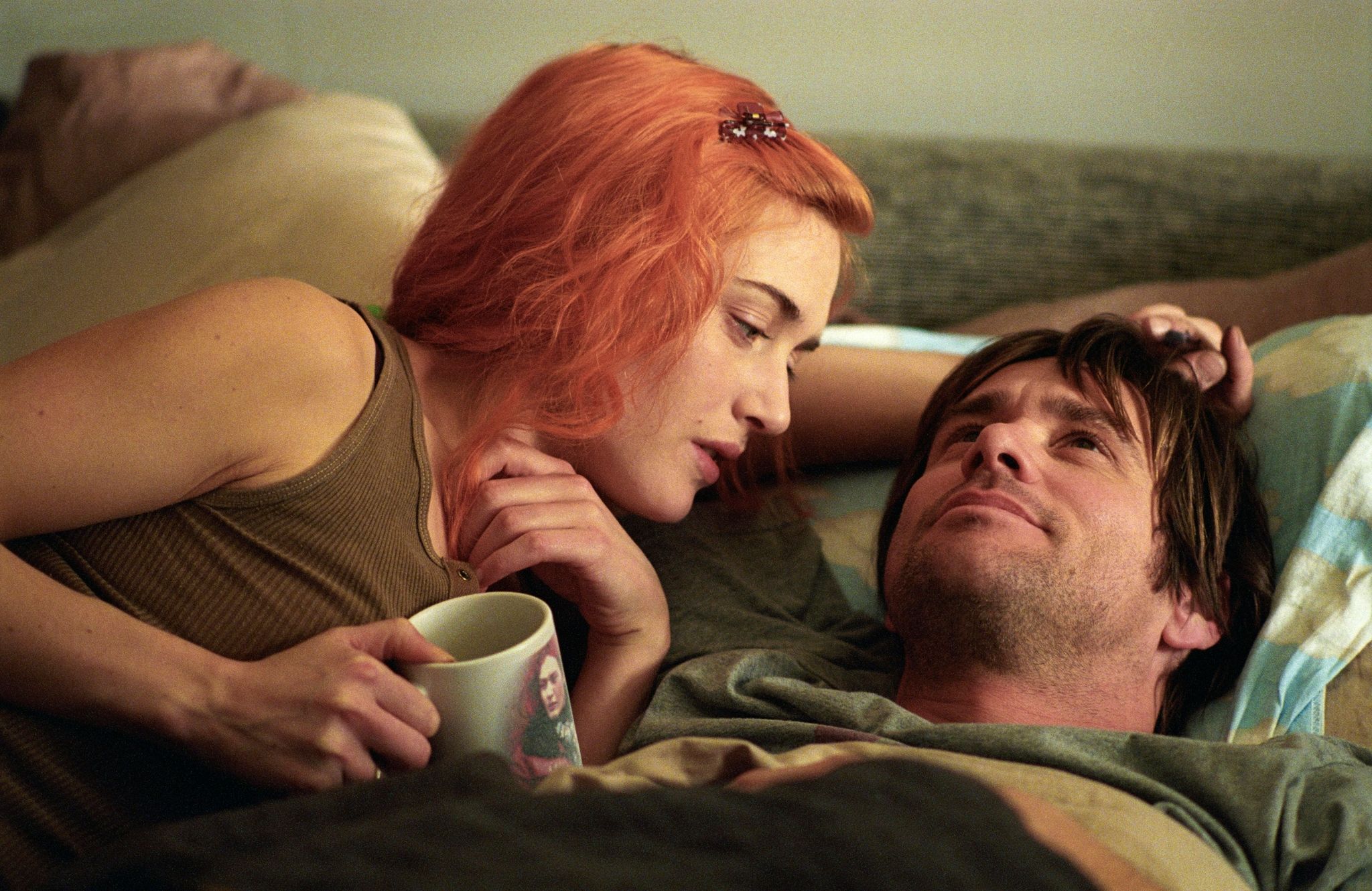
  • The Fragmented Truth of Memory: Narrative Form in Eternal Sunshine of the Spotless Mind

    I am writing this reader’s post after watching Citizen Kane, which gave me a lot of inspiration about how audiences and the movie interact. From Citizen Kane, we see narrative in forms of memory, in fact, in different aspects and versions of memory, such that they seem to piece together a story. Through such nonlinear narratives, why would the audience be able to understand what’s going on? Bordwell, Thompson, and Smith describe narrative as a chain of events linked by cause and effect occurred in time and space.

    However, they also remind us that narration can control what we know and when we know it (which ties back to Citizen Kane, as the story literally is about information control). In Eternal Sunshine of the Spotless Mind (Michel Gondry, 2004), this manipulation of time and information becomes the emotional core of the film.

    The space between who we are and who we think we are movie review (2004) |  Roger Ebert

    The story itself is simple: about two people (Joel and Clementine) meeting and falling in love on a train. Eventually, they experienced a painful breakup due to miscommunication. Both decided to undergo a medical procedure at a company called Lacuna, Inc. to have each other’s memories erased. However, the erasing process forces them to relive their experiences with each other in reverse–so they ended up experiencing their final fight, and moving backward to their first moments of love. As Joel revisits these memories, he realizes that he didn’t actually want his memories of Clementine to be erased.

    Unfortunately, the erasing process was complete, and both of them forgot about each other. Although later by chance they met on a train and fell in love again, just like they first did, ending the movie merrily, what is more important is the narrative structure of this film.

    Dreaming of Lacuna, Inc.. When I first saw Eternal Sunshine of… | by  Christian Montoya | Applaudience | Medium

    The plot is nonlinear and disorienting by design. The film begins after Joel and Clementine’s relationship has already ended and been erased, but neither the audience nor Joel realizes this right away. By employing nonlinear storytelling and restricted narration, we learn Joel’s memories in reverse, mirroring the mind’s gradual erasure. The result is that the audience experiences forgetting alongside the character, and become trapped inside the narrative logic of memory rather than time.

    In this work that narrates time reversely, temporal order and causality are also mixed up. As memories collide into one another, spatial and continuity break down, forcing the audience to think hard piecing these scenes together. In one moment, Joel runs through his own memories to “save” Clementine, blending dream logic with narrative motivation. Bordwell would describe this as a manipulation of time and space that adheres to cause and effect–that the cause (Joel’s resistance to forgetting) to the effect (the reappearance of moments in the past).

    Eternal Sunshine of the Spotless Mind

    But even when the film bends time, the emotional coherence is maintained, which is the unity of meaning. During the final scene, the directors decide to end the film with an open-ended narration: Joel and Clementine listens to tapes of their past relationship. This provides neither a full disclosure nor disunity, but an open-ended interpretation which we do not know what will happen in the future.

    Revisiting this movie after reading through this chapter and watching Citizen Kane, I found a lot more fun in exploring the relationship between how the human mind absorbs information and how narration techniques could best serve the human mind in understanding what filmmakers are trying to tell. The emotional power of Eternal Sunshine of the Spotless Mind does not come from the story itself, but definitely from how it’s told, which is all the power of narrative form.

  • When a movie has three narratives (or maybe none?): Diegesis in “Clue”

    Clue (Lynn, 1985) is a classic comedy-mystery film based on the classic whodunnit board game. The movie is absolutely hilarious, but it’s also very unique as far as mystery films go. Clue has three endings. Not narrative jumps, not fake-outs, but three actual solutions to the whodunnit mystery. On theatrical release, each theater was sent a different ending, and on streaming, they are all presented as possible realities. At first, it would seem like this absolutely throws away any sense of a consistent plot or narrative (any proper diegesis)––how can a murder have three different killers, three different distinct sequences of effect?

    Clue is a genius film because it doesn’t have one narrative, one sequence. It cleverly builds up a giant front of nothing, then builds it’s entire narrative in less than five minutes. How? Diegetic narration.

    Clue is a restricted film, in that we never know more than one character. Specifically, we never know more than the murderer knows–-we see the killings as they happen, but we never know who does them. At least one characters always knows more than us. And that character is usually the man above, Wadsworth (Tim Curry). He is the butler of the house, and the story’s effective narrator.

    Throughout most of the film, the characters make absolutely no progress towards finding out who the murderer is. They search the house repeatedly, deal with guests, and discover murder after murder (eventually totaling six), but never get any closer to finding the truth. In this sense, Clue completely disregards the notion that characters are causes of events––the murderer in Clue might as well be a force of nature (faceless, unknown, unfeeling, and unseen), and the plot is otherwise driven by seemingly random occurrences (the motorist’s arrival, the singing telegram, Mr. Boddy not being dead). Clue‘s plot, when pared down, is nearly non-existent: the characters move around the house discovering nothing for an hour as random things happen, until Wadsworth explains the entire thing to them.

    This is not a plot. It’s a sitcom set-up. Which is why Clue‘s comedy takes center-stage. Comedies don’t necessarily need plots, and Clue can sometimes feel more like a Who’s-on-First-esque stand-up bit rather than a film.

    I don’t want to claim that Clue has no elements of narrative story; like all mysteries, it hides it’s causes without hiding it’s effects, while it has no actual flashbacks it does have an extended scene where Wadsworth acts out the beginning of the movie, functioning as a flashback, and it does have a climax (or, more accurately, three––each of the three moments when Wadsworth unmasks the murderer(s)). But it barely has a rising action, if at all. It mostly shuns exposition, giving one detail each per character and nothing else until the very end, and while it theoretically has a goal-oriented plot, nothing happens. The narrative of Clue moves at a speed of zero until the very end, when it suddenly launches through every stage of a plot in five minutes.

    Clue, to me, is a fascinating example of a refusal of narrative. The story of the movie is so completely not-the-point, instead being there only to provide moments of shock and comedic set-ups. I’m curious what others think––is Clue a seminal masterpiece in non-narrative writing? Or just a mystery that leans a little too heavily on humor? Either way, this whodunnit mystery film is a classic for a reason––and that reason isn’t the mystery itself.