Category: Reader

  • Narrative Form and Cinema of Attractions in About Time

    In this weeks reading on narrative form, we learn how events in film unfold through causality, time, and space within a coherent diegesis, the film’s world of story action. Temporal relations, such as order and duration, also guide how audiences process the story such as whether events are shown chronologically or through flashbacks and repetitions. This structure provides clarity, creates emotional and thematic unity, and leads viewers toward resolution and meaning.

    In my favorite film, About Time (Curtis, 2013), narrative form is approached in a unique way, because the main character, Tim, is able to time travel to points in his life. The film plays with temporal order by repeating events in new variations, allowing viewers to compare how choices shape meaning. Duration, or how time is represented, varies across the film from quick rewinds to long stretches of lived experience. By the end, when Tim stops time traveling and embraces the present, the pacing slows. The audience feels the emotional weight of time by the end because the narrative stops manipulating it.

    Tim’s narration unifies these shifts in time and space. His reflective voiceover anchors the audience during a nonlinear storyline, shaping understanding of both the story itself and his internal transformation throughout.

    In Tom Gunning’s essay, he looks at an earlier stage of cinema before narrative form became dominant. He defines early film as a “cinema of attractions,” where the emphasis was on showing rather than telling. These films directly addressed the audience, highlighting spectacle, novelty, and surprise rather than character development or plot. Gunning argues that while later narrative cinema wanted to immerse viewers in a continuous story, the cinema of attractions invites awareness of the act of looking. Cinema was about the experience of seeing and being amazed by motion and illusion.

    About Time also contains moments of cinematic attraction in Gunning’s sense. The time-travel sequences momentarily pull viewers out of the story to look at the visual spectacle of time manipulation itself. These instances seem to pause narrative progression for the purpose of emotional spectacle.

    For example, when Tim relives an ordinary childhood day on the beach with his father after learning of his death, the scene functions less as narrative advancement and more as what Gunning would call a “cinema of attractions”: a moment of direct emotional address to the viewer. The slow pacing, golden lighting, and sense of suspended time invite viewers to live in the experience and be in awe of the ocean’s beauty with them, rather than think about the future. It’s an attraction not of shock, as in early cinema, but of sentiment—a spectacle of feeling. The story pauses and time itself seems to hold still. It’s not about narrative logic anymore but about emotion, the beauty of the moment, and the connection between father and son. These scenes remind viewers of film’s power to manipulate and reshape time and shape, creating a sense of wonder that is distinct from the plot’s emotional or overarching “romcom” narrative arc. It reminds viewers that Tim is not on a quest to fall in love with a woman, but rather on a quest to fall in love with life itself.

  • Narrative Form in Parasite

    When we watch a movie, we do more than just observe. We actively construct meaning by connecting events, predicting outcomes, and imagining what might exist beyond the frame. This makes storytelling in film an interactive process between the filmmaker and the viewer. This week’s readings on narrative form and narration emphasize that films create meaning not only through what they show but also through how and when information is revealed. Chapter 3 explains that narration is the method through which story and plot are presented to the viewer, shaping how the plot delivers the story moment by moment.


    It is defined that a film’s story represents the full chain of events in chronological order, while the plot is the filmmaker’s intentional arrangement of those events to control what we experience and when. After reading Chapter 3, I began to think about how films guide our understanding by controlling what we know and when we know it. I recently rewatched Bong Joon-ho’s Parasite (2019) and noticed how this dynamic structure is exemplified.


    As the readings explain, the story exists in our minds as a chain of events while the plot shapes how we experience it. Parasite’s story could be told straightforwardly as a poor family infiltrating a wealthy household. However, the plot of the film builds suspense by giving us information slowly through the eyes of the Kim family. Joon-hoo rearranges and reveals information in ways that control how we feel and what we know. Scenes are placed strategically to build curiosity and suspense. For example, at first, the Kim family’s plan seems clever and lighthearted. However, when the hidden basement is revealed, everything we thought we understood about the family’s actions changes. This rearranging of information keeps us engaged, encouraging us to connect causes and effects and to reinterpret what we have already seen.

    Techniques such as restricted narration and point-of-view (POV) shots deepen this process. The readings explain that narration determines whether we know more (unrestricted) or less (restricted) than the characters. Parasite relies mostly on restricted narration, as we often know only what the Kim family knows. The POV shot, as the readings describe, is a tool that allows us to see the world through a character’s eyes. Bong uses both of these to heighten tension and align us with the Kims’ limited perspective. For example, when Ki-taek peers out from hiding beneath the table, the camera mimics his restricted view, forcing us to imagine what lies just outside the frame. These moments emphasize that narration is not neutral, but rather it is constructed through selective framing and sound that guide how we process information.

    Narrative cinema is a collaboration between what the filmmaker shows and what the audience infers. Through its manipulation of story, plot, point-of-view, and other techniques, Parasite exemplifies that film is not something we simply watch, it is something we build meaning from.

  • Following the Trio: A Narrative of Fear and Uncertainty in Harry Potter and the Deathly Hallows (Part 1)

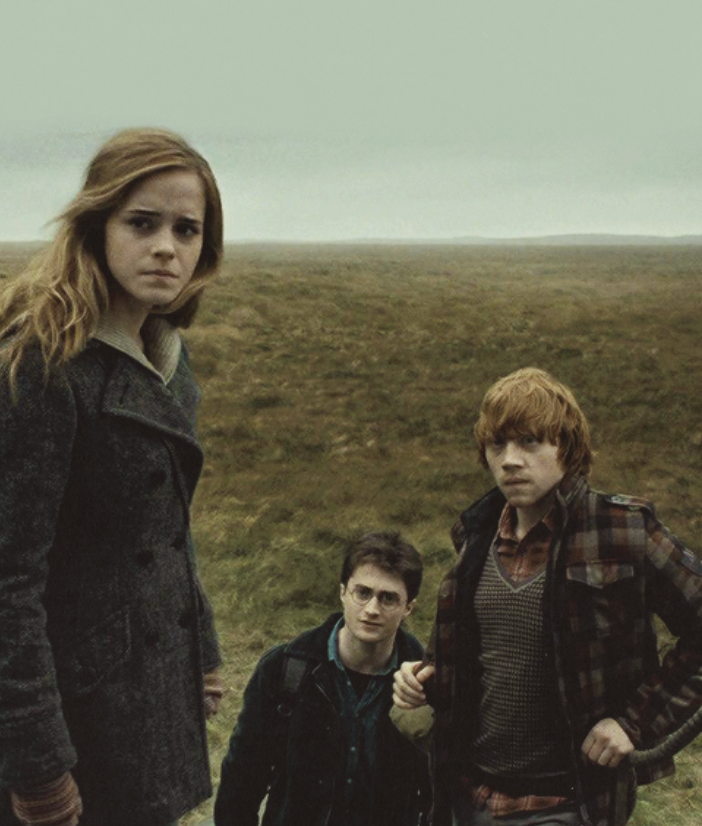
    While reading about narrative form and the cinema of attractions, I kept thinking about Harry Potter and the Deathly Hallows, Part 1 and how its slower pace and moments of spectacle make us feel the story’s uncertainty in a really visual way. Unlike the earlier Harry Potter movies, The Deathly Hallows, Part 1 slows everything down and narrows the focus. The film uses restricted narration, so we only see and know what Harry, Ron, and Hermione do. Because we’re limited to their perspective, we’re able to strongly connect to their confusion and frustration as they struggle to search for the Horcruxes. The long stretches of silence and constant wandering throughout the film make the narrative itself feel tense, almost as if the characters are stuck in time.

    The film also plays with the element of temporal order which further encourages us to put ourselves in the positions of the main characters. For example, the long and quiet forest sequences make the passage of time feel stretched out, and the use of flashbacks and dream sequences momentarily disrupt the flow of events. When Harry sees flashes of Voldemort’s movements through their mental link, we’re pulled out of the present moment and into his mind, which leaves us disoriented and questioning what’s real or imagined. These choices in narrative form force viewers to question what’s real, what’s memory, and what’s imagination, blurring the line between the past and present. It’s less about building toward a single climax and more about showing how time itself feels distorted when the characters are directionless while searching for Horcruxes the whole movie.

    Even with its slower pace, the film still has moments that support Tom Gunning’s idea of the cinema of attractions, which are scenes meant to astonish the viewer rather than just move the story forward. The Tale of the Three Brothers sequence, which is told through shadow animation, is a perfect example. For a few minutes, the film pauses the main narrative to tell a story within the story that’s visually striking and stylistically different from everything else. Considering that we only realize the tale’s significance later in the film, it feels like this pause invites us to watch for the sake of wonder before its deeper meaning clicks into place.

    Through the mixture of restricted narration, disrupted temporal order, and visually striking flashes, Deathly Hallows, Part 1 is a perfect setup for the battle to follow. The decisions in narrative form regarding time, perspective, and spectacle allow viewers to more deeply empathize with the characters and actually feel what it’s like to live inside a wizarding world that’s falling apart.

  • The Sounds of La La Land

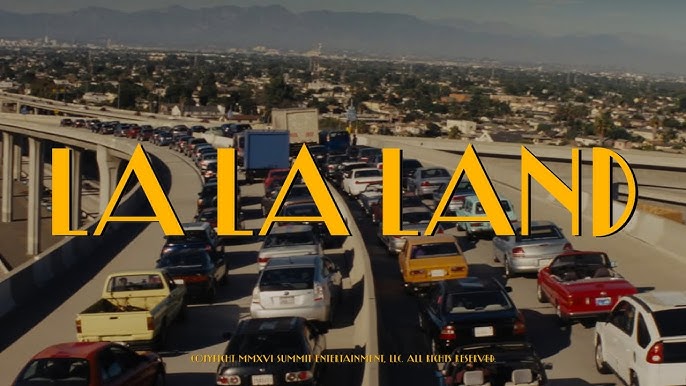
    It’s always a great day when I get to talk about “La La Land”, so what a perfect opportunity it is to be assigned to talk about a movie that encapsulates different elements of sound. While it obviously has the greatest soundtrack of all time (in my opinion), it uses a plethora of sound techniques to help make that part of the movie come to life.

    The most notable one for me is their use of nondiegetic sound / music, which is sound that comes from a source outside of the story world. In the “Planetarium” sequence, Mia and Sebastian waltz around a building and through the stars and clouds to a song that only seems to exist in their imaginations. I remember showing my mom this movie for the first time, and her immediate reaction to this scene was something along the lines of “this is way too unrealistic, I don’t get it”; but that’s the whole point! Nothing about it is realistic, but that’s what makes us feel all of the unexpected romance of their new connection. By using nondiegetic music, along with them dancing in space, it shows that they are, literally, having an “out of world” experience. It gives a more fantastical, unrealistic touch to the scene, and it helps add to the idea of them being in “La La Land”.

    Another sound technique that they used with the movie’s musical scenes where the actors are singing, is they had them lip sync to prerecorded tracks. Then during the editing process, they put the sound and image together to get the final product. Most movies add the soundtracks in during postproduction, not in the moments of shooting. As noted in the textbook, “even dancers’ footwork, like taps or stomps, will already be on the playback”. That way the sound can be more consistent and clear than if they had people trying to sing on camera during big numbers like “Another Day Of Sun”, when there’s already so much going on.

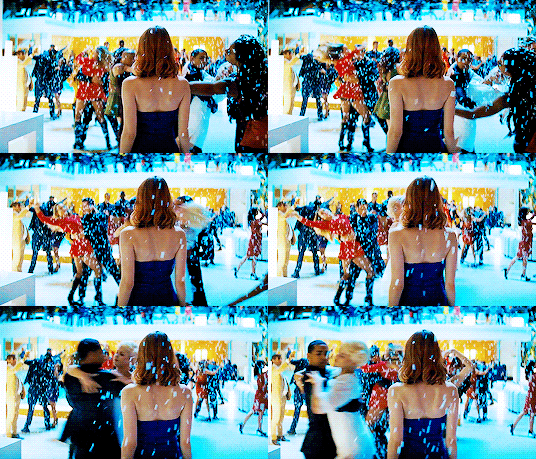
    During “Someone In The Crowd”, Chazelle uses rhythm and tempo to blend the song and imaging of the dance sequence together. After Mia has her solo moment in the bathroom mirror, she walks out to a slow paced beat of music. She steps with the same rhythm of the song, and the dancers around her also dance at that same pace. As the tempo of the song gets faster, her walking and their dancing does as well, all leading up to the finale of everyone jumping in the pool and dancing and singing much faster. He uses that combined visual and audible rhythm to build up anticipation to that final segment of the song.

    My initial question from the reading is how do we differentiate between loudness and pitch?

  • Rewatching Wicked Pt.5

    Not to see the beautiful visuals but to pay attention to the sound!

    When tasked with creating an entire world out of nothing, although what we see is so important to creating the unique whimsy of Oz, what we hear cements us in the film even more.

    This film beautifully uses the synchronization of senses to help put us into their shoes. As they do their musical numbers and dance, we hear every movement perfectly timed with the visuals and it makes you feel like a fellow student of Shiz University. Sound is an element they have to rely on heavily to help bring this fictional land to life, from hearing the animals, to the loud creeks of doors, to the sound of Glinda tossing her hair. Sound makes these simple movements we would ignore everyday, seem so important and whimsical- making everything in Oz feel alive.

    The movie utilizes diegetic sound wonderfully with the musical scenes. We are able to see how the students of Shiz University react to music and it gives us a better understanding of the whole world they are in and how students perceive Elphaba vs Glinda. Specifically in the scenes during a Wizard and I vs Popular- we see Elphaba singing and her peers reacting to her as she sings, they look disgusted and run away from her, yet when Glinda sings they all flock to her. Because of our understanding that music and singing are welcomed in Shiz, we know it has nothing to do with them randomly bursting out into song and everything to do with how the students at Shiz view them. Diegetic sound plays a crucial role in this movie because it helps us understand how the characters interact and how music plays a key role in their fairytale land.

    Along with this, composer Stephen Schwartz uses timbre, the unique quality or color of a sound used to heighten the experience of the film. In Wicked, this element is used heavily. With Elphaba her timbre is used to show how powerful of a character she is since her singing comes from a more alto and stronger place (sometimes seen as a “Chest Voice”,) while with Glinda her vocal performance is often characterized by a bright light to show her bubbly personality. Timbre is throughout this movie, bringing the characters to life and showing us how sound is important for telling us about the characters personalities and influence on the people around them.

    Overall, sound is one of the most important elements of this film. Without it, we would struggle to understand Glinda and Elphaba’s relationship dynamic or how they fit into the world around them. Sound reveals another layer of the world of Oz, allowing us to experience its deeper nuances. As mentioned earlier, because of these things, the whimsical sounds of Oz help us connect with the movie and fall in love with this magical world.

  • The Emotional Volume of Malcolm and Marie

    The movie Malcolm and Marie tells the story of a successful filmmaker and his lover who return home from his movie premiere and engage in a heated argument about the film’s inspiration. The film focuses on the life of a woman recovering from a history of drug abuse, and Marie believes the movie is based on her life. She feels neglected because Malcolm did not mention her during his speech at the premiere. The setting of the movie is a large, seemingly secluded house, featuring only these two characters, which creates a “close-proximity relationship” between the actors and the audience. Additionally, the movie is entirely in black and white, further reducing distractions and directing the viewer’s attention to what is happening in each scene, and most importantly, to the sound.

    When discussing the sound complexity within this film, it is important to focus on the speech, music, and noise. With the entire setting taking place within the couple’s home, the dialogue between the two allows for deeper understanding, the musical choices convey intense emotions, and the noises (sound effects) reinforce a sense of fidelity. The movie heavily relies on diegetic sound to evoke a sense of realism that places viewers in the position of feeling present within the home.

    The movie opens with an establishing shot of what we assume to be the couple’s car slowly approaching their home. The proximity of the camera to the sound source suggests the use of added sound effects created through the Foley process to imitate the noise of a car inching closer. This opening shot introduces the concept of sound perspective, which is present throughout the film. As the car approaches the camera, the volume gradually increases. The scene then cuts to the couple entering their home. Marie heads to the bathroom while Malcolm goes to the bar and begins playing “Down and Out in New York City” by James Brown.

    With the distance between the characters in this scene, we can observe how the loudness is distributed across the cuts. This scene features a large sound bridge that connects the shots and maintains continuity. The medium shots focused on Malcolm are louder due to his proximity to the speakers in the bar, while the shots of Marie in the bathroom are more muffled and distant, creating a sense of depth and separation. There is minimal verbal communication throughout this musical aspect, however, the addition of automated dialogue replacement (ADR) in post-production helps blend the music and dialogue, illustrating the connection between the two within a loud environment. 

    This scene also effectively demonstrates the manipulation of volume for intelligibility, setting the tone for the relationship dysfunction that unfolds later in the film. Malcolm is portrayed as loud and overpowering, while Marie remains more subdued, yet equally passionate and intense.

    As we approach the halfway point of the movie, the dynamic characteristics of the characters truly come to life. When another argument is introduced into the sequence, we hear the reintroduction of the song “Down and Out in New York City” through Marie, who expresses, “As if a song written 50 years ago about a different f****** girl would somehow make me feel better about our relationship.” This suggests that the song initially served to engage the audience in the opening scene, but its later reappearance provides a foundation for understanding the emotional complexity between the couple. While Malcolm uses the music to uplift his spirits and celebrate his accomplishments, Marie perceives it as boastful and dismissive of her feelings.

    After reading chapter 7 on sound, I can say that I viewed this movie in a completely different light. Placing my attention on the little sound adjustments and music choices make me appreciate the time that was put into creating this film. Also, it invites a deeper level of understanding and love for the characters once analyzing how these things not only serve the audience, but how they play a role in character development.

  • An Idea vs. Realism: Biopics

    In Eisenstein’s A Dialectic Approach to Film Form, a large portion of this essay’s argument relates to conflict and surrealist portrayal. The essence of the tension and action, according to Eisenstein, is through stark contrast: “The incongruence in contour of the first picture-already impressed on the mind – with the
    subsequently perceived second picture engenders, in conflict, the feeling of motion.”

    Bazin’s argument, however, follows a much different path than Eisenstein. To Bazin, film is a manner of recreating our own reality itself. Bazin’s argument largely stems from his notion that the “cinematic illusion” had always existed in humans – even before the technology to produce film had been created. “In any case, there was not a single inventor who did not try to combine sound and relief with animation of the image – whether it be Edison
    with his kinetoscope made to be attached to a phonograph, or Demenay and his talking portraits…”

    In essence, these two point of views contrast against each other. Eisenstein is arguing for the complete intellectual intervention in film space to create tension and meaning, whereas Bazin attempts to create an environment that mimics reality to achieve tension and meaning.

    These two different point of views made me think of current-day biopics, or dramatizations of real-world people in the form of cinema. In concept, one might associate biopics with Bazin’s form of film creation, attempting to mimic a real-life counterpart to a historical figure in the form of film. However, modern biopics such as Oppenheimer and The Wolf of Wall Street integrate very specific and dramatic changes that portray the type of contrast that Eisenstein refers to. In Oppenheimer, monochrome scenes are placed all throughout the movie to express the harsh historical experiences that Oppenheimer went through, whereas the colorful imaging represented his goals and aspirations. Had the monochrome filter not been added, the viewer wouldn’t be able to understand the same feeling that Oppenheimer had been when encountering the dark aspects of his story.

    The same can be said for The Wolf of Wall Street. In the iconic scene where Jordan Belfort proclaims that he will not be leaving the company, he is portrayed as a “savior-like figure” with his arms in the shape of a cross, standing on a higher level than all of his subordinates. This artistic decision was specifically implemented by director Martin Scorsese to portray an overall narrative and meaning to the story that wouldn’t be present if the scene was simply based on accurate recounts.

    Overall, do you find more meaning in reality, or when an artistic decision is implemented to convey a narrative? Can a biopic be completely true if it decides to drastically dramatize its subject for a larger meaning?

  • Realism and Conflict in Toy Story

    In the movie Toy Story, the dialectic principle of dynamism is illustrated through the conflict between Woody and Buzz Lightyear. Andy’s old favorite toy, Woody, is being challenged by the new toy, Buzz Lightyear. This shows the conflict between the thesis (old authority) and the antithesis (newcomer).

    This tension is shown through constant shot-reverse shots between Woody and Buzz Lightyear. When Buzz Lightyear first appears, the viewers get a close shot of Woody, and then the camera shifts to an upward tilting shot to show his towering figure, ending with a close shot of Buzz. This camera movement and angle help depict Buzz as a big and powerful figure. Buzz’s body is vertically positioned, which is in conflict with Woody’s smaller horizontal posture. Eisenstein refers to this as the conflict of planes and volumes. This clash between Woody and Buzz gives rise to the meaning of film art, according to Eisenstein, who views cinema as conflict.

    While Toy Story lacks realism because it is an animated film, the toys act very realistically, having thoughts and emotions (like humans would). This goes against Bazin’s beliefs about total realism – “a recreation of the world in its own image, an image unburdened by the freedom of interpretation of the artist” (Bazin 236).

    I wonder what kind of technological advancements in cinematography would come about in the next decade (beyond the 3D cinema experience we currently have) and whether they will move the film form closer to realism. Would it resemble the “myth of total cinema” that Bazin imagines?

  • Cinema’s Essence- Conflict vs Realism in Everything Everywhere All at Once

    In Eisenstein’s essay, “A Dialectic Approach to Film Form,” he argues that cinema is “conflict,” as meaning comes through the “collision” of shots in the form of a montage. In “The Myth of Total Cinema” by Andre Bazin, he argues that cinema is myth, as humanity continuously tries to imitate life in a perfect form. In each of their theories, they strive to define what cinema is, in its true essence. In the movie Everything Everywhere All at Once directed by Daniel Kwan and Daniel Scheinert, both of these theories are utilized to create both a conflicting yet emotionally grounding experience.

    Eisenstein and Bazin’s position come across as almost complete opposites. Eisenstein believed that when two shots collided, they produced a new idea for the viewer to generate. This is seen everywhere in Everything Everywhere All at Once, as the rapid multiverse jumping creates a montage where images smash together to create another meaning. Evelyn is shown as a laundromat worker, then an opera singer, then a hibachi chef, and these rapid succession of images creates new ideas in the viewer for Evelyn’s identity and possibility. The chaotic editing creates conflict in between each shot, and through these conflicting shots a meaning is constructed. Much of this movie is conveyed through overstimulating and even absurd montages, but this only enhances the experience for the viewer.

    Meanwhile, Bazin believed that the shots are received by the viewer as a window to reality. Interestingly, the quiet, intimate scenes in between the chaos feels the most real. The scenes between Joy and Evelyn in their home universe as they fight and reconcile over real, human things hits the hardest to the viewer, as they are an almost perfect recreation of reality. Much of this movie’s praise comes from its relatability as the audience could see their own reality reflected clearly through the screen.

    Additionally, Bazin’s ideas that cinema is driven by a myth– human’s desire to recreate reality in its entirety– also shines through in this movie. Everything Everywhere All at Once attempts to literally recreate all of reality, in its countless multiverses, lives, and emotions all in one film. This is done through the use of technology (in its sound, color, CGI), as with each tool cinema progresses towards the myth of realism. It embodies the myth that cinema can capture everything, even every possible version of it.

  • Do You Want to Build a Snowman?

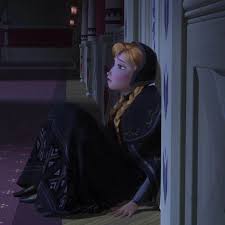
    Disney’s Frozen “Do You Want to Build A Snowman?” sequence is a perfect example of a montage that isn’t just shots put together, but a story telling of how these girls grew up. Though this montage is to a song, so there is actually a rhythmic sequence happening, unlike how Eisenstein argued it should be.

    Do You Want to Build a Snowman? (From "Frozen"/Sing-Along) - video  Dailymotion

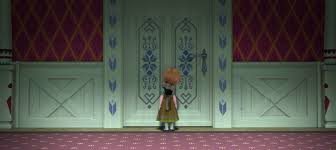
    We can see that the montage is also dialectical. Anna persistently tries to get Ella to come play, but Elsa can’t due to her uncontrolled powers. Anna feels neglected and left in confusion. Both grow up in isolation but in the same house, and we follow them through their teen years and even the passing of their parents, together but separated by this wall.

    Frozen: Do You Want to Build a Snowman? Song Lyrics

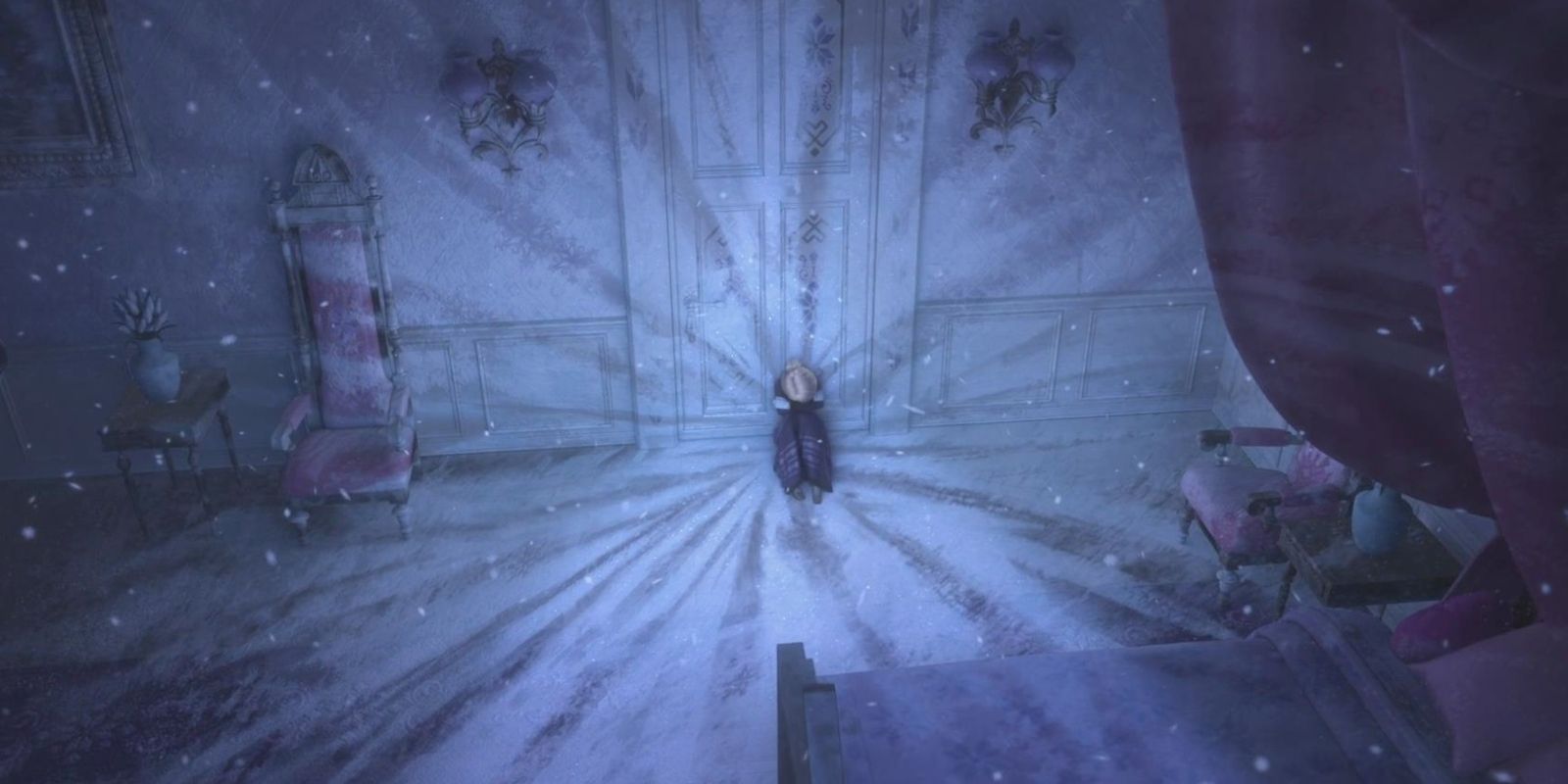
    We can see in this wide long shot of Elsa in her room, how she is still unable to control her powers. Everything being cold, iced, and “frozen”, related to the ideal purpose of the movie and how she feels after just losing her parents. She repeats this mantra which Bazin would consider an “Idee fixe”. Her constant obsession with her powers drives the narrative.