Category: Searcher

  • RRR: Entertainment or more?

    While watching the film, viewers are taken on a rollercoaster of emotions. The two protagonists’ relationship keeps us in suspense. They start as friends, but we know that conflict is looming between them because of their opposing views. Indeed, they become enemies, but in a shocking reversal, they put aside their differences and become friends again. The movie definitely pulled on my heartstrings.

    An article about the ethics of the film by Alex Woodson talks about how different people view the movie from different perspectives. Symbolism is lost for those who do not know much about Indian history/culture. Alex Woodson argues that clothing, flags, names, and locations are “all packed with symbolism” that can be interpreted as suggesting Hindu nationalism. The author of the article mentions that it is hard to understand the details about the inner struggles that were going on during the time. People in the U.S. may not fully comprehend the conflict between the two religious groups, Hindu and Muslim. The director of the film addressed the political topic while bringing entertainment through comedic stunts and supernatural action scenes.

    Woodson’s article questions the selection of leaders who were shown at the end of the film. This list of figures did not include any Muslims, which could be interpreted as a political minimization of the role of Muslims in the Indian political struggle for independence from the British Empire.

    Woodson points out the use of violence and blood in the film. He mentions the scene where blood splashes on a map with the words, “The sun never sets on the British Empire.” This scene is very symbolic, seemingly going against a non-violent stand that Mahatma Gandhi (who was not depicted in the movie) had on the struggle for independence in India.

    In a New Yorker interview, the director (Rajamouli) states, “Entertainment is what I provide.” Rajamouli claims that he is averse to any extremist position, while at the same time stating that he “hates” extremism, suggesting that he is more extremist than he wants to portray himself as.

    Throughout the interview, Rajamouli tries to defend the political implications that critics state the movie implies. He says that he did not think that the movie would be interpreted as a “Hindu nationalist fantasy.” He states that he just drew on his subjective views, mentioning the historical figures he admired when he was little. He keeps reiterating that the movie’s purpose was entertainment, not a political statement. The issue is that the movie has reached millions of people and is highly influential, affecting the beliefs of people, so the director has a responsibility for more equal inclusion and representation.

    Rajamouli states, “American audiences are looking with fresh eyes.” They may not have seen his previous movies as Indian audiences have, so they were probably less expectant of big action scenes. This seems to be a contributing factor to why the movie was such a big hit globally.

    Sources:

    Ethics on Film: Discussion of “RRR” | Carnegie Council for Ethics in International Affairs (Alex Woodson)

    The Man Behind India’s Controversial Global Blockbuster “RRR” | The New Yorker (Simon Abrams)

  • Combining CGI and Reality in RRR

    I was amazed by the visual effects in many of RRR‘s scenes. There was a particular feeling of grandeur that almost reminded me of a CG Lawrence of Arabia, and I was curious as to how Rajamouli’s team achieved this look. I found both a video going through the visual process and an article discussing it.

    Article

    VFX Breakdown Video

    Animatrix, a visual effects company, helped with camera tracking in the film. Motion capture supervisor Ben Murray emphasizes that “it always ends up looking better when you combine real action with CGI, rather than relying entirely on the computer generated side.” You can see this blend clearly in the video with a mixture of sets, props, and green screens which are overlayed with CGI. The computer imagery is largely used for the animals, objects in a path of destruction/objects that are destroyed, and backgrounds to achieve a look of grandeur.

    This is not from my imbedded video but I thought it was funny

    Murray also talks about how Animatrix used NCAM which makes it possible to see CGI while filming, leaving less chance up to post-op. This is used in large Western blockbuster films such as Warner Bros films as well as for sports games like Fox Sports. It makes sense that this production, with its level of CGI, required this kind of technology.

    NCAM

    “Our aim is to revolutionise augmented reality and real-time visual effects. This is why our technology is so unique. Our patented camera tracking is able to continuously stream data to industry standard graphic engines, resulting in the photorealistic and immersive integration of virtual assets. The versatility of our design means you can use Ncam across multiple applications and interchangeable configurations.” -Nic Hatch, CEO of NCAM

  • Revisiting RRR Through the Lens of Caste and Savior Narratives

    When I watched RRR, I didn’t realize that the film reproduced an upper-caste Hindu nationalist fantasy aligned with contemporary Hindutva ideology. By reading the Vox article, I noticed that both protagonists, Raju and Bheem, are portrayed in ways that make Raju seem the educated, visionary savior and Bheem shown as emotionally driven and illiterate “noble savage.” I learned that many popular films are made by upper-caste directors and actors, not confronting the caste system issues in society. I wanted to search if any films actually criticize this nature of Indian films relying on upper-caste “savior” narratives.

    This article from Hindus for Human Rights examines how the Indian caste system continues to shape popular cinema. It first explains that caste is not just a historical phenomenon but a living structure that still affects education, economic opportunity, policing, and social mobility. The article highlights how Indian films have historically avoided directly confronting caste or have softened it through romance and nationalism to avoid criticism.

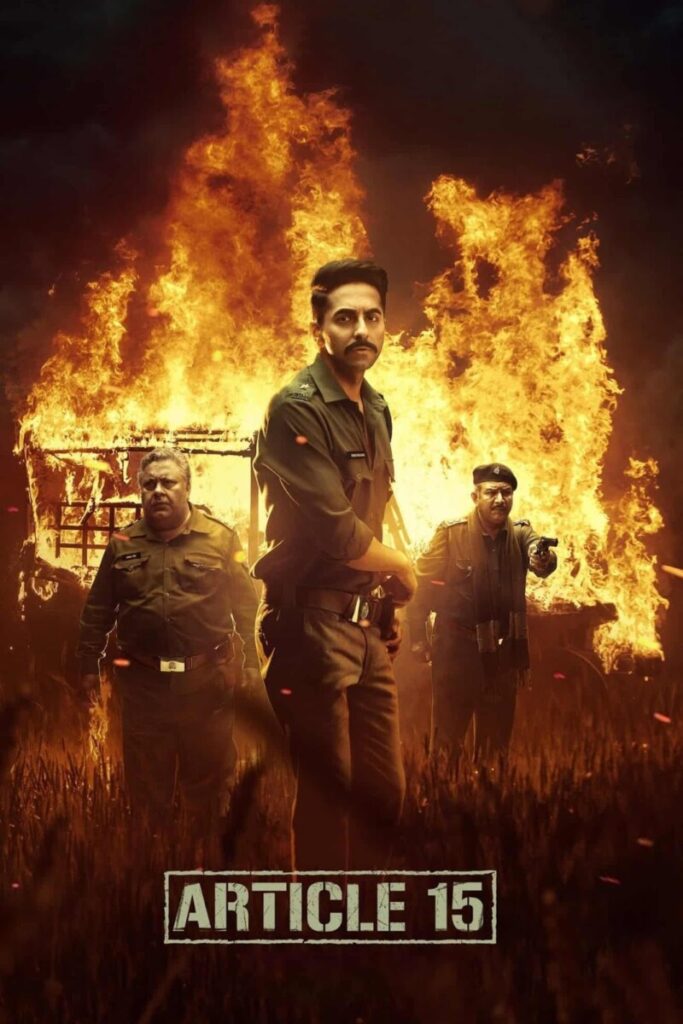
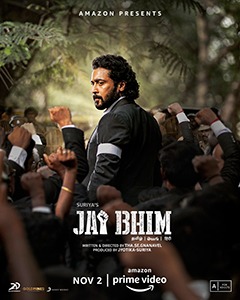
    It then contrasts older films with more recent works like Jai Bhim (2021), which directly depicts caste-based police violence against an Adivasi family, and Article 15 (2019), which addresses caste discrimination but has been criticized for relying on an upper-caste “savior” protagonist. Through these examples, the article argues that cinema can either reinforce or challenge caste hierarchies by centering the voices of marginalized communities.

    This source is worthwhile because it provides a clear framework for analyzing how caste operates in the film industry. I think this is useful for our discussion of RRR tomorrow because it helps identify whether a movie truly centers marginalized voices or instead reproduces an elite-savior narrative. Since the article is written by a human rights organization, its perspective is strongly activist and critical, but that also makes it effective at questioning films that appear progressive on the surface while remaining politically limited beneath the surface.

    https://www.hindusforhumanrights.org/news/caste-system-in-india-and-its-representation-in-popular-cinema

  • The Tech-Takeover of the Modern Film Industry

    It is an unfortunate fact that we as a society have stopped going to the movie theaters as much. With the introduction of large-scale media streaming on platforms such as Netflix, Disney+, HBO Max, etc., there is simply less incentive to go to a movie theater when there are plenty of accessible options at home. These companies, now with their dominant influence in this revolutionized industry, have begun to produce their own movies that will go straight to streaming rather than traditional cinematic screenings. Now, as Professor Zinman brought up on Monday, it is important to acknowledge that these companies like Netflix are NOT filmmaking companies, they are tech companies. When a big business like Apple or Amazon takes over the production of a movie, it begins to feel like an advertisement instead of a creative work. When the discussion of this tech-takeover was taking place on Monday, I could not get the recent Amazon Prime exclusive, War of the Worlds, out of my head.

    Check out this clip:

    This is a real scene in this movie. The product placement is absolutely ridiculous in War of the Worlds. A man risks his entire life for a 1000$ Amazon gift card, there is a scene of the main character ordering a USB drive on the Amazon website, and Devon Bostick’s character is literally just an Amazon delivery driver. In the broader narrative of this movie, the Amazon company essentially saves the entire world. This movie just feels like an hour and a half long ad. What’s funnier is that the producer of War of the Worlds, Patrick Aiello, denies any sort of Amazon product placement in this movie. (https://www.msn.com/en-us/entertainment/news/war-of-the-worlds-producer-insists-there-isnt-any-product-placement-in-the-widely-panned-reboot-we-never-intended-for-amazon-to-release-the-movie/ar-AA1LrATe)

    Overall, it is very important to recognize and appreciate the artistic value that comes from an authentic movie producer like Warner Bros or 20th Century Studios. As previously mentioned, movies coming from large tech companies often do not receive theatrical release and go straight to streaming. This practice is a large factor in the modern decline of theater-going. To keep the love of movie-going alive, keep this message in mind.

  • Why did RRR become popular in Western culture?

    While looking into the history of RRR, I came across a Reddit post that caught my attention and intrigued me:

    The user, Fragrant-Strength482, discussed how the “over-the-top action, melodrama, and larger-than-life storytelling” is a norm in Indian cinema. From his point of view, he didn’t get why this film became the one everyone in the West suddenly cared about, especially when he thought there were other Indian films that were better. That got me thinking: why did RRR click with Western audiences?

    To me, RRR feels like a three-in-one package. It is part action film, part musical, and part bromance. I enjoyed the film because it never felt too serious. Even though it deals with a serious topic like colonialism, it still manages to have fun with itself. The film is loud, colorful, emotional, and dramatic, and somehow all of that works to deliver a message.

    New Lines Magazine dove deeper into understanding why the film resonates with American audiences. The article quoted Telugu film critic Hemanth Kumar C.R. who explained that, unlike many Marvel and DC heroes, who often seem tired or cynical, the characters in RRR are full of life and excitement. Their friendship is the heart of the movie, and the story jumps from action to romance to drama at a speed that surprises people who are not used to Indian filmmaking. That mix felt fresh and exciting for Western audiences who do not usually see movies done this way.

    Additionally, there were also outside factors. People Magazine discussed how, after the pandemic, viewers wanted movies that were fun and thrilling. RRR delivered exactly that. The movie was also easy to access on streaming platforms such as Netflix, which helped it spread quickly. This caused the film to gain popularity, given that someone would watch it, get hooked by one of the wild scenes, and immediately tell other people to check it out.

    Ultimately, RRR did not just stand out because it was different. It became popular because it reminded audiences that movies can be huge and energetic while still being emotional and enjoyable to watch.

    Sources:
    https://newlinesmag.com/spotlight/decoding-indian-film-rrrs-popularity-in-the-west/

    https://people.com/movies/rrr-movie-everything-to-know

  • RRR: All about Shooting Naatu Naatu

    In this interview (RRR: Behind & Beyond)with Ram Charan & NTR, they talked about the process of shooting Naatu Naatu (the famous dance part of the film).

    RRR Review | Movie - Empire

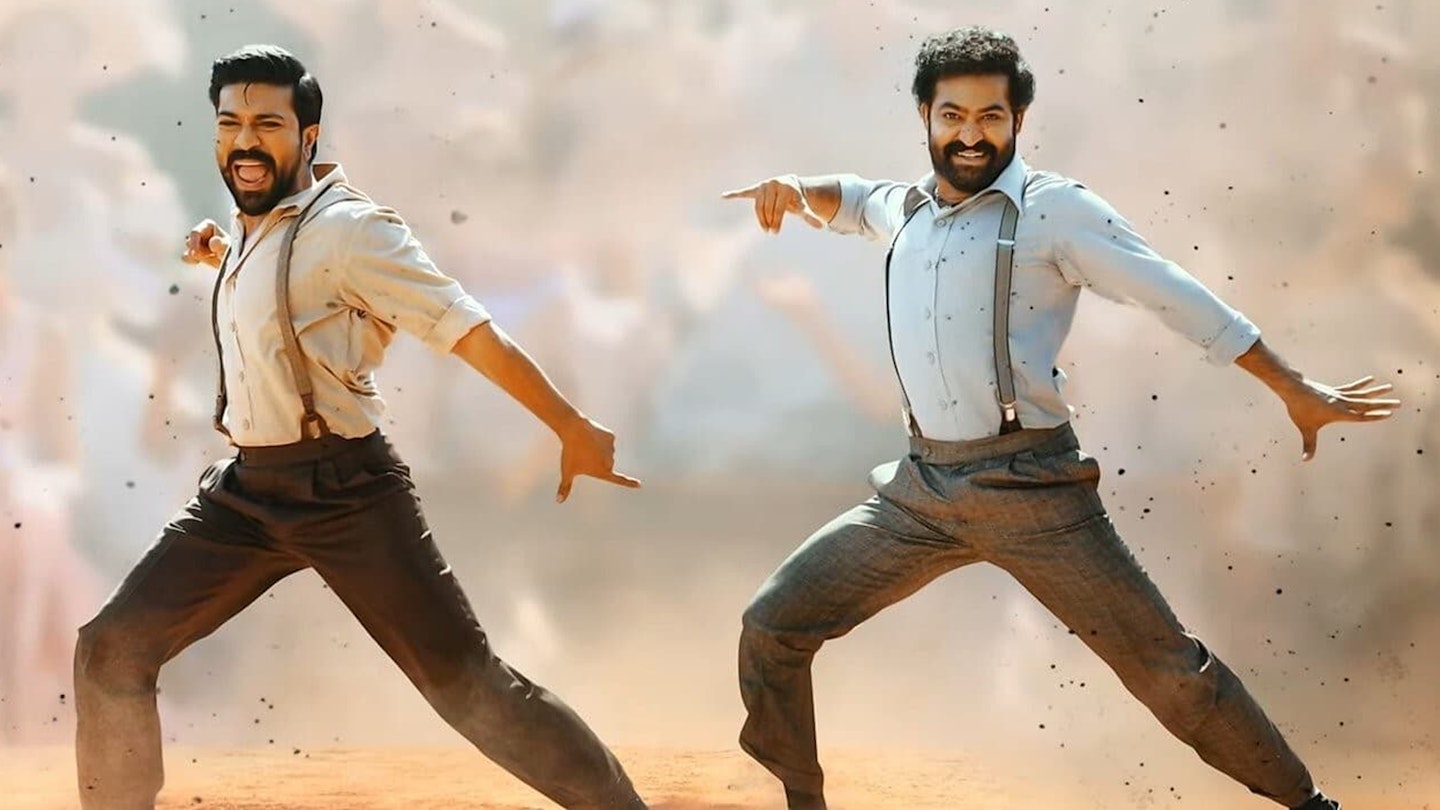
    Naatu Naatu is a 2021 Indian song that is composed by M. M. Keeravani, lyrics by Chandrabose, recorded by Rahul Sipligunj and Kaala Bhairava. The choreography was by Prem Rakshith, incorporating 110 moves for the sequence and featuring about 50 more dancers for the film.

    Already from the film we were able to see how Ram and Bheem danced very precisely alike. Now from the interview, they actually explained the reason to this. Rehearsing separately before they went to Ukraine, and practicing together for 7 days after they went to Ukraine, and ultimately taking 12 full days to film this part of the film, NTR questioned the reason why they were required to dance exactly the dance. Since they come from different backgrounds, it seems reasonable that their dance styles could differ by a bit.

    Rajamouli, the director of the film, simply answered that “No, NTR and Charan can have different styles but not Ram and Bheem. These are my heroes. They are supposed to dance the way I want them to dance.”

    RRR | Detroit Institute of Arts Museum

    Well, the more reasonable explanation that NTR explained from the interview was that, because Naatu Naatu is supposed to showcase how relationships look like when you’ve become true friends with one another. You know exactly how the other person thinks or move even without looking at them. You understand fully each other’s mind, heart, or spirit.

    Within 24 hours of the song’s release in 2021, the song crossed over 17 million views in Telegu, which also made it the first Telegu song to cross 1 million likes. Charan and NTR often recreated the visual portions of the dance for the film’s marketing, and made the dance too very popular and trending.

  • RRR in the West and in India

    After talking to my friend, who is Telegu and grew up watching Tollywood films, I was surprised to hear that he and his family was not a fan of the movie RRR. I wondered if it was because of historical inaccuracy or propoganda, but because he was born and raised in America, he claimed that he didn’t know much about Indian history or current events and didn’t feel strongly about the problematic sides of the movie. He simply thought that it was not the best and felt that there were many more Tollywood films that were worth watching and much shorter than the long 3 hour run time. I greatly enjoyed the film, and was under the impression that it was a hit in India as well. After doing some research, I found that his opinion is not alone.

    In a blog post titled “India Doesn’t Seem to Love ‘RRR’ as Much as the West,” negative opinions from regular Tollywood and Bollywood watchers were compiled. One critic explained that a foreigner watching RRR would feel extremely different from an Indian watching RRR, as a foreigner would be in awe over the effects, over the top action, music, and “masala” of the movie that is not normally seen in Hollywood movies, while a regular watcher would feel that it is another run-of-the-mill movie. I, as a foreigner, was hooked into the movie as it was nothing I had ever seen before, but I’m sure that my friend felt that he had seen many just like it or better.

    In another negative review I found, written by a critic from India, they also complained of the long run time of the movie and calls it “bloated and bombastic affair.” They say that this movie requires you to suspend your disbelief for far too long and “their invincibility is a given, and that’s a drag.” I had personally been invested into every minute of the film, with all its flashy effects and inhumane stunts and the actors’ charisma, but it is understandable that someone may find the action scenes dragging out for far too long, as it is nothing they haven’t seen already.

    Despite the less enthusastic reactions of watchers who are already extremely familiar with Indian films, most can agree that RRR has helped immensely with exposure and hope that the western audience will give other Tollywood films a try.

    https://gulfnews.com/entertainment/bollywood/film-review-rrr-is-high-on-action-long-on-time-1.86716477

    https://www.worldofreel.com/blog/2022/12/ps9oqq7cyzzybjajilm8oj4a9rwedy

  • S.S. Rajamouli’s Next Project: The Future of Indian Animation

    A few weeks ago, I came across an article talking about S.S. Rajamouli’s next big project: an animated feature film called Baahubali – The Eternal War. It’s slated to come out in 2027, and people are saying it will bring Indian animation to the next level.

    ‘Baahubali: The Eternal War’ Aims to Redefine Indian Animation

    After witnessing the absolute spectacle that was RRR (Rajamouli, 2022), I’m inclined to agree. Rajamouli’s special effects were a blast; it’s not everyday that I get to see a man punch a tiger with fire. I’m curious how much of the action was real and how much of it was computer generated. Several animation studios are working with Rajamouli, including Alcyde Studio, which has worked on Arcane in the past. The animation in the teaser trailer looks incredible, and I’m confident in the production quality for this project.

    The animation is expected to be on par with, if not surpassing, the animation in Arcane and Spiderman Into the Spiderverse. As a fan of both titles, I’m excited to see Baahubali raise the bar for animation through the roof. If this movie gets a theatrical release, I will definitely be going.

  • Bullying, Acceptance, and Zombies – Paranorman (Butler, Fell, 2012)

    Paranorman is a childhood classic of mine. It’s funny, honestly kind of scary, and beautifully animated. It took me until a recent rewatch, however, to truly uncover some of the messages that the film tries to send youth across the world. The film features many references to classic horror conventions and gives nods to many legends such as John Carpenter. However, as directors Chris Butler and Sam Fell discuss in this interview (https://www.starburstmagazine.com/features/interview-chris-butler-a-sam-fell-directors-of-paranorman/), the movie can’t be labeled as a horror movie or simply a kids movie. Instead, the film uses zombies as a way to look introspectively at Norman himself, turning the film into much more of a character study. The directors discuss how the zombies act as an unusual comfort in the life of Norman. While theoretically he should be scared of the undead, he has come to fear social pressures and bullying far more.

    Similarly, the directors choose to reveal towards the end of the film that one of the main characters, Mitch, is openly gay. This plays into the concept of misdirection since Mitch is initially portrayed as a classically straight, intimidating jock. This is a parallel to the misdirection of the zombies. What should be scary isn’t. What we assume to be true about Mitch’s identity isn’t either. The directors describe this as the ‘idea of making the audience complicit in [the film] and then pulling the rug out from under them.’ Overall, Paranorman, while cosplaying as a “horror” movie, really dives deep into the social anxiety of a high schooler through the unusual use of zombies.

  • RRR: Writing History through water and fire

    I really don’t know whether to classify it as a comedy or a serious movie discussing about independence. There are so many hilarious moments that just seemed so unrealistic but works fine in such a film.

    (ok this two dude just jump off a 5 level tall building like a horse)

    Although RRR is much like a mythic and exaggerated fantasy film, it is based on a very real and brutal British colonial rule in India during the early 20th century. The British ruled on a heavy racial hierarchy, exploitation, land seizure, and violent suppression to maintain control over the millions of people, like the Gond people that Bheem belonged to are often driven out of the forest. However, rebellion also exists. Activists such as Alluri Sitarama Raju resisted through guerrilla movements like the Rampa Rebellion of 1922–24 (ended when Raju was captured and killed). RRR simplifies this era into a clear good versus evil narrative, but it channels the anger and resistance that shaped the fight for independence..

    The coolest visual idea that I see in this film is the fire versus water motif. Ram is assigned with fire, and also framed in warm colors. Bheem is assigned with water, and is framed by cold colors. We often see Ram using fire and he literally blows everything up in the end of the film. And the intro sequence of Bheem is literally him unleasing animals out of a water tank. And we can follow the theme of how these two elements learn not to cancel each other out but combine into something stronger. Ram sacrifices himself to achieve the greater goal while Bheem focus more on achievable things such as rescuing his sister for the tribe.

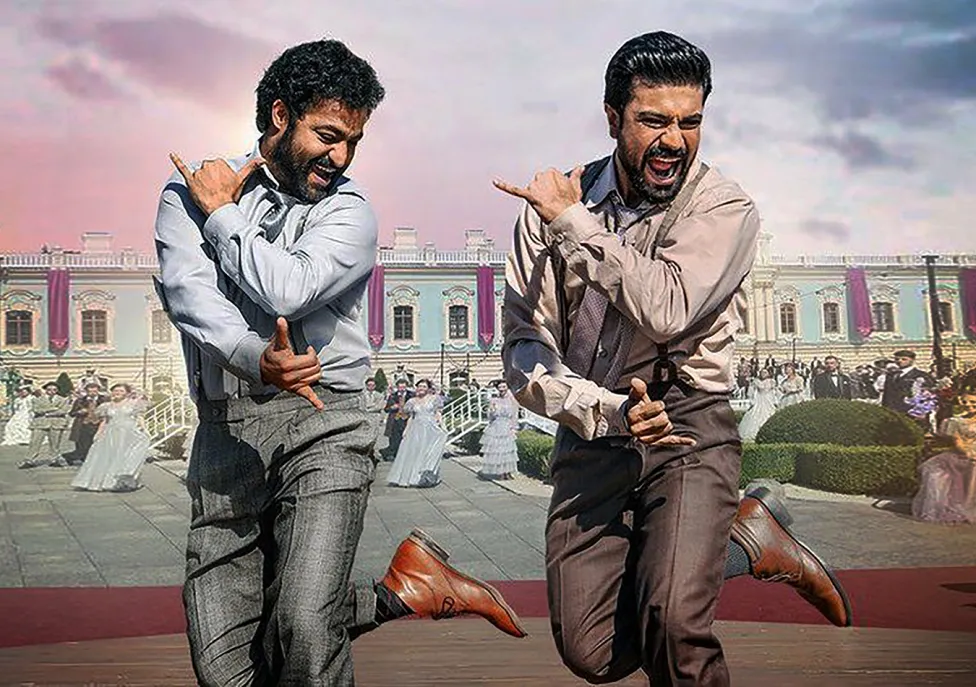
    Another interesting part of this film is its music and dance. There is the “Naatu Naatu” dance. On the surface, it’s just a ridiculous, exhausting dance battle at a British garden party. But it became the first song from an Asian film to win the Oscar for Best Original Song, and the first Indian song to win both the Golden Globe and the Critics’ Choice awards. We see a lot of violence and gun and fights and killing throughout the movie, but here we see rhythm and music replace guns and bullets.

    What makes the scene compelling is the dance’s design: fast footwork derived from traditional Indian folk dance styles, matched with a competitive, almost combative structure. More deeply, it is not just a dance, but rather a form of fightback of colonial hierarchy. Every kick, jump, and step is a refusal to be humiliated by the British. Marking the moment of India’s cultural identity triumph at that moment right at the backyard of the British colonizers.