Alex Gibney is a documentary film director and producer who worked on multiple big projects throughout his career. In this interview, he shows a little bit of the behind the scenes and the thoughts and challenges of making a documentary.
While watching the interview, I realized how important editing is to a documentary. I’m used to thinking about scripted movies, where the film is mostly captured on set. The editing for those is more like putting a puzzle together when you already have the picture on the box. But for documentaries, this is very different. The story and the film itself are created in the editing room. It feels like the story is actually found and built from the ground up.
Gibney says that he often discovered new ideas and thoughts when reviewing footage in the editing room. He also highlights the flexibility of documentary work, explaining that because the teams are small, they can easily go film new material if they discover a party of the story they want to tell is missing in the edit. That kind of flexibility is amazing and seems vital for this kind of work.
According to Gibney, editing plays such a major role because it guides the audience towards the point of view of the author. It’s how they take all that raw footage and shape it into the final message. This is connected to a major challenge: dealing with people in the story you disagree with. Gibney talked about balancing the obligation he feels towards his subjects with his primary obligation, which is to the audience. He was clear that he’s not there to make a “commercial” for someone, especially if they aren’t being truthful. A directors job is to find and convey the truth.
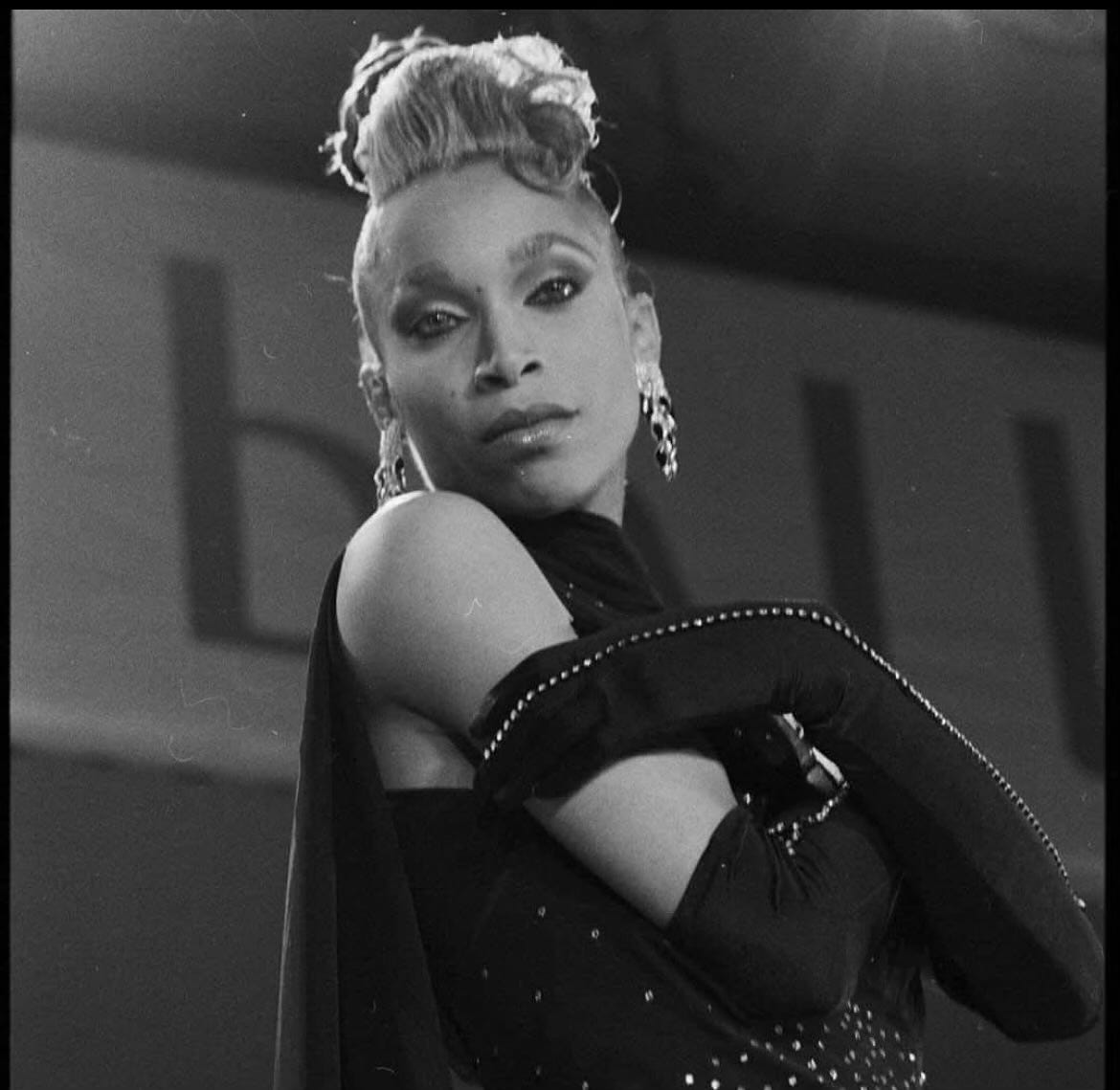
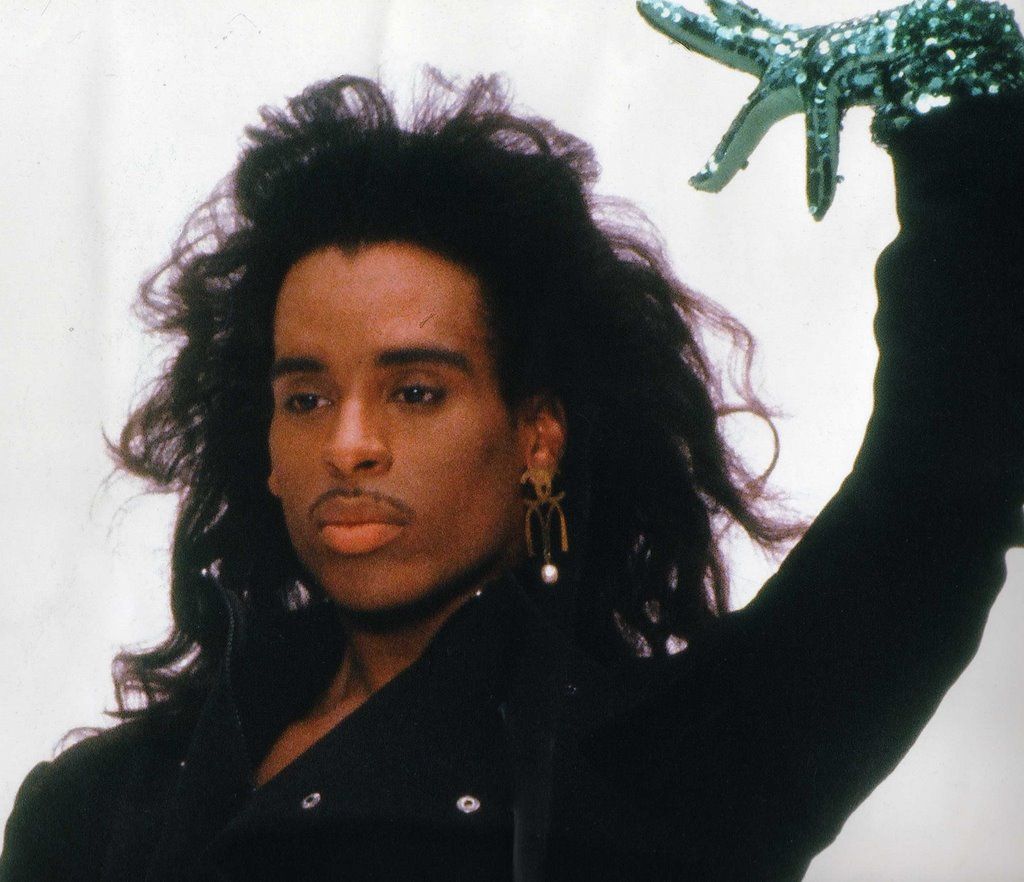
Jennie Livingston’s Paris is Burning (1990) follows an ensemble cast of performers in the Harlem Ball scene, each of whom finds a different outcome (death, fame, resignation, etc.). Willi Ninja, the film posits, is the one who made it out.
I was fascinated by Paris is Burning‘s portrayal and framing of Ninja. In contrast to the fate of it’s other major protagonist (if the figured can be considered as such), Venus Xtravaganza, Ninja’s apparent success story is a sliver of a very external form hope in a film which is largely about disadvantaged people needing to create hope for themselves.
Ninja probably did “make it out” more than anyone else in the film. He went on to teach dance, be on TV, and shape the Ball scene going forwards. But he did not escape, not fully. The figures of Paris is Burning talk often about wanting a “normal life”. Ninja died of AIDS-related complications at the age of 45.
According to the Google Arts and Culture article about Ninja, he will be remembered thusly: “[his] legacy is the legacy of voguing, and the exquisite form of dance and expression that he brilliantly developed. Ninja passed away on September 2nd, 2006, in New York City, but remains deathless in his art.”
He may remain deathless in his art. He would today have been 64.
Paris Is Burning captures the vibrancy, competition, and chosen families of New York’s ballroom scene. Three decades later, RuPaul’s Drag Race has brought many of those aesthetics and attitudes into the global mainstream. Watching the show today, it’s easy to forget that terms like “shade,” “reading,” and “realness” weren’t born on a soundstage, but rather in Harlem’s ballrooms.
Jennie Livingston, the director of Paris Is Burning, reflected on this evolution in an interview with AnOther Magazine, noting that “if you’ve ever heard of “realness,” “reading,” or “throwing shade,” it’s probably because of RuPaul’s Drag Race. But the origin of this terminology far precedes the reality-TV show.” (Livingston, 2020) I picked up a degree of tension within this article, in that although Drag Race celebrates the artistry of drag, it also repackages it for mass consumption, sometimes distancing it from the political urgency of its roots. The ballroom scene was never just about winning but rather about being seen and loved by one’s house, since they oftentimes didn’t recieve much love from their biological families or society in general due to their identities. In contrast, on Drag Race, “family” becomes storyline rather than lifeline.
The show’s success has undeniably opened doors for queer performers worldwide, proving that what began in underground NYC clubs could reshape global pop culture. Regardless, RuPaul’s Drag Race should stand as a reminder that the culture it celebrates was built not just on glamor, but also on resilience, creativity, and chosen family.
Back in September, I attended the Emory Cinematheque’s screening of Grey Gardens (Maysles, 1975), and knew I wanted to wait until the week on documentary to fully unpack what I had witnessed. In only 95 minutes, viewers are taken into the home of Edith and Edie Beale, also known as Big and Little Edie, an eccentric mother and daughter duo who are relatives of Jackie Kennedy Onassis living in their run down Long Island estate. The pair argue, sing, perform, share stories from their past life, and seemingly ignore the garbage-filled mess that is surrounding them. Ralf Webb of the White Review discusses the use of direct cinema, the ethics of the film, its historical impact, and more in his 2018 review: https://www.thewhitereview.org/feature/film-direct-cinema-grey-gardens-summer/
Still of Little Edie from Grey Gardens, 1975
What is fascinating about this documentary, compared to any others that I have seen, is its commitment to direct cinema, in which they committed to be invisible to the object they were observing without narrative form or musical overlay. In the golden rule, direct cinema is where “interaction with the subjects should never evolve into direction” (Webb). This was exemplified through many shots of Little Edie being interrupted by the calls of Big Edie in the background, or through the subjects consistently talking to the film crews, presenting that they were not restating or asking questions until they got an acceptable answer. Watching this film reminded me of the ethics discussed in class during the first week on Rear Window, however, and how voyeuristic attitudes are only validated when what is being watched has a purpose. This mother and daughter were only relevant due to their cousin’s status, and throughout the cinematheque moviegoers laughed at their remarks, which admittedly were funny throughout the film. Still, there was a clear exposition of two women in crisis, living amongst rodents, and are now solidified in history as entertainers.
Big Edie sits amongst her run down estate
Their story is seen through the eyes of the documentarians, and what is told is manipulated by the production of those making the film, not themselves. The film raises ethical questions because “the Maysles, it seems, are acting in bad faith: they’ve gained the Beales’ trust, maneuvered into their private lives, and act innocently inquisitive, when, in actuality, they’re wise to the documentary gold in front of them. I could not help but think of this when watching Paris is Burning (Livingston, 1991) and wonder if my own entertainment and knowledge acquired throughout the film was ethical. Still, I believe that documentary holds a power in solidifying parts of history that may go underrepresented, and maintain the capacity to amplify voices in ways that would not be for forever. Big and Little Edie do get their stories told to the world, as do the subjects of Livignston’s Paris is Burning that would not be exposed to such a wide audience without the oppurtunity.
Albert and David Maysles pose with Big and Little Edie
Big and Little Edie have been remembered through movie adaptations, a Broadway show, and drag queen interpretations. After Grey Gardens‘ was released, Little Edie noted feeling accomplished in her portrayal of the film, “as though the power to partly construct a filmic version of her own reality gave her some freedom from it” (Webb). Theories like Webb’s remind us not to look too personally into the lives of the subjects we watch in these films. After spending an hour and a half with Big and Little Edie, it is easy to feel as though one can make generalizations about their lives as a whole. That is just an hour and a half of years of living in Grey Gardens, and the documentary could have been different if filmed at any other point in life.
After watching Paris is Burning, I became really curious about what happened to the lives of these dancers, house mothers, gays, transexuals after the film was released in 1990. Now that more than 30 years has passed, a lot must have happened to the clubs and the ballroom culture too.
Fortunately, I did find a relevant YouTube video that followed up most people in the film and described their lives after (although most of them passed away by now). The link to the video is here: Life After Paris is Burning | TRIBE TV NTWRK. I will summarize what is being said down below.
1. Pepper Labeija
From when he became the mother for the House of Labeija, Labeija remained to be the mother for the following 20 years. On May 14, 2003, Labeija died of a heart attack only at the age of 54. Recall how he said in the documentary that he felt smart not to do the sex reassignment surgery, such that in the following 40 years he would live well, hearing his death at just 54 makes me feel sorry and unexpected.
2. Venus Xtravaganza
Venus Xtravaganza is one of most memorable person to me from the film. She is just so pretty and talks so softly. I remember her talking repeatedly about her hopes of life and what she wants as an aspiring model. She also talked about how she escaped an attack from a man that tried to sleep with her. Another reason why her image sticks in my mind so much is probably because her death occurred during the filming of Paris is Burning. Her dead body was under the bed of a Duchess Hotel, perhaps due to a similar occasion of his attack.
As of 2019, the killer has not been found, but in 2013 a New York’s theatre group displayed a murder mystery play that referenced Venus’s death. In POSE, Venus was also paid homage through multiple hot lines.
3. Octavia Saint Laurent
Octavia was the girl who took modeling seriously and tried the best out of her self. I remember her because her dance is good, her makeup is done well, and her poses when she was being photographed as a model were all delicate. After Paris is Burning, in 1993, she played a role in the Saint of Fort Washington. In 2005 Octavia was a host of the TV award show, The PillAwards. The next year she starred in Wolfgang Bush’s How Do I Look. In this film, she commented Paris is Burning as “a terrible movie.” She also discussed her drug use, sex work, and fight with AIDS. In 2008, she was diagnosed with cancer, and on May 17 the following year, she passed away.
4. Willi Ninja
Willi Ninja is the mother of the House of Ninja. My impression of him is that his vogue dance was so good and delicate. If I remembered correctly, he became the godfather of Vogueing and even in the film, he described himself as the one who could dance the best out there. Paris is Burning greatly helped Willi’s career. He starred in the music video for Malcom McLaren’s song Deep in vogue. He also danced in two of Janet Jackson’s music videos from the album Rhythm Nation 1814. He also appeared in the 2006 follow-up How Do I Look documentary. Unfortunately, Ninja died of a AIDS-related heart failure the same year How Do I Look was released.
5. Angie Xtravaganza
The mother of her house, Angie’s nice and tender personality is probably what made me like her so much when watching the documentary. She took such great care of her house members, saying how whenever there’s a ball she would have to help her members prepare. During a short passage describing how she got paid to get her breast, her members cheered her up and said that Angie “nourished them,” showing their love for Angie. She also won the mother of the year, as shown in the documentary!
Unfortunately, she passed 3 years after the filming from an AIDS related liver disease, only 28 years old. 3 weeks after her death, the NYT published an article on the ball scene and gave her a large photo on the front of the Styles section, with the title, “Paris Has Burned”. A year later, Junior Vasquez released a house single titled “Eggs”, dedicated to Angie.
While doing my searching this week for Nope, I stumbled along this video of Jordan Peele himself breaking down what he believes the central theme of his movie “Nope” is.
Within this video he breaks down how he believes Nope to not just be about race, but to also be acknowledgement to the people who came before them in this industry. He speaks about how this movie could not have been made 5 years ago and it brings into question as a viewer if by simply existing are you defying stereotypes. Jordan Peele would say yes. He believes that this movie is defiance against norms in the film industry. By having this movie star mainly people of color while also being created by people of color, its credit scene alone is acknowledgment of the fact that they are pushing boundaries. Jordan Peele challenges us to go beyond thinking that this movie is strictly about what’s in front of our face and asks us to look deeper in the fact that every single characters role and meaning to the movie is a commentary on the film industry’s stereotypes and restrictions.
For him he feels as if this movie is a nod to all the black entertainers who have been snubbed while their white counterparts get the spotlight. Along with this theme he talks about how this movie isn’t just about spectacles and what we will do to see them, but also about what we will do to be seen. It’s a reminder that there is always someone behind the camera and what they went through to get the shot they desired should not be ignored. We see this continuously throughout the movie as they Em and Oj talk about wanting to get the shot for the money, they want the recognition that comes along with capturing something otherworldly on film. You also blatantly see it when the TMZ reporter asks to be filmed despite having broken numerous bones.
Finally he ends the video by saying he really hoped to have immersed people in the film, and that he wishes that everyone would have left the movie feeling as if they had been near a UFO because it is something so many of us have thought about before. Although he is unable to pinpoint one central theme, he highlights that no movie is really able to be summed up into one jist, there are multiple layers to every good movie. Whether it be about breaking stereotypes or immersing people fully into something genuinely horrifying,
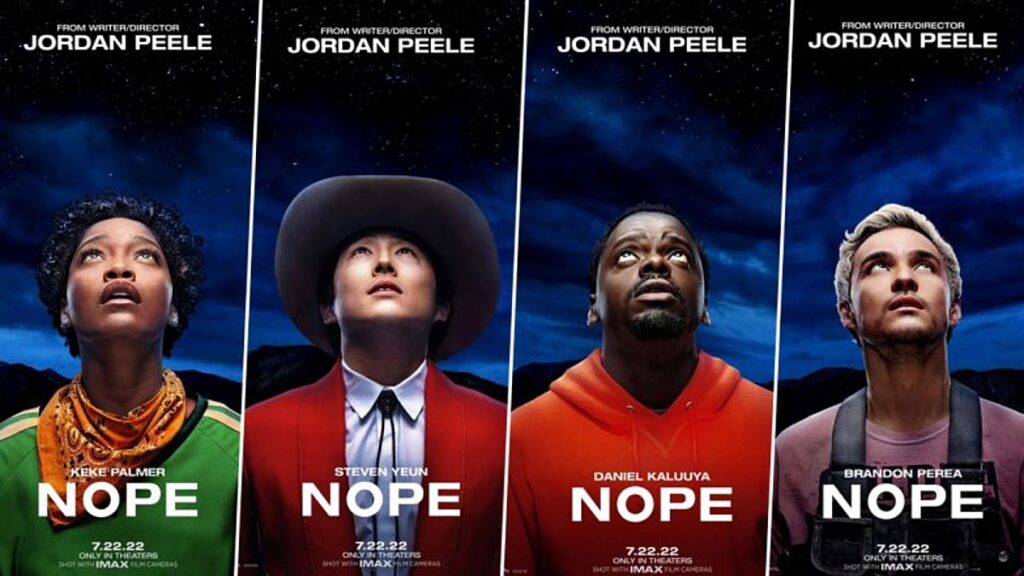
When I first watched Nope by Jordan Peele, I went in completely blind. I didn’t even take the chance to watch the trailer. I just got in the car with my brother and sat in the theater, expecting something similar to Peele’s previous projects, Get Out and Us: a psychological thriller. After the first viewing, I was blown away by his shift toward an astrological horror theme. However, taking into account count the deeper meaning of having two black leads and reflecting on the film’s exploration of “spectacle” and Black visibility in Hollywood, I began to see it as a powerful commentary on what it truly means to be Black in Show Business.
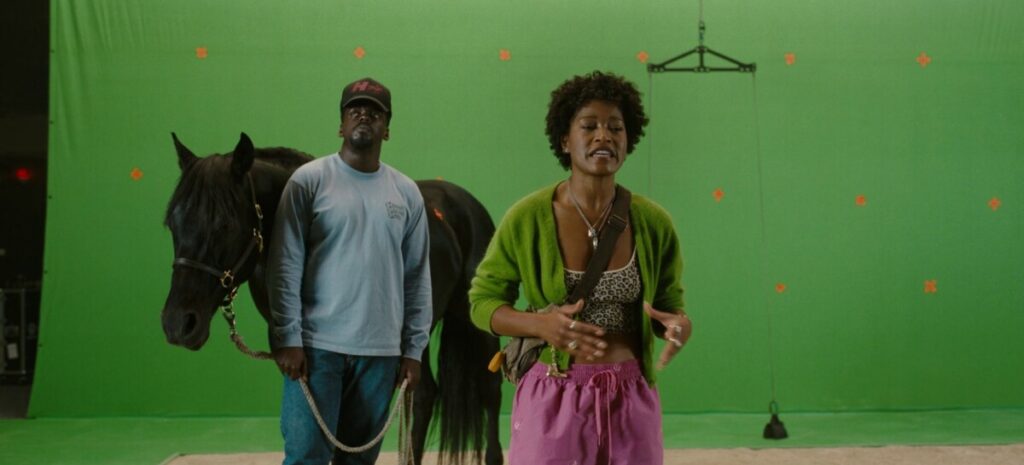
In one of the major scenes where both protagonists stand in front of a green screen, we get an early glimpse into how Black performers are often treated within the film industry. Taking into account the main characters’ family history, particularly their connection to one of the first moving pictures, featuring their great (3x) grandfather riding a horse, the crew’s reaction to their presence feels heavily anticlimactic. This moment of what seems like simple oversight, is rooted in the historical disregard of Black contributions to cinema, aligned with the siblings’ late father’s horse ranch, which serves as a foundation for the two. The way their labor and resources are used with minimal acknowledgement or recognition encapsulates the broader experience of many Black and minority group whose efforts often go unseen beyond the screen.
This theme of exploitation and invisibility is further explored in articles like WATCH: THE MEANING BEHIND JORDAN PEELE’S ‘NOPE’: THE DANGERS OF PURSUING SPECTACLE which provides insight into Peele’s effort to create a film that ultimately subverts the minds of the audience and plants several ideas how a spectacle can change one’s perception.
Using the characters as hosts to display the different elements that can stem from spectating. With Jean Jacket, the flying alien entity being the main spectacle, there is an understanding of what the inevitable path is when accepting a greater power which is symbolic of the not only the film industry, but the Industry as a whole.
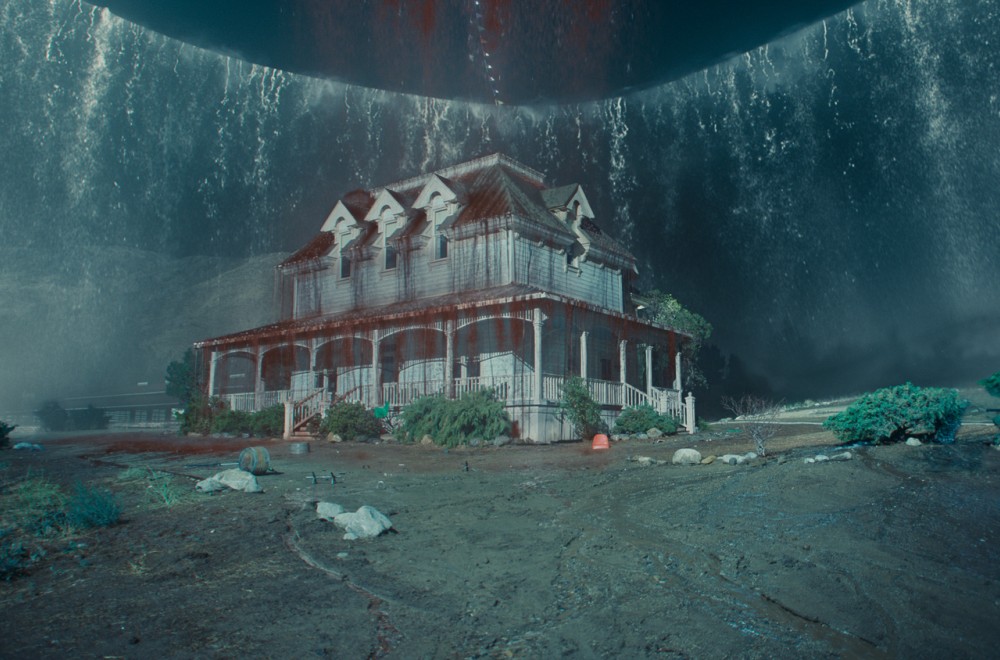
The article goes on to discuss characters like Emerald, who tries to use the spectacle for money, Ricky, who uses it for fame, and Angel, who seeks recognition. These motivations reflect what often drives viewers and people within minority groups. The film suggests that when you focus too much on proving yourself or showcasing your worth to the industry, you risk being consumed and discarded, which is shown in the scene where Jean Jacket rains blood over the ranch house
In one of his interviews, Jordan Peele claims that he got a lot of inspiration from Steven Spielberg’s “Jaws” for his movie “Nope”. The correlation between the two films didn’t quite register with me at first, but after watching this YouTube video that breaks down specific scenes and sounds from both movies, it’s a super cool comparison and you can definitely see the similarities that they share.
A major focus of the video is the sound aspect of Nope – it consists of mostly diegetic sound throughout the film, which adds to the realistic feel of the movie and makes us feel more immersed in the events that take place. During the beach scene in Jaws, the audience is on edge knowing that there is a shark attack brewing. The background noise consists of normal sounds that you would hear on a beach, people talking, waves crashing, radios playing, etc. But then we hear a scream coming from the water and our anxiety rises, thinking that it’s the shark’s new victim. We quickly find out that it’s just a girl screaming because her boyfriend lifted her up out of the water, but that sound triggers us to think of the worst and adds to the suspense. The same can be said about the scene in Nope where OJ is standing outside in the dark with Ghost. It has an eerie wind sound, the horse sneezing, and overall it’s quiet but diegetic and normal; then a loud noise comes from the house, which again makes us frightened about what that means. We see that it’s just Emerald playing music to dance to, but that sudden introduction of a new sound scares the audience and keeps them on edge for something horrible to occur. The diegetic sound and focus on otherwise overlooked day-to-day noises heightens our senses and gives us a “calm before the storm”.
Another cool part of the sound in Nope was the creation of the noise coming from the alien thing (I’m still not exactly sure what to call that creature). It was supposedly a combination of screams like you are on a roller coaster, and screams like you are getting eaten by some mysterious entity that flies around like a hungry UFO, which makes for a very uncomfortable noise. At first from a distance the sound could be interpreted as just wind, or the normal noise that a flying saucer would make, but as the story goes on, we learn that it’s much more than that and gives the sound more attention and meaning. It eventually conditions the audience to start to feel anxious whenever that noise sounds in the film and it’s a super cool addition to the already creepy creature.
Overall, the video has great insight into the movie and certain elements that I definitely missed on the first watch, so I highly recommend watching it!
This week’s reading described genres as living systems that balance convention and innovation. That idea came to mind while reading Alex Sergeant’s essay “Scrutinizing the Rainbow: Fantastic Space in The Wizard of Oz (1939)” (Alphaville: Journal of Film and Screen Media). Sergeant argues that The Wizard of Oz didn’t just use genre conventions, but that it invented the grammar of hybrid genre filmmaking. The film’s split between Kansas and Oz, realism and fantasy, black-and-white and Technicolor, turns genre into a kind of motion. Its “dual spatial focus,” as Sergeant calls it, grounds the viewer in the familiar before releasing them into wonder. That structure became Hollywood’s model for how to blend fantasy, musical, and adventure without losing coherence.
Sergeant’s analysis captures what our reading describes as the “interplay of convention and innovation.” Oz takes familiar ingredients—the musical number, the quest, the fairytale moral—and merges them into one story of transformation. We recognize the comfort of genre, yet feel its edges blur. Looking at Oz in this way, I realized it’s the blueprint for so many “journey” films that bridge worlds: Star Wars, Pan’s Labyrinth, Harry Potter. Each one restages Dorothy’s passage through spectacle toward self-discovery. Sergeant calls Oz “perhaps the most watched example of classical Hollywood cinema,” but what keeps it alive is how it shows that genre moves. It isn’t a fixed category. It’s a rainbow that bends meaning across forms.
That insight also ties directly to our feature, Nope (2022). Jordan Peele reworks genre the way Oz once did. He fuses the Western’s open landscape, the sci-fi invasion, and the horror monster movie into a single story about spectacle and control. Both films ask: what happens when wonder turns on the spectator? Sergeant’s essay, though written about 1939, helps explain why Nope feels familiar yet new. It’s the same path Dorothy walked, only now it’s lined with clouds and cameras instead of poppies and tin men. Genre, for Peele and Fleming alike, isn’t a set of boundaries, but a language that keeps rewriting itself.
There will always be a debate towards what the “best” movie of all time is. However, there is no debate that Citizen Kane is one of the most culturally and cinematically impactful movies ever created. Orson Welles, with his first ever time directing a film, forever changed the way that cinema was created. New ideas on how to portray lighting, focus, narrative, among many others, were created in Citizen Kane for one key reason: Welles had no idea what he was doing.
When I say that Orson Welles had no idea what he was doing, of course Welles had a conceptual vision for what he wanted his first direct film to become, but Welles had no preconceptions on what was and wasn’t possible in the process of creating film. That was his greatest strength.
In an interview with Orson Welles (linked above), he notes that you mustn’t “soak yourself in film.” What he means by this is that you shouldn’t dive too deep into what is and isn’t possible in filmmaking. Welles’ creativity stemmed from the fact that he had no idea on what was possible at the time. Gregg Toland, the working cinematographer on Citizen Kane, brought Welles’ radical-at-the-time ideas to life.
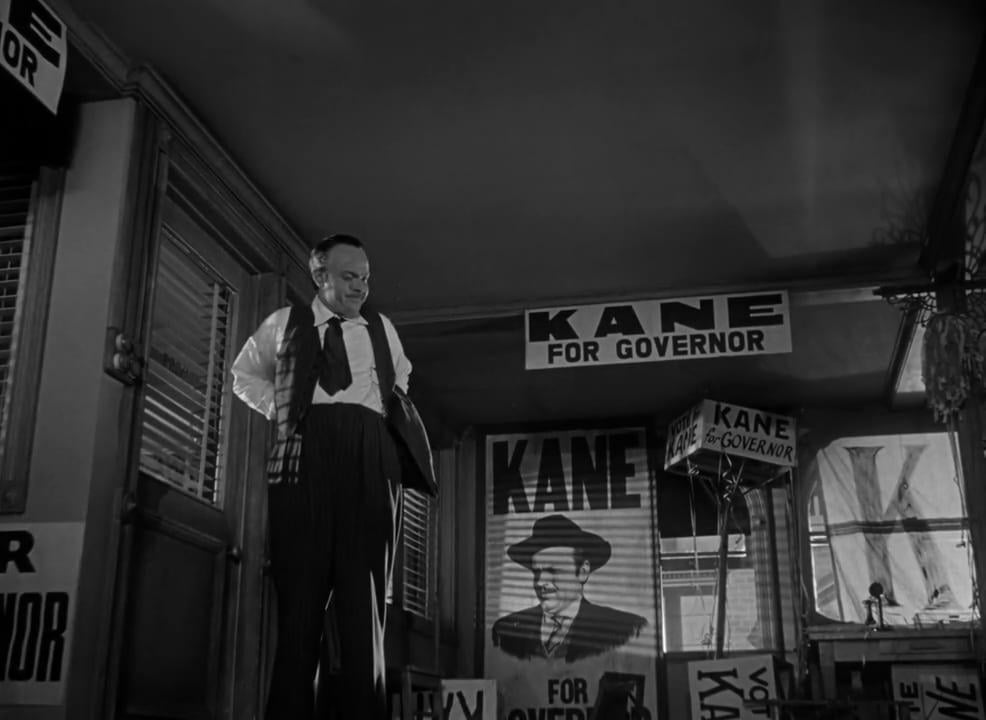
For example, the low shots in the film were a radical new idea at the time. Cloth ceilings were integrated into the set of Citizen Kane to give more of a realism effect. Cinematographer Gregg Toland adds “The Citizen Kane sets have ceilings because we wanted reality, and we felt that it would be easier to believe a room was a room if its ceilings could be seen in the picture.” The confidence to pull off such a revolutionary idea at the time came from the unbounded creativity of a director who had no idea what the “rules” were.
Even though Welles’ belief to not “soak yourself in film” sounds good in prospect, it is important to mention the anomaly that is Citizen Kane. Welles mentions it himself in the interview, that most brilliant filmmakers in the next generations will already know the ins and outs of the filmmaking process. It is simply unlikely that a masterpiece will be created just because the creative vision has no prior experience in the creation of a new subject, Orson Welles was simply an anomaly. Overall, even though it is highly unlikely to create genius from nothing like Welles, it is still possible. New filmmakers in the next generation shouldn’t bound their creativity to what is already known, but towards what hasn’t been done. That’s how great films like Citizen Kane are created.