Category: Searcher

  • Citizen Kane’s Real Life Drama

    Citizen Kane was not just a drama shown on-screen, it was based on a real life newspaper tycoon William Randolph Hearst and thinly veiled by cinematic flourish. However, Hearst was a powerful man and Orson Welles, an arrogant yet brilliant rising star, had made himself a powerful enemy.

    According to PBS, Orson Welles was an ambitious young man who set out to dethrone Hearst, but Hearst would not take this lying down. He banned any mention of this film in his newspapers and intimidated theatre managers into refusing to show the movie. As such, Citizen Kane was initially a box office flop, failing to recoup its production costs. Despite the boycott, Citizen Kane still managed to get nominated for nine categories at the 14th Academy Awards, but only winning for Best Original Screenplay. Hearst’s influence managed to reach into the Academy voters, with many claiming that Citizen Kane was snubbed due to personal dislike of Welles among voters and Hearst’s supporters. The film was reportedly booed by audience members every time it was named at the Oscars.

    Although Citizen Kane was a less than flattering depiction of Hearst, there is an interesting theory about why Hearst was so adamant to obscure the film. According to the writer Gore Vidal, “Rosebud,” the phrase that the film centers around, was a nickname given by Hearst to his mistress Marion Davies’s clitoris. Marion Davies was an actress who was well liked in Hollywood, and the controversy over Citizen Kane was said to be “a fight over her honor” as her depiction in the movie as Susan Alexander was as Welles claimed himself– “a dirty trick.”

    Out of the three sources I used, only the PBS article seems to be based in fact and backed up by other sources. Although Far Out Magazine titles their article as “Why Citizen Kane was Booed at the 1942 Oscars,” the article clarifies that the booing was only account of Citizen Kane being booed came from Welles himself, who wasn’t even in attendance. Additionally, the Guardian article reads more as celebrity gossip with speculation about Welles and his co-writer Mankiewicz and their hidden motives.

    https://faroutmagazine.co.uk/why-citizen-kane-was-booed-at-the-1942-oscars

    https://www.theguardian.com/unsolvedmysteries/story/0,,1155656,00

    https://www.pbs.org/wgbh/americanexperience/features/kane-william-randolph-hearst-campaign-suppress-citizen-kane

  • Narrative Form in Now You See Me 2

    When reading this week’s Film Art chapter on narrative form, specifically the section about “playing games with story time”, I kept thinking back to the movie Now You See Me 2. This film stood out to me so strongly because of its unique storytelling structure and the way plot twists are revealed.

    I watched this movie, the sequel, before I had ever seen the original movie, so I was probably more confused than the average viewer would have been. But, the film’s narrative is essentially structured as a magic trick in itself, which is fitting for a story centered around magicians.

    The film does an excellent job of building up mystery and suspense while remaining entertaining the entire time. There are quite a few different subplots that run throughout the movie. In terms of narrative form, I’m focusing on timelines and temporal frequency.

    The movie begins in a flashback of the character Dylan’s childhood. It’s a pivotal scene of his father dying while performing a failed magic trick. For viewers who haven’t seen the first film, this scene feels disconnected until the very end, an example of how the film withholds meaning until the right moment, similar to a magician revealing the trick’s secret. However, the scene makes sense from the start if the viewer has already seen the first movie. I was reminded of this scene when reading about the importance of flashbacks, and what part of the movie they are placed in. Putting this at the beginning of the movie keeps viewers intrigued the whole film, as they are waiting to find out what the significance of the scene is.

    Furthermore, the clip I attached is one of the best examples of temporal play in the film. In the beginning, there is a scene where we see the four magicians trying to escape the FBI. They jump down a shoot that they think will bring them to their escape truck, and instead somehow end up in the middle of Japan in a matter of seconds. The audience, sharing the Horsemen’s limited point of view, is completely disoriented. Later on in the movie, the scene is repeated.This time, it is revealed that the entire operation was orchestrated by Walter, the film’s main antagonist. He actually hypnotized and transported them to Japan via private jet during this “instant” transition. By repeating the scene and revealing hidden context, the film “plays games with plot time,” keeping the viewer’s knowledge aligned with that of the main characters.

  • Citizen Kane: Techniques That Changed Hollywood Film

    An article by Gottlieb called “Welles’s Citizen Kane Breaks with Traditional Filmmaking” states that the film Citizen Kane, while groundbreaking and highly influential at the time, was also very controversial. Before the film was released, it faced many problems, and many attempts were made to stop its release. The “Hearst syndicate” tried its best to stop the spread of the film because the main character of the film, Kane, was modeled after William Randolph Hearst (Gottlieb, 2023).

    Welles starts the film with the death of the main character and incorporates flashbacks and interviews with those who knew him. It is a story we must piece together and make meaning of on our own as different characters share their own versions of Charles Foster Kane’s life, and we are trying to figure out his true nature. Welles called this technique “prismatic” (Cheshire, 2002). The story is told out of order to provide mystery and intrigue. 

    Orson Welles’s Citizen Kane (1941) changed Hollywood filmmaking. As an outsider to the Hollywood film industry, Welles brought new, unconventional ideas and techniques to make this film. He expanded the type of stories that could be told in Hollywood films, showing corrupt, powerful people (a more controversial topic than typically depicted in Hollywood) (Gottlieb, 2023). Also, he used some new cinematography techniques. For example, he used low-angle shots that revealed the ceiling and depth of field, which “appeared powerful, modern, hyperarticulate” (Cheshire, 2002).

    An essay from the Library of Congress (Cheshire, 2002) called “Citizen Kane” explains the new techniques used in the film that helped change the film industry forever. 

    The film used wipes (a shot transition in which one image gradually takes the place of another through a horizontal, vertical, or diagonal movement across the screen, while both images remain partially visible), which was innovative at the time.

    One other technique that cinematographer Gregg Toland used was deep focus. This is where everything in the frame is in focus (clearly visible and sharp): the foreground, middleground, and background. In other words, there is a large depth of field. Deep focus and long takes were used to make the scenes feel more realistic and true to nature, which is something that Andre Bazin would appreciate (as he has a deep desire for realism in film).

    Overall, this source is important because it describes how new techniques used in the film changed Hollywood filmmaking – which stories were told and how they were told.

  • Citizen Kane & The Simpsons

    How does a movie like Citizen Kane, made in 1941, stay relevant in the present? Option one would be to make a film that engages the audience with cinematography and elliptical editing so smooth you won’t even notice the swift manipulation of time. Orson Welles and cinematographer Gregg Toland’s use of these techniques creates a rich and layered narrative. Or option two, make it good enough for future writers to joke about it.

    It's Not A Sled Anymore: Remaking A Cinematic Classic : NPR

    Take Keanu Reeves, for example. In 2014, he released an April Fool’s joke about reimagining the movie. The new version, titled Citizen Kane 3-D, was directed by and starred Keanu Reeves, and added a martial-arts subplot to the tale of a wealthy media tycoon who dies friendless, haunted by his childhood.

    Keanu isn’t the only one good at making playful remarks; in fact, The Simpsons created an entire episode dedicated to the parody and reveals the Simpsons character Mr. Burns’ backstory while doing so. This clever homage and original storytelling intertwining shows how Citizen Kane remains part of our cultural fabric. Unable to link the real episode, I have included a video from NowThisNerd to help foster the story. He also details how the Simpsons start their referencing journey, but he does a good job of making clear comparisons for our purposes.

    These playful reinterpretations aren’t just jokes; they’re how classic films stay relevant across generations. They introduce timeless stories to new audiences and keep the conversation going, ensuring that the original works don’t get forgotten.

  • The Film That Reinvented Cinema: Orson Welles’ Citizen Kane

    After watching Orson Welles’ Citizen Kane, I wondered why this film is considered one of the greatest masterpieces of all time. The film left a lingering impression on me – particularly in its portrayal of Kane’s failure to understand others’ desires until his death. Although this film emotionally resonated with me, I still couldn’t understand why it is considered revolutionary. To gain a deeper understanding of why Citizen Kane is regarded as a revolutionary film, I viewed an analytical video about it on YouTube. The video explains that we may not immediately see this movie as revolutionary. In the past, films rarely experimented with visual storytelling or narrative structure to the extent that Citizen Kane did. The video especially highlights how the cinematic techniques that once set Citizen Kane apart are now standard in modern cinema. Although those techniques were not entirely new, Orson Welles and cinematographer Gregg Toland combined them in a new way that reinvented the language of cinema.

    Some interesting innovations include the following:

    1. Deep Focus
      Some of the film’s most notable innovations include the use of deep focus. According to Film Art, deep focus is “a use of the camera lens and lighting that keeps objects in both close and distant planes in sharp focus”. In earlier films, filmmakers typically used different focal lengths to separate the figures from the background. However, in Citizen Kane, the entire scene was kept in focus through the use of a small aperture, which allowed more of the image to remain sharp within a single frame. This allowed viewers to take in the whole frame simultaneously. An example of this technique appears in the scene where young Kane plays in the snow outside the window, while inside, his mother and Mr. Thatcher are making decisions about his future.
    1. Montage Sequence
      Another notable cinematic technique used in Citizen Kane is a montage sequence, which is a film editing technique used to condense time through a series of short shots. In this instance, Welles utilizes this technique to compress sixteen years of marriage into just a few minutes. The audience observes the emotional tone between Kane and his wife evolving throughout their relationship, as multiple breakfast scenes seamlessly dissolve into one another. Even though the exact year or time is never shown, it becomes evident that Kane’s marriage is gradually declining.
    2. Labyrinth of Flashbacks and Different Points of View
      Unlike most films of its time, Citizen Kane does not follow a linear narrative structure. Instead, it followed a radical approach to storytelling. This non-linear narrative structure allows the story to unfold through differing perspectives and recollections. The movie begins with Kane’s death, and the story unfolds as a reporter interviews several people to find out what “Rosebud” means. Each person who was once close to Kane takes the audience back in time, revealing different parts of his life. This kind of narrative technique had never appeared in films before. However, many later films abandoned the strictly linear narrative, adopting techniques such as flashbacks and flash-forwards in ways that reflect Citizen Kane’s influence on modern storytelling.

    After learning about these techniques, I came to understand why Citizen Kane is regarded as revolutionary. The cinematography, shifts in perspective, and narrative structure illustrate the film’s transformative impact on modern cinema. Ultimately, exploring its innovative techniques allowed me to appreciate how Citizen Kane continues to shape the style and storytelling of modern films.

  • The Comedic Legacy of Singin’ in the Rain

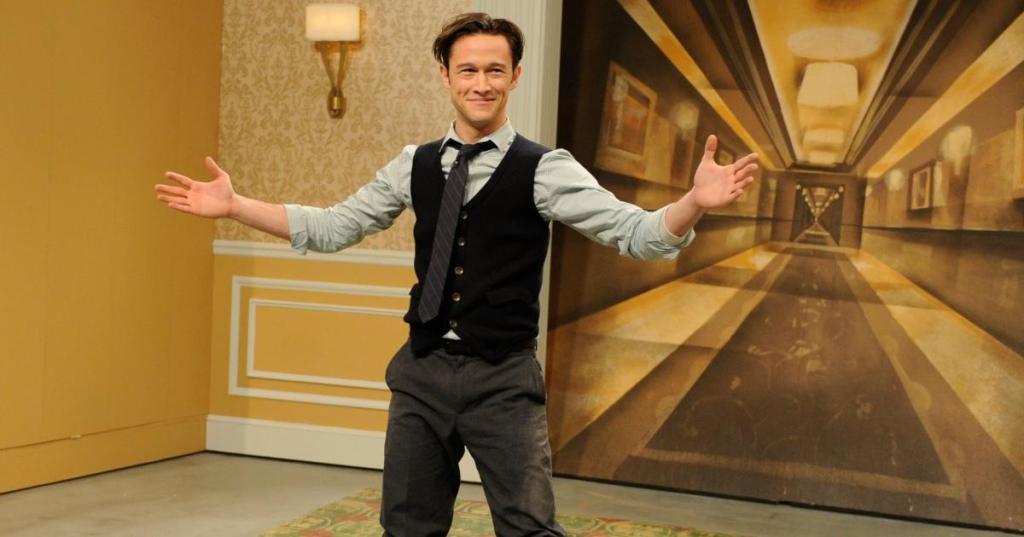
    While watching Singin’ in the Rain (Gene Kelley 1957), I was reminded of Joseph Gordon-Levitt’s highly enjoyable rendition of Make Em’ Laugh on SNL in 2009. Unfortunately, the performance has never been rebroadcast because SNL never got the rights to the song. Watch a clip on Instagram here.

    joseph-gordon-levitt-snl-nbc-getty-images.jpg

    As I went back watch the clip, I was stuck by how much people love musicals and dance numbers. According to the article I found about Joseph Gordon-Levitt’s performance, Daniel S. Levine (the author) states, “Rather than a traditional monologue, Gordon-Levitt used his SNL debut to perform “Make ‘Em Laugh” live” (Levine 2023). Many professionals in the industry seem to greatly enjoy musicals as evidenced by this performance. It’s interesting that SNL never got the rights to the song because Singin’ in the Rain is known as a jukebox musical.

    Joseph Gordon-Levitt is an actor known for portraying the character Tom opposite Zoey Deschanel in the movie 500 Days of Summer. He also does a dance number in that movie, and he worked with the same choreographer, Michael Rooney, for the SNL performance. I love seeing Hollywood celebrate movie classics and the whimsy of cinema.

  • Debbie Reynolds and Singin’ in the Rain

    I encountered an interesting video on YouTube of a more recent interview of Debbie Reynolds. She talks about how, surprisingly, she had no formal dancing experience when she was cast as Kathy. Thus, she had to undergo rigorous rehearsals, eight hours a day for two months, before shooting began.

    I found this surprising because she plays such a convincing performance in the film, with her dancing being extremely technical and well-done. In the interview, she talks about her determination to keep up with her co-stars who had much more experience than her. I find this fascinating as it mirrors her character in the film; both are talented performers but had to work extra hard to prove themselves in an industry of veterans. Overall, knowing this detail now almost adds another layer of authenticity to the film.

    screenshot from video

    I also found it interesting in the video that they address there being two directors and how that worked in the making of the film. Reynolds talks about how Gene Kelly directed the actors while Stanley Donen mostly worked behind the scenes with the crew and cameras. Given the technicality both in the cinematography and the mise en scene, it is not surprising that they would divide and conquer.

    screenshot from video

    Ultimately, this video highlights the tedious work put into the making of such a grand film, reminding us how it has become such an acclaimed production.

  • Sound fabrication as a choreographed dance

    As we began to overview sound it is interesting to understand the extent to which it is naturally occurring or if its being artificially fabricated. The mini documentary “The unsung art of Foley” https://www.youtube.com/watch?v=UO3N_PRIgX0 exposes how foley artists replicate noises in such a realistic manner. The mixer Mary Jo Lang refers to this process as a dance which made me think of how sound is not purely recorded, rather, it is performed. The so-called “natural” sounds we hear in a movie are just a combination of layers meticulously thought of. 

    This idea directly resonates with the week’s feature Singin in the rain that exposes Hollywood’s obsession with synchronization and illusion. Additionally the sound in the movie is hyperbolized in every sense and there would be no way to grasp that solely from recording the movie. for example: even though the iconic song was recorded on a real water flooded set, the audio was recorded separately. Foley artists lend authenticity to images that would otherwise feel empty or flat — just like Kathy Selden “ghost-voices” Lina Lamont. 

    In the documentary, Alyson Moore says: “People take sound for granted, but you would miss it if it wasn’t there”. This emphasizes how if well done, sound is meant to be unnoticed. The layering process is an effort towards achieving  the most natural noise possible, and in musicals, layering parallels harmony as multiple elements bled together in a single experience. In musicals layering is exaggerated through dialogue, song, dance, ambient sound, rhythm and more. 

    In essence, both dancers and foley artists rely on rhythm, timing and a combination of movements to succeed. Foley artists dance behind the scenes mirroring the dances on the screen (as exposed on the documentary). By recognizing sound as a choreography we begin to understand that what feels natural in films is sometimes the most artificially constructed elements.

  • Footsteps that we can feel, the usage of foley sound in Singin’ in the Rain.

    During the movie, there are a lot of dancing and jumping and characters walking around scenes. And in such scenes, all the characters’ footsteps are captured exceptionally well, and in the dance scenes we always hear the clear crisp of their feet stumbling on the ground, just like the microphone is held inside their shoes.

    This connects to this week’s reading where post-production is used to achieve this effect, which is foley sounds. Below is a link that is useful for us to read

    ⬇️

    https://soundgirls.org/lara-dale-foley-artis

    A foley artist may have many many shoes they use to create certain sounds the characters made during the film. “If you work long enough on diverse projects you will eventually need to have every type of shoe, or at least the sound of that shoe, that you possibly can.” Artist Lara Dale said so, and she herself have more than 300 shoes.

    Lara Dale also notes that the movie stars rarely record their own footstep tracks, but Gene Kelly did record his own footsteps. This makes Singin’ in the Rain one of those rare cases where the on-screen dancer is also the off-screen “Foley walker.” That choice keeps the choreography’s exact groove while still giving the mix team freedom to shape space and texture.

    In addition, notice how the footsteps all sound like the special shoes used by tap artists, but the characters in the frame are either wearing leather shoes or high heels. This is clearly not a sound such shoes can make in real life, and foley is employed here to mimic the optimistic sound. Sound enriches the image with expressive information the picture alone can’t carry, it offer fun and wit into the shots.

    If we are to listen to the actual footsteps that is recorded during the film taking period, it probably will be unclear and not so rhythimic that we are able to capture the beet and feel their dance as they do the moves.

    So the thing I noticed that how his feet sound turns out to be the point. The film wants you to feel the dance as music, not just see it. Foley makes that happen.

  • In Praise of Nope’s Sound Design

    This week, we discussed the power of sound design in a film, which Film Art describes as “a world in the background”. Different aspects of sound design can change how the audience interprets a scene. For example, volume can give us a perception of distance, but can also be used to draw the viewer’s attention to a certain sound or dialogue line.

    A film that came to mind while I was reading through the chapter that shows the power of sound design perfectly is Jordan Peele’s Nope (Peele, 2022). A good source to check out regarding the effectiveness of its sound design is Thomas Flight’s video, “How Nope Tricks Your Ears” (https://youtu.be/cWPFMmuagQ4?si=l04q3J3dWclvuuUy). I also felt it was fitting to talk about this video, considering how we’ll be watching Nope as a class later in the semester. Semi major spoilers ahead, so read and watch at your own risk!

    One thing Thomas Flight discusses in his video is how Peele employs a technique he (Flight) calls “sonic ambiguity”. He brings up how Spielberg does this technique exceptionally well in Jaws. In fact, he cites the sequence of Brody keeping watch at the beach, which we actually watched in class. Throughout the sequence, Spielberg adds in sounds that could be attributed to a shark attack, such as a woman screaming or frantic splashing. These sounds, buried in the ambience of a crowded beach, are paired with the observer-esque editing of the sequence to instill a feeling of anxiousness in the viewer.

    Nope does something similar. During a nighttime scene shortly after the first alien attack, OJ sits outside with his horse. He begins to notice strange noises above him and realizes the alien has been circling the farm. The sounds of the alien in the scene are present, just very faint. Instead, Peele masks the screams of the alien’s victims behind the much louder sounds of cicadas, nighttime wind, or a horse’s snort. As Thomas Flight says, though at some point, viewers are able to discern between the sounds of the night and the sounds of the alien, the beginning few moments leave us on the edge of our seats. Is the alien there, or is it just sounds in the night? What’s going to happen?

    Another thing Nope uses sound design for is to trigger a psychological response in the viewer. In the flashback scenes, where Gordy brutally kills his castmates, most of the carnage is obscured by doors, furniture, or tablecloths. Instead, Poole utilizes sound. With every sound of skin tearing, bones breaking, or people crying out, viewers are forced to listen to the carnage and come to a conclusion on what’s happening themselves. The terror of this scene is almost personalized in a way: each member of the audience has a different image of the violence in their head, and to them, that’s the scariest outcome there is.

    If this sounds interesting, I wholeheartedly recommend Thomas Flight’s video that’s linked earlier in the blog. I also recommend going through Flight’s entire channel, as it’s a gold mine for video essays on film and TV.

    I look forward to watching Nope with you all after midterms!