Category: Week 11 (11/03 + 11/05) • Documentary

  • Interpreting Realness in Paris is Burning

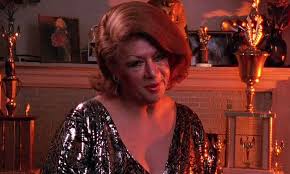
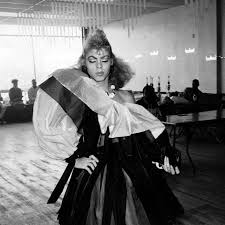
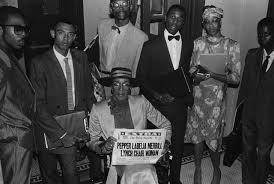
    Realness is a theme within ballroom culture depicted in the film Paris is Burning. To “walk real” means to embody the look, attitude, and guise of a person you are not; oftentimes in the context of the film, a white, straight, well off man or woman. Fundamentally, this gives you the legitimacy of being acceptable by society, and many critics upon Paris is Burning’s release hailed drag culture as proof of identity fluidity.,

    But others pointed out the “realness” is questionable, because it illustrates standards set by a dominant class and culture. In other words, identity fluidity isn’t truly the case because people “conform” to the social norms established.

    While doing research for Paris is Burning, I came across two articles that have very different takes on the film’s interpretation of realism: Phillip Brian Harper’s “The Subversive Edge: Paris Is Burning, Social Critique, and the Limits of Subjective Agency” and Chandan Reddy’s “Home, Houses, Nonidentity: Paris Is Burning” Both take a stance criticizing the virtue of “realness” portrayed in the film, but they differ in the perspective in why people in ballroom culture use it.

    Harper argues that realness in the context of the film is manipulated and controlled in a way that maintains a strict social hierarchy. When people enter the ballroom and “walk real,” they are emulating identity rather than creating identity; thus adhering to the “white, straight, and wealthy” ideals that are strived towards. As such, Paris is Burning gives an appearance of being empowering, but it is the very thing that keeps people disempowered.

    Reddy takes a different approach; rather than what “realness” limits, he is more interested in what realness reveals and how it is used in ballroom culture. He argues that ballroom culture is aware of the social construct of “realism,” and instead emulation exposes how fake “realism” is; how a social hierarchy is nothing more than an act. In this way, ballroom functions as a way of cultural expression rather than cultural assimilation.
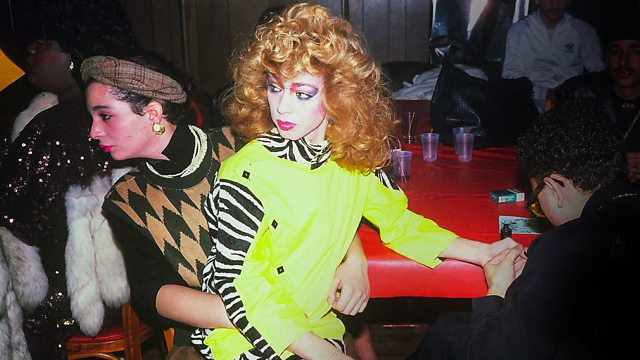
    I think these two interpretation speak to the nature of the documentary itself; both can be true. Jennie Livingston, the film’s director, is a white woman, which comes at contrast to ballroom’s black and hispanic roots. The film is made for white audiences; ballroom is presented as a new concept, and much of the film covers topics people within ballroom culture would be very familiar with already. As such, the discrepancy between the white filmmakers and the black, hispanic, and queer community creates different interpretations between the creative choices used and even the nature of the interviews given. In other words, the dream to live up to “white” expectations shared by many in the ballroom community may not be as pronounced as the film presents it to be. I think that its impossible to explain a culture and its significance through media; you have to actually live it.

  • Fashion Beyond Status

    In the film, Dorian Corey explained that in a ball, “you can be anything you want. You’re not really an executive, but you’re looking like an executive. And therefore you’re showing the straight world that I can be an executive. If I had the opportunity, I could be one. Because I can look like one.”

    Throughout Paris Is Burning (1990), the idea of complete replication, or “blending in,” is emphasized, with individuals receiving perfect scores when they completely embody the role they present in the ballroom. One of the main ideas in the film is how the ballroom community uses fashion and voguing to inhabit roles that society usually denies them. When participants walk in categories such as “Executive Realness” or “Town and Country”, they are not simply showing off clothing, they are performing access to power, wealth, and respectability. These performances revealed that fashion is never just about what someone wears, rather, it is about who has permission to appear legitimate while wearing it. Given this, at first, I believed drag was an act of imitation (a way to blend into a higher social class) with emphasis being placed on fashion’s power coming from the privilege of the wearer rather than creativity itself. However, throughout the film, my interpretation changed.

    In the film, a participant can look like a Wall Street executive, yet outside the ballroom, society still views them as poor and queer. Their outer fashion appears convincing, yet it does not grant the privilege attached to that image. This highlights the “normalized” idea that the value of fashion depends on who wears it and the access that person holds.

    What makes Paris Is Burning interesting is how this dynamic is transformed. Within the ballroom, fashion no longer depends on external validation. Fashion now becomes a language of self-definition and freedom. As Corey explains, “In the ballroom, you can be anything you want.” The act of performance turns fashion into something liberating rather than aspirational. Drag emerges as a form of expression that contradicts the belief that fashion requires social status to hold meaning. It demonstrates that confidence and creativity, not privilege, give style its significance.

    I explored this idea/theme further through reading a piece by The Criterion Collection titled “Paris Is Burning: The Fire This Time” written by Michelle Parkerson. Parkerson writes that the ballroom is “a world in which style becomes survival,” and within this space, self-presentation operates as a “radical act”. The balls create an alternate reality where individuals excluded from the hierarchy can redefine beauty, gender, and success. Fashion, detached from wealth or whiteness, becomes a language of resilience, artistry, and self-identification.

    The ballroom community and drag as an art show that fashion holds value when it becomes a tool of identity rather than a marker of privilege. Drag transforms clothing into language, movement into protest, and presentation into truth. Through performance, individuals claim visibility and power in a world that refuses to grant it. Fashion in this context no longer depends on wealth or position. It becomes an act of existence.

    Source: https://www.criterion.com/current/posts/6832-paris-is-burning-the-fire-this-time?srsltid=AfmBOornHPZpxL81P94ZA5YgxfPWpz2L8nkkNcF_IdYNO5G8XHxtyQJe

  • Editing is Everything

    Alex Gibney is a documentary film director and producer who worked on multiple big projects throughout his career. In this interview, he shows a little bit of the behind the scenes and the thoughts and challenges of making a documentary.

    While watching the interview, I realized how important editing is to a documentary. I’m used to thinking about scripted movies, where the film is mostly captured on set. The editing for those is more like putting a puzzle together when you already have the picture on the box. But for documentaries, this is very different. The story and the film itself are created in the editing room. It feels like the story is actually found and built from the ground up.

    Gibney says that he often discovered new ideas and thoughts when reviewing footage in the editing room. He also highlights the flexibility of documentary work, explaining that because the teams are small, they can easily go film new material if they discover a party of the story they want to tell is missing in the edit. That kind of flexibility is amazing and seems vital for this kind of work.

    According to Gibney, editing plays such a major role because it guides the audience towards the point of view of the author. It’s how they take all that raw footage and shape it into the final message.
    This is connected to a major challenge:
    dealing with people in the story you disagree with. Gibney talked about balancing the obligation he feels towards his subjects with his primary obligation, which is to the audience. He was clear that he’s not there to make a “commercial” for someone, especially if they aren’t being truthful. A directors job is to find and convey the truth.

  • Paris is Burning: Through a Modern Lense

    There was one main thought I had in my mind while watching Paris is Burning…why do these people from 1985 remind me so much of modern-day influencers? Though it might be a stretch, a community for those rejected by 80s society shows shocking similarities to the way that we see influencer in modern-day society. It is important to contextualize what I mean about modern-day influencers that might be similar to the ballroom culture of Harlem. First, the houses. I found the different houses fascinating in this watch. Ballroom participants rally behind a representative/Mother of the house and let that house form their culture and identity of their performance. To me, this shockingly resembled online consumer and fan bases to online celebrities. For example, I constantly see different fan bases for different celebrities create their own fanbase name and create an identity behind that influencer (like “Swifties” for Taylor Swift). Not only was this idea of the house/fanbase mimicked in Paris is Burning, but I found another comparison with the whole notion of “Realness” at the ballroom shows. It is narrated in the documentary that “Realness” is the attempt to mimic a “normal”, straight, wealthy white person as a dress up for the social rejects of the ballrooms. Doing this and successfully mimicking a “normal” person would result in good voting from the judges. With the whole idea of pretending to be something that you are not to pander to an audience, I see a striking similarity to modern-day influencers and the artificial persona that they demonstrate to their audiences. In the digital age, celebrities are not able to live to be their authentic selves. They have PR managers, agents, and fans that judge their every single move – similar to the judging in the 1980s ballrooms.

    Overall, this might be a stretch, but I find odd similarities in the way that ballrooms are structured in comparison to modern-day influencers. Do influencers live every day putting up a performance as part of their identity? Do influencers mimic ballrooms from the 80s, except they earn likes and shares instead of clapping from the audience? When making these connections one can truly understand the social and cultural impact of the LGTBQ of 1980s Harlem.

  • NYC and the LGBT Community

    As I was watching “Paris is Burning,” I was reminded of another documentary I had watched called “Stonewall Uprising” which focused on the events of the Stonewall riots that occured in New York City and marked the turning point for LGBT visibility and rights in NYC. I was curious as to how these two events connected to each other and found that the riots occured almost exactly 21 years before the release of “Paris is Burning.”

    The Stonewall Riots was a spontaneous riot that that occured when NYC police raided the Stonewall Bar, a popular gay bar where drag queens, gay men, and transgender people often visited as refuge from NYC’s transphobic and homophobic policies. However, the members present fought back against the police, signifying the tipping point for the marginalized and oppressed members of the LGBT and their refusal to take any more abuse. The riot was led mostly by trans women of color, similar to “Paris is Burning.”

    “Paris is Burning,” set around 20 years later, shows how this spirit of resistance has carried through history and evolved into new self-expressions and continuing to defy societal norms. Although still oppressed and marginalized, many young LGBT runaways as well as shunned members of society could turn to the widespread drag ball culture to find a family and community. 20 years previously, Stonewall was the only gay bar where gay men were allowed to dance, and drag queens had fought tooth and nail to protect their community. With this background knowledge, I found it extremely touching that these drag queens could now dance freely and even be accepted in some magazines and runway shows. Voguing, performance, and “realness” in “Paris is Burning” can be seen as extensions of the fight that began with Stonewall.

    Stonewall and “Paris is Burning” show slices in history of the fight for equality in LGBT communities in New York City, as well as the progression of their rich and unique culture. After watching these two documentaries about the history of NYC’s LGBT culture, I am curious how they have continued to develop into the modern day. From what I am aware of, NYC has one of America’s largest LGBT communities with an extremely thriving culture currently, so I would say that these queens’ struggle proved fruitful for their future children.

    How has the fight for LGBT rights developed across the country in various cities other than NYC? And how has the fight progressed in the current political climate?

  • Documentary Experience and Family Theme: Paris is Burning

    Watching Jennie Livingston’s Paris is Burning (1990) gave me a fascinating perspective on Harlem’s ballroom culture, a world I hadn’t known much about before. I also don’t watch documentaries very often which made this feel like a unique viewing experience for me both content-wise and stylistically.

    One of the elements that stood out most to me was the concept and importance of chosen family. The film emphasizes how the “houses” function not simply as performance groups, but as emotional homes for participants who might not have been accepted in their biological families.They even have familial roles within their Houses, such as mother of the house. I liked the way the participants describe the role of the mother; they talk about how important she is and how she emotionally and financially supports the rest of the family. The House offers a safe haven for many individuals experiencing homelessness or economic hardship, and the sense of belonging feels just as important as the creative expression.

    It was really impactful to hear the stories of the participants and learn about why they loved being a part of the ballroom space so much. A specific moment that resonated with me was when one of the participants talked about how performing made them feel famous, recognized, and loved, even if just for a few minutes. That line stuck with me because it felt so universal. Even though I don’t have any connection to ballroom culture, the feeling of wanting to be seen and appreciated for what you’re good at is something most people relate to in their own lives and fields of work. It didn’t seem like a desire for fame, but a longing to be acknowledged and to feel like you matter in the space you choose to exist in.

    When thinking about this film in terms of genre, I felt that the documentary format made me feel very immersed in the era. The archival style and raw visual quality made it feel like I was genuinely in late-1980s New York rather than watching a movie from decades ago. I know that movies are often immersive and transport you to a different world, but this felt different than a fictional movie. It was more immediate and intimate rather than a sort of escape. Overall, I enjoyed the experience of being immersed in this unfamiliar world.

    Some questions I’m posing to the class: is ballroom “realness” a form of escape, empowerment, or assimilation? Does the camera feel observational, celebratory, exploitative, or something in between? How does the film’s documentary style shape our emotional reaction to the people on screen?

  • Paris Is Burning: Redefining Family

    Learning about the history of New York City’s Ballroom culture was genuinely fascinating. There were so many new ideas to me — such as houses, reading, shading, and voguing. Houses are competing teams that go against one another in different categories in Ballroom. However, I believe the idea of a “house” is more than a team; it’s an ideological home where people can love and be loved despite being overlooked or unappreciated in reality. For the participants, the House was a new kind of family. They understood one another, accepted themselves as they were, and learned how to give and receive love.

    Throughout the film, it’s mentioned that many of those who participated in the Balls were economically disadvantaged or even homeless. Yet, the Ballroom gave them a reason to dream. Everyone in the film had a dream: to be famous, to be recognized, to be rich, or simply to form a loving family. As you listen to their stories, you realize that their dreams are no different from anyone else’s. People want stability, acknowledgment, love, and belonging — the very same things that society once told them they couldn’t have. The Ballroom, however, became the space where they created their own version of family, culture, and hope.

    One thing that struck me deeply was realizing that voguing actually originated from the Ballroom culture. I had seen dancers perform it before, but I had never thought about its history. As I watched the movie, the movements looked familiar. But when they described voguing as a way to “attack each other through a dance,” I was able to recognize and understand it as a new concept.

    Overall, this film introduced me to a new culture built on resilience, creativity, and love. It showed how members of the Ballroom community fought to create a space where they could turn their dreams into reality. Everyone has a dream that can sometimes feel impossible to achieve. When faced with the weight of reality, people often hesitate to dream at all.. However, the figures in Paris Is Burning never gave up. They are dreamers, and, in their own way, they are also achievers.

  • The One Who “Made it Out”: The Fate of Willi Ninja

    Jennie Livingston’s Paris is Burning (1990) follows an ensemble cast of performers in the Harlem Ball scene, each of whom finds a different outcome (death, fame, resignation, etc.). Willi Ninja, the film posits, is the one who made it out.

    In part thanks to Paris is Burning, Ninja spent the 1990s well-employed; he was featured in several major music videos, and worked as a model, for a time, for Jean-Paul Gaultier. He taught dance––his style of voguing, in specifics–across Europe, and in Japan. Back in New York, his “House of Ninja” grew, becoming the first multiracial Ballroom house.

    I was fascinated by Paris is Burning‘s portrayal and framing of Ninja. In contrast to the fate of it’s other major protagonist (if the figured can be considered as such), Venus Xtravaganza, Ninja’s apparent success story is a sliver of a very external form hope in a film which is largely about disadvantaged people needing to create hope for themselves.

    Ninja probably did “make it out” more than anyone else in the film. He went on to teach dance, be on TV, and shape the Ball scene going forwards. But he did not escape, not fully. The figures of Paris is Burning talk often about wanting a “normal life”. Ninja died of AIDS-related complications at the age of 45.

    According to the Google Arts and Culture article about Ninja, he will be remembered thusly: “[his] legacy is the legacy of voguing, and the exquisite form of dance and expression that he brilliantly developed. Ninja passed away on September 2nd, 2006, in New York City, but remains deathless in his art.”

    He may remain deathless in his art. He would today have been 64.

    Further reading about Ninja can be found at the following links:
    Google A&C
    New York Times Obituary
    Mental Floss
    Ninja’s IMDB
    Outhistory (Video links at the bottom of this page)

  • Paris Is Burning and the Birth of Drag Race

    Paris Is Burning captures the vibrancy, competition, and chosen families of New York’s ballroom scene. Three decades later, RuPaul’s Drag Race has brought many of those aesthetics and attitudes into the global mainstream. Watching the show today, it’s easy to forget that terms like “shade,” “reading,” and “realness” weren’t born on a soundstage, but rather in Harlem’s ballrooms. 

    Jennie Livingston, the director of Paris Is Burning, reflected on this evolution in an interview with AnOther Magazine, noting that “if you’ve ever heard of “realness,” “reading,” or “throwing shade,” it’s probably because of RuPaul’s Drag Race. But the origin of this terminology far precedes the reality-TV show.” (Livingston, 2020) I picked up a degree of tension within this article, in that although Drag Race celebrates the artistry of drag, it also repackages it for mass consumption, sometimes distancing it from the political urgency of its roots. The ballroom scene was never just about winning but rather about being seen and loved by one’s house, since they oftentimes didn’t recieve much love from their biological families or society in general due to their identities. In contrast, on Drag Race, “family” becomes storyline rather than lifeline. 

    The show’s success has undeniably opened doors for queer performers worldwide, proving that what began in underground NYC clubs could reshape global pop culture. Regardless, RuPaul’s Drag Race should stand as a reminder that the culture it celebrates was built not just on glamor, but also on resilience, creativity, and chosen family. 

  • Illusions of Realness in Paris is Burning

    While watching Paris Is Burning, I was fascinated by how the documentary uses its form to make a rhetorical argument about the illusions of “realness.” Through interviews, performances, and their everyday night life, Jennie Livingston doesn’t simply document ballroom culture, but she persuades the viewer to see how identity itself is constructed and performed. The documentary holds power in how it blurs the boundary between reality and illusion, showing that “realness” is both a performance within the ballroom and a mirror of society’s own ideals.

    Janus Films — Paris Is Burning

    We see in the interviews when explaining realness that is paired with them also embodying it on the runway. Livingston’s use of personal testimonies, like Dorian Corey’s reflections on passing and illusion, becomes a subtle argument: that realness is not deception, but a survival strategy in a world that denies minorities and those of the queer community access to power and success that white cis males receive.

    The camera’s observational gaze allows the audience to empathize with the performers rather than judge them. By immersing us in their language, music, rituals, routines, the documentary shows a form of “realness” that is its own kind of truth to the performers. As a way to reclaim agency when reality offers none. Livingston seems to ask us to reconsider what authenticity really means and who gets to define it.

    queer people need more | Amrou Al-Kadhi ...

    Does Livingston’s portrayal of “realness” empower the ballroom community by revealing their creativity, or does it risk reinforcing the very ideals they’re imitating? What does the film suggest about how we all perform “realness” in our own lives?