Category: Week 12 (11/10 + 11/12) • Experimental + Art Film

  • Reality, Performance, and Ambiguity in Holy Motors and Parasite

    This week’s readings both explore what defines art cinema. Bordwell describes art cinema through realism, authorial expressivity, and ambiguity. Unlike classical Hollywood films, which follow clear cause-and-effect logic, art films leave uncertainty and interpretation to the audience. Frodon’s interview with Carax shows how these ideas of art film are embodied in Holy Motors, where everyday life itself becomes a performance.

    In Holy Motors, Monsieur Oscar travels through Paris, performing multiple identities, such as a beggar, a father, and a killer. Although there are no visible cameras or audiences watching him, he continues to perform and act. This reflects authorial expressivity, as Carax blurs the line between art and life. The stretch limousine that Oscar rides represents the realism of modern alienation as it looks luxurious on the outside but feels empty inside. It reflects how technology connects people, yet simultaneously isolates them. The ending, where machines speak, creates ambiguity. Audiences are confused about whether they are watching life or just another performance as Carax blurs the line between human and machine. Human Oscar performs like a machine the entire day, and now the machine has started to talk like a human being. 

    Bong Joon-ho’s Parasite also embodied the art cinema mode. Its realism is grounded in the vivid contrast between the wealthy home and the semibasement house. Bong’s authorial expressivity is evident through symbolic motifs such as stairs and rain. The vertical movement of the stairs represents the class hierarchy in the film. The rain reveals the stark reality of how the experience of rain can change significantly depending on one’s social status. Finally, the ambiguous ending, whether the son ever rescues his father, reveals life’s uncertainty rather than a happy ending or resolution.

    These are questions we can think about:

    1. If life itself becomes a performance, can we ever distinguish between authenticity and acting?
    2. Does the director’s control over ambiguity make the film more honest or more artificial?
  • Art Cinema Today: Enemy

    When figuring out what I wanted to write about for this week’s blog post, I noticed many were interpreting the reading from this week in a modern context. To add on to that trend, in a perfect way to talk about a very underrated movie, I would like to emphasize the artistic efforts from Enemy (2013, Denis Villeneuve).

    According to David Bordwell, the author behind the Art Cinema Essay, some of the aspects that make up art cinema, contrary to a standard Hollywood movie, are key stylistic inputs that don’t exist in the overdone Hollywood blockbuster. Even though Bordwell’s argument was released in 1979, this notion still holds up to this day. With sequels and big name brand movies dominating Hollywood, it is a treat for audiences to find a movie nowadays that tries something unique or different. Enemy is one of those movies that does exactly that, and unfortunately did not translate to the box office.

    First off, Bordwell notes in his essay that artistic films often include morally ambiguous, confused characters that progress throughout the film. The protagonist of Enemy, Adam/Anthony Bell, is a man who is discovering his morality throughout the entirety of the film. The basis for the plot of this movie is that Adam is fighting against an “enemy” version of himself. He interprets his life as he is fighting against a clone, however in reality, it is just himself in a different conscious. The longer the movie goes on and the more that Adam finds about his other self, the more that his morals develop from the blank slate that he is in the beginning of the film.

    Secondly, an art film must explore philosophical or social themes that tell the audience something about the human condition. At its simplest form, this movie is about a man who finds an enemy version of himself. However, this movie covers interesting themes of marriage and responsibility in a very interesting way: a massive spider. All throughout this movie, Villeneuve continues to cut to scenes of a massive spider towering over the city that Adam lives in. In no casual Hollywood movie would this occur as it confuses the audience. On my first watch of Enemy, I had absolutely zero idea what the spider the size of a skyscraper meant towards the plot of the movie, or even why the characters weren’t discussing this plot point. In reality, the spider represents the main character’s fear of commitment to his marriage and is an encapsulation of the feeling of being trapped by his wife. Adam simply can’t stop himself from giving into lust and the spider getting larger and larger over the city is representation of that.

    One last aspect of Enemy that I appreciate very much is the open-endedness of the ending. Bordwell highlights the importance of a film with unanswered questions at the end. Now, if Enemy is known for one thing, it might be its confusing ending. After Adam has successfully defeated his other self and everything seems to fit for a perfect, happy ending, the movie simply ends with Adam staring at a massive tarantula spider in his bed room that jumps away from him. For viewers expecting a simple ending that a typical Hollywood picture would deliver, this ending makes absolutely no sense and calls for open discussion and speculation as to the meaning of what the comically large spider in the bedroom represents. A clear indication of the artistic value that Denis Villeneuve put into this movie.

    Overall, Enemy is a very underrated movie that didn’t do too well at the box office, most likely because of the very artistic and metaphorical decisions that Villeneuve added to the movie. To me, this movie perfectly fits the art film that Bordwell talks about in his essay. However, an artistic movie doesn’t always have to fail at the box office and in popularity. Are there any ways to imbue artistic filmmaking according to Bordwell into a movie while still making it digestible to the average watcher? or is that impossible because it is meant to be viewed by someone with an appreciate of the art of filmmaking?

  • “The Art Cinema as a Mode of Film Practice” and Wicked

    In this week’s reading, David Bordwell’s essay “The Art Cinema as a Mode of Film Practice” analyzes the art cinema as a mode of film practice rather than a genre, meaning it’s defined by a set of formal and narrative techniques rather than thematic content. This greatly differs from traditional Hollywood films, in which characters have a clear-cut goal with a straightforward plot, while Art Cinema has looser plots with complex and ambiguous protagonists in a “realer” way.

    A recent movie I watched was “Wicked”, which although in fact is a Hollywood blockbuster, there are certain aspects that can resonate with Borwell’s Art Cinema. In Bordwell’s essay, he says that art cinema prioritizes psychological depth over straightforward plot, exploring the inner thoughts of its characters. InWicked, the story delves deep into Elphaba’s motivations and moral struggles, rather than just a linear good-versus-evil plot. Bordwell also highlights narrative ambiguity in art cinema, where events are open to interpretation and outcomes are not fully resolved. Although the actual movie is pretty straightforward, when combined with the context of the original story, many interpretations and nuances begin to show. We see the familiar world from Elphaba’s perspective and begin questioning what was actually real. Finally, Bordwell says that the protagonist in art cinema is often complex and morally ambivalent. Elphaba fits this model perfectly, as she subverts traditional heroic and villainous roles, making the audience question what it means to be “good” or “evil.”

    Although some connections can be drawn between the essay and “Wicked,” there are many points where the movie is different from Art Cinema and is instead a traditional Hollywood blockbuster. For example, although Elphaba is complex and morally ambiguous, she still has a strong goal and drives the plot forward. Additionally, although the movie has very human characters with human thoughts, the movie is still very fantastical and nothing like the “naturalistic setting” and realistic points in the essay. The plot is very structured and has a pretty distinct beginning, middle, and end, even if the context of the original story gives the movie a complex story structure. In conclusion, Wicked is more like a mainstream musical movie with some art cinema elements, rather than an actual example of art cinema.

  • Modern Art Cinema- Celine Song’s Past Lives

    After reading David Bordwell’s essay “The Art Cinema as a Mode of Film Practice”, I couldn’t help but try to compare what I had watched to every detail he described. Of course, it made me curious to figure out which modern movies pass the “test of art cinema.” I landed on Celine Song’s Past Lives. This movie is the textbook definition of precisely what art cinema is, possessing a definite historical existence, a set of formal conventions, and implicit viewing procedures.

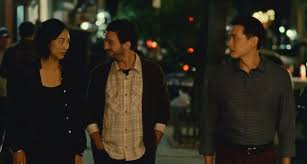
    Song does not follow the classical Hollywood cinematic narratives of cause and effect. The narrative is driven by realism and authorial expressivity. We follow the main character, Nora, as she reunites with her childhood friend, Hae Sung. At the start of Past Lives, Song places us in the position of distant observers. Two unseen strangers watch Nora, Hae Sung, and Nora’s husband in a bar, whispering guesses about what their relationship might be: Lovers, friends, a triangle. This moment sets the tone for the entire film: we begin outside, speculating and interpreting, just as those commentators do.

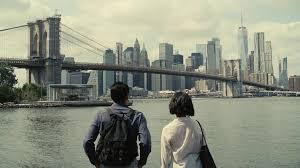
    Past Lives': A Tour of New York City With Greta Lee and Celine Song

    The characters’ goals are emotional rather than external. We see some characters wander out & never reappear, and events that lead to nothing. We are on the outside, watching this story unfold, and a series of flashbacks and flashforwards drives the narrative. Unlike in a classical film, the spatial and temporal elements are constantly manipulated. Like Bordwell describes, the characters often “tell” us what connections mean through autobiographical recollection, as when Nora reflects on her childhood in Korea before emigrating to Canada. We see this in Past lives after the opening scene, where we flashback 28 years to young Nora in Korea with young Hae Sung. We recount her immigration to America, where we meet Hae Sung’s mom. There is a girl on the plane who practices English with young Nora. Then, we flash forward 12 years to an older, yet still young, Nora in New York.

    Nora reconnects with Hae Sung through Facebook. We follow their relationship over video calls in different time zones, switching perspectives between Nora and Hae Sung. Yet, as the movie progresses, we question who is telling the story. Song disrupts the fantasy early for the audience of “childhood friends turned lovers”, as Nora gets married to a White American man, and yet, it still feels like she is longing to be with Hae Sung or Hae Sung to be with her.

    Past Lives ends where it began, the same street, the same window, but our position has changed. We now see from inside, with a deeper understanding of the characters and their unspoken feelings. The final conversation between Nora and Hae Sung offers the illusion of closure while leaving us suspended in longing. In true art-cinema fashion, Song ends not with resolution but with interpretation. The question is not whether they end up together, but what their connection means to them and to us. In this way, Past Lives fulfills Bordwell’s vision of art cinema: realist, author-driven, and deeply ambiguous.

  • Experimental Film in 2001: A Space Odyssey

    Experimental Film in 2001: A Space Odyssey

    This week, we’re discussing three distinct genres of film: documentary, experimental, and animated. Although I haven’t delved into the first two genres extensively, 2001: A Space Odyssey by Stanley Kubrick stood out to me immediately as an experimental film I’ve actually seen (so many films that are considered experimental have been on my watchlist for a LONG time, such as House and Stalker).

    Though not all of the film is considered “experimental”, the “Stargate” sequence definitely should be.

    At the beginning of the sequence, Bowman, our main character, is in space investigating one of the monoliths when he is pulled into a gateway of colorful lights.

    Throughout the rest of the sequence, we see tunnel-like flashes of light (shown above), with shots of Bowman in distress interspersed between. It’s worth noting that as the sequence continues, the shots of Bowman become motionless, his face frozen in horror and distress. As the sequence continues, we begin to see shots of blinking eyes (presumably Bowman’s?) with different color schemes, space phenomena, and landscapes of strange colors.

    This sequence is a version of what Film Art calls “associational form”. Using these images, Kubrick suggests ideas and emotions to the viewer, despite the images seemingly having no logical connection.

    Through the tunnel-esque design of the colors, we infer that Bowman is traveling somewhere. Then, using the short, shaky shots of Bowman in distress, along with the freeze-frames, we know that whatever journey Bowman is on is nowhere near pleasant. But on the other hand, some parts of this sequence are also abstract (the second form). The images aren’t necessarily used to convey a meaning; it’s up to the viewers themselves to find meaning within them. A good example of this in the sequence is the eyes or the space phenomena. Is Kubrick trying to show what Bowman is seeing as he travels?

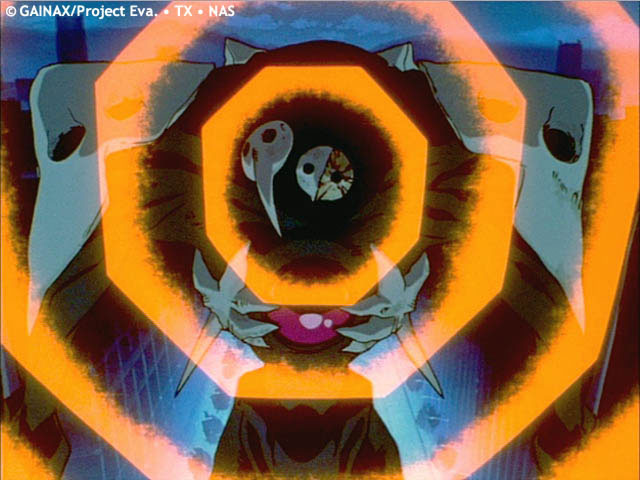
    On the topic of 2001, it’s also fun to see references to such an influential movie in other media. There were two pieces of media that came to mind immediately, which are the anime Neon Genesis Evangelion and one of my favorite video games of all time, Signalis.