Category: Week 5 (9/22 + 9/24) • Editing I: Continuity Editing

  • Understanding Continuity Editing

    The Film Art’s content on continuity editing emphasized my viewing of All that Heaven Allows as more than a melodrama but also as a film built through seamless and meticulous editing – almost invisible. The book’s chapter 6 specially emphasizes Hollywood concentrates their traditional editing means in maintaining spatial clarity across axis of action, using eyeline matches, and shot-reverse-shot patterns to anchor the viewer within that fictional world. To that end, Sirk’s movie is a great example of a film grounded in visual logic. 

    My overall impression of the movie and its editing was that Sirk uses continuity editing to preserve spatial and logical continuity but he uses the mise en scene and camera distance to create a contrast between freedom and confinement. This can be evidenced when comparing the framing of scenes inside Cary’s house ( full of mirrors, glass, rigid lines, feels claustrophobic) and Ron’s mill (openness and natural flow). 

    Chapter 6 also talks about graphic matches and rhythmic editing which Sirk uses for both clarity and emotional pacing (as tension builds up). The cutting rhythm in Ron’s scenes are slow and patient while they are noticeably tighter, more abrupt and faster paced when it comes to Cary’s scenes with her children specially. Match-on-action cuts ensure that Cary’s emotional journey remains smooth. 

    Richard Brody’s point that melodrama “risks laughter at the moments of greatest passion” finally made sense: continuity editing is what keeps those potentially “too much” moments sincere. It stabilizes melodrama so that emotional intensity reads as real rather than ridiculous. Laura Mulvey’s “dialectic between high art and trash” is literally visible: continuity gives the film its classical control, while the heightened emotions push it toward excess. 


    This week’s movie + reading reminded me of Challengers. Guadagnino’s film about a love triangle between three professional tennis players also relies on continuity editing principles. The axis of action is incredibly important in the match scenes. But what’s interesting is that Challengers often deliberately test the boundaries of continuity—using whip-pans, extreme close-ups, and rhythmic cutting to accelerate tension—whereas All That Heaven Allows uses continuity to smooth emotion.

  • Douglas Sirk: The Great Melodramatic Philosopher

    The moment the end credits rolled in, All That Heaven Allows, I was fixated on two aspects of the film. The first being the implementation of the deer, which seemed to keep reappearing when I least expected it, and the second being my amazement at how powerful this tale of female individualism told in the 1950s was. I was curious to learn of the creative who put this together, and decided to do so in a melodramatic fashion. In a 2015 article, film critic Richard Brody writes about Sirk’s work as a director Sirk’s work as a director in The New Yorker Magazine, highlighting his thematic contributions to history as “crackpot philosophers and identity-shifters” (Brody). Sirk built a world in his films in which his characters were outsiders to their societies, but made monumental changes that took a philosophical stance on society and all of its dysfunctions. Sirk was known for his melodramas, and his comedic ability. He creates movies about widows, career oriented women, children, and racial injustice, among others.

    His stories are presented in this melodramatic fashion as a way to express complex and underrepresented realities, but with a genuine lesson attached to them. Take All That Heaven Allows for example, a film seemingly about a love affair between an older widow and her younger gardener. The scene where the film’s protagonist, Cary, finds a copy of Henry David Thoreau’s “Walden” and not only reads but discusses a portion of the book’s message to march at the beat of her own drum displays how “Sirk doubles Thoreau on himself, showing American philosophy not as an academic discipline but as the residue of a way of life, a trace of vital and ongoing experience” (Brody). Sirk is not only imparting life lessons on his characters, but he is doing so to his audience in a way that is tangible and relatable. American philosophy would be easier understood from a melodrama, rather than a textbook. Sirk is also giving Cary a permanent solution in this film, one where she and Ron choose to live away from both of their lifestyles in their new home, rather than a temporary rebellious moment for a happy movie ending that the audience knows would realistically never work.

    As Brody describes the different films that Sirk has created, the consistent theme of self-determination is apparent. He focuses on an American dream tale that is not commonly told, but still possible. In Week-End with Father (1951) there is representation of a woman wanting to continue her career even after marriage and having children. In Imitation of Life (1959), Sirk addresses the racial inequities in Hollywood cinema and calls out codes of silence. Brody states that he does not simply contribute to cinematic history, but to the history of thought as a whole.

    I wonder if the political climate of his time made a lot of the messaging in his films more subtle, or if you think that the use of melodrama helped Sirk to make his messages almost too glaringly obvious? Was the dramatic storytelling a way to share his philosophical ideas, or were they a deeper layer in his film?

    Link to article:

    https://www.newyorker.com/culture/richard-brody/douglas-sirks-glorious-cinema-of-outsiders

  • Windows and Mirrors in All That Heaven Allows

    All That Heaven Allows, directed by Douglas Sirk, utilizes the window and mirror as tools to highlight the contrast between the two characters, Cary Scott and Ron Kirby.

    The window in Cary Scott’s house is small, and when Cary is depicted from outside the building, the window appears like a lattice. The window traps her in societal expectations, leaving her yearning for freedom from people’s gaze. People around her also leave her behind the window, and even push her back into her place whenever she tries to break free from it.

    Screenshot from the film

    However, the window in Ron Kirby’s house is different, starting from its size. It is larger and frames the beautiful scenery of nature. When any character stands in front of this window, we feel a sense of freedom rather than suffocation. The movie ends with Ron and Cary standing in front of the giant window, showing how Cary finally freed herself from the people’s gaze and made a choice for herself. The choices she had made up to now were always for others. However, by choosing to be with Ron, viewers can realize that Cary overcame her fear of society’s judgment and made a decision she truly wanted—for herself.

    The director also uses a mirror as a tool to show how Cary shapes herself to conform to societal expectations. She doesn’t look into her ego, but rather uses the mirror to see how others might view her. Every time she attempts self-reflection, external interference interrupts her, forcing her back into the role she is expected to play.

    Screenshot from the film

    The question that I want the class to pose is
    1. How does the eyeline match from the mirror scene highlight Cary’s character?
    2. How does the wide shot and deep space amplify Ron’s character?

  • All That Heaven Allows and its Title

    The film, All That Heaven Allows, was at first seen as a melodramatic love story that was catered to women during the 1950s. However, unlike many other romcom titles during the 1950s like Singin’ in the Rain (1952) and Roman Holiday (1953), the title All That Heaven Allows, poses narratives and societal questions that may not appear to the average viewer on first watch.

    With the film officially releasing in 1955, it is important to preface that All That Heaven Allows takes place within the 1950s. Just years following the Second World War, the United States saw a massive economic boom and a sense of optimism (Why the 1950s Are Called the Golden Era – Vintage Lifestyle). This sense of greatness that existed in 1950s America seems to be contrasted by the repressive and constraining narrative that is portrayed in All That Heaven Allows. The seemingly “perfect” society of the 1950s is portrayed in a toxic light according to Douglas Sirk. In this film, all instances of American society seem to be portrayed in a negative light. The love between Ron and Cary, an innately problematic relationship by 1950s standards, is only attacked when in an urban setting. When in the natural countryside, all members of Ron’s family are completely accepting of Cary’s relationship.

    A clear difference is established between the human experience of that in an urban and rural setting. In my point of view, Sirk establishes the natural countryside as a sort of “Heaven” where both Ron and Cary can choose to be themselves and live life to their fullest, whereas the urban lifestyle is resemblant of a “Hell” that represses Cary and her desires.

    Overall, even though it may be a stretch to compare the idea of optimism and greatness during the 1950s to a sort of “Hell,” how do you consider the dichotomy between nature and urban culture in relation to the title? Is Sirk making a broader commentary towards the culture of the 1950s?

  • All That Heaven Allows: Transitions and Themes

    Douglas Sirk’s All That Heaven Allows, set in a small New England town in the 1950s, tells the story of Cary, a wealthy widow, and her budding romance with Ron, a much younger, less well-off gardener. This love affair causes an uproar among Cary’s superficial country club friends and, more sensitively, her children, who deeply disapprove of Ron.

    The editing throughout the film is very impressive, especially considering the fact that the film was made decades before digital editing existed. Sirk employs plenty of continuity editing to maintain a clear, easy-to-follow narrative. I specifically noticed the use of elliptical editing to condense time. The film transitions us through season after season seamlessly, although the entire movie is only an hour and a half long.

    One specific example that stood out to me was the dissolve on a tree in Cary’s backyard. The shot focuses on the tree in the fall full of bright red leaves, and slowly dissolves into a shot of the same tree, now nearly bare, marking the shift from autumn to winter.

    It’s a subtle but effective way to cue viewers that time has passed, and, in addition, it is a satisfying visual for the audience.

    Beyond editing, the film raises many questions about gender roles. The entire movie is clearly a commentary of the role of being a woman and mother in 1950s society. On the surface, Cary is boxed in by the expectations of being a mother and a respectable, upper-class woman. However, to me, the message seems to goes beyond just pointing out the freedoms that Cary is limited to as a single woman and hypocrisy she is faced with by society.

    In an ironic way, within her relationship with Ron, Cary almost seems to be playing “the man”. She often seems to hold more power between the two of them. Cary is the is the one with money, and social status, not to mention she’s also actually older than Ron. Even though Ron doesn’t seem to care about these things, it still seemed to establish a slight dominance in the relationship. At one point she even asks him, “Do you want me to be a man?”, to which he replies (jokingly), “Only in one way.” This is even visually represented when Ron has his accident and is physically emasculated. He is bedridden, unable to move, while Cary is watches over and takes care of him.

    This scene reminded me of the ending of Rear Window, where Jeff is immobilized and Lisa becomes the active, capable partner. Overall, the ending of the film made me think about what Sirk is trying to suggest about happy endings/happy relationships. In this scene, the entire setting of the house looks like a fantasy world. This is enhanced by the deer in the snow right outside of the window looking in at them.

  • “Continuity is the only way”

    This week’s reading emphasized how editing shapes a film by manipulating the elements of time, space, and emotion through the arrangement of shots. Chapter 6 taught us the four relations that link one shot to the next (graphic, rhythmic, spatial, and temporal) and showed how these relations typically work to create continuity.

    Continuity is often treated as the “correct” outcome of editing. Breaks in continuity are usually labeled as mistakes because filmmakers are expected to maintain details and screen direction consistently so that the story feels seamless and believable. A film that is seamless is said to allow its viewers to follow the story and connect emotionally without distraction. This week’s feature, Douglas Sirk’s All That Heaven Allows, is a strong example of this system at work, using techniques like dissolves and fade-ins to maintain clarity and flow. While there are many examples of continuity, I wanted to explore the other techniques, such as the purpose of non-continuity, focusing on whether it could create the same emotional connection that continuity does.

    Although continuity rules mainstream cinema, many filmmakers decide to break continuity intentionally to serve meaning and express a certain mood. I came across this video by Thomas Flight, which explores how non-continuity can be as expressive as continuity itself.

    Flight argues that what looks like a “mistake” may actually highlight emotional intensity, realism, or psychological conflict. He explains how, in these moments, filmmakers sacrifice seamlessness to convey something more powerful.

    One example he mentions comes from The Bear. In a scene where Carmy is lost in the chaos of a high-pressure kitchen, the image suddenly cuts to a close-up of a small pilot flame, overlaid with the smiling face of his ex-girlfriend Claire. The shot disrupts continuity, but it visualizes Carmy’s inner turmoil. The flame embodies the heat and pressure of his career, while Claire represents the happiness he feels he has lost. This moment, brought by breaking continuity, deepens the audience’s understanding of his conflict more than a “seamless” edit could.

    (I included a screen recording of the scene since I could not find the clip on YouTube )

    My takeaway is that breaking continuity is not always an error, it is also a way for filmmakers to use editing to show emotions and guide the interpretation of a story. Therefore, the next time you spot a “mistake,” ask yourself if it was purposefully placed into the film to convey/explain a certain emotion.

  • Douglas Sirk’s Imagination Command

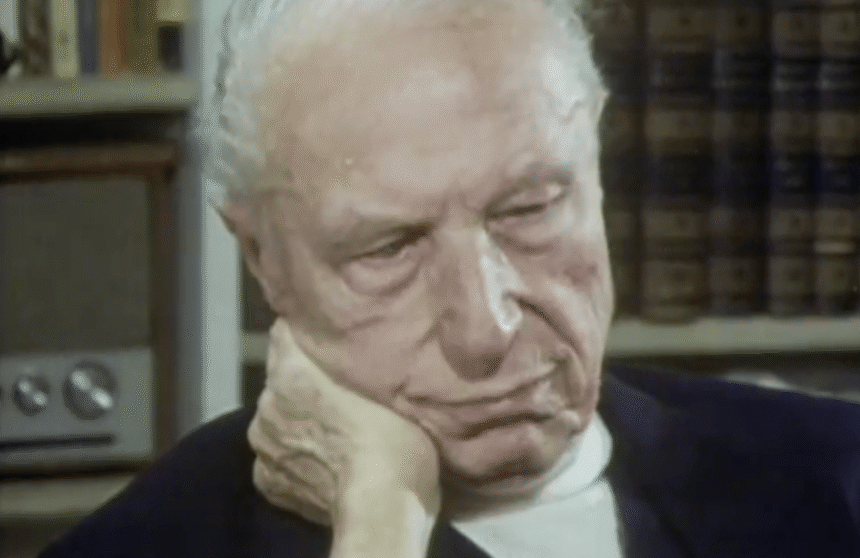
    While watching All that Heaven Allows (1955), I kept thinking about how it was supposed to be a “bad movie”. It is a “weepie”, it is unserious, it is “trash” (as director Sirk would positively call it later). I was so interested in the Sirk quote we looked at together—about crazy trash being much closer to high art than we’d like to think—that I went looking for more of his interviews.

    I found an absolutely fascinating 1-minute interview clip on the Criterion Collection’s website. It’s linked here: https://youtu.be/z02M_qbTbDA?si=-BiYflIbLpltSTne

    This interview, while not directly concerning All that Heaven Allows, is very much a commentary on it, and Sirk’s other “bad films”. He rebukes this “bad” claim, offering his own set of criteria as to what makes a film good or bad: it must have imagination, must be interesting, must have a theme, must be consistent, and must trust the audience just enough (which is to say, not at all).

    What I like the most about this clip, and his criteria, are how they end. Sirk moves from talking about imagination—that every film must have one, that a film without one is a waste, or not even a true film (piece of art) at all—to talking about why he makes “bad movies”. According to him, he makes “preaching” movies: the antithesis of bad.

    ”The moment you stop preaching in a film, the moment you want to teach your audience, you’re making a bad film.”

    Sirk seems, here, to be eschewing the concept of subtlety in film, and based on All that Heaven Allows, it seems that he followed that command. Whether it is the treacherousness and turn-facedness of the children, the incessant nature of the friends, or the unending charm of Mr. Kirby, nothing in AtHA is subtle. Every emotion and character is a metaphorical brick to the face of whatever emotion Sirk wants you to feel. It calls back to something else he said in the interview

    “[A movie] should have its own kind of finish, its own kind of theme”.

    All that Heaven Allows has finish. It has a theme. And it’s certainly enjoyable to watch. In the wake of AtHA, can we really deny Sirk’s definition of good and bad? And if we enjoy AtHA, why would we?

  • All That Heaven Allows – Colors and Windows

    As a viewer, I noticed that Cary’s emotions would often be expressed through the colors on screen. When things were romantically well and hopeful between her and Ron, the world seemed warmer and brighter (almost glowing). But when they had conflict and Cary herself had inner conflict, the color scheme would turn cold and shadowy.

    The window is continually used to express Cary’s trapped feelings; she is always separated from what she really wants by glass. It is like she is watching her own life from the outside; she is so caught up in worrying about how her neighbors and her family will see and think about her (trying to keep everyone else happy), that she can not fully live in the moment. She is not able to express how she really feels because her life is being framed like a window. The windows are often depicted as frosted, suggesting her struggle to break free from the life she has always known.

    The scene with the rainbow of colors shining through the window is very interesting. In that scene, Cary is listening to her daughter, trying to take in someone else’s view of her relationship with Ron. The rainbow lighting is symbolic; it is showing just how many conflicting feelings and perspectives Cary is experiencing all at once.

    When Cary looks at the empty landscape outside the window, it seems to reflect her isolation and longing for connection. When the film changes to winter, the snow also seems to reflect her loneliness after she loses Ron. However, in the last scene, even though Ron is hurt, the color scheme became brighter (and maybe even more dream-like), and a deer appeared, which seems to symbolize hope.

    Questions to consider: 

    Did you notice any other recurring objects or symbols besides windows and snow that seemed important?

    How did you interpret the use of color changes throughout the film? Did any moment stand out to you visually?

  • The Editing Mistakes Behind Bohemian Rhapsody

    This video essay serves as an excellent lesson on how not to edit a scene, and in doing so highlights the mistakes you should avoid. The creator, Thomas Flight, breaks down the editing of a dialogue sequence from the movie Bohemian Rhapsody.

    The three key mistakes Thomas points out in this scene are:

    • Lack of motivation
    • Broken spatial continuity
    • Poor pacing

    Lack of Motivation:
    Thomas shows that many of the cuts in this sequence lack motivation, since they don’t provide new information. Instead, we see the same reactions or actions repeated, which makes the cuts feel redundant and unnecessary.

    Broken Spatial Continuity:
    This scene makes clear how crucial spatial continuity is. Thomas demonstrates this with the example of inconsistent eye lines: characters often look in the wrong direction, or appear to be looking at one person while the next shot reveals someone completely different. He also demonstrates how rearranging or simplifying the sequence of shots can create better spatial continuity.

    Poor Pacing:
    The scene is 104 seconds long and contains 60 cuts, resulting in an average shot length of just 1.8 seconds. For comparison, an action scene from a Transformers – The last Knight is 136 seconds long with 49 cuts, concluding to an average shot length of 2.8 seconds. Therefore, Thomas shows that the pacing of this normal dialouge scene is way to quick, making it feel unnatural and rushed.

    The irony is that Bohemian Rhapsody actually won the Oscar for Best Editing. As this video essay illustrates, awards don’t always reflect quality in filmmaking.

  • All That Heaven Allows: Eliptical Illusion

    All That Heaven Allows tells the forbidden love story of the older woman, Cary, and the younger man, Ron. This story is about an age gap and a social class gap as well. Rumors are spread quickly about their atypical interests in each other.

    The director chooses to move us very quickly through this story. Many dissolves, fade-ins, and fade-outs transition us between places and the months. We begin in the fall, and by the end of the movie, they are reunited in the winter. The question I pose is, because of the continuity of months that passed, did the movie rush the film? Though we know months have passed due to the mise-en-scene, they are dressed in warmer clothes, the snow has packed, and she picks out a tree to take home and decorate, even presents are being received as her children return home.

    Amazon.com: All That Heaven Allows (Blu-ray + DVD) : Jane Wyman, Rock  Hudson, Agnes Moorehead, Douglas Sirk: Movies & TV

    When it comes to their love, did we, as watchers, have enough time to fall in love with them just as fast as they did? Do you think this editing choice was done on purpose? Does it move the story along smoothly enough for us to know it’s been months, but also feel the growth between their relationship and the distance when they reunite?