Category: Week 6 (9/29 + 10/1) • Editing II: “Alternative” Forms

  • The Zone of Interest, The Sound of Interest, And The Importance of Children In Holocaust Movies

    The Zone of Interest will probably be a one-time watch for me; not because I didn’t think the movie was good, but on the contrary, because it was too well done. That was truly one of the more chilling films that I’ve ever seen, but it was also just so original and wonderfully made, I couldn’t keep my eyes off of it even though it was about such a hard topic.

    I thought that it had to be an exaggeration that the sound would have such a large impact on the movie, but to my surprise it actually did; it made the entire film. The movie itself and the sound in it are two stories in complete opposition of each other. What is mostly shown on the screen is just a regular seeming family in a regular looking home. Emphasis on mostly, as there are obviously wide shots and quick moments where we see the horrors happening next door too. The sound however, leaves you with a sick, scary feeling as soon as the movie starts. I like the way that the director chose to leave the screen black at the beginning of the film and have just the sound playing, because it sets the tone and creates that eerie feeling right off of the bat for us. This way, even with the most regular and simple of scenes, you always feel aware of the presence of the camp, even if you can’t see it. That’s what I think I liked most about this whole movie – it reminded us that it’s always going to be there, even if we don’t want to see it or acknowledge it. When we talk about an artist’s responsibility to history and making artwork about events like the Holocaust, I think this film did a beautiful job of it and left an important impression. It’s an ugly part of history, and we don’t want to see it or even think about it at times because of how horrible it was; but even if we don’t want to see it, it will always be there. Even when we couldn’t see anything happening in the camps throughout the film, we could hear it, and worse, we could feel it. They couldn’t have done a better job approaching it in my opinion, and the sound is what keeps you with that feeling throughout the entire thing.

    During the film, I also saw a scene that reminded me of another one of my only-one-watch favorites, The Boy In The Striped Pajamas. Both scenes are of the family’s children in their rooms with Hitler / Nazi symbols present. For The Zone of Interest, the son is wearing an outfit with the Swastika on it, and for The Boy In The Striped Pajamas, the daughter had put up posters with Nazi propaganda on it. It always feels like such an interesting part of these movies to add in scenes with children, because it shows how negatively those beliefs can spread to the next generations, especially in households where their families were involved in running the camps. However, the one scene with children that stood out in this movie from every other Holocaust-related one that I have seen, was the garden room scene with the two brothers. The older brother in his usual outfit picks his screaming little brother up, throws him in the garden room, and locks him in as he’s begging to get out. Meanwhile in the background, you can see the smoke coming out of the camp, where literally that exact same situation is happening, but in a much more serious sense. Seeing them doing that playfully, repeating what their parents have done, with it occurring in real time only a couple yards or so away, spoke volumes. It was a perfect parallel and honestly, one of the most terrifying scenes out of the whole movie for me.

    In terms of lingering questions, I’d love to figure out more about the significance of the Hansel and Gretel story in the film. It’s been a while since I brushed up on my fairytale knowledge, but it was clearly a very important part of the movie that I have yet to fully understand.

  • The Second Zone of Interest

    How Diegetic Sound Shaped This Film

    This film opened with a piercing sound sequence that set the stage for this film. At first, I watched this scene thinking that the screen in White Hall 105 had failed us and that we weren’t seeing the visuals, because of course, for a sound this intimidating there had to be visuals. However, I was wrong and for about 2 minutes the room was pitch black and filled with this horrifying siren noise that then, turned into the sounds of birds singing. The sound in this film is impossible to ignore, horrific to hear, and hard to talk about. It’s hard to call the depictions of such a horrifying event “a well done piece of work,” it feels wrong knowing these were the sounds of real people. However, to pick apart this movie we must acknowledge such a strong piece of it and the fact that they managed to paint a completely vivid image of something we never saw.

    “I wanted viewers to realise that they’re submerging,” the director, Jonathan Glazer, told Rolling Stone about the intro of this film, “It was a way of tuning your ears [in] before you tune your eyes to what you’re about to view.”

    Sound shaped how we all viewed this movie, if it weren’t for the sound we would believe that this film was about a happyish family who just got a nice new house. However, the message becomes clear to us in the scenes where we are showed a pretty flower but the background audio is people screaming or when we would see the family going through daily actions and the sound would be replaced by an overwhelming sound of pain. This movie made it impossible to feel comfortable with anything that this family was doing, it made their ignorance apparent and made it clear that despite the “happy” atomic family imagery, there was a true horror happening across that wall.

    While watching it, it also felt like the director was almost making a commentary on the viewers as well, it felt like I was complicit. I was sat there, watching a family go through mundane actions, while people were genuinely suffering, and all we could do was listen. It added onto the overall feeling that this movie was a massive political commentary on how we as people often excuse horrors simply because we do not see them first hand. We too are complicit in horrors when we become indifferent to blatant pain and suffering, and this movie felt like it was screaming that in our faces. Because as these people were being burned alive across the wall, despite breathing in their ashes constantly, this family remained disgustingly indifferent.

    Throughout this movie there were 2 other scenes with the overwhelming sounds we heard in the intro, except they weren’t black outs- they were a red and white out. Although these scenes were also used to direct our attention back to the sound in these moments, they were also used to symbolize the atrocities happening off screen. The white out was used after they talked about expanding the camps so they could burn more people, and the director noted that it was supposed to be used to direct our attention back to the sounds of people screaming. Then they used the red out after a close up of a red rose, this seemingly beautiful thing is actually born out of misery. In this garden we are shown a scene of a boy using ashes to fertilize the garden, so even a simple thing in nature we would normally look at and enjoy- is a genuine representation of blood and suffrage. So when the scene goes to the red out, we hear the screams of these people, we hear the pain.

    The sound is the movie, The Zone of Interest pushed the boundaries of how to portray something historically devastating and still managed to leave viewers with a feeling of deep reflection. Are we doing this everyday? Do we too sit in a nice house while ignoring the blatant suffrage of others across the walls?

  • What We Don’t See in The Zone of Interest

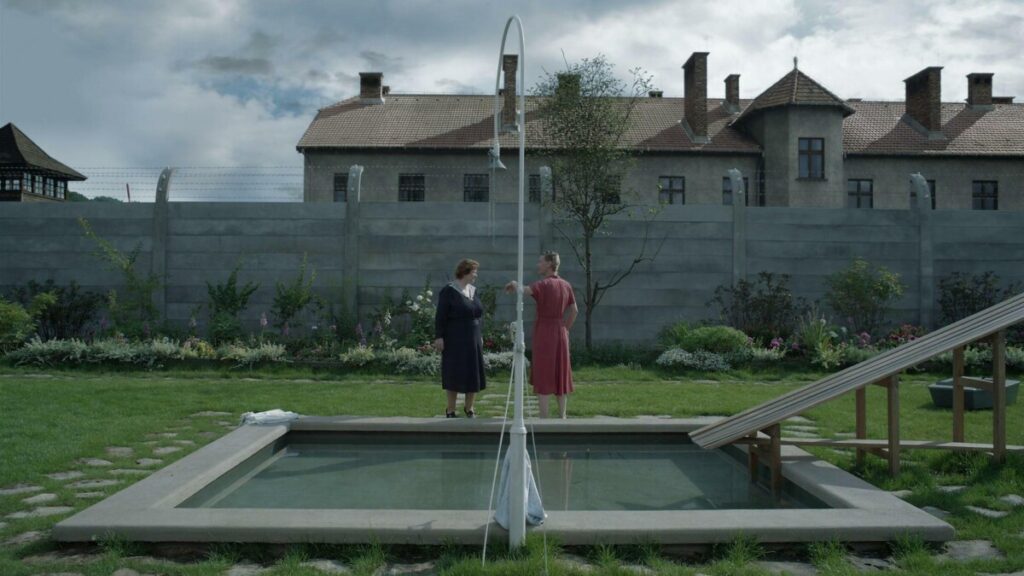
    I found The Zone of Interest upsetting, not for what we see, but for what it doesn’t show us. Although Holocaust movies generally face us with horror, Jonathan Glazer’s film creates much of its tension through absence or omission. The mise-en-scène is dominated by the family garden that has neat flower beds, a swimming pool, and bright summer light. It appears bucolic, almost rural advertisements for a country retreat. However, just beyond the wall of the garden, and out of view but heard, the machinery of Auschwitz operates. Perhaps the wall is the single most important “prop” in the film. It turns the setting into a “space of denial”: everything inside of it becomes a performance of normality, and everything outside of it becomes an unasked truth. It invites the viewer to divide attention between what is seen and what is only imagined.

    The cinematography really elevates this experience. The camera usually remains distant, presenting the Höss family in wide, static compositions. These extended, sweeping shots allow us to take in the entire composition, unlike the quick edits that usually direct or engage our focus, with our gaze wandering between, for example, the children and then the barely-there smoke in the back. The smoke stays in the distance, but we can’t escape its presence.

    The editing, or the lack of it, is just as remarkable. Several scenes play out in long takes, which invites a much heavier sensibility to time than we might expect from typical Hollywood filmmakers, who usually give us some rhythmic ‘relief’ by cutting scenes. When we do come to the cuts, they feel, and are, really jarring. For instance, consider the nighttime sey-gogging sequences, captured in infrared. The tonal shift creates a ghostly, documentary feel. These interruptions make us hyperaware of the film’s structure, like the director is forcing us to question how we are watching. Are we complicit, sitting comfortably on the inside of that wall?

    What struck me most in this movie was how ordinary the scenes inside the house felt. A mother selecting wallpaper, children splashing in a pool, a father leaving for work. The horror is how effortlessly those images are drawn into “normal” living, and how those same images coexist with mass murder. That is the film’s success: it doesn’t visually allow us to “see” the atrocity, but returns us to consider the comforts that enable it to happen.

  • The Role of Hansel and Gretel in The Zone of Focus

    Watching The Zone of Interest for this week, I was so drawn to the scenes of a girl under an x-ray, night vision filter placing apples and pears into the ground. These clips were so separate from the typical cinematography of the rest of the film. Jonathan Glazer maintains his pattern of long takes, but the difference in color is more than notable. What I also noticed in one of these sequences is that the audio is a continuation of Rudolf reading the story, Hansel and Gretel, to his children before bed. Then I was like–Woah. Is Hansel and Gretel Nazi propaganda? Here’s a link to the fairytale again for those who need a refresher. I had to look into this, because I had never heard about it being used in this way. There is no journalism focused on the use of Hansel and Gretel in the movie past a couple of Reddit posts, so here come some articles that touch on its usage:

    Embedded above is an article from Film Quarterly. It mentions that, “When crosscut with Höss reading Hansel and Gretel to his children, the scenes of resistance take on an ethereal, fairy-tale-like quality that seems at odds with the film’s overriding resistance to sentimentality” (Amy Herzog, Film Quarterly). I thought this was an interesting thought, and likely mirrors Glazer’s direct intention of including the fairytale. The act of resistance being leaving a trail of apples as a parallel to the trail of bread crumbs in Hansel and Gretel is such an interesting choice. In Nazi propaganda, Hansel and Gretel were made to represent two blond German children, and the witch a Jewish person who is ultimately burned alive in the oven she tries to cook the children in. By including this trail of apples, Glazer mocks that propaganda and creates an entirely different, benevolent narrative.

    Here’s an article from Vanity Fair. In this interview, Glazer reveals that the girl with the apples was a real person, whom he met when she was 90 years old! Although the film does not explicitly disclose what is based on a true story and what isn’t, there are many characters that are based on real people, including this hidden hero.

  • Zone of Focus

    The film Zone of Interest opens with a long black screen accompanied only by background noises. The extended black screen at the start left me momentarily confused, thinking, “Professor Zinman should check if the site is working,” until the image of a family sitting in the grass appeared. That was the moment I realized the film demanded a deeper level of attention to be fully understood.

    Much of the movie consists of wide long shots, often framed in the same setting from different angles. With minimal sound, the only noises come from the subjects within each scene. With prior knowledge of the Holocaust, the silences felt overwhelmingly loud. Everyday details, the greenhouse, white picket fence, and breakfast on the table, revealed the unsettling coexistence of ordinary life with unspeakable horror. What seemed silent was never truly silent. The depth of realism within this film creates a space for the viewer that refuses to acknowledge the events happening around them. One scene shows an older woman lying in bed as the entire room becomes submerged in a red tint, followed by her sitting at the window, looking out at the camp located in the backyard of the home. All that could be heard was the noises of misery in the distance.

    Making Zone of Interest: Framing Holocaust Through 21st Century Lens:
    not the scene mentioned in the paragraph***

    Do you believe that individuals without much prior knowledge of the events of this time period would still be able to understand the severity of the quiet moments?

  • Under the Skin’s use of Non-Actors

    As we began to explore in class, Jonathon Glazer, to the best of his ability, implements a level of attempted reality in his films. In The Zone of Interest, Glazer used secret cameras and microphones to keep actors from acting in a certain direction, worrying about their positioning, etc. The sense of realism is extremely effective in the film, as it allows us to understand the fact that the Höss family, and especially Rudolf, were real people and not just puppets of the system following orders. Rudolf was a real individual who understood the implications of his actions and carried them out anyway. I believe that although some people criticize the film for being too sympathetic towards the family, the hidden microphones and cameras actually contribute to the better understanding of their atrocities. Glazer’s desire to attain a real, untouched feeling that distances itself from “acting” extends past The Zone of Interest, as his 2013 film Under the Skin actually takes it a step further. Under the Skin is an unsettling horror film starring Scarlett Johansson. The reason that the film is so unsettling is that many of the characters were being played by people who didn’t know they were being filmed. The film follows an alien (played by Scarlett Johansson) as she seduces and captures unsuspecting men (played by non-actors)

    This 1 minute 38 second long interview (https://www.youtube.com/watch?v=S8MbvKqHWM0) with Jonathon Glazer breaks down an individual scene in which Scarlett Johansson interacts with real people walking down a Glasgow street. Glazer describes his reasoning of using non-actors as to show “human kindness and how we help each other up when we fall”. However, another reason for his use of non-actors is to show human temptation and how easily we are willing to give into it. This is interesting to me because it is clearly mirrored in The Zone of Interest. I think a large part of why Glazer used similar techniques in The Zone of Interest was to establish an unsettling sense of kindness and family values that exist within the Höss family, but then at its core, the realism that exists within the Höss home also shows how unforgiving their actions are. So the realism that Glazer implements in both films demonstrates the double-edged sword that is humanity.

  • An Idea vs. Realism: Biopics

    In Eisenstein’s A Dialectic Approach to Film Form, a large portion of this essay’s argument relates to conflict and surrealist portrayal. The essence of the tension and action, according to Eisenstein, is through stark contrast: “The incongruence in contour of the first picture-already impressed on the mind – with the
    subsequently perceived second picture engenders, in conflict, the feeling of motion.”

    Bazin’s argument, however, follows a much different path than Eisenstein. To Bazin, film is a manner of recreating our own reality itself. Bazin’s argument largely stems from his notion that the “cinematic illusion” had always existed in humans – even before the technology to produce film had been created. “In any case, there was not a single inventor who did not try to combine sound and relief with animation of the image – whether it be Edison
    with his kinetoscope made to be attached to a phonograph, or Demenay and his talking portraits…”

    In essence, these two point of views contrast against each other. Eisenstein is arguing for the complete intellectual intervention in film space to create tension and meaning, whereas Bazin attempts to create an environment that mimics reality to achieve tension and meaning.

    These two different point of views made me think of current-day biopics, or dramatizations of real-world people in the form of cinema. In concept, one might associate biopics with Bazin’s form of film creation, attempting to mimic a real-life counterpart to a historical figure in the form of film. However, modern biopics such as Oppenheimer and The Wolf of Wall Street integrate very specific and dramatic changes that portray the type of contrast that Eisenstein refers to. In Oppenheimer, monochrome scenes are placed all throughout the movie to express the harsh historical experiences that Oppenheimer went through, whereas the colorful imaging represented his goals and aspirations. Had the monochrome filter not been added, the viewer wouldn’t be able to understand the same feeling that Oppenheimer had been when encountering the dark aspects of his story.

    The same can be said for The Wolf of Wall Street. In the iconic scene where Jordan Belfort proclaims that he will not be leaving the company, he is portrayed as a “savior-like figure” with his arms in the shape of a cross, standing on a higher level than all of his subordinates. This artistic decision was specifically implemented by director Martin Scorsese to portray an overall narrative and meaning to the story that wouldn’t be present if the scene was simply based on accurate recounts.

    Overall, do you find more meaning in reality, or when an artistic decision is implemented to convey a narrative? Can a biopic be completely true if it decides to drastically dramatize its subject for a larger meaning?

  • Realism and Conflict in Toy Story

    In the movie Toy Story, the dialectic principle of dynamism is illustrated through the conflict between Woody and Buzz Lightyear. Andy’s old favorite toy, Woody, is being challenged by the new toy, Buzz Lightyear. This shows the conflict between the thesis (old authority) and the antithesis (newcomer).

    This tension is shown through constant shot-reverse shots between Woody and Buzz Lightyear. When Buzz Lightyear first appears, the viewers get a close shot of Woody, and then the camera shifts to an upward tilting shot to show his towering figure, ending with a close shot of Buzz. This camera movement and angle help depict Buzz as a big and powerful figure. Buzz’s body is vertically positioned, which is in conflict with Woody’s smaller horizontal posture. Eisenstein refers to this as the conflict of planes and volumes. This clash between Woody and Buzz gives rise to the meaning of film art, according to Eisenstein, who views cinema as conflict.

    While Toy Story lacks realism because it is an animated film, the toys act very realistically, having thoughts and emotions (like humans would). This goes against Bazin’s beliefs about total realism – “a recreation of the world in its own image, an image unburdened by the freedom of interpretation of the artist” (Bazin 236).

    I wonder what kind of technological advancements in cinematography would come about in the next decade (beyond the 3D cinema experience we currently have) and whether they will move the film form closer to realism. Would it resemble the “myth of total cinema” that Bazin imagines?

  • Cinema’s Essence- Conflict vs Realism in Everything Everywhere All at Once

    In Eisenstein’s essay, “A Dialectic Approach to Film Form,” he argues that cinema is “conflict,” as meaning comes through the “collision” of shots in the form of a montage. In “The Myth of Total Cinema” by Andre Bazin, he argues that cinema is myth, as humanity continuously tries to imitate life in a perfect form. In each of their theories, they strive to define what cinema is, in its true essence. In the movie Everything Everywhere All at Once directed by Daniel Kwan and Daniel Scheinert, both of these theories are utilized to create both a conflicting yet emotionally grounding experience.

    Eisenstein and Bazin’s position come across as almost complete opposites. Eisenstein believed that when two shots collided, they produced a new idea for the viewer to generate. This is seen everywhere in Everything Everywhere All at Once, as the rapid multiverse jumping creates a montage where images smash together to create another meaning. Evelyn is shown as a laundromat worker, then an opera singer, then a hibachi chef, and these rapid succession of images creates new ideas in the viewer for Evelyn’s identity and possibility. The chaotic editing creates conflict in between each shot, and through these conflicting shots a meaning is constructed. Much of this movie is conveyed through overstimulating and even absurd montages, but this only enhances the experience for the viewer.

    Meanwhile, Bazin believed that the shots are received by the viewer as a window to reality. Interestingly, the quiet, intimate scenes in between the chaos feels the most real. The scenes between Joy and Evelyn in their home universe as they fight and reconcile over real, human things hits the hardest to the viewer, as they are an almost perfect recreation of reality. Much of this movie’s praise comes from its relatability as the audience could see their own reality reflected clearly through the screen.

    Additionally, Bazin’s ideas that cinema is driven by a myth– human’s desire to recreate reality in its entirety– also shines through in this movie. Everything Everywhere All at Once attempts to literally recreate all of reality, in its countless multiverses, lives, and emotions all in one film. This is done through the use of technology (in its sound, color, CGI), as with each tool cinema progresses towards the myth of realism. It embodies the myth that cinema can capture everything, even every possible version of it.

  • Do You Want to Build a Snowman?

    Disney’s Frozen “Do You Want to Build A Snowman?” sequence is a perfect example of a montage that isn’t just shots put together, but a story telling of how these girls grew up. Though this montage is to a song, so there is actually a rhythmic sequence happening, unlike how Eisenstein argued it should be.

    Do You Want to Build a Snowman? (From "Frozen"/Sing-Along) - video  Dailymotion

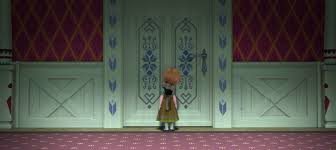
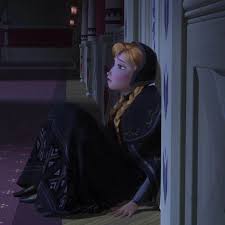
    We can see that the montage is also dialectical. Anna persistently tries to get Ella to come play, but Elsa can’t due to her uncontrolled powers. Anna feels neglected and left in confusion. Both grow up in isolation but in the same house, and we follow them through their teen years and even the passing of their parents, together but separated by this wall.

    Frozen: Do You Want to Build a Snowman? Song Lyrics

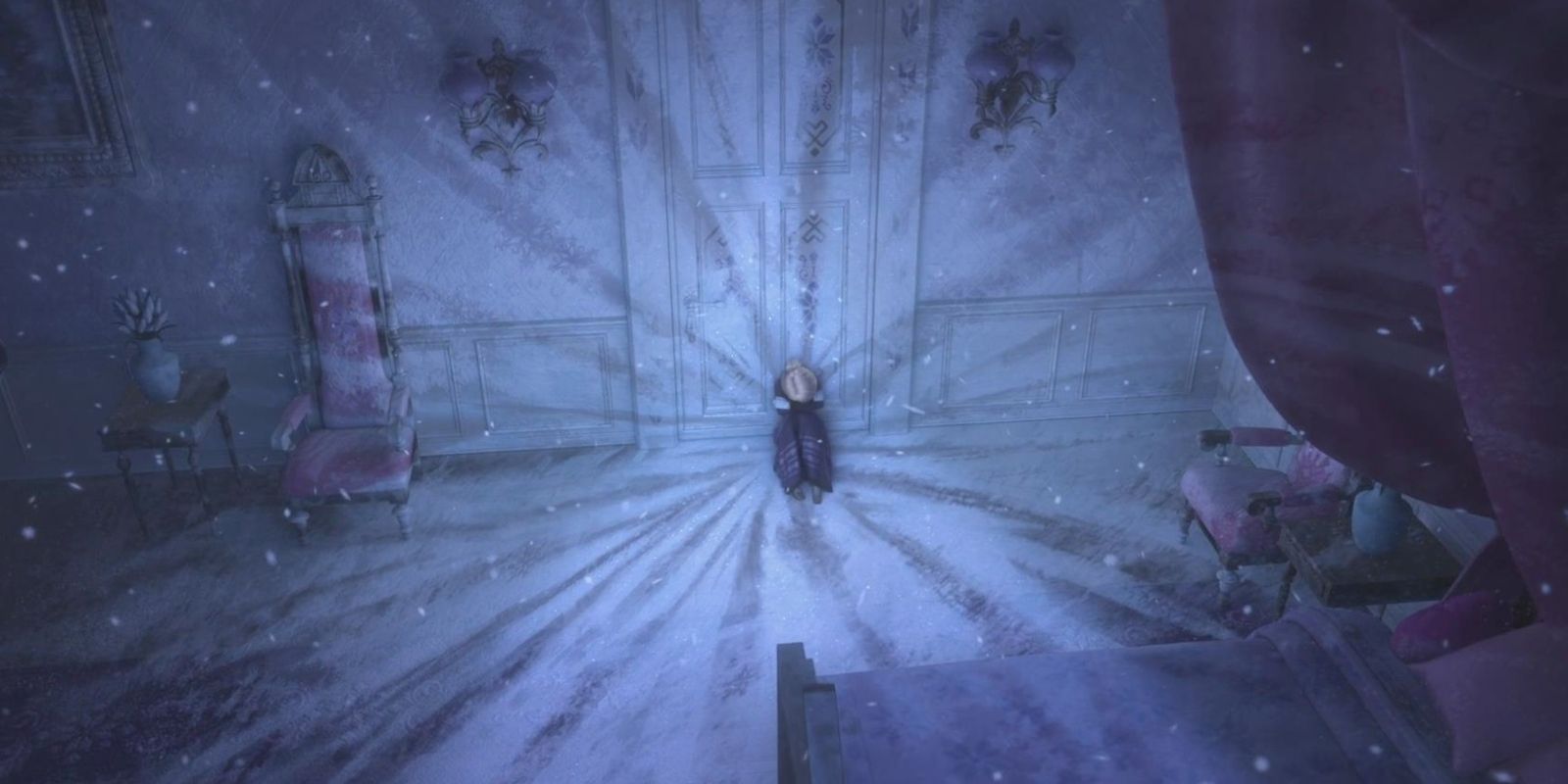
    We can see in this wide long shot of Elsa in her room, how she is still unable to control her powers. Everything being cold, iced, and “frozen”, related to the ideal purpose of the movie and how she feels after just losing her parents. She repeats this mantra which Bazin would consider an “Idee fixe”. Her constant obsession with her powers drives the narrative.