Category: Week 7 (10/6 + 10/8) • Sound

  • The Sounds of La La Land

    It’s always a great day when I get to talk about “La La Land”, so what a perfect opportunity it is to be assigned to talk about a movie that encapsulates different elements of sound. While it obviously has the greatest soundtrack of all time (in my opinion), it uses a plethora of sound techniques to help make that part of the movie come to life.

    The most notable one for me is their use of nondiegetic sound / music, which is sound that comes from a source outside of the story world. In the “Planetarium” sequence, Mia and Sebastian waltz around a building and through the stars and clouds to a song that only seems to exist in their imaginations. I remember showing my mom this movie for the first time, and her immediate reaction to this scene was something along the lines of “this is way too unrealistic, I don’t get it”; but that’s the whole point! Nothing about it is realistic, but that’s what makes us feel all of the unexpected romance of their new connection. By using nondiegetic music, along with them dancing in space, it shows that they are, literally, having an “out of world” experience. It gives a more fantastical, unrealistic touch to the scene, and it helps add to the idea of them being in “La La Land”.

    Another sound technique that they used with the movie’s musical scenes where the actors are singing, is they had them lip sync to prerecorded tracks. Then during the editing process, they put the sound and image together to get the final product. Most movies add the soundtracks in during postproduction, not in the moments of shooting. As noted in the textbook, “even dancers’ footwork, like taps or stomps, will already be on the playback”. That way the sound can be more consistent and clear than if they had people trying to sing on camera during big numbers like “Another Day Of Sun”, when there’s already so much going on.

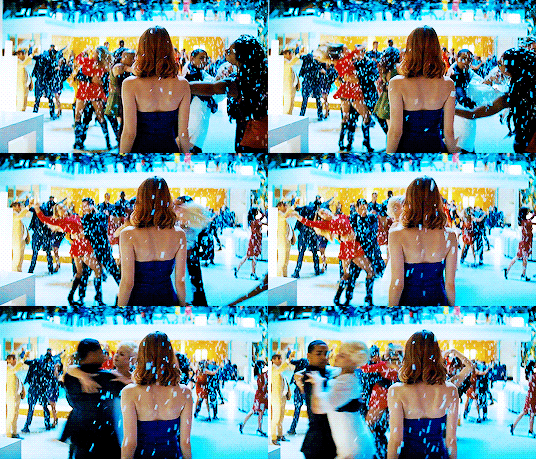
    During “Someone In The Crowd”, Chazelle uses rhythm and tempo to blend the song and imaging of the dance sequence together. After Mia has her solo moment in the bathroom mirror, she walks out to a slow paced beat of music. She steps with the same rhythm of the song, and the dancers around her also dance at that same pace. As the tempo of the song gets faster, her walking and their dancing does as well, all leading up to the finale of everyone jumping in the pool and dancing and singing much faster. He uses that combined visual and audible rhythm to build up anticipation to that final segment of the song.
    My initial question from the reading is how do we differentiate between loudness and pitch?

  • Rewatching Wicked Pt.5

    Not to see the beautiful visuals but to pay attention to the sound!

    When tasked with creating an entire world out of nothing, although what we see is so important to creating the unique whimsy of Oz, what we hear cements us in the film even more.

    This film beautifully uses the synchronization of senses to help put us into their shoes. As they do their musical numbers and dance, we hear every movement perfectly timed with the visuals and it makes you feel like a fellow student of Shiz University. Sound is an element they have to rely on heavily to help bring this fictional land to life, from hearing the animals, to the loud creeks of doors, to the sound of Glinda tossing her hair. Sound makes these simple movements we would ignore everyday, seem so important and whimsical- making everything in Oz feel alive.

    The movie utilizes diegetic sound wonderfully with the musical scenes. We are able to see how the students of Shiz University react to music and it gives us a better understanding of the whole world they are in and how students perceive Elphaba vs Glinda. Specifically in the scenes during a Wizard and I vs Popular- we see Elphaba singing and her peers reacting to her as she sings, they look disgusted and run away from her, yet when Glinda sings they all flock to her. Because of our understanding that music and singing are welcomed in Shiz, we know it has nothing to do with them randomly bursting out into song and everything to do with how the students at Shiz view them. Diegetic sound plays a crucial role in this movie because it helps us understand how the characters interact and how music plays a key role in their fairytale land.

    Along with this, composer Stephen Schwartz uses timbre, the unique quality or color of a sound used to heighten the experience of the film. In Wicked, this element is used heavily. With Elphaba her timbre is used to show how powerful of a character she is since her singing comes from a more alto and stronger place (sometimes seen as a “Chest Voice”,) while with Glinda her vocal performance is often characterized by a bright light to show her bubbly personality. Timbre is throughout this movie, bringing the characters to life and showing us how sound is important for telling us about the characters personalities and influence on the people around them.

    Overall, sound is one of the most important elements of this film. Without it, we would struggle to understand Glinda and Elphaba’s relationship dynamic or how they fit into the world around them. Sound reveals another layer of the world of Oz, allowing us to experience its deeper nuances. As mentioned earlier, because of these things, the whimsical sounds of Oz help us connect with the movie and fall in love with this magical world.

  • The Emotional Volume of Malcolm and Marie

    The movie Malcolm and Marie tells the story of a successful filmmaker and his lover who return home from his movie premiere and engage in a heated argument about the film’s inspiration. The film focuses on the life of a woman recovering from a history of drug abuse, and Marie believes the movie is based on her life. She feels neglected because Malcolm did not mention her during his speech at the premiere. The setting of the movie is a large, seemingly secluded house, featuring only these two characters, which creates a “close-proximity relationship” between the actors and the audience. Additionally, the movie is entirely in black and white, further reducing distractions and directing the viewer’s attention to what is happening in each scene, and most importantly, to the sound.

    When discussing the sound complexity within this film, it is important to focus on the speech, music, and noise. With the entire setting taking place within the couple’s home, the dialogue between the two allows for deeper understanding, the musical choices convey intense emotions, and the noises (sound effects) reinforce a sense of fidelity. The movie heavily relies on diegetic sound to evoke a sense of realism that places viewers in the position of feeling present within the home.

    The movie opens with an establishing shot of what we assume to be the couple’s car slowly approaching their home. The proximity of the camera to the sound source suggests the use of added sound effects created through the Foley process to imitate the noise of a car inching closer. This opening shot introduces the concept of sound perspective, which is present throughout the film. As the car approaches the camera, the volume gradually increases. The scene then cuts to the couple entering their home. Marie heads to the bathroom while Malcolm goes to the bar and begins playing “Down and Out in New York City” by James Brown.

    With the distance between the characters in this scene, we can observe how the loudness is distributed across the cuts. This scene features a large sound bridge that connects the shots and maintains continuity. The medium shots focused on Malcolm are louder due to his proximity to the speakers in the bar, while the shots of Marie in the bathroom are more muffled and distant, creating a sense of depth and separation. There is minimal verbal communication throughout this musical aspect, however, the addition of automated dialogue replacement (ADR) in post-production helps blend the music and dialogue, illustrating the connection between the two within a loud environment. 

    This scene also effectively demonstrates the manipulation of volume for intelligibility, setting the tone for the relationship dysfunction that unfolds later in the film. Malcolm is portrayed as loud and overpowering, while Marie remains more subdued, yet equally passionate and intense.

    As we approach the halfway point of the movie, the dynamic characteristics of the characters truly come to life. When another argument is introduced into the sequence, we hear the reintroduction of the song “Down and Out in New York City” through Marie, who expresses, “As if a song written 50 years ago about a different f****** girl would somehow make me feel better about our relationship.” This suggests that the song initially served to engage the audience in the opening scene, but its later reappearance provides a foundation for understanding the emotional complexity between the couple. While Malcolm uses the music to uplift his spirits and celebrate his accomplishments, Marie perceives it as boastful and dismissive of her feelings.

    After reading chapter 7 on sound, I can say that I viewed this movie in a completely different light. Placing my attention on the little sound adjustments and music choices make me appreciate the time that was put into creating this film. Also, it invites a deeper level of understanding and love for the characters once analyzing how these things not only serve the audience, but how they play a role in character development.