Blog

  • Modern Art Cinema- Celine Song’s Past Lives

    After reading David Bordwell’s essay “The Art Cinema as a Mode of Film Practice”, I couldn’t help but try to compare what I had watched to every detail he described. Of course, it made me curious to figure out which modern movies pass the “test of art cinema.” I landed on Celine Song’s Past Lives. This movie is the textbook definition of precisely what art cinema is, possessing a definite historical existence, a set of formal conventions, and implicit viewing procedures.

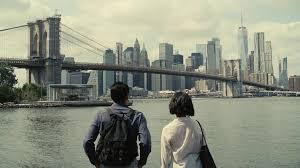
    Song does not follow the classical Hollywood cinematic narratives of cause and effect. The narrative is driven by realism and authorial expressivity. We follow the main character, Nora, as she reunites with her childhood friend, Hae Sung. At the start of Past Lives, Song places us in the position of distant observers. Two unseen strangers watch Nora, Hae Sung, and Nora’s husband in a bar, whispering guesses about what their relationship might be: Lovers, friends, a triangle. This moment sets the tone for the entire film: we begin outside, speculating and interpreting, just as those commentators do.

    Past Lives': A Tour of New York City With Greta Lee and Celine Song

    The characters’ goals are emotional rather than external. We see some characters wander out & never reappear, and events that lead to nothing. We are on the outside, watching this story unfold, and a series of flashbacks and flashforwards drives the narrative. Unlike in a classical film, the spatial and temporal elements are constantly manipulated. Like Bordwell describes, the characters often “tell” us what connections mean through autobiographical recollection, as when Nora reflects on her childhood in Korea before emigrating to Canada. We see this in Past lives after the opening scene, where we flashback 28 years to young Nora in Korea with young Hae Sung. We recount her immigration to America, where we meet Hae Sung’s mom. There is a girl on the plane who practices English with young Nora. Then, we flash forward 12 years to an older, yet still young, Nora in New York.


    Nora reconnects with Hae Sung through Facebook. We follow their relationship over video calls in different time zones, switching perspectives between Nora and Hae Sung. Yet, as the movie progresses, we question who is telling the story. Song disrupts the fantasy early for the audience of “childhood friends turned lovers”, as Nora gets married to a White American man, and yet, it still feels like she is longing to be with Hae Sung or Hae Sung to be with her.
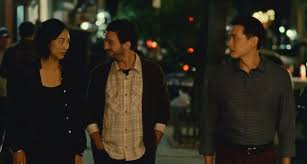
    Past Lives ends where it began, the same street, the same window, but our position has changed. We now see from inside, with a deeper understanding of the characters and their unspoken feelings. The final conversation between Nora and Hae Sung offers the illusion of closure while leaving us suspended in longing. In true art-cinema fashion, Song ends not with resolution but with interpretation. The question is not whether they end up together, but what their connection means to them and to us. In this way, Past Lives fulfills Bordwell’s vision of art cinema: realist, author-driven, and deeply ambiguous.

  • Night Moves

    Watching Night Moves for the first time, especially as my first crime movie, is feel eye-opening.

    The film’s slow tension and moral ambiguity show how crime stories aren’t always about action—they’re often about human conflict and hidden motives. The story follows private detective Harry Moseby as he investigates the disappearance of a teenage girl, but what starts as a simple missing case turns into a web of lies and betrayal. As the plot unfolds, the mystery becomes less about solving a crime and more about understanding people’s hidden motives.

    It might make you realize how complex people’s decisions can be when faced with guilt and fear, leaving you thinking about what justice and truth really mean.


    This cat is cute by the way.

  • ETERNITY Advance Screening Invite

    Hello class! I have been on this email list ever since I saw A Complete Unknown (Mangold 2024) last December, and every once in a while I get offers to see advanced screenings of films. Besides the ability to see a major film before its release, these events usually feature really cool opportunities like Q+As with the actors/production team, merch giveaways, free food, dress up events, and other features that you wouldn’t normally get at a regular movie theater. Its also a super cool way to connect with other college students in Atlanta and its free to attend! Anyways the reason I am mentioning this is because I just got another email about the new A24 film Eternity starring Elizabeth Olsen, Miles Teller and Callum Turner this week and thought it might be of interest to some people in the class. Here are the details:

    Wednesday, November 12

    7PM @ Regal Atlantic Station

    RSVP FORM*: https://forms.office.com/pages/responsepage.aspx?id=eyk5BEZnPUeEqxjQbr8MNHc01kevvK9AnNaf1I1Zip1UMUxYRE5UUEg0V1M3UlpIWVlROUhDTERWNCQlQCNjPTEu&route=shorturl

    *Seating is first come, first serve. I recommend showing up early to ensure you get a seat!

    If anyone goes, let me know how it is, but if you can’t make it I would still suggest signing up to join the email list for future events!

  • Interpreting Realness in Paris is Burning

    Realness is a theme within ballroom culture depicted in the film Paris is Burning. To “walk real” means to embody the look, attitude, and guise of a person you are not; oftentimes in the context of the film, a white, straight, well off man or woman. Fundamentally, this gives you the legitimacy of being acceptable by society, and many critics upon Paris is Burning’s release hailed drag culture as proof of identity fluidity.,

    But others pointed out the “realness” is questionable, because it illustrates standards set by a dominant class and culture. In other words, identity fluidity isn’t truly the case because people “conform” to the social norms established.

    While doing research for Paris is Burning, I came across two articles that have very different takes on the film’s interpretation of realism: Phillip Brian Harper’s “The Subversive Edge: Paris Is Burning, Social Critique, and the Limits of Subjective Agency” and Chandan Reddy’s “Home, Houses, Nonidentity: Paris Is Burning” Both take a stance criticizing the virtue of “realness” portrayed in the film, but they differ in the perspective in why people in ballroom culture use it.

    Harper argues that realness in the context of the film is manipulated and controlled in a way that maintains a strict social hierarchy. When people enter the ballroom and “walk real,” they are emulating identity rather than creating identity; thus adhering to the “white, straight, and wealthy” ideals that are strived towards. As such, Paris is Burning gives an appearance of being empowering, but it is the very thing that keeps people disempowered.

    Reddy takes a different approach; rather than what “realness” limits, he is more interested in what realness reveals and how it is used in ballroom culture. He argues that ballroom culture is aware of the social construct of “realism,” and instead emulation exposes how fake “realism” is; how a social hierarchy is nothing more than an act. In this way, ballroom functions as a way of cultural expression rather than cultural assimilation.

    I think these two interpretation speak to the nature of the documentary itself; both can be true. Jennie Livingston, the film’s director, is a white woman, which comes at contrast to ballroom’s black and hispanic roots. The film is made for white audiences; ballroom is presented as a new concept, and much of the film covers topics people within ballroom culture would be very familiar with already. As such, the discrepancy between the white filmmakers and the black, hispanic, and queer community creates different interpretations between the creative choices used and even the nature of the interviews given. In other words, the dream to live up to “white” expectations shared by many in the ballroom community may not be as pronounced as the film presents it to be. I think that its impossible to explain a culture and its significance through media; you have to actually live it.

  • Night Moves: a crime film about a bad detective

    I did not know exactly what to expect from Arthur Penn’s Night Moves before I watched it, but I was pleasantly surprised when I realized it was not your average overdone crime film.The main character (Moseby) is not a genius detective that follows a trail throughout the film and is then rewarded by his big find at the end. Rather, he is not only flawed but actively misses clues throughout the story, culminating in an ending this is not satisfying but instead hopeless. He technically “solves” the case, but not purposefully, and fails to save anyone.

    I really appreciated Moseby’s character. He is imperfect and painfully ignorant, but despite there being signs of this all around him, he still continues to try with good intentions. And yet, he gets a bad ending. It is depressing, but it is real: the story doesn’t try to glorify or glamorize this tragically human character.

  • Authenticity and Realness in Little Women

    Last night, I sat down to watch Little Women (Greta Gerwig, 2019) with very high expectations. It’s many peoples’ favorite movie, and now I understand why. Little Women follows the lives of the March sisters as they navigate what it means to be a woman in 19th century America.

    Little women 2019 full movie - viralkaser

    One of the main themes in Little Women is that women are complex and their different priorities do not make them less of a woman. Jo wants to be a successful writer, Amy chases the life of an artist, and Meg dreams of living a life of luxury and riches. Each sister also has different views on love. Meg gives up the chance to marry rich for the man she loves, while Jo refuses to compromise her dreams for any man and believes she will never fall in love. Meanwhile, Amy originally views marriage as an economical transaction.

    Deep In Vogue: 30 Years of 'Paris Is Burning'
    Willi Ninga dreams of being a famous dancer
    So You Want to Be a Writer? I’ll Tell You How! An Honest Guide for ...
    Jo March wants to be a successful writer

    I thought back to these ideas during our discussion today about Paris is Burning (Jennie Livingston, 1990). While in a different context, Little Women explores similar themes of wish fulfillment and dreaming of an unattainable life due to societal barriers. Both groups of people dream of fame, recognition, or riches. While the Harlem ball communities have an outlet to be whoever they want to be for a bit, the March sisters each end up having to compromise some of their values or dreams. This doesn’t make them any less of a woman, and they don’t need to be subservient to the societal expectations they face. Ultimately, both groups are looking to realize their dreams while remaining true to themselves.

  • Fashion Beyond Status

    In the film, Dorian Corey explained that in a ball, “you can be anything you want. You’re not really an executive, but you’re looking like an executive. And therefore you’re showing the straight world that I can be an executive. If I had the opportunity, I could be one. Because I can look like one.”

    Throughout Paris Is Burning (1990), the idea of complete replication, or “blending in,” is emphasized, with individuals receiving perfect scores when they completely embody the role they present in the ballroom. One of the main ideas in the film is how the ballroom community uses fashion and voguing to inhabit roles that society usually denies them. When participants walk in categories such as “Executive Realness” or “Town and Country”, they are not simply showing off clothing, they are performing access to power, wealth, and respectability. These performances revealed that fashion is never just about what someone wears, rather, it is about who has permission to appear legitimate while wearing it. Given this, at first, I believed drag was an act of imitation (a way to blend into a higher social class) with emphasis being placed on fashion’s power coming from the privilege of the wearer rather than creativity itself. However, throughout the film, my interpretation changed.

    In the film, a participant can look like a Wall Street executive, yet outside the ballroom, society still views them as poor and queer. Their outer fashion appears convincing, yet it does not grant the privilege attached to that image. This highlights the “normalized” idea that the value of fashion depends on who wears it and the access that person holds.

    What makes Paris Is Burning interesting is how this dynamic is transformed. Within the ballroom, fashion no longer depends on external validation. Fashion now becomes a language of self-definition and freedom. As Corey explains, “In the ballroom, you can be anything you want.” The act of performance turns fashion into something liberating rather than aspirational. Drag emerges as a form of expression that contradicts the belief that fashion requires social status to hold meaning. It demonstrates that confidence and creativity, not privilege, give style its significance.

    I explored this idea/theme further through reading a piece by The Criterion Collection titled “Paris Is Burning: The Fire This Time” written by Michelle Parkerson. Parkerson writes that the ballroom is “a world in which style becomes survival,” and within this space, self-presentation operates as a “radical act”. The balls create an alternate reality where individuals excluded from the hierarchy can redefine beauty, gender, and success. Fashion, detached from wealth or whiteness, becomes a language of resilience, artistry, and self-identification.

    The ballroom community and drag as an art show that fashion holds value when it becomes a tool of identity rather than a marker of privilege. Drag transforms clothing into language, movement into protest, and presentation into truth. Through performance, individuals claim visibility and power in a world that refuses to grant it. Fashion in this context no longer depends on wealth or position. It becomes an act of existence.

    Source: https://www.criterion.com/current/posts/6832-paris-is-burning-the-fire-this-time?srsltid=AfmBOornHPZpxL81P94ZA5YgxfPWpz2L8nkkNcF_IdYNO5G8XHxtyQJe

  • Suzume: Doors and Disasters

    Makoto Shinkai’s Suzume is a road movie (?) with a heavy ritual influence. The teenager, Suzume, crosses Japan shutting supernatural “doors” that leak catastrophe into the present time. Each site she went to is a ruin, either school, bathroom, or amusement park. Those are places that everyday life was interrupted. By making Suzume kneel, touch the ground, and speak different names, the film literalize the act of remembrance as a public act rather than a private feeling. It makes Suzume a symbol of memory.

    Visually, Shinkai used this through recurring motifs: doors framed against the sky, also with short passages like operate like associational form inside a classical narrative.

    The character arc threads cleanly through the travel experience of Suzume. She begins her story as someone running: running late to school, and running late to process a childhood loss. Each stop she made pairs with a temporary caretaker and a “door” that must be closed. This story formation makes the help and repair intertwined. Sota’s transformation into a three-legged chair looks like a joke, but it is a symbol that shifts the theme from romantic into burden and compassion. Suzume must carry responsibility rather than be carried by an adult character. Daijin, the cat-like god, complicates things further: it wants love and attention, but also demands duty. That tension—affection versus obligation—maps onto Suzume’s choice to grow up.

    Technically, Suzume is a hybrid of hand-drawn and computer digital compositing. We can see its hand-drawn characters, but as well as the sky, water, fog, and all the background effect being computer generated. Shinkai also uses pockets of limited animation: held poses and micro-movements to stage stillness against richly rendered environments. Those holds let music and ambient sound carry emotion while the image rests, so when motion returns to the main component of the shot, it hits with force.

    Sound is also important in Suzume. Big moments often land on a sudden hush—right before a key turns or a “door” seals. That drop creates negative space so the next sound (a thud, a breath) carries emotional weight. Large amounts of diegetic sound is also used. Wind across grass, distant trains, , urban city and in each region Suzume visits. They’re mixed forward in quiet scenes so place feels alive even when the frame is still.

    Lastly, thematically, the film refuses to “erase” and part of the story. Closing the door doesn’t reset the ruin, but rather it honors it. The final scene returns Suzume to the origin of her loss and suffer, where she meets her younger self and offers the assurance she once needed. This loop Suzume underwent is the movie’s ethical thesis, that remembrance is the maintenance of memory, and the future is the willingness to keep moving forward nonstop.

  • Editing is Everything

    Alex Gibney is a documentary film director and producer who worked on multiple big projects throughout his career. In this interview, he shows a little bit of the behind the scenes and the thoughts and challenges of making a documentary.

    While watching the interview, I realized how important editing is to a documentary. I’m used to thinking about scripted movies, where the film is mostly captured on set. The editing for those is more like putting a puzzle together when you already have the picture on the box. But for documentaries, this is very different. The story and the film itself are created in the editing room. It feels like the story is actually found and built from the ground up.

    Gibney says that he often discovered new ideas and thoughts when reviewing footage in the editing room. He also highlights the flexibility of documentary work, explaining that because the teams are small, they can easily go film new material if they discover a party of the story they want to tell is missing in the edit. That kind of flexibility is amazing and seems vital for this kind of work.

    According to Gibney, editing plays such a major role because it guides the audience towards the point of view of the author. It’s how they take all that raw footage and shape it into the final message.
    This is connected to a major challenge:
    dealing with people in the story you disagree with. Gibney talked about balancing the obligation he feels towards his subjects with his primary obligation, which is to the audience. He was clear that he’s not there to make a “commercial” for someone, especially if they aren’t being truthful. A directors job is to find and convey the truth.

  • Paris is Burning: Through a Modern Lense

    There was one main thought I had in my mind while watching Paris is Burning…why do these people from 1985 remind me so much of modern-day influencers? Though it might be a stretch, a community for those rejected by 80s society shows shocking similarities to the way that we see influencer in modern-day society. It is important to contextualize what I mean about modern-day influencers that might be similar to the ballroom culture of Harlem. First, the houses. I found the different houses fascinating in this watch. Ballroom participants rally behind a representative/Mother of the house and let that house form their culture and identity of their performance. To me, this shockingly resembled online consumer and fan bases to online celebrities. For example, I constantly see different fan bases for different celebrities create their own fanbase name and create an identity behind that influencer (like “Swifties” for Taylor Swift). Not only was this idea of the house/fanbase mimicked in Paris is Burning, but I found another comparison with the whole notion of “Realness” at the ballroom shows. It is narrated in the documentary that “Realness” is the attempt to mimic a “normal”, straight, wealthy white person as a dress up for the social rejects of the ballrooms. Doing this and successfully mimicking a “normal” person would result in good voting from the judges. With the whole idea of pretending to be something that you are not to pander to an audience, I see a striking similarity to modern-day influencers and the artificial persona that they demonstrate to their audiences. In the digital age, celebrities are not able to live to be their authentic selves. They have PR managers, agents, and fans that judge their every single move – similar to the judging in the 1980s ballrooms.

    Overall, this might be a stretch, but I find odd similarities in the way that ballrooms are structured in comparison to modern-day influencers. Do influencers live every day putting up a performance as part of their identity? Do influencers mimic ballrooms from the 80s, except they earn likes and shares instead of clapping from the audience? When making these connections one can truly understand the social and cultural impact of the LGTBQ of 1980s Harlem.