Blog

  • NYC and the LGBT Community

    As I was watching “Paris is Burning,” I was reminded of another documentary I had watched called “Stonewall Uprising” which focused on the events of the Stonewall riots that occured in New York City and marked the turning point for LGBT visibility and rights in NYC. I was curious as to how these two events connected to each other and found that the riots occured almost exactly 21 years before the release of “Paris is Burning.”

    The Stonewall Riots was a spontaneous riot that that occured when NYC police raided the Stonewall Bar, a popular gay bar where drag queens, gay men, and transgender people often visited as refuge from NYC’s transphobic and homophobic policies. However, the members present fought back against the police, signifying the tipping point for the marginalized and oppressed members of the LGBT and their refusal to take any more abuse. The riot was led mostly by trans women of color, similar to “Paris is Burning.”

    “Paris is Burning,” set around 20 years later, shows how this spirit of resistance has carried through history and evolved into new self-expressions and continuing to defy societal norms. Although still oppressed and marginalized, many young LGBT runaways as well as shunned members of society could turn to the widespread drag ball culture to find a family and community. 20 years previously, Stonewall was the only gay bar where gay men were allowed to dance, and drag queens had fought tooth and nail to protect their community. With this background knowledge, I found it extremely touching that these drag queens could now dance freely and even be accepted in some magazines and runway shows. Voguing, performance, and “realness” in “Paris is Burning” can be seen as extensions of the fight that began with Stonewall.

    Stonewall and “Paris is Burning” show slices in history of the fight for equality in LGBT communities in New York City, as well as the progression of their rich and unique culture. After watching these two documentaries about the history of NYC’s LGBT culture, I am curious how they have continued to develop into the modern day. From what I am aware of, NYC has one of America’s largest LGBT communities with an extremely thriving culture currently, so I would say that these queens’ struggle proved fruitful for their future children.

    How has the fight for LGBT rights developed across the country in various cities other than NYC? And how has the fight progressed in the current political climate?

  • Documentary Experience and Family Theme: Paris is Burning

    Watching Jennie Livingston’s Paris is Burning (1990) gave me a fascinating perspective on Harlem’s ballroom culture, a world I hadn’t known much about before. I also don’t watch documentaries very often which made this feel like a unique viewing experience for me both content-wise and stylistically.

    One of the elements that stood out most to me was the concept and importance of chosen family. The film emphasizes how the “houses” function not simply as performance groups, but as emotional homes for participants who might not have been accepted in their biological families.They even have familial roles within their Houses, such as mother of the house. I liked the way the participants describe the role of the mother; they talk about how important she is and how she emotionally and financially supports the rest of the family. The House offers a safe haven for many individuals experiencing homelessness or economic hardship, and the sense of belonging feels just as important as the creative expression.

    It was really impactful to hear the stories of the participants and learn about why they loved being a part of the ballroom space so much. A specific moment that resonated with me was when one of the participants talked about how performing made them feel famous, recognized, and loved, even if just for a few minutes. That line stuck with me because it felt so universal. Even though I don’t have any connection to ballroom culture, the feeling of wanting to be seen and appreciated for what you’re good at is something most people relate to in their own lives and fields of work. It didn’t seem like a desire for fame, but a longing to be acknowledged and to feel like you matter in the space you choose to exist in.

    When thinking about this film in terms of genre, I felt that the documentary format made me feel very immersed in the era. The archival style and raw visual quality made it feel like I was genuinely in late-1980s New York rather than watching a movie from decades ago. I know that movies are often immersive and transport you to a different world, but this felt different than a fictional movie. It was more immediate and intimate rather than a sort of escape. Overall, I enjoyed the experience of being immersed in this unfamiliar world.

    Some questions I’m posing to the class: is ballroom “realness” a form of escape, empowerment, or assimilation? Does the camera feel observational, celebratory, exploitative, or something in between? How does the film’s documentary style shape our emotional reaction to the people on screen?

  • Paris Is Burning: Redefining Family

    Learning about the history of New York City’s Ballroom culture was genuinely fascinating. There were so many new ideas to me — such as houses, reading, shading, and voguing. Houses are competing teams that go against one another in different categories in Ballroom. However, I believe the idea of a “house” is more than a team; it’s an ideological home where people can love and be loved despite being overlooked or unappreciated in reality. For the participants, the House was a new kind of family. They understood one another, accepted themselves as they were, and learned how to give and receive love.

    Throughout the film, it’s mentioned that many of those who participated in the Balls were economically disadvantaged or even homeless. Yet, the Ballroom gave them a reason to dream. Everyone in the film had a dream: to be famous, to be recognized, to be rich, or simply to form a loving family. As you listen to their stories, you realize that their dreams are no different from anyone else’s. People want stability, acknowledgment, love, and belonging — the very same things that society once told them they couldn’t have. The Ballroom, however, became the space where they created their own version of family, culture, and hope.

    One thing that struck me deeply was realizing that voguing actually originated from the Ballroom culture. I had seen dancers perform it before, but I had never thought about its history. As I watched the movie, the movements looked familiar. But when they described voguing as a way to “attack each other through a dance,” I was able to recognize and understand it as a new concept.

    Overall, this film introduced me to a new culture built on resilience, creativity, and love. It showed how members of the Ballroom community fought to create a space where they could turn their dreams into reality. Everyone has a dream that can sometimes feel impossible to achieve. When faced with the weight of reality, people often hesitate to dream at all.. However, the figures in Paris Is Burning never gave up. They are dreamers, and, in their own way, they are also achievers.

  • The One Who “Made it Out”: The Fate of Willi Ninja

    Jennie Livingston’s Paris is Burning (1990) follows an ensemble cast of performers in the Harlem Ball scene, each of whom finds a different outcome (death, fame, resignation, etc.). Willi Ninja, the film posits, is the one who made it out.

    In part thanks to Paris is Burning, Ninja spent the 1990s well-employed; he was featured in several major music videos, and worked as a model, for a time, for Jean-Paul Gaultier. He taught dance––his style of voguing, in specifics–across Europe, and in Japan. Back in New York, his “House of Ninja” grew, becoming the first multiracial Ballroom house.

    I was fascinated by Paris is Burning‘s portrayal and framing of Ninja. In contrast to the fate of it’s other major protagonist (if the figured can be considered as such), Venus Xtravaganza, Ninja’s apparent success story is a sliver of a very external form hope in a film which is largely about disadvantaged people needing to create hope for themselves.

    Ninja probably did “make it out” more than anyone else in the film. He went on to teach dance, be on TV, and shape the Ball scene going forwards. But he did not escape, not fully. The figures of Paris is Burning talk often about wanting a “normal life”. Ninja died of AIDS-related complications at the age of 45.

    According to the Google Arts and Culture article about Ninja, he will be remembered thusly: “[his] legacy is the legacy of voguing, and the exquisite form of dance and expression that he brilliantly developed. Ninja passed away on September 2nd, 2006, in New York City, but remains deathless in his art.”

    He may remain deathless in his art. He would today have been 64.

    Further reading about Ninja can be found at the following links:
    Google A&C
    New York Times Obituary
    Mental Floss
    Ninja’s IMDB
    Outhistory (Video links at the bottom of this page)

  • Paris Is Burning and the Birth of Drag Race

    Paris Is Burning captures the vibrancy, competition, and chosen families of New York’s ballroom scene. Three decades later, RuPaul’s Drag Race has brought many of those aesthetics and attitudes into the global mainstream. Watching the show today, it’s easy to forget that terms like “shade,” “reading,” and “realness” weren’t born on a soundstage, but rather in Harlem’s ballrooms. 

    Jennie Livingston, the director of Paris Is Burning, reflected on this evolution in an interview with AnOther Magazine, noting that “if you’ve ever heard of “realness,” “reading,” or “throwing shade,” it’s probably because of RuPaul’s Drag Race. But the origin of this terminology far precedes the reality-TV show.” (Livingston, 2020) I picked up a degree of tension within this article, in that although Drag Race celebrates the artistry of drag, it also repackages it for mass consumption, sometimes distancing it from the political urgency of its roots. The ballroom scene was never just about winning but rather about being seen and loved by one’s house, since they oftentimes didn’t recieve much love from their biological families or society in general due to their identities. In contrast, on Drag Race, “family” becomes storyline rather than lifeline. 

    The show’s success has undeniably opened doors for queer performers worldwide, proving that what began in underground NYC clubs could reshape global pop culture. Regardless, RuPaul’s Drag Race should stand as a reminder that the culture it celebrates was built not just on glamor, but also on resilience, creativity, and chosen family. 

  • Illusions of Realness in Paris is Burning

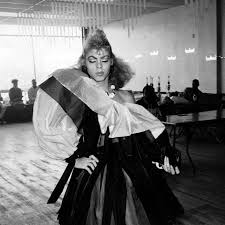
    While watching Paris Is Burning, I was fascinated by how the documentary uses its form to make a rhetorical argument about the illusions of “realness.” Through interviews, performances, and their everyday night life, Jennie Livingston doesn’t simply document ballroom culture, but she persuades the viewer to see how identity itself is constructed and performed. The documentary holds power in how it blurs the boundary between reality and illusion, showing that “realness” is both a performance within the ballroom and a mirror of society’s own ideals.

    Janus Films — Paris Is Burning

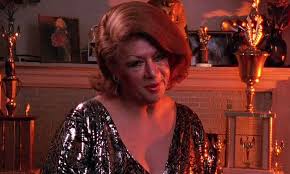
    We see in the interviews when explaining realness that is paired with them also embodying it on the runway. Livingston’s use of personal testimonies, like Dorian Corey’s reflections on passing and illusion, becomes a subtle argument: that realness is not deception, but a survival strategy in a world that denies minorities and those of the queer community access to power and success that white cis males receive.

    The camera’s observational gaze allows the audience to empathize with the performers rather than judge them. By immersing us in their language, music, rituals, routines, the documentary shows a form of “realness” that is its own kind of truth to the performers. As a way to reclaim agency when reality offers none. Livingston seems to ask us to reconsider what authenticity really means and who gets to define it.

    queer people need more | Amrou Al-Kadhi ...

    Does Livingston’s portrayal of “realness” empower the ballroom community by revealing their creativity, or does it risk reinforcing the very ideals they’re imitating? What does the film suggest about how we all perform “realness” in our own lives?

  • Violence, Myth, and Resistance in Dev Patel’s Monkey Man

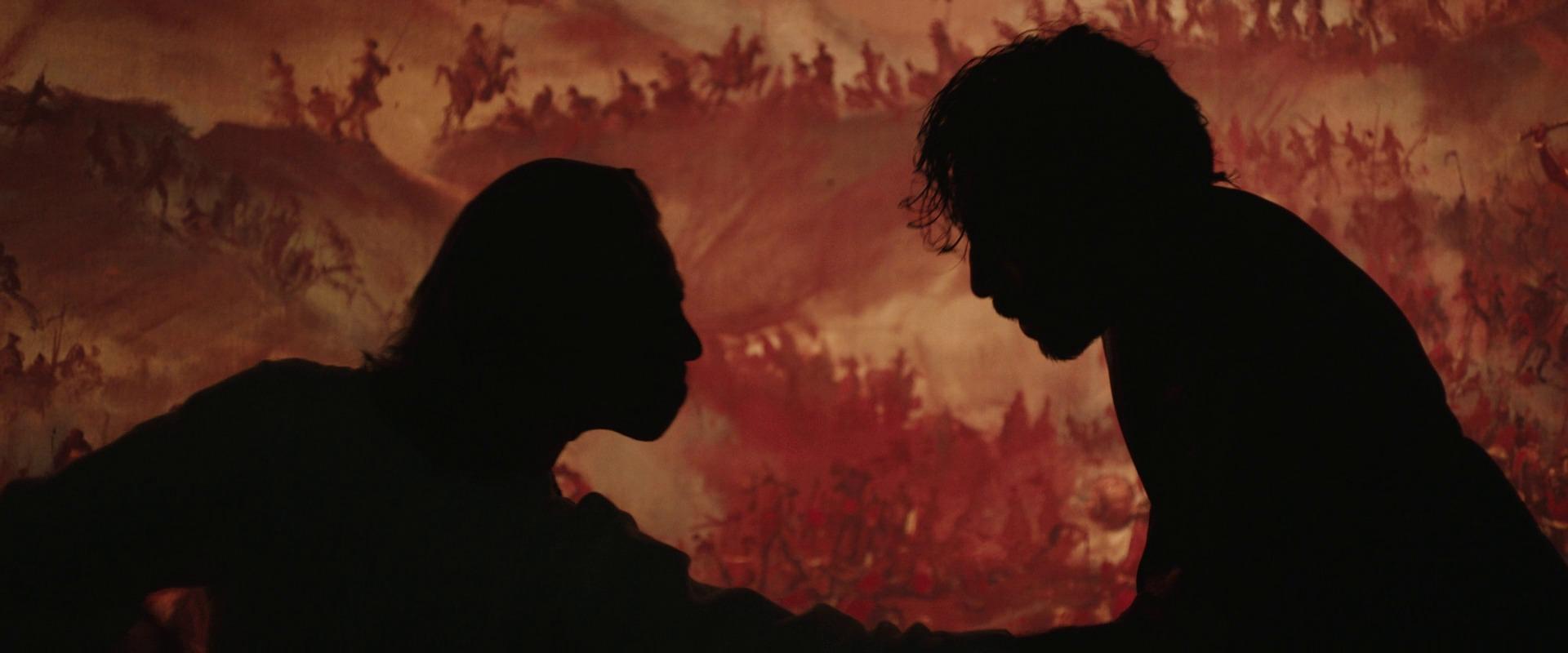
    From the moment the camera prowls through the slum and the underground fight arena in Monkey Man, Patel forces us to see India’s stacked system of power not as a distant cultural curiosity, but as a brutal architecture. The cinematography does heavy lifting: oppressive low-angles, jagged handheld shots, stark contrast between light and shadow. All of it works to embed the caste system, not just thematically but physically. As Patel himself explains: “I was like, ‘I can use a genre that I love so dearly … to talk about the caste system of India.’” When you see the hero fighting through kitchen floors, back rooms, then penthouses, it isn’t just spectacle. It’s a visual indictment, and not one that’s a subtle allegory; it is loud and unapologetic.

    The editing amplifies that critique. Cut to raw bones, cut to ritual, cut to violence. Each transition hits like a message: the exploited become beasts, the gods become corrupt lords, and the viewer is forced to track this movement. The film doesn’t lull into comfort. Instead, it jumps—from clandestine matches to inflated political rallies, from masks to megaphones. Patel says he wanted “real violence … real trauma …” The timing of edits emphasises that the system’s brutality is cyclical. The oppressed fight, they ascend; the ascendants become oppressors. The cut-and-paste structure of action becomes the mirror of systemic churn.

    Castle (@CastleDead) / X

    Genre is where Patel earns his argument. He takes the revenge-action template (think John Wick) and injects it with mythology (the monkey-god Hanuman) and with the very real politics of caste and corruption. He says the hero isn’t “the guy who you knew was going to take on a hundred men.” He’s the marginalised. The underdog. That choice says everything. Genre serves the critique: spectacle draws in the mainstream; the content punches back. It refuses to let violence be pure adrenaline—it makes it a statement. And by doing so, the film picks a side: the side of the oppressed against the entrenched elite.

    Which brings us to the real-world stakes: Monkey Man is not just set in India; it is speaking to India—and the backlash proves the point. The film’s theatrical release in India remains stalled, amid reports that the Central Board of Film Certification has delayed or avoided screenings because the content is politically charged. Patel links this delay to real frustration: “We’re talking about religion and how religion can weaponise a large mass of people … it came from a place of rage too, against what was happening in India.” In other words, the system this film critiques is still fighting for control over the narrative. The censorship becomes part of the message. The elite refuse to let the message out—and that refusal confirms the film’s point.

  • Paris Is Burning: A Documentary

    Paris Is Burning (Jennie Livingston, 1990) is a documentary that gives viewers a look into the lives of marginalized people struggling to find and express themselves and find a community to support them along the way. It depicts them as they experience the conflict between the grim reality of hardships and the beautiful fantasy they find in ball performances, the conflict that shows a range of experiences and emotions: courage, support, love, envy, freedom of expression, and acceptance. At the ball, no one is judged and everyone is welcome, able to show themselves as they are and proud of it. The soundtrack shifts from disco to pop to quieter interviews, echoing that acceptance of diversity. However, it is very different outside the ball, as it is dangerous for them to be themselves, which can be seen when one of them is killed unexpectedly. Paris Is Burning lets us see the pride, hope, and creativity in this community, while also depicting the real struggles they face.

    The style of the film (a documentary) makes it feel like we are a part of the times. It seems to us to be a completely accurate/objective representation of reality (although it isn’t because documentaries are subjective). The mise-en-scène feels real, with people outside on the bleachers, in small apartments, or walking through the streets. The setting and props, such as wigs, mirrors, sewing machines, and clothes, tell the stories of people. You feel you observe what is real because of the use of handheld shots and natural lighting. The performances feel authentic and honest because they do not look staged. The movie’s editing connects interviews and ballroom scenes, going back and forth between close shots of someone getting ready and wide shots of people dancing and posing. This juxtaposition shows how the community lives in the dual worlds of harsh reality and magical fantasy.

    The cuts are often elliptical, skipping time and details, but keeping the message close to the film’s main themes. The voices we hear sometimes do not match the images. For example, an interview is played over a ball scene, which is a nondiegetic sound or a sound bridge. It blends. The voices carry across time and space, showing that the ball is both fantasy and real life. The diegetic sound of cheering, sewing machines, and laughter mixes with nondiegetic music and creates a natural flow, making us feel a part of the moment.

    The section titles appear on a black screen in big white dramatic letters — “Children,” “Legendary Children,” “Realness.” These are graphic inserts, like announcements on stage. They set the tone for what comes next, functioning as acts in a play. The camera framing with close-ups of faces, hands, or eyes adds intimacy, but the distance in some scenes shows respect and is not intrusive (no feeling of voyeurism). Life unfolds before our eyes in all its aspects, ordinary and beautiful. Livingston doesn’t show an interviewer and does not narrate the story; people speak for themselves. The film feels genuine and full of respect, love, and pride for the chosen family that celebrates differences.

    One thing that I noticed was that, at first, people dressed up to fit in as middle-class or “successful” types, such as dressing up as business executives. However, over time, they started to dress up to look more like celebrities or models instead. Stars like Marilyn Monroe were seen as the epitimy of beauty (the “ideal” woman of the time). This shows how much of an impact pop culture has on how we dress, act, and perceive others. The film shows how people at the ball scene tried to copy the styles and attitudes they saw in the community, blending their dreams with the world around them, showing that they could become whatever they wanted to be.

    Questions:

    What was a themes did you notice while watching the film?

    Do you think that the message is always the most essential aspect in documentary films?

  • Documentary and Ethics in Grey Gardens

    Back in September, I attended the Emory Cinematheque’s screening of Grey Gardens (Maysles, 1975), and knew I wanted to wait until the week on documentary to fully unpack what I had witnessed. In only 95 minutes, viewers are taken into the home of Edith and Edie Beale, also known as Big and Little Edie, an eccentric mother and daughter duo who are relatives of Jackie Kennedy Onassis living in their run down Long Island estate. The pair argue, sing, perform, share stories from their past life, and seemingly ignore the garbage-filled mess that is surrounding them. Ralf Webb of the White Review discusses the use of direct cinema, the ethics of the film, its historical impact, and more in his 2018 review: https://www.thewhitereview.org/feature/film-direct-cinema-grey-gardens-summer/

    Still of Little Edie from Grey Gardens, 1975

    What is fascinating about this documentary, compared to any others that I have seen, is its commitment to direct cinema, in which they committed to be invisible to the object they were observing without narrative form or musical overlay. In the golden rule, direct cinema is where “interaction with the subjects should never evolve into direction” (Webb). This was exemplified through many shots of Little Edie being interrupted by the calls of Big Edie in the background, or through the subjects consistently talking to the film crews, presenting that they were not restating or asking questions until they got an acceptable answer. Watching this film reminded me of the ethics discussed in class during the first week on Rear Window, however, and how voyeuristic attitudes are only validated when what is being watched has a purpose. This mother and daughter were only relevant due to their cousin’s status, and throughout the cinematheque moviegoers laughed at their remarks, which admittedly were funny throughout the film. Still, there was a clear exposition of two women in crisis, living amongst rodents, and are now solidified in history as entertainers.

    Big Edie sits amongst her run down estate

    Their story is seen through the eyes of the documentarians, and what is told is manipulated by the production of those making the film, not themselves. The film raises ethical questions because “the Maysles, it seems, are acting in bad faith: they’ve gained the Beales’ trust, maneuvered into their private lives, and act innocently inquisitive, when, in actuality, they’re wise to the documentary gold in front of them. I could not help but think of this when watching Paris is Burning (Livingston, 1991) and wonder if my own entertainment and knowledge acquired throughout the film was ethical. Still, I believe that documentary holds a power in solidifying parts of history that may go underrepresented, and maintain the capacity to amplify voices in ways that would not be for forever. Big and Little Edie do get their stories told to the world, as do the subjects of Livignston’s Paris is Burning that would not be exposed to such a wide audience without the oppurtunity.

    Albert and David Maysles pose with Big and Little Edie

    Big and Little Edie have been remembered through movie adaptations, a Broadway show, and drag queen interpretations. After Grey Gardens‘ was released, Little Edie noted feeling accomplished in her portrayal of the film, “as though the power to partly construct a filmic version of her own reality gave her some freedom from it” (Webb). Theories like Webb’s remind us not to look too personally into the lives of the subjects we watch in these films. After spending an hour and a half with Big and Little Edie, it is easy to feel as though one can make generalizations about their lives as a whole. That is just an hour and a half of years of living in Grey Gardens, and the documentary could have been different if filmed at any other point in life.

    Grey Gardens (musical), 2006
  • Forms That Teach Us How to Watch

    In this week’s reading of chapter 10. It gives us clear forms to think with while watching a particular movie. On the documentary side, rhetorical forms are filmmaking that aims to persuade the audience. This form addresses to us directly the problem and presents arguable claims. It leans on appeals to feeling, and ultimately asks us to take a side of the problem.

    Placing Jennie Livingston’s Paris Is Burning (1990) against this framework clarifies how rhetorical form can work without a narrator. The film’s interviews, ballroom sequences, and everyday scenes openly address us through testimony of the characters speak directly about safety, recognition, realness, class, and race.

    In contrast of the documentary, experimental work often turns into associational form. The shots and sounds are linked by analogy, contrast, and motif. Through this process we build meaning across juxtaposition of these elements rather than plot points or a thesis statement. For example, the book offered the film Koyaanisqatsi. It shows that ideas about technology and modern life without narration or a very clear line of argument. It structured our experience through segments and images of Philip Glass’s work.

    Finally it is the animation section. In cel animation, studios divide labor across drawing, coloring, and photography. It uses fine detail and capture movements, while limited animation only moves parts of the image. There is also computer animation that reshape the traditional animation film world. Film such as Toy Story establish a convention in the field of fully 3D cartoon world and improving way of making film. The book still stress that human work is necessary, such as modeling, keyframing, and lighting.

    During free time I watched Suzume by Makoto Shinkai. His film feel like chapter’s hybrid model in practice: hand-drawn character aesthetics integrated with digital composition for skies, water, light, and particulate depth, very much in the Mononoke vein the book describes.

    I also spot the strategic use of limited animation for emphasis. The hold and micro motion of the character agaginst the detailed environment aligns with the chapter’s point of limited versus full. It is not just budget constrain but rather a stylistic choice of Shinkai. I will also write a viewer post later this week to discuss about Suzume later this week.

    One question I would like to bring up is:

    Do hybrid animation change how we read movement as expressive. In other words, when do we attribute meaning to limited motion as style versus as a budget constrain?