Before watching this week’s screening, chapter 10 of film art reshapes how I understand what makes a film a documentary. This section of the book is focused on emphasizing how documentaries do not simply capture reality but construct the way it wants us to perceive reality through a series of choices. And after reading the article about Livingston’s film it makes me reflect how the ballroom scene will inevitably blend observation and persuasion rather than just showing things as they are.
One of the themes that stood out to me in indexicality and the book describes it as the physical link between what the camera records and what existed before it while emphasizing that link is not the same as objectivity and accuracy. Just because images are real it does not mean that they are neutral and non staged.
The reading also explores two major types of organization: categorical and rhetorical form. Categorical form groups information thematically ( like a scientific or sociological study for example) while the rhetorical form uses facts and emotions to persuade the viewers of a viewpoint.
Finally, Bordwell and Thompson remind us that documentaries often stage or structure events (editing interviews, adding narration, asking subjects to repeat actions) to shape meaning. This idea complicates how we judge truth in non fiction and how can we discern reality from construction.
When I think about these ideas in relation to the documentary film The Salt of the Earth (a personal favorite) by Wim Wenders, the tension between documentation and interpretation becomes even clearer. This film relies heavily on indexicality as the photographs used in it are literal traces of real suffering, displacement and resilience. Yet the filmmakers use sound design, narration, and editing to guide our emotional response, transforming the images into a rhetorical form that advocates for compassion and ecological awareness.
Formally, The Salt of the Earth alternates between still photographs taken by Sebastiao Salgado (the subject of the film) and present day footage of his travels creating something close to categorical form. But as the film progresses, it moves into rhetorical form as it persuades viewers to see beauty in devastation. This shift makes visible what Film Art calls “the filmmaker’s argument”: the shaping of real material to express a worldview.
My questions for this week are: 1. Does Paris is Burning use both categorical and rhetorical forms to shape meaning similarly to The Salt of the Earth? 2. Can a film ever truly let its subjects speak for themselves or if it is always going to be an act of shaping reality?
After watching Paris is Burning, I became really curious about what happened to the lives of these dancers, house mothers, gays, transexuals after the film was released in 1990. Now that more than 30 years has passed, a lot must have happened to the clubs and the ballroom culture too.
Fortunately, I did find a relevant YouTube video that followed up most people in the film and described their lives after (although most of them passed away by now). The link to the video is here: Life After Paris is Burning | TRIBE TV NTWRK. I will summarize what is being said down below.
1. Pepper Labeija
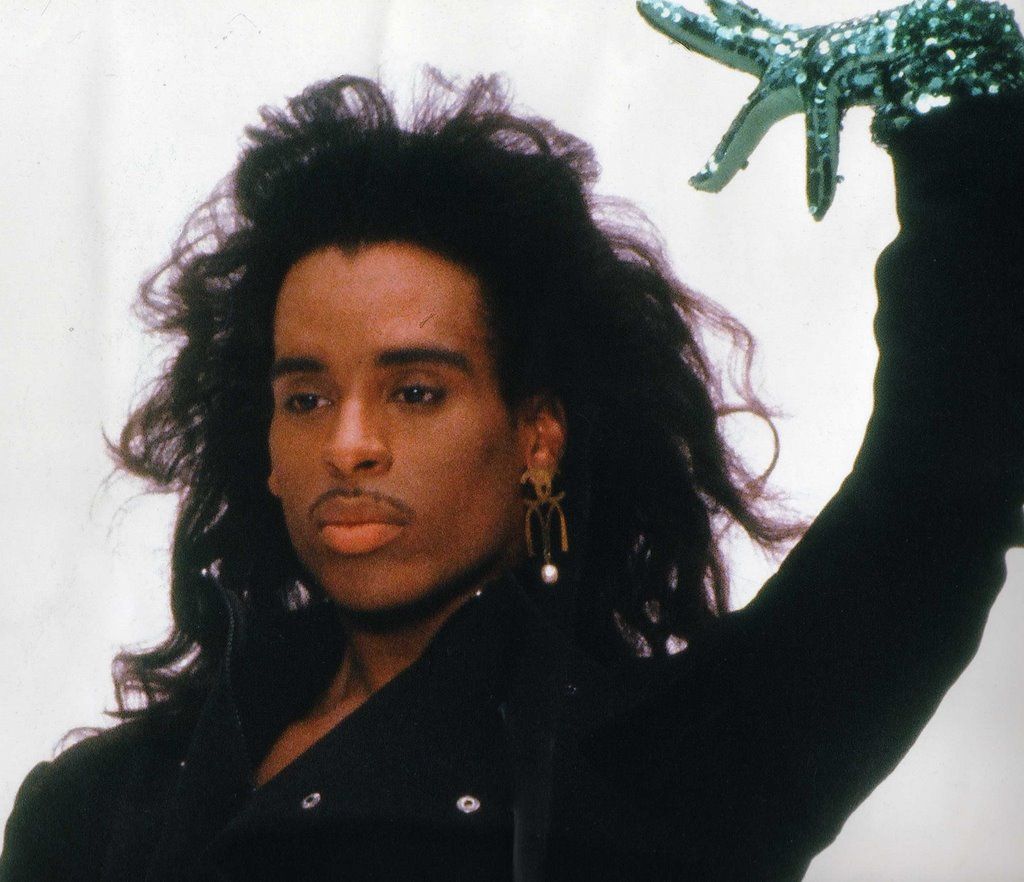
From when he became the mother for the House of Labeija, Labeija remained to be the mother for the following 20 years. On May 14, 2003, Labeija died of a heart attack only at the age of 54. Recall how he said in the documentary that he felt smart not to do the sex reassignment surgery, such that in the following 40 years he would live well, hearing his death at just 54 makes me feel sorry and unexpected.
2. Venus Xtravaganza
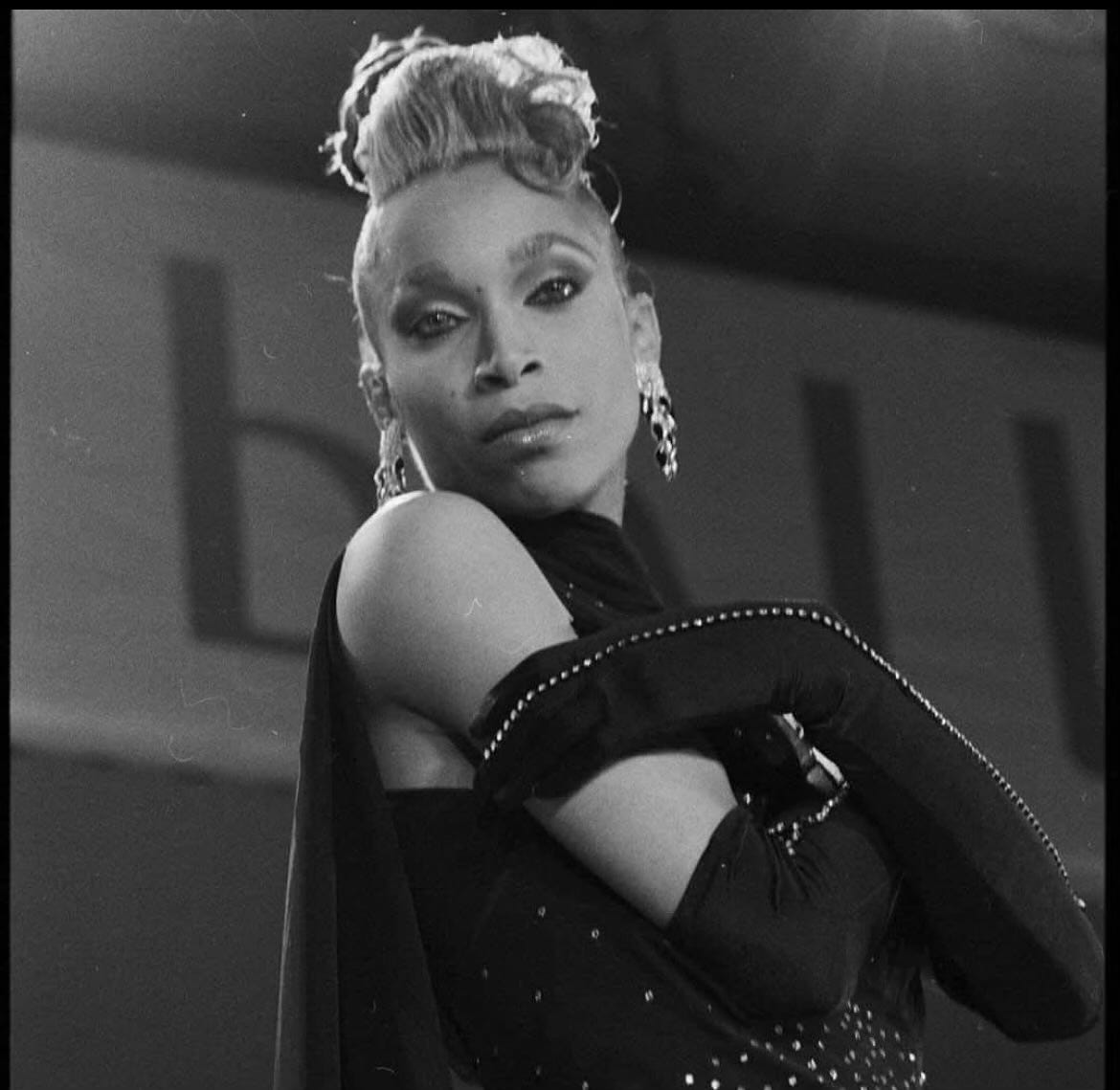
Venus Xtravaganza is one of most memorable person to me from the film. She is just so pretty and talks so softly. I remember her talking repeatedly about her hopes of life and what she wants as an aspiring model. She also talked about how she escaped an attack from a man that tried to sleep with her. Another reason why her image sticks in my mind so much is probably because her death occurred during the filming of Paris is Burning. Her dead body was under the bed of a Duchess Hotel, perhaps due to a similar occasion of his attack.
As of 2019, the killer has not been found, but in 2013 a New York’s theatre group displayed a murder mystery play that referenced Venus’s death. In POSE, Venus was also paid homage through multiple hot lines.
3. Octavia Saint Laurent
Octavia was the girl who took modeling seriously and tried the best out of her self. I remember her because her dance is good, her makeup is done well, and her poses when she was being photographed as a model were all delicate. After Paris is Burning, in 1993, she played a role in the Saint of Fort Washington. In 2005 Octavia was a host of the TV award show, The PillAwards. The next year she starred in Wolfgang Bush’s How Do I Look. In this film, she commented Paris is Burning as “a terrible movie.” She also discussed her drug use, sex work, and fight with AIDS. In 2008, she was diagnosed with cancer, and on May 17 the following year, she passed away.
4. Willi Ninja
Willi Ninja is the mother of the House of Ninja. My impression of him is that his vogue dance was so good and delicate. If I remembered correctly, he became the godfather of Vogueing and even in the film, he described himself as the one who could dance the best out there. Paris is Burning greatly helped Willi’s career. He starred in the music video for Malcom McLaren’s song Deep in vogue. He also danced in two of Janet Jackson’s music videos from the album Rhythm Nation 1814. He also appeared in the 2006 follow-up How Do I Look documentary. Unfortunately, Ninja died of a AIDS-related heart failure the same year How Do I Look was released.
5. Angie Xtravaganza
The mother of her house, Angie’s nice and tender personality is probably what made me like her so much when watching the documentary. She took such great care of her house members, saying how whenever there’s a ball she would have to help her members prepare. During a short passage describing how she got paid to get her breast, her members cheered her up and said that Angie “nourished them,” showing their love for Angie. She also won the mother of the year, as shown in the documentary!
Unfortunately, she passed 3 years after the filming from an AIDS related liver disease, only 28 years old. 3 weeks after her death, the NYT published an article on the ball scene and gave her a large photo on the front of the Styles section, with the title, “Paris Has Burned”. A year later, Junior Vasquez released a house single titled “Eggs”, dedicated to Angie.
When Andor (Tony Gilroy, 2022 – 2025) first came out, I dismissed it as another run-of-the-mill Star Wars show and didn’t touch it. It was only after some convincing that I picked up the show. Once I started watching, I binged the two seasons and capped it off with Rogue One (Gareth Edwards, 2016) as the thrilling finale. I promise that no review I write is going to do Andor justice; this is just a shameless plug for the show. Rogue One was also good, but the subject matter of Andor is quite relevant to current events and offers powerful commentary on our political climate.
The events of Andor are set five years before the events of Rogue One. The show follows one of the side characters from Rogue One, Cassian Andor, and reveals how he became part of the Rebellion. No prior knowledge of the Star Wars universe is needed to watch it, which works to the story’s benefit and allows the general audience to connect and engage with the characters and world.
On a technical level, both seasons of Andor are beautifully done, with the framing, costuming, and editing all working together to make the worlds come alive. The depth and worldbuilding of the different planets featured throughout the show is astonishing for how little screentime they get. All of the props, clothing, and makeup lend themselves to make the artifice of these fake planets a reality.
Documentary techniques were considered in multiple scenes of season two specifically (being vague to avoid spoilers but its episode 8). Janus Metz, a documentary filmmaker, directed that particular episode and relied on his own experience and other documentary films to inform the cinematography.
Season one of Andor is definitely a more fleshed out narrative, both in themes and character development. It offers up a tumultuous political thriller in a sci- fi world with minimal space wizard magic. The dialogue is amazing and character-driven story is masterfully done. Plot doesn’t matter so much as Andor’s moral journey from an indifferent bystander to someone who has found their life’s purpose.
Season two is a little more rushed, and the characters are a little under-utilized because the creators wanted to make more seasons. As a result, every three episodes chronicle a year in the Star Wars universe leading up to the events of Rogue One. Season two has a more involved plot and a more ambitious agenda, but continues to be extremely well done with impactful moments and some incredible monologues. The show ends right at the beginning of the events of Rogue One.
Rogue One was also a good watch, but the writing was not a good. The score, however, was phenomenal and the final climax was a spectacle to watch. Both Andor and Rogue One do such a good job of fleshing out the Star Wars universe and create striking parallels to reality. If you haven’t already, I highly recommend watching Andor and Rogue One.
This chapter of Film Art introduces documentary, experimental, and animated films. Documentary films interpret reality to tell what is meant to be a nonfiction story. This can be a nonpartisan organization of information or an attempt to persuade the viewer into believing something; these are defined as categorical and rhetorical. Experimental films do not follow traditional narrative rules, but rather may focus on patterns of sound or light and may have an unconventional narrative or no story at all.
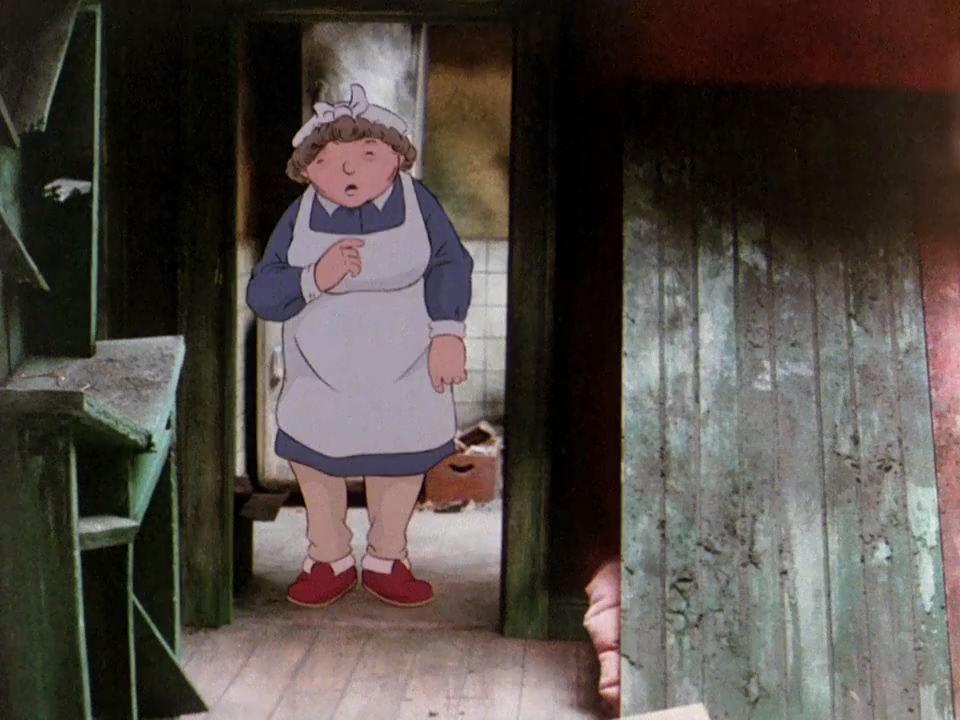
There are many types of animated films, but their defining characteristic is that it constructs reality by drawing, computer generating, or manipulating objects frame-by-frame. When I read this section in Film Art, I reflected on how a lot of animated media uses multiple forms of animation. One film that came to mind was Jimmy Murakami’s 1986 war film When the Wind Blows.
The film utilizes a mix of traditional and stop-motion animation, which creates a juxtaposing effect that is perfect for the message of the film. The two characters are drawn and animated with the process of cel animation. This is when clear sheets of celluloid (or “cels”) are drawn on and then layered and photographed. When these cels are shifted, it creates the illusion of movement. However, rather than a drawn background. This film uses sets made of real objects and adds the drawn characters in later. The objects in the set are animated to move as characters interact with them. This film is about the devastating impacts of nuclear warfare, but the characters are relatively oblivious to the danger they are in, which is displayed by the set around them mimicking reality as they remain drawn. There are even multiple live-action scenes in the film, such as when the bomb drops in the film. I don’t think this fully classifies as experimental but the use of mixed media definitely breaks traditional narrative rules.
Another animated movie that came to mind was one of my favorite animated films, Satoshi Kon’s Paprika. This film blends hand-drawn imagery (cel animation) with CGI, which is computer-generated imagery. This is an extremely surrealist film with an extreme amount of detail, and the CGI is used to aid the drawn animation to aid this effect and be more efficient. (https://www.tboake.com/manipulation/yeung/4films/paprika.html)
After reading the Guardian article about Paris is Burning, I think it raises a concern in documentary-making that I never considered. The documentary received backlash because the director is a white filmmaker making a film about a predominantly black/latino scene. This raised questions about cultural appropriation and lack of profit/recognition for participants in the film. This also highlights how, while documentaries are meant to be fully nonfiction, the experiences/identity of the filmmaker always matters as it can create bias.
This week, we read about three different types of films: documentaries, experimental films, and animated films. All of them differ from narrative film in some way.
Documentary films claim to present factual information about the world. They have their own genres and often mix them to create a collage of records centered around a specific subject matter.
Experimental films, on the other hand, are created to express a unique viewpoint or experience, convey a mood, show a physical quality, or explore possibilities of the medium. Narrative form tells a story with expressionistic features, but the two main forms of experimental films are abstract form and associational form. Abstract form emphasizes pictorial qualities such as shape, color, or texture. You can think of abstract form as art in the medium of film. Associational form suggests ideas and emotions to the viewer by assembling images and sounds that may not have any logical connection. You can think of associational form as poetry in the medium of film. The juxtaposition of images creates linkages that the viewer can interpret. One example of an experimental sequence in a film is from 28 Years Later, where war footage is intercut with the current scene.
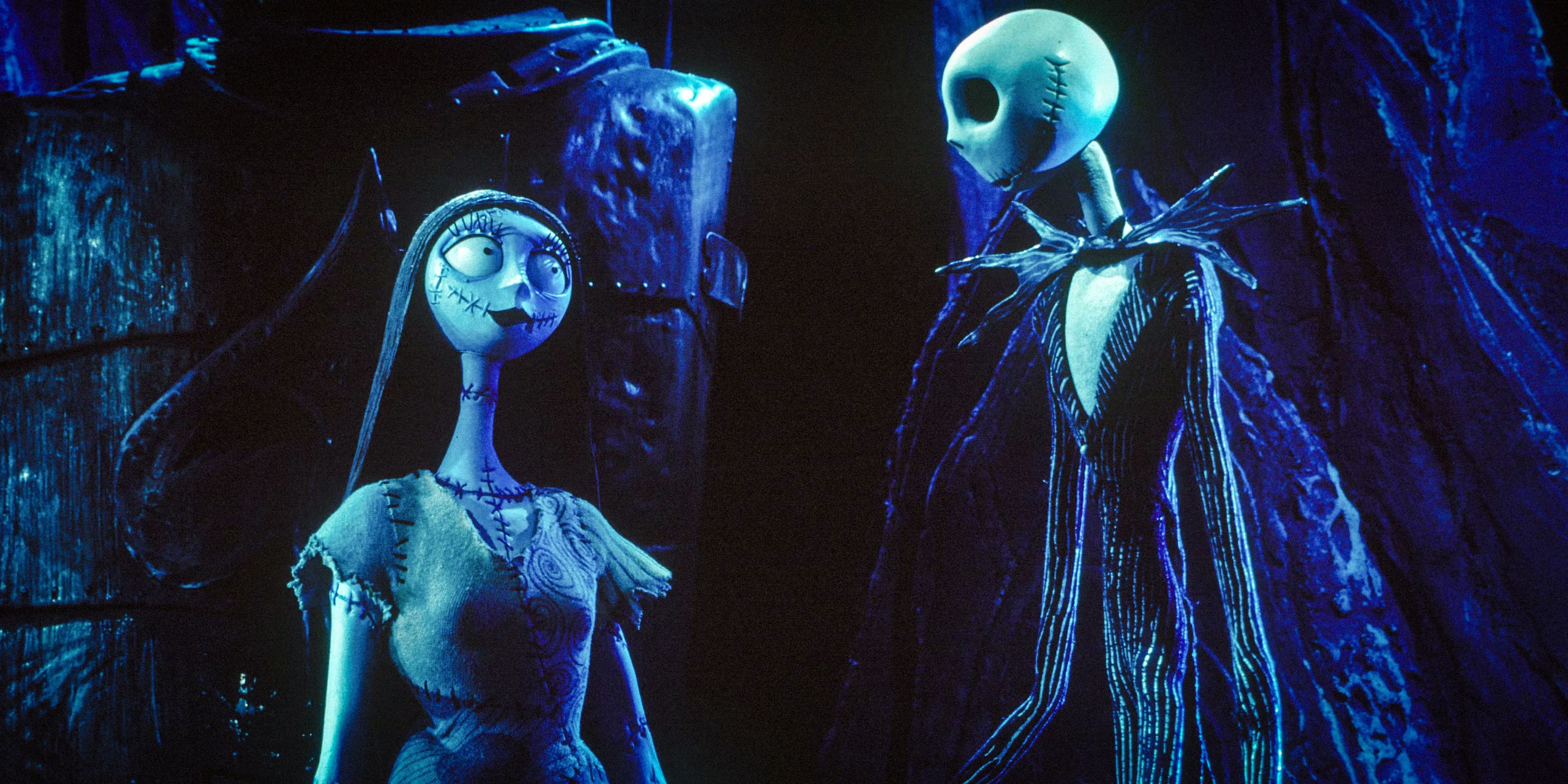
Animated films are a series of images that are shot one frame at a time. They encompass a wide range of genres and types of films. You might see a narrative, documentary, or experimental animated film. Older animation techniques involved celluloid (or cels for short), layered animated drawings that created an illusion of movement. Other animation styles include cutouts, clay animation, or model/puppet animation. I recently watched A Nightmare Before Christmas (Henry Selick 1993), which was created in the puppet style of animation as a stop-motion musical.
In a lengthy process of two years, the animators had to pose the puppets for each frame of the movie. That added up to roughly 110,000 frames. In addition, the creative team built all of the sets and props from scratch, while Danny Elfman wrote all of the songs and was the singing voice for Jack Skellington. The result is a movie with a unique visual and musical identity that remains a beloved family film to this day.
Another studio that is famous for puppet animation is Studio Laika. Coraline, Kubo and the Two Strings, and ParaNorman are some of the movies they have made. Their upcoming feature, Wildwood, released a first look documentary a few days ago.
This week, we’re discussing three distinct genres of film: documentary, experimental, and animated. Although I haven’t delved into the first two genres extensively, 2001: A Space Odyssey by Stanley Kubrick stood out to me immediately as an experimental film I’ve actually seen (so many films that are considered experimental have been on my watchlist for a LONG time, such as House and Stalker).
Though not all of the film is considered “experimental”, the “Stargate” sequence definitely should be.
At the beginning of the sequence, Bowman, our main character, is in space investigating one of the monoliths when he is pulled into a gateway of colorful lights.
Throughout the rest of the sequence, we see tunnel-like flashes of light (shown above), with shots of Bowman in distress interspersed between. It’s worth noting that as the sequence continues, the shots of Bowman become motionless, his face frozen in horror and distress. As the sequence continues, we begin to see shots of blinking eyes (presumably Bowman’s?) with different color schemes, space phenomena, and landscapes of strange colors.
This sequence is a version of what Film Art calls “associational form”. Using these images, Kubrick suggests ideas and emotions to the viewer, despite the images seemingly having no logical connection.
Through the tunnel-esque design of the colors, we infer that Bowman is traveling somewhere. Then, using the short, shaky shots of Bowman in distress, along with the freeze-frames, we know that whatever journey Bowman is on is nowhere near pleasant. But on the other hand, some parts of this sequence are also abstract (the second form). The images aren’t necessarily used to convey a meaning; it’s up to the viewers themselves to find meaning within them. A good example of this in the sequence is the eyes or the space phenomena. Is Kubrick trying to show what Bowman is seeing as he travels?
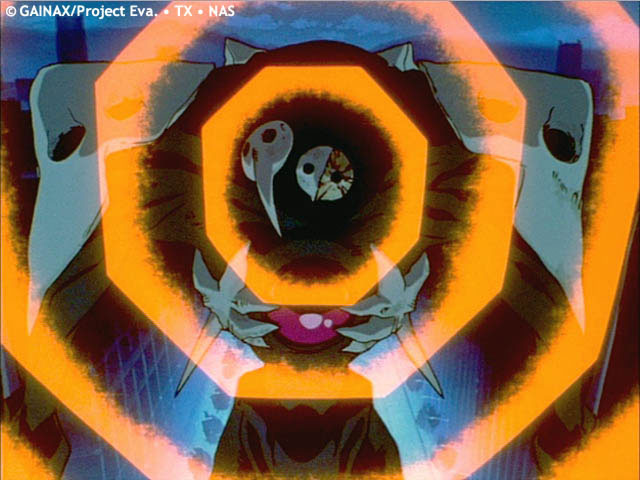
On the topic of 2001, it’s also fun to see references to such an influential movie in other media. There were two pieces of media that came to mind immediately, which are the anime Neon Genesis Evangelion and one of my favorite video games of all time, Signalis.
While doing my searching this week for Nope, I stumbled along this video of Jordan Peele himself breaking down what he believes the central theme of his movie “Nope” is.
Within this video he breaks down how he believes Nope to not just be about race, but to also be acknowledgement to the people who came before them in this industry. He speaks about how this movie could not have been made 5 years ago and it brings into question as a viewer if by simply existing are you defying stereotypes. Jordan Peele would say yes. He believes that this movie is defiance against norms in the film industry. By having this movie star mainly people of color while also being created by people of color, its credit scene alone is acknowledgment of the fact that they are pushing boundaries. Jordan Peele challenges us to go beyond thinking that this movie is strictly about what’s in front of our face and asks us to look deeper in the fact that every single characters role and meaning to the movie is a commentary on the film industry’s stereotypes and restrictions.
For him he feels as if this movie is a nod to all the black entertainers who have been snubbed while their white counterparts get the spotlight. Along with this theme he talks about how this movie isn’t just about spectacles and what we will do to see them, but also about what we will do to be seen. It’s a reminder that there is always someone behind the camera and what they went through to get the shot they desired should not be ignored. We see this continuously throughout the movie as they Em and Oj talk about wanting to get the shot for the money, they want the recognition that comes along with capturing something otherworldly on film. You also blatantly see it when the TMZ reporter asks to be filmed despite having broken numerous bones.
Finally he ends the video by saying he really hoped to have immersed people in the film, and that he wishes that everyone would have left the movie feeling as if they had been near a UFO because it is something so many of us have thought about before. Although he is unable to pinpoint one central theme, he highlights that no movie is really able to be summed up into one jist, there are multiple layers to every good movie. Whether it be about breaking stereotypes or immersing people fully into something genuinely horrifying,
I went into this week’s screening thinking that maybe this would be the day where I would start liking terror or at least understanding why so many people love it. Long story short, it wasn’t… But it got me thinking that maybe this is the point. Keke Palmer herself says that “Nope is not a movie that you can really explain, It’s a movie that is meant to be perceived. It’s a movie meant to make you think and bring out some of your innermost thoughts of your subconscious and trigger you“.
Going into that idea that this is a movie meant to be perceived, my perception is that Nope e is not about the horror or the scary things we don’t know about reality, it’s about people’s greater desire to be a part of something greater, a spectacle. To that end, Peele exposes this desire as he connects it directly to Hollywood’s history of turning people and animals into objects of consumption. Jordan Peele is throwing at our faces at all times a parallel between Jean Jacket and Gordy, and how these 2 characters have been pushed into performance roles that are outside their nature. In essence, it is hard to learn about a thing when you are learning about it in a context where it shouldn’t be in in the first place, which is the case for the chimpanzee in the sitcom and Jean Jacket in the Starlight lasso show. Gordy is made to act human and JJ is turned into a profitable attraction – both stripped of autonomy in the name of entertainment.
Both Gordy and Jean jacket are creatures that cannot be controlled. Peele suggests that once you turn something uncontrollable into a product of mass viewing, you invite destruction. Hollywood in this sense is the real monster. Which is why I understand both creatures to be symbols that represent Hollywood in this context, and this idea that the spectacle pays off. Hollywood is this unpredictable beast, and spectacle is always a currency of high value.
Besides Gordy and Jean Jacket, all of the other characters also serve as symbols. The TMZ reporter and the cinematographer are also unmistakable symbols for this obsessive culture and the neverending gaze for the perfect shot. In contrast, OJ is the only one who sees animals not as tools but as living beings and he is therefore the only one who’s able to “tame” JEan Jacket as he understands the creatures mechanisms.
Ultimately, Nope becomes a criticism of the exploitation disguised as entertainment. A movie that uses the conventions of horror, sci-fi and western genres to critique the industry that birthed them.
Says Rooster Cogburn as he bravely charges four-on-one against Ned Pepper and his outlaws. Retied and an alcoholic at the start of the film, Cogburn’s resolve on the side of moral justice and duty marks the completion of his arc, a moment of western catharsis that the audience cheers for. True Grit (1969) is an excellent exemplification of the Western genre, an adventure about a morally complex character between clear moral boundaries and all the guns, wild west environments, and exciting score to boot. However, the 2008 film No Country for Old Men approaches westerns very differently. Rather than embracing familiar themes of redemption and bravery, the Coen brothers twist these themes on their head in order to expose Hollywood and the audience’s expectations of genre.
Genre, as outlined in Film Art: An Introduction, are systems and conventions of similar iconography, plots, themes, and characters that are employed to help filmmakers structure stories and audiences form expectations. Hollywood’s relationship with its audiences are largely built off of genre; our expectations and ritualistic nature urge us toward specific films to create specific emotions. Genre differences can arise when filmmakers take old elements and present them in new ways. But it is especially rare when a film violates genre conventions entirely; taking each and every element and breaking it over its knee.
No Country for Old Men is set desert landscape with the guns, sheriffs and outlaws all exemplifying the western genre, but much of the iconography is tainted with an uneasy emptiness. One shot that sticks in my head is the establishing shot as Anton walks into the gas station. The long shot’s desert landscape looks dead and dry, both sky and earth devoid of the color that gave the American West’s adventurous look from films in the 60s. The marks of civilization that signified the “boom town” in typical westerns look rusted, old, and yet uncomfortably modern; the car, power lines, and gas station somehow look older than the environment around them. The Coen’s opt for still shots rather than pans, letting the audience sit in the dinginess of the environment rather than projecting spectacle and grandeur.
No Country for Old Men‘s wastelands, both desert and urban, convey a sentiment of a time long gone and an uneasiness that sets this film apart from other Westerns.
The score of the film is also notable, mostly because the film doesn’t really have much of score, or any music for that matter. Rather than the adventurous overtures of typical westerns, an empty sounding film creates tension that betrays the audience’s expectations. The use of sound is incredible, from the “blip” of the transponder to Carter Burwell’s subtle, almost unnoticeable swells of ambient music, sound is integral to the film’s mise en scene and the emotion it conveys.
Sheriff Bell isn’t the “main character” but certainly the protagonist in which the central theme revolves around. Nostalgic for a past that no longer exists, he retires at the end of the film once the morally straightforward, “good vs. evil” perspective, his kind demeanor, and solid wits akin to an old detective no longer hold up in the modern world. It’s notable that the Sheriff and his deputy ride horses, iconography that Film Art: An Introduction attributes to the “outlaws” of westerns, as opposed to the criminal’s use of modern automobiles. Bell’s most powerful scene, in my opinion, is when he sits down with Carla Jean to discuss Moss’ unwillingness to get help from the police. When Carla Jean tells Bell how determined and resourceful Moss is, Bell breaks into a metaphorical story, about how one of friends Charlie, when trying to kill livestock for slaughter, was himself injured when his bullet missed and ricocheted. He concludes with “even in the contest between man and steer, the issue is not certain.” Then Bell sighs and laments, “‘course they slaughter steers a lot different these days. They use an air gun, shoots a little rod… animal never knows what hit him.” This scene is written so tragically, and you along with Bell can feel the way a little bit of cathartic justice that Bell believes in is long dead. https://www.youtube.com/watch?v=WHnMFX2OuhM
Our main character Llewelyn Moss is a rough and tough lone wolf squarely placed between the moral framework common amongst other Western characters. But he doesn’t get a redemption or heroic death; the Coen brothers kill him offscreen by some unknown and unseen gang members. Breaking one of the Western’s most fundamental conventions, the audience is let down in an anticlimactic whimper as the old-time, unconventional traits that positively serve past western characters, such as True Grit’s Cogburn, instead leave Moss dead. It’s to note that Moss’ adversaries throughout the film are portrayed as unseen, and filmed as a tension building thriller. In a genre that pits the hero and villain, along with their moral qualms, at eye-line-match from one another, there is not a single “face-off” or “final confrontation” between antagonist and protagonist. Moss’ two deadly encounters with the gang are a good example: none of them are ever pictured in detail, just silhouetted in suggestion, like a force of nature rather than a human antagonist.
However, nothing really feels like a force of nature more than Anton Chigurh, the film’s central antagonist. Across the novel and film, Anton is a character who is physically unexplainable; his name and appearance tell nothing about who he is, and his characterization by Javier Bardem brilliantly leaves the audience with more questions than answers. He is without remorse, compassion, or emotion, yet has an unexplainable moral code seen when confronting the gas station owner and Llewelyn’s landlord; this complexity underlines the futility in understanding his character. The Coens write Anton as a looming force of nature. Sheriff Bell and Anton never even meet, let alone an old fashioned stand-off, yet his presence overshadows the entire film, leaving a trail of dead in his wake. He kills not through a bad-ass gunfight or a confrontation of moral differences, but through happenstance and causality, as best illustrated in the scene between him and Carson Wells. I think a brilliant decision the Coen brothers make is leaving the fates of the accountant and Carla Jean uncertain; denying narrative closure and further complexifying Anton’s moral standpoint further play with the audience’s expectations. At the end of the film, Anton is suddenly hit by a car, leaving him gravely injured but his overall end unknown. I have always interpreted this as the ambiguity of fate, how calamity befalls him not in the middle of committing a villainous deed, but simply being in the wrong place at the wrong time. At the same time, fate isn’t justice bound, as Anton simply gets help from some bystanders and walks away. It speaks to the expectations we have onto what befalls those who are good verses evil.
The Coen brothers have a lot to say about Hollywood’s use of genre. Audiences have been trained to expect certain things through repetitive use of genre patterns, something especially appealing to larger studios and cinematic universes. One of the oldest genres in filmmaking, westerns have been reflexively rebranded and redone in order to appeal to a continuously shifting audience. No Country for Old Men, for lack of a better word, slaps you across the face, and exposes our dependency on familiar patterns and our innate impulse to seek new thrills from set expectations.
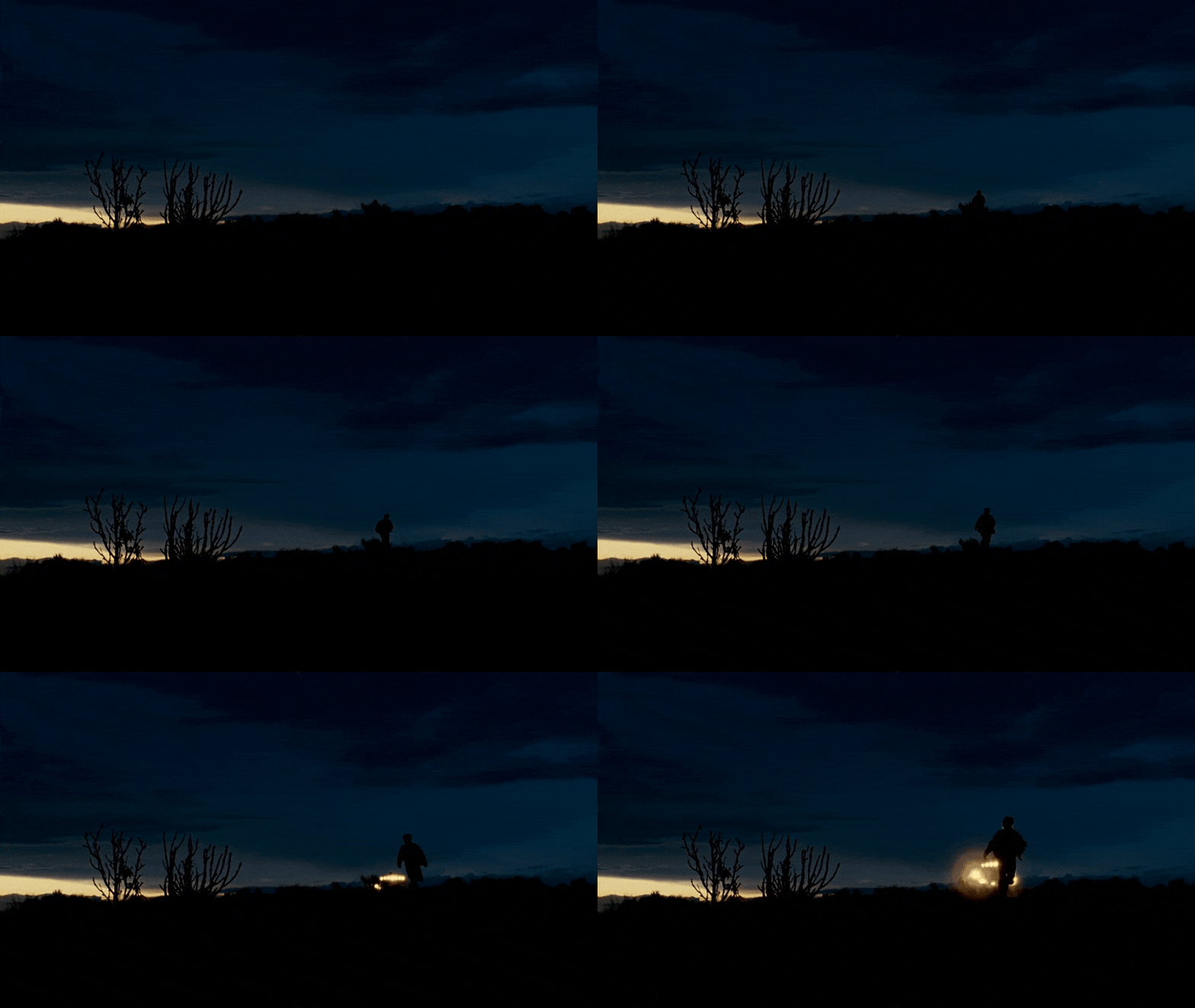
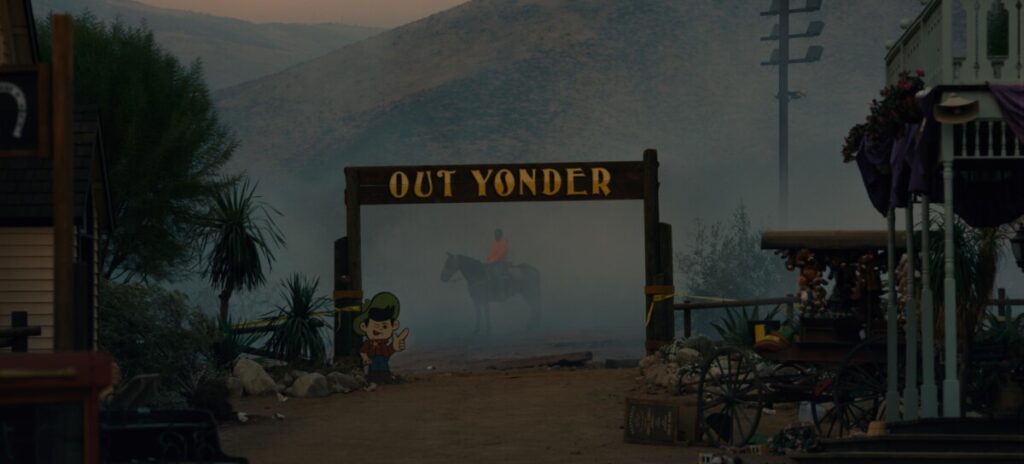
When discussing with a friend after class, there was a little bit of a debate on whether OJ was consumed by Jean Jacket or he miraculously got away in time. There was belief that OJ appearing at the end of the film in the hazy white smoke could be symbolic of his death, with the sine “out yonder” contributing to the belief of him being gone.
However, I believe that he is still alive mainly because of the trope “if you don’t see them die on screen, they are still alive”. This suggests not seeing any clips of OJ actually getting sucked up by Jean Jacket supports my claim that he is still alive.






.jpg?bwg=1547139642)
.jpg?bwg=1547139642)

.jpg?bwg=1547139642)