Blog

  • “And Spits You Out”: Representation of Spectacle in NOPE!


    When I first watched Nope by Jordan Peele, I went in completely blind. I didn’t even take the chance to watch the trailer. I just got in the car with my brother and sat in the theater, expecting something similar to Peele’s previous projects, Get Out and Us: a psychological thriller. After the first viewing, I was blown away by his shift toward an astrological horror theme. However, taking into account count the deeper meaning of having two black leads and reflecting on the film’s exploration of “spectacle” and Black visibility in Hollywood, I began to see it as a powerful commentary on what it truly means to be Black in Show Business. 
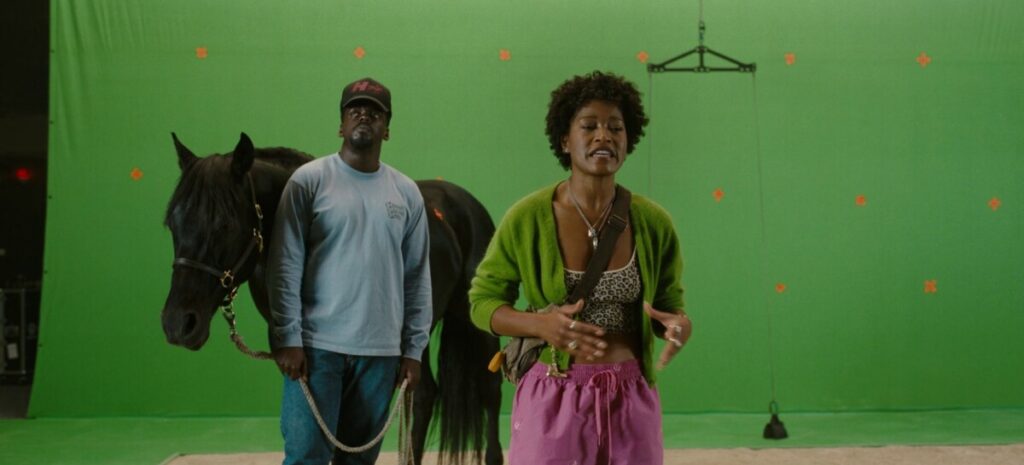
    In one of the major scenes where both protagonists stand in front of a green screen, we get an early glimpse into how Black performers are often treated within the film industry. Taking into account the main characters’ family history, particularly their connection to one of the first moving pictures, featuring their great (3x) grandfather riding a horse, the crew’s reaction to their presence feels heavily anticlimactic. This moment of what seems like simple oversight, is rooted in the historical disregard of Black contributions to cinema, aligned with the siblings’ late father’s horse ranch, which serves as a foundation for the two. The way their labor and resources are used with minimal acknowledgement or recognition encapsulates the broader experience of many Black and minority group whose efforts often go unseen beyond the screen. 

    This theme of exploitation and invisibility is further explored in articles like WATCH: THE MEANING BEHIND JORDAN PEELE’S ‘NOPE’: THE DANGERS OF PURSUING SPECTACLE which provides insight into Peele’s effort to create a film that ultimately subverts the minds of the audience and plants several ideas how a spectacle can change one’s perception.
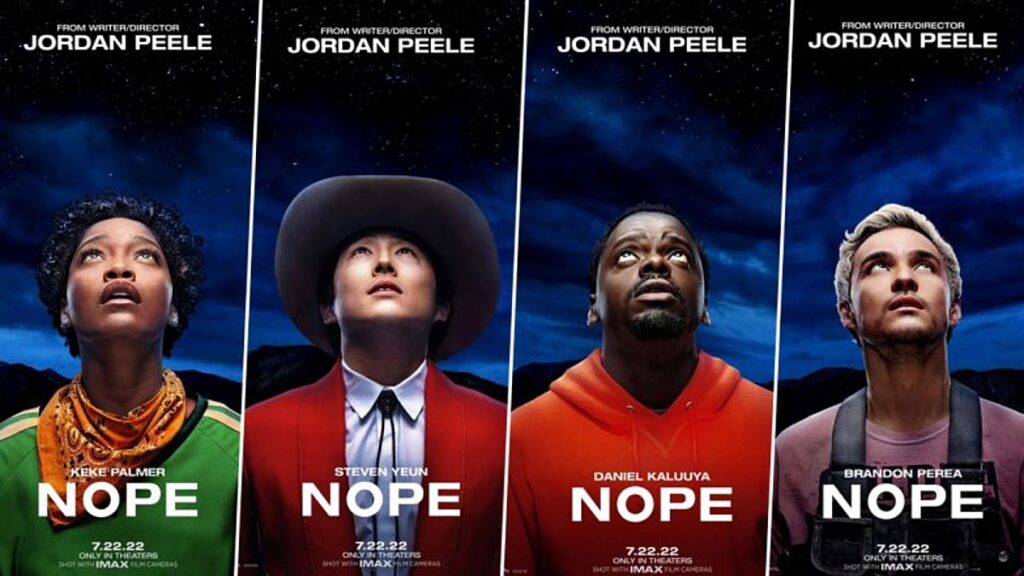
    Using the characters as hosts to display the different elements that can stem from spectating. With Jean Jacket, the flying alien entity being the main spectacle, there is an understanding of what the inevitable path is when accepting a greater power which is symbolic of the not only the film industry, but the Industry as a whole. 

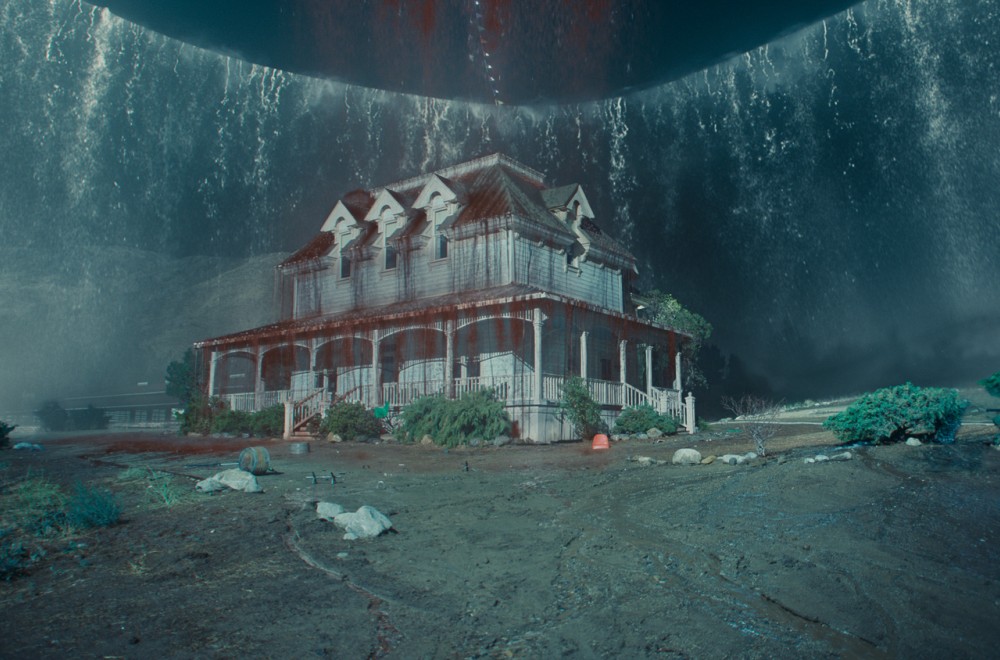
    The article goes on to discuss characters like Emerald, who tries to use the spectacle for money, Ricky, who uses it for fame, and Angel, who seeks recognition. These motivations reflect what often drives viewers and people within minority groups. The film suggests that when you focus too much on proving yourself or showcasing your worth to the industry, you risk being consumed and discarded, which is shown in the scene where Jean Jacket rains blood over the ranch house
  • Sound & The Influence of Steven Spielberg’s “Jaws” on “Nope”

    In one of his interviews, Jordan Peele claims that he got a lot of inspiration from Steven Spielberg’s “Jaws” for his movie “Nope”. The correlation between the two films didn’t quite register with me at first, but after watching this YouTube video that breaks down specific scenes and sounds from both movies, it’s a super cool comparison and you can definitely see the similarities that they share.

    A major focus of the video is the sound aspect of Nope – it consists of mostly diegetic sound throughout the film, which adds to the realistic feel of the movie and makes us feel more immersed in the events that take place. During the beach scene in Jaws, the audience is on edge knowing that there is a shark attack brewing. The background noise consists of normal sounds that you would hear on a beach, people talking, waves crashing, radios playing, etc. But then we hear a scream coming from the water and our anxiety rises, thinking that it’s the shark’s new victim. We quickly find out that it’s just a girl screaming because her boyfriend lifted her up out of the water, but that sound triggers us to think of the worst and adds to the suspense. The same can be said about the scene in Nope where OJ is standing outside in the dark with Ghost. It has an eerie wind sound, the horse sneezing, and overall it’s quiet but diegetic and normal; then a loud noise comes from the house, which again makes us frightened about what that means. We see that it’s just Emerald playing music to dance to, but that sudden introduction of a new sound scares the audience and keeps them on edge for something horrible to occur. The diegetic sound and focus on otherwise overlooked day-to-day noises heightens our senses and gives us a “calm before the storm”.

    Another cool part of the sound in Nope was the creation of the noise coming from the alien thing (I’m still not exactly sure what to call that creature). It was supposedly a combination of screams like you are on a roller coaster, and screams like you are getting eaten by some mysterious entity that flies around like a hungry UFO, which makes for a very uncomfortable noise. At first from a distance the sound could be interpreted as just wind, or the normal noise that a flying saucer would make, but as the story goes on, we learn that it’s much more than that and gives the sound more attention and meaning. It eventually conditions the audience to start to feel anxious whenever that noise sounds in the film and it’s a super cool addition to the already creepy creature.

    Overall, the video has great insight into the movie and certain elements that I definitely missed on the first watch, so I highly recommend watching it!

  • The Wizard of Oz and the Birth of Genre Hybridity

    This week’s reading described genres as living systems that balance convention and innovation. That idea came to mind while reading Alex Sergeant’s essay “Scrutinizing the Rainbow: Fantastic Space in The Wizard of Oz (1939)” (Alphaville: Journal of Film and Screen Media). Sergeant argues that The Wizard of Oz didn’t just use genre conventions, but that it invented the grammar of hybrid genre filmmaking. The film’s split between Kansas and Oz, realism and fantasy, black-and-white and Technicolor, turns genre into a kind of motion. Its “dual spatial focus,” as Sergeant calls it, grounds the viewer in the familiar before releasing them into wonder. That structure became Hollywood’s model for how to blend fantasy, musical, and adventure without losing coherence.

    Sergeant’s analysis captures what our reading describes as the “interplay of convention and innovation.” Oz takes familiar ingredients—the musical number, the quest, the fairytale moral—and merges them into one story of transformation. We recognize the comfort of genre, yet feel its edges blur. Looking at Oz in this way, I realized it’s the blueprint for so many “journey” films that bridge worlds: Star Wars, Pan’s Labyrinth, Harry Potter. Each one restages Dorothy’s passage through spectacle toward self-discovery. Sergeant calls Oz “perhaps the most watched example of classical Hollywood cinema,” but what keeps it alive is how it shows that genre moves. It isn’t a fixed category. It’s a rainbow that bends meaning across forms.

    That insight also ties directly to our feature, Nope (2022). Jordan Peele reworks genre the way Oz once did. He fuses the Western’s open landscape, the sci-fi invasion, and the horror monster movie into a single story about spectacle and control. Both films ask: what happens when wonder turns on the spectator? Sergeant’s essay, though written about 1939, helps explain why Nope feels familiar yet new. It’s the same path Dorothy walked, only now it’s lined with clouds and cameras instead of poppies and tin men. Genre, for Peele and Fleming alike, isn’t a set of boundaries, but a language that keeps rewriting itself.

  • “Nope”: a homage to those exploited in Hollywood

    Jordan Peele’s Nope was an intriguing multi-genre film that was not only entertaining but also full of historical and social commentary. When viewing Nope’s genres through a “reflectionist approach”, it becomes clear that they function together to tell a story about he history of Hollywood. Near the beginning of the movie, we see OJ and Emerald on a film set, surrounded by all white workers. While OJ tries to tell them about the safety precautions for the horse, they brush him off, ignoring his voice. Simultaneously, they ignore the needs of Lucky, not treating him like a real breathing animal but rather a prop. Emerald also tries to promote her directing and acting to he white audience but is not taken seriously. All of this highlights the exploitation of animals and marginalized groups throughout the history of Hollywood. 

    This is where the Western genre present in the film is so crucial to its message. Unlike the white-dominated industry, OJ has the ability to understand that the horses are worthy of respect as much as humans are because he understands them due to his job. He does not attempt to exploit them for the purpose of entertainment or a “spectacle” like Jupe. 

    However, while Jupe’s character functions as both an example of those who exploit and those who were exploited. This is where the horror genre comes into play. As a child actor, Jupe faced a traumatic experience on set which was then brushed under the rug- it was even flipped into a comical incident and put on SNL. It is clear throughout the film that this experience still affects him. However, possibly as a way to cope with it, he exploits the incident for money, charging tourists to enter the small museum he has built dedicated to it.

    Finally, the idea of exploitation ties into the sci-fi genre of the film. At one point, OJ thinks back to how Lucky became aggravated when looked at and realized that also applied to the alien. Just as the horse had to be treated with respect on the film set, the alien could not be “domesticated” as Jupe tried to accomplish because he treated it as a prop without attempting to understand it. The idea that a catastrophe could be prevented if only you don’t look is analogous to how exploitation could be prevented if only people were not so eager to see a “spectacle”. 

    What are other examples of exploitation in the film? How does Peele combine genres to make other commentary about society? What is the significance of Jean Jacket?

  • “Nope”: How Its Cliches Make the Movie

    Nope(Jordan Peele, 2022) is a movie that has been on my watchlist since it came out. Many people have told me it’s one of their favorite movies, and I get it now. This is a film that is very good as creating feelings of tension with genuinely good jump scares, truly spine-chilling suspense, and beautifully disturbing imagery.

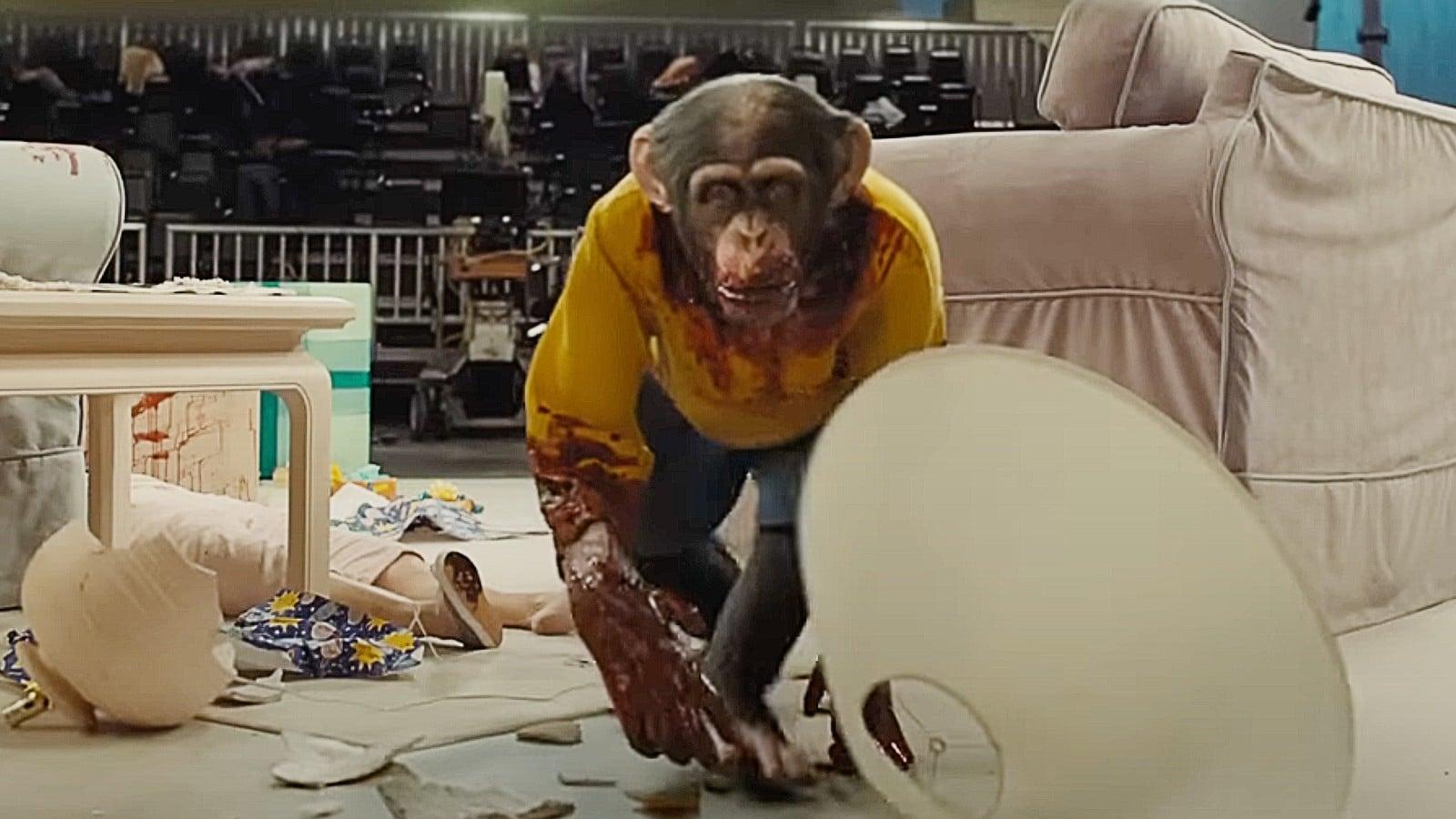
    In Nope, there are so many of the tropes we’ve come to know from horror. Danger at a house, a fake out scene, the final girl, and jump scares are just some examples of such cliches. The conventions drive our expectations as viewers and present some familiarity to grasp onto. It’s the subject content of the horror, however, that really draws out those feelings of dread. Peele doesn’t rely on cheap scares; he draws out the suspense and lets the audience stew in the disturbing events onscreen. The scene of Gordy’s Birthday Massacre and the Raining Blood scene leave particularly strong impressions, mainly due to the copious amount of onscreen blood. This contrasts with the rest of the film, which has almost no gore at all.

    Jordan Peele explains meaning of Gordy chimp sequence in Nope - Dexerto

    The relatively slow cutting allows the audience to slowly take in the scene, as the realization of what is actually happening hits. Furthermore, the long takes and sound design work together to keep the audience in a suspended state of tension. During Gordy’s Birthday Massacre, it was truly terrifying to watch the ape, blood on its face and hands, kill the people on set in such an animalistic way. No emotion, no remorse. Just violence. The fact that we saw the slaughter through the eyes of a young Ricky Park just added to the fear factor. To top it off, the gunshot at the end of the scene was so jarring it actually jolted me out of my seat. I’ll mark the experience down as another success of the horror genre.

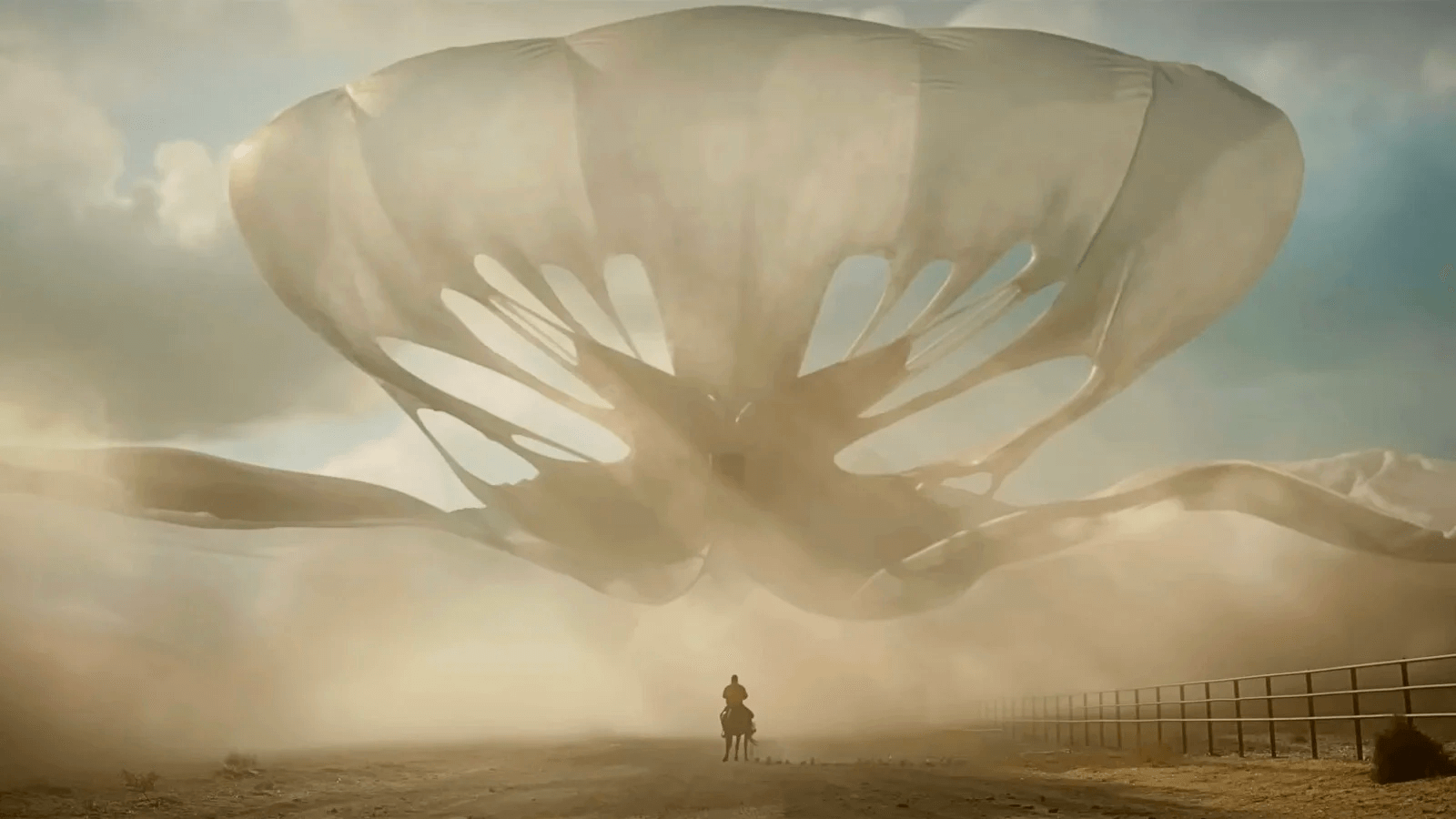
    I can’t just lump it in with all of the other horror movies I’ve seen though. While Nope hits all of the beats of the horror genre, it also shows elements of westerns and sci fi. The warm color tones and California ranch setting are reminiscent of the western genre, and the conspiracy theories and extraterrestrial presence bring the monstrous energy of something otherworldly to the film. Rather than a scary climax, the final confrontation with the alien gives the invokes the essence of the classic western showdown. Tense, yes, but not horrific. There’s a commentary about the lengths people will go to create a spectacle and the dangers of tampering with the unknown.

    WATCH: NOPE — VFX & Cinematography Breakdown (2023)

    I wonder if the context in which Nope was made gives it a deeper or different meaning? What is the significance of seeing Gordy’s story?

  • Jupiter’s Spectacle

    Rewatching Nope today was a blast. It was really fun seeing the reactions of people who had never seen it before, and how similar their reactions were to mine when I first saw the movie a few years ago. One theme of the film that stood out to me during this second viewing, though, is how the need for a spectacle is constant throughout the entire movie.

    Before the film even begins, Jordan Peele shows an epigraph of a Bible quote, specifically Nahum 3:6: I will cast abominable filth upon you, make you vile, and make you a spectacle.

    The theme of spectacle continues during the rest of the film. For example, Steven Yeun’s character, Jupe, turns his childhood trauma from “Gordy’s Home” into a camp museum exhibit. The blood-soaked shoe we see at the beginning of the film can be seen on a glass plaque in the room, along with several fan-made posters that seem to glorify the horrible attack that occurred.

    On the topic of Jupe’s childhood trauma, a scene that stands out to me is immediately after Jupe reveals the museum exhibit in his office. When Emerald asks him what really happened on set, Jupe isn’t able to explain it through a firsthand account. He has to use an SNL skit, a spectacle itself, as a medium to describe the events that took place. Spectacle is almost like a coping mechanism for Jupe: he uses it to avoid direct confrontation with his past and to downplay the damage it did to his mental state. He almost frames Gordy’s killings as an act in a show.

    Going back to the quote from Nahum, and some things we discussed in class, we determined that what makes something a spectacle is if it catches your eye. In other words, the content needs to be shocking enough to make you stop (scrolling) and watch. The quote from Nahum implies something very similar. Only after “filth” is cast on the subject (in the context of Nahum, God is casting filth upon the Assyrian capital of Nineveh) is the subject a spectacle.

    This is why Jupe has capitalized on Gordy so much. It’s an event so violent and shocking that people can’t help but watch it unfold and become obsessed with it. Jupe even says it himself, how there is a growing fanbase for the show and most importantly, for its violent ending.

    Jupe also tries to do the same thing with Jean Jacket. Though he doesn’t necessarily paint Jean Jacket in a very violent light, he buys the Haywoods’ horses for the sole purpose of luring the alien down from its cloud and turning its hunt into a spectacle.

    Though spectacle is an obvious theme throughout the film, there are many different ways of looking at it. Though I talked about spectacle purely from Jupe’s point of view, you can also analyze the Haywoods or even Antlers Holst. I’m curious to see how their ideas of spectacle differ or coincide. Is their fixation on spectacle also originating from past events like Jupe’s?

  • Saying “NOPE” to terror

    Jordan Peele’s NOPE (2022) is a film that has a very simple categorization, but it thrives because of its genre complexity.

    To be honest, I am scared. At the first glance, NOPE seems like a straightforward science-fiction horror film about this unknown UFO from the other world terrorizing a California horse ranch and the people that connects with it. Peele blends in the elements from Western, horror and science fiction genres to question not just our fear, but the way we perceive horror and spectacle.

    The Western genre influence is the most visible. We see that the setting is located at a desert valley, which is similar to the most classical cowboy movies that happen in a small town in the middle of the desert. Here, the setting and the background knowledge of we knowing the main character’s family all tame horses adds on to the Western genre influence.

    At the same time, horror is also deeply rooted in NOPE. Peele used fear through sound and silence. This echos the horror through sensory orientation to the audience. The UFO is both a top predator and a symbol of unknown and violence. Like the best horror films, NOPE exposes our psychological vulnerability — in this case, our obsession with witnessing spectacle even at our own danger. In addition to the UFO as horror, the flashback of the Chimp killing three people, and OJ’s father killed by plane crash remnants is also killing me and really scared the guts out of me.

    I REALLY DON’T WANT PICTURES HERE IT SCARES ME SO MUCH


    Nope also employs a lot of science fiction conventions to explore the curiosity of human and the approach of the unknown. The idea of meeting an alien culture becomes a indication of these people trying to catch the impossible. Just like most sci-fi films, there is a desperate attempt to take control, which may suggest how technology shape our relationship with the reality (as suggested by the lights out and all technology stuff)

    The fusion of these three genres redefine its boundaries. NOPE is a perfect example of genre hybrid. We can see the familiarness of other films we watch before of the same genre, but we can also see the influence of the three on each other. It is not just about the giant terror alien flying in the sky, but it is about the cost of observation, and the price of the spectacle.

    One thing I noticed while watching, is that why these people, though fear of the UFO, still wants to approach and get a shot of it, even knowing its destructiveness? Peele turns that fascination back on us, making viewers question their own role as spectators.

  • The Attica Prison Uprising and Dog Day Afternoon

    There is a distinct moment in Dog Day Afternoon (Lumet, 1975) when the tides turn and you start to feel some hope for Sonny Wortzik. That moment occurs when he invigorates a crowd of onlookers by yelling “Attica! Attica!”. I, along with many people, had no clue what this meant and was confused with its’ obvious and immediate impact in the film. After some research, however, I realized that the moment is symbolic of a larger theme in the film of an individual’s role in the collective to fight against an oppressive system.

    “Attica!” refers to the Attica Prison Riots of 1971, when prisoners collaborated to take staff and guards hostage, demanding better conditions, better food, better medical care, and better treatment from guards. It resulted in a clash between prisoners and National Guard, ending 43 lives. Sonny invokes this image to a crowd of onlookers to reframe his crime. Instead of a robbery for personal gain and a few bucks, Sonny wants to be remembered as the man who resisted authority, and fought back against an oppressive system. While his goal is not to protest prison conditions, he is trying to send a message that each individual has a responsibility to the greater collective to stand up and do their part to contradict men like Murphy, men “who kill people like me (Sonny)”.

    His speech goes beyond simple uprising against an unjust police force. Sonny also represents the voice of the queer man in the 1970’s, a voice that was widely dejected and cast aside. The robbery itself is an attempt to pay for his husband’s gender reassignment surgery. The entire film is Sonny wanting to live authentically in society, and the police force, the governing body, is what’s holding him back from that. Therefore, “Attica!” further represents his struggle against the confining forces of society.

  • Chapter 9 and the Meaning of Genre

    I always thought the idea of genre and sub genres is interesting in movies. Humans have an innate desire to categorize things (Genre of music, type of food, species of animal). Film is no exception. Although films just stem from an idea in a single human’s brain, we feel the need to categorize it into something boiled down. Chapter 9 discusses how to recognize those categories, and gives a few examples of its’ own.The chapter describes genre as a a category of films that share conventions such as plot structures, character types, setting, themes, etc. We learn to recognize genres by associating specific elements with larger groups. For example, the idea of revenge is often associated with Westerns, the theme of loyalty is associated with martial arts fils, and even specific symbols like a Tommy Gun is associated with gangster films.

    The chapter also discusses the concept of life cycles within genre, which I found to be very interesting. The idea is that there seems to be a clear arc when it comes to some genres: An emergence of the genre, a rise, a peak, and a decline. Such examples include the introduction and eventual over saturation of disaster movies, large scale fantasy movies, and dystopias. I think that some genres have definitely proved to withstand the test of time, but I find it interesting that film genres are as much of a trend as fashion or food. Film makers learn from one another, leading to certain trends and eventual ends of trends.

    The chapter also gives us a case study on four genres: The Western, the horror film, musicals, and sports movies. The chapter discusses how Westerns, for example are derived large in part from reality, and displays common themes of order vs. lawlessness. Westerns are also widely recognized from their iconography: Railroads, spurs, horses, wagons, etc. Horror films are less recognizable by iconography, and more definable by emotions. Specifically, horror films evoke feelings of disgust and fear. Musicals, on the other hand, are an example of technological development. As we saw in Singin’ in the Rain (Kelly, 1952), the implementation of music and dialogue in film was revolutionary, and the concept of the Musical was defining of that innovation. Lastly, sports films are largely categorized by their use of a ‘Big Game’, a win or lose moment between the ‘good guys and bad guys’. They often feature underdogs, and end in joyful, unexpected success. These are just some ways that films can be categorized, and how we recognize them.

  • The Genres of Chapter 9

    This week’s reading takes us away from the harder, technical knowledge of the class of editing, cinematography, and mise-en-scene, and towards more big-picture aspects of film: the film genre. This reading covered some history and logistics behind genres, as well as four of the main genres in American film: the Western, Horror, Musical, and Sports. I thought this was an interesting list–I figured rom-coms would be featured, but I figured wrong. This list was still very interesting to read, and covered in-depth descriptions of each genre type. Here’s a brief re-telling of the genres:

    The Western movie is a classic, born at the beginning of the 20th century, not so much later than the birth of film itself. I really liked the beginning of this description, the Western film displays the “conflict between civilized order and the lawless frontier.” Whenever I think about a Western, I consider the rebellious aspect of it a lot. Also, the standoffish nature of it all, with duels and the whole “this town ain’t big enough for the two of us” deal.

    Horror movies, as well as the Horror genre, are characterized very distinctly by their subjects, themes, and iconography. Iconography, especially, is prevalent in this genre. The Horror genre immediately elicits images of Jason’s mask from Halloween or the doll from Annabelle. All of these are very iconic examples of iconography.

    As a theatre kid, I’m very familiar with the musical genre–both onstage and onscreen. There are two types of musical films: the “backstage musical” and the “straight musical.” The backstage musical contains actors that perform for an audience in their story world, while a straight musical follows a typical narrative, just with singing and dancing throughout as a storytelling mechanism. A good example of a straight musical is Singin’ in the Rain!

    The last genre on the list is the sports movie. I haven’t seen many, but the first that comes to mind is a classic from my childhood, The Sandlot. This genre is characterized by not only sports-playing, but by competitions and tournaments and typically containing the big game at the story’s climax. Additionally, this is where the popular underdog narrative often takes place.