Blog

  • Emilia Pérez: When Representation Turns into Performance

    When I go to watch a movie, I always try to enter the theater with the mindset that I’m going to like it, doing my best to block out outside opinions (although, with a film as talked about as Emilia Pérez, it’s impossible not to go in with some bias).

    Emilia Pérez is an extremely ambitious vision from Jacques Audiard who, in my opinion, “bit off more than he could chew.” When you set out to tell a story that, while not the central focus of the narrative, involves themes that are so relevant and current in society, it’s essential for the filmmaker to study each of these themes in depth.

    And that’s where the film fails, in my view. How can a man who’s been on hormone therapy for two years still have a beard? Small details like this don’t align with the reality of a transition and bothered me throughout the story.

    Now, speaking from a musical perspective the film Emilia Pérez left a LOT to be desired. I’ll admit that I liked the first two songs, but as the movie went on, the songs felt increasingly out of place, as if they were an afterthought by the director, disconnected from the story. Their lyrics, unlike those of a good musical, didn’t complement the plot; they were shallow and repetitive.

    The duet between Zoe Saldaña and the doctor hit me as a failed attempt at “wokeness,” something that critics somehow bought into, believing they were promoting the kind of “diversity” long demanded by major awards (and honestly, that’s the only explanation I can find for the number of nominations this film received). 

    I also LOVED the choreography, especially in the benefit scene, which was, by the way, very well directed.

    Given the massive controversies surrounding the film, especially Karla Sofía Gascón, it’s hard to praise her—but it’s undeniable that her performance made the film powerful in many moments. I also can’t watch it without imagining how difficult it must have been for her, as a trans woman, to have to dress and act as a man in several scenes; the dysphoria must have been intense. (I’m not excusing the outrageous things she said, just pointing out something I found interesting.)

    Lastly, we can’t ignore the blatant stereotypes the film brings—not only about Mexican culture but also about trans issues—something that bothered me but also prompted important reflections about how certain clichés still dominate the minds of critics and voters today. How can these people realize that this isn’t reality when they live in an “Americanized” bubble where that’s the only perspective they know?

    Anyway, these are things I feel like the Academy will have to think about moving forward if it truly wants to represent the diverse realities that exist beyond such a limited lens.
  • The beach as more than a backdrop in Portraif of a Lady on Fire

    Portrait of a Lady on Fire at Beach of Port Blanc - filming location

    In Portrait of a Lady on Fire, Schiamma uses cinematography to build an emotional world and this becomes very evident in the beach, a place with open framing and stunning landscapes that captures the brief freedom felt by Marianne and Heloise. A place where they can exist outside of the ticking clock that separates their romance and see each other freely. 

    The beach is more than a backdrop, it’s a constructed space that reflects freedom and intimacy. In contrast with the interior shots (tightly framed and dim lighting), the beach opens up into wider shots with natural lights and horizon lines. This shift in visual style matters as it crafts part of the tone of the narrative. It represents how their relationship is constrained indoors by social norms and surveillance while on the beach the cinematography offers expansiveness, mirroring their sense of freedom. 

    Additionally, the contrast between lighting can also be read into as one of the key features that build these converging atmospheres of freedom and constraint. On the beach, the light is diffuse, natural and less mediated, with a softness around characters. Compared to the effects of firelight indoors. The natural illumination makes their intimacy feel purer and almost utopian even though we know that this cannot last. 

    The beach is also a place for mutual observation where the female gaze becomes visible. The camera in these scenes mirror the equality through a centered framing. Staging also tends to be symmetrical and altogether this adds on to the utopian feel of that ambient where the characters can be seen without fear. 

    In essence, the beach in Portrait of a Lady on Fire is a visual embodiment of freedom, love and memory. Through open framing, natural lights and longer takes Schiamma transforms that landscape into an emotional space. When they return indoors the tone shifts back to restraint and surveillance, reminding us that what happens on the beach is real and temporary. A space of possibility that lives only through memory.

  • Funny Games (1997, Haneke) and our Everyday Complicity in Violence

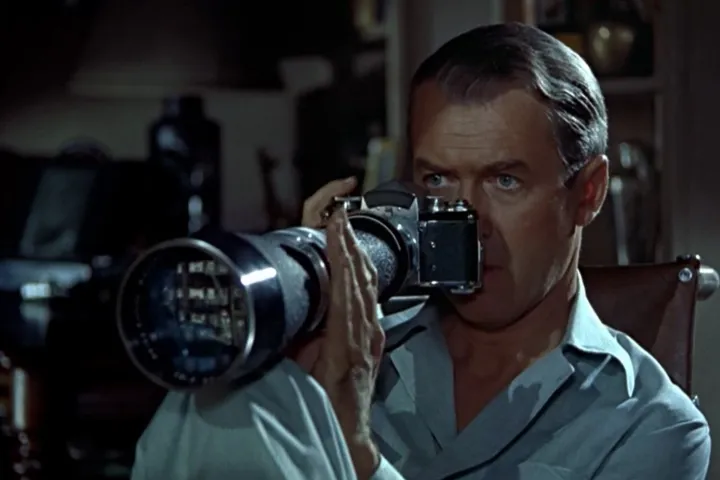
    Funny Games (1997, Haneke) is a disturbing tale of violence and intrusion. Following 2 men who invade a family’s vacation home and put them through a series of twisted and lethal “games”, the film creates a similar commentary on voyeurism and complicity in violence as is present in Rear Window (1954, Hitchcock). As we have discussed in class, Rear Windows places the viewer into the role of voyeur, mirroring our actions with L.B. Jefferies, a man literally incapable of movement and action. Rear Window asks the viewer about their willingness and implicit desire to watch and spy on others. Jefferies’ camera becomes symbolic of the movie screen itself, showing how he, and the viewer, are separated from physical harm, but gain a natural excitement from learning about the private lives of others. The murder of Thornwald’s wife is simply a method for the viewer to excuse and justify their voyeuristic actions.

    Funny Games adds on to this conversation of voyeurism and natural desire to watch violence. However, Haneke definitely punishes the viewer for their viewership of violence, while Hitchcock mainly just asks the question if its wrong. Funny Games starts as a reasonably normal thriller with frightening antagonists and a strong sense of suspense. That is, until one of the home-invaders, Paul, stares directly into the camera after the family learns a terrible truth.

    I was shocked by this moment, and initially very confused about the meaning behind it. Overtime, I came to an understanding that this film is not about 2 men torturing a normal family, but actually about torturing the audience. Haneke is literally punishing the audience for having any interest in watching such a movie. Following horrifying act after horrifying act, the audience is finally given a moment of justice and a glimpse of joy. It is then immediately taken away by Haneke through breaking every rule of cinema. A film that started completely in reality is then complicated with time travel and reality manipulation. All of this is done just to take our moment of justice away, and put us back into pain. Additionally, there are multiple minute long scenes of us simply watching the characters sit in silence, suffering in both physical and emotional pain. Overall, there isn’t a comfortable moment in the entire movie, and that is the point. Haneke takes Hitchcock’s commentary on complicity in violence and turns it into blame; blaming the audience for having any desire to watch.

  • Silence and Survival: The Pianist

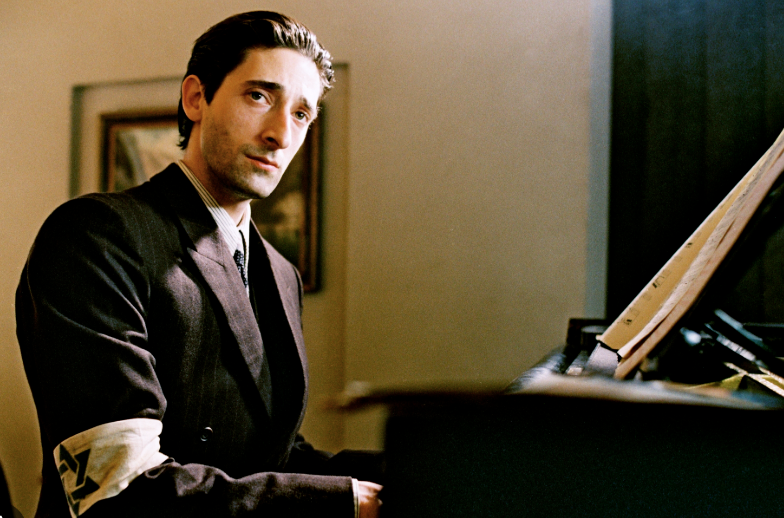
    I watched The Pianist last weekend. What makes it different from other war movies isn’t just its subject — it’s how Roman Polanski uses stillness, sound, and point of view to make you feel trapped inside the experience instead of just watching it. This isn’t a movie about fighting or victory. It’s about surviving when there’s nothing left to fight with. And don’t forget, it is a 2002 film.

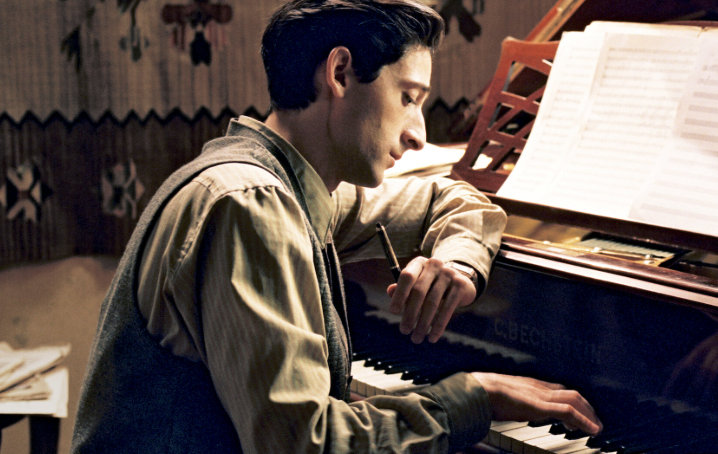
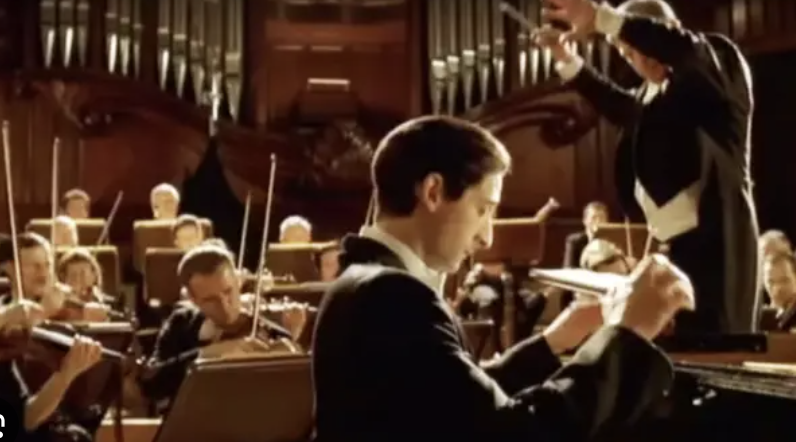
    One of the techniques we talked about in class — the use of sound, or sometimes the lack of it — is what gives this film its emotional weight. For long stretches, there’s no music at all, which feels ironic for a movie about a pianist. The silence becomes unbearable, like it’s pressing down on you. You hear every footstep, every creak in the floorboards, every breath he takes when he’s hiding. When the piano finally does return, it doesn’t sound like a triumphant comeback. It sounds like a whisper of the person he used to be. Polanski manipulates diegetic and non-diegetic sound to show how music transforms from a source of joy to one of survival.

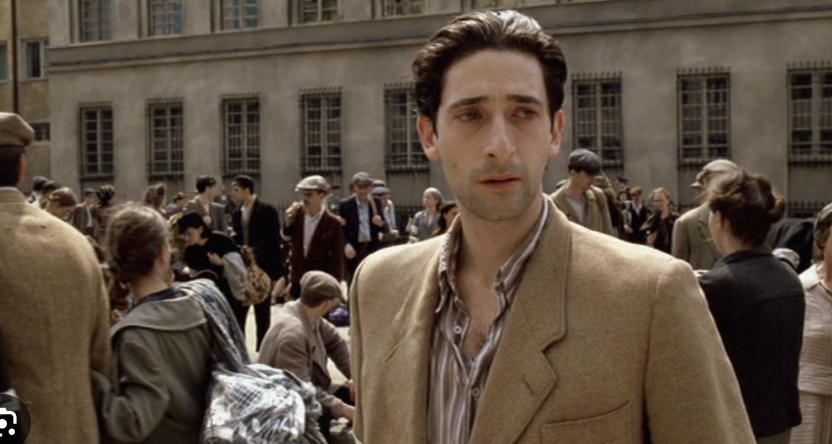
    Below wee see Szpilman in the beginning of the war and when caught by the Nazi official and playing the Piano for him. Two different scenes, the same people tortured by

    Another technique that stood out to me was Polanski’s use of camera perspective. We rarely see wide, establishing shots of the war; instead, the camera stays close to Szpilman, forcing us to see through his eyes. This first-person framing makes the destruction of Warsaw feel more intimate and claustrophobic — it’s not about the scale of tragedy, but about how it feels to live through it. There’s a particular scene when he’s watching from a window as people are beaten in the streets below. The camera doesn’t cut to close-ups of the violence. It just stays with him, silently watching. That restraint, that distance, actually makes the moment more horrifying.

    Lighting also plays a huge role in setting the tone. Early in the movie, the lighting is natural and warm, almost nostalgic. But as the war progresses, it shifts toward shadows and muted grays. By the end, everything feels drained — not just visually, but emotionally. The loss of color mirrors Szpilman’s loss of hope, and by the time he’s finally rescued, the lighting doesn’t shift back. It stays cold, like survival isn’t victory, just continuation.

    The Pianist isn’t an easy film to watch, but it’s essential. It uses the language of film — sound, perspective, and light — to tell a story that words alone couldn’t capture. It’s not just about what happened, but how it felt to live through it. And that’s what makes it worth watching.

  • What We See: Restrictive Knowledge in The Truman Show

    One of the most important elements within narrative is the degree of knowledge we as an audience are given as the plot progresses. This degree of knowledge often falls between restrictive, knowing as much as a character, and unrestrictive, seeing and understanding more than they do.

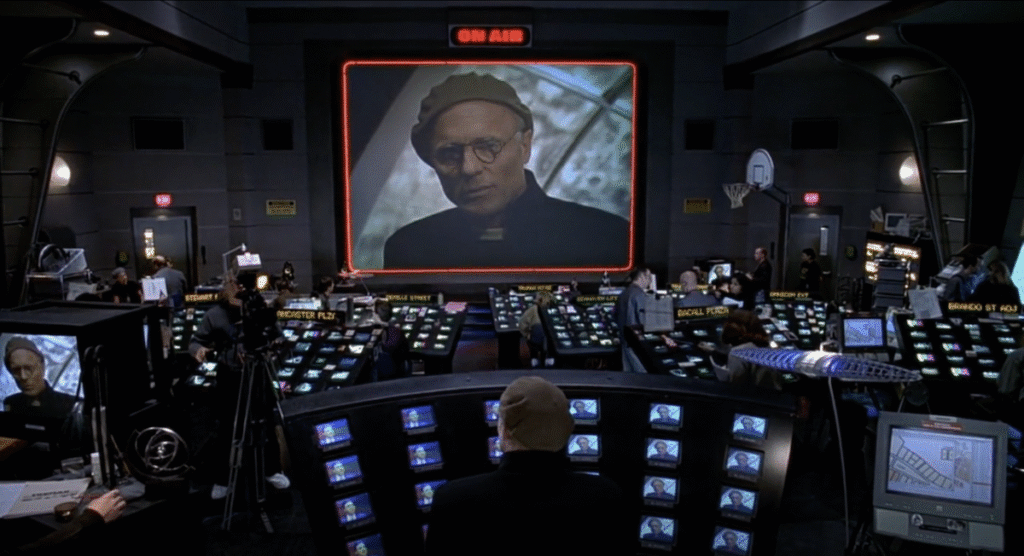
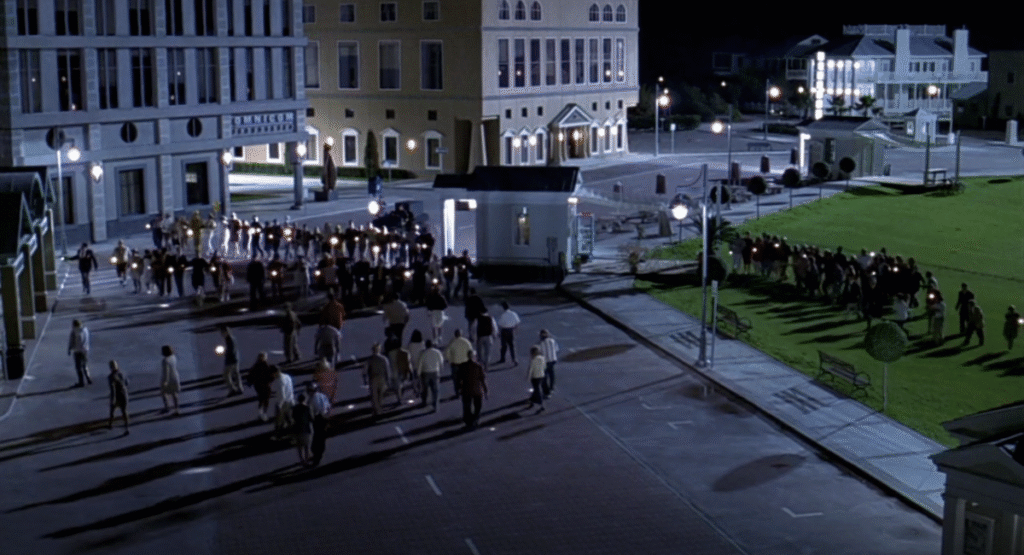
    The film begins with a relatively restrictive plot centered around the main character, Truman. We as an audience are aware that he is in a television show through mild exposition in the opening, but for the first half of the film, we experience what Truman experiences. The film invites the audience to piece together the world of Seahaven and it’s intricacies by ourselves rather than exposition; from the sitcom-like interactions between Truman and the cast, to the oddities of glitching radios and falling lights hinting at the artifice. We are active participants of Truman’s gradual discovery that the world around him isn’t real.

    Around halfway through the movie, the degree of restriction drastically changes. During Truman and his “father’s” reunion, the film intercuts the perspective of Truman and the show’s control room. We meet Christof, the creator of the show, and his show-runners as they improvise the direction in real time. Shortly after, a news reel acts as exposition, fully fleshing out how The Truman Show came to be and operates. During an interview phone call between Christof and a former cast member Lauren, Christof tells her “we accept the world that is presented to us” when Lauren calls out the ethical injustice done to Truman.

    Had the story began with an unrestrictive lens, Seahaven would simply appear less real from the beginning, and Christof’s thematic stance would appear more intellectual rather than emotional. Instead, the restrictivity allows us to emphasize with Truman, and make the central conflict –control verses freedom– grounded in Truman’s personal struggle instead of overarching ideology. For example, despite the Christof and the showrunners’ numerous attempts to present Seahaven and Truman’s life as “perfect,” we clearly see Truman’s emotional distress and desire for authenticity.

    The climax of the film makes the most creative and powerful use of restriction. Truman decides to leave the island and conquers his fear of water as he sets sail. During the night, he sneaks out of the house, and none of the cameras –and by extension, we the audience– know where he is. The story is suddenly restrictive again, but with a reversal of power. We don’t follow Truman’s ignorance; we share the showrunners’. The film itself weaponizes restrictive narration against the audience, implicating us of the same voyeurism that it critiques.

    The Truman Show ‘s manipulation of narrative perspective throughout its runtime ultimately becomes both its central storytelling device and its strongest moral statement.

  • One Battle After Another Review: Viva La Revolution & Leonardo Dicaprio

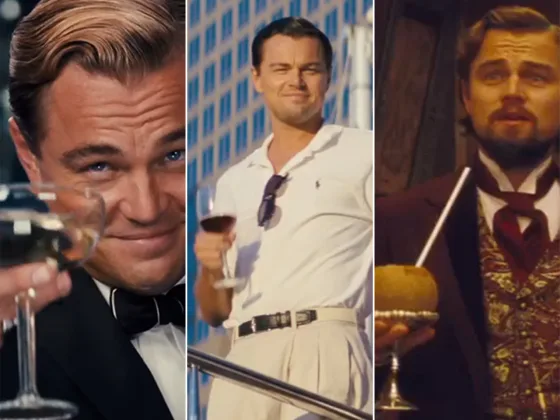
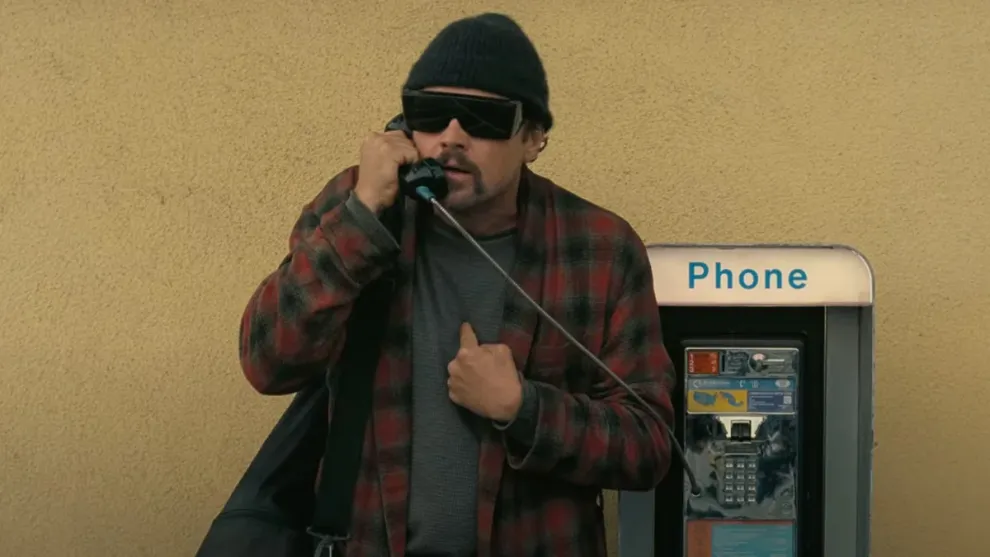
    Over break, I went to see One Battle After Another at North Dekalb. I walked into it well aware of my feelings about Leonardo Di-I only date women under 25-rio but I decided I would put those feelings aside and treat him as just any other actor. I walked out of it, still disliking him as a person but man can he act. His performance in this movie helped make the movie what it is. He was angry, depressed, chaotic, and surprisingly funny.

    Before I saw the movie I saw the scene of him screaming, “Viva la revolution” and believed that this must be coming from a scene that was powerful, however to my shock it was comedic. The whole theater busted out laughing and thats when I started to really understand the themes of this movie.

    The movie, despite being a blatant commentary about how every individual is constantly facing their own battles, was a movie about the people we put on the front lines of revolutions. If you look online you’ll quickly find memes of people saying “you know you’re safe at a protest if a white girl is there” or jokes about sending your white friend to talk to authoritative figures because you know they’ll be treated better. That’s what this movie felt like. Leonardo was the white friend.

    At the beginning of this movie there was a scene where he was kissing Teyana Taylor in a car full of people, and she said “do y’all think he likes black girls??” and he replied “I like black girls, you know I like black girls.” In the moment I cringed, and thought it was such a weird thing to say. It felt performative and weird and it had the same energy as him screaming, viva la revolution. It felt like his tastes, his preferences, his romantic relationships, how he approached his job in the revolution, was performative and defiant simply to be defiant, not for a greater cause. Because what revolution was he fighting for? He screams “Viva La Revolution” which in English means long live the revolution, to a Mexican man, it felt like being American and saying “gracias” at a Mexican restaurant. Despite him being the father of a black woman, he is hilariously detached in our eyes because what revolution is a straight white man in America fighting for? What revolution is Leonardo Dicaprio, a white man worth hundreds of millions of dollars known and loved around the world, screaming about? His whole character was ironic, casting him was deliberate.

    We as people have these preconceived ideas about gender and racial roles and how people should be doing certain things that correlate with those roles but this movie rips that apart. The sensei of a dojo in this movie is Mexican. The person who comes to save his daughter is a Black woman. The person who leaves Leonardo and Teyanas relationship, is Teyana. The people who save Leonardo are hispanic. This movie pokes fun at the ideas of what we believe a person should be doing, making us question why we have those ideas at all. So in that moment, where Leonardo was frantic because he had found out where his daughter was going, the police were raiding where he was, and he yelled out, “VIVA LA REVOLUTION” to the sensei who was helping a bunch of immigrants who he was housing not be seen by the police, in reality wasn’t a joke. He meant that. But it was comedic, it felt ridiculous, and as a person of color I laughed extra hard. Often times in revolutions it feels like white people get there last, it takes something happening to them for them to realize and have empathy for something many of us have been fighting for years. So it was perfect to me, that the sensei simply put his fist in the air. An acknowledgment of the fight, but a toned down one. Because in reality, white people are often given more space to be loud, to be defiant, while people of color are expected to be quieter in their revolts. Him silently putting his fist up while Leonardo screamed it, was telling of that.

    This movie was a great commentary on society and there was so much in it that it would literally be impossible to sum it up in one blog post because of how wonderfully layered it was. This one scene stood out to me because of the comedy and irony of a seemingly serious moment, I still laugh now seeing clips of it. This movie is worth the 3 hour watch, it’s riveting and a commentary on the world we live in now that people need to hear.

  • Creativity and its Limits: Citizen Kane

    (73) Orson Welles on Watching Too Many Films – YouTube

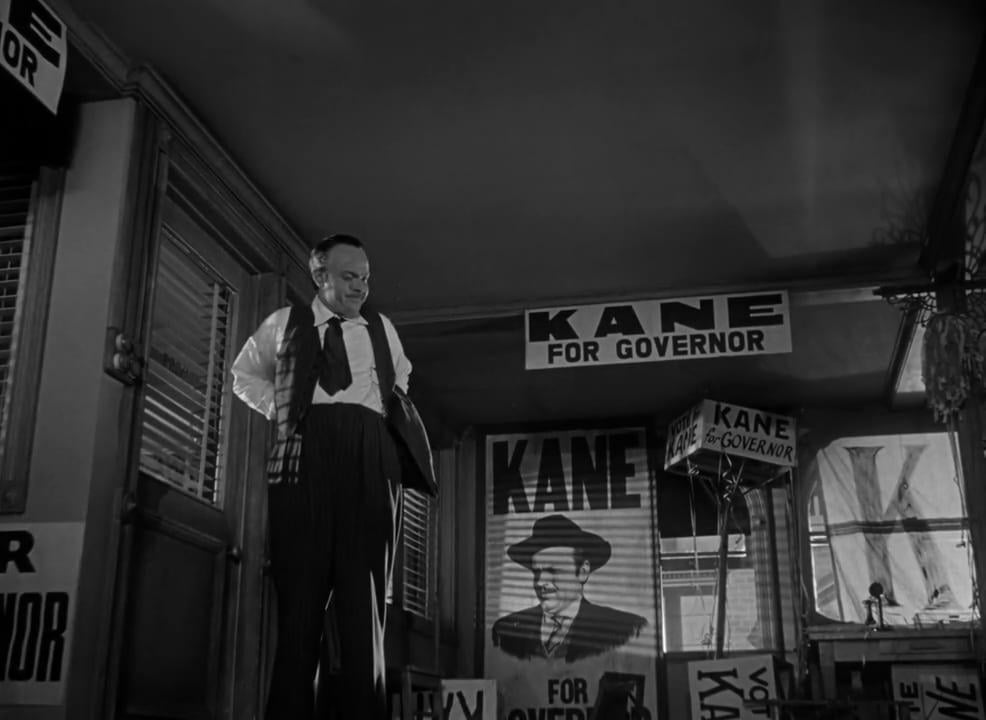
    There will always be a debate towards what the “best” movie of all time is. However, there is no debate that Citizen Kane is one of the most culturally and cinematically impactful movies ever created. Orson Welles, with his first ever time directing a film, forever changed the way that cinema was created. New ideas on how to portray lighting, focus, narrative, among many others, were created in Citizen Kane for one key reason: Welles had no idea what he was doing.

    When I say that Orson Welles had no idea what he was doing, of course Welles had a conceptual vision for what he wanted his first direct film to become, but Welles had no preconceptions on what was and wasn’t possible in the process of creating film. That was his greatest strength.

    In an interview with Orson Welles (linked above), he notes that you mustn’t “soak yourself in film.” What he means by this is that you shouldn’t dive too deep into what is and isn’t possible in filmmaking. Welles’ creativity stemmed from the fact that he had no idea on what was possible at the time. Gregg Toland, the working cinematographer on Citizen Kane, brought Welles’ radical-at-the-time ideas to life.

    For example, the low shots in the film were a radical new idea at the time. Cloth ceilings were integrated into the set of Citizen Kane to give more of a realism effect. Cinematographer Gregg Toland adds “The Citizen Kane sets have ceilings because we wanted reality, and we felt that it would be easier to believe a room was a room if its ceilings could be seen in the picture.” The confidence to pull off such a revolutionary idea at the time came from the unbounded creativity of a director who had no idea what the “rules” were.

    Even though Welles’ belief to not “soak yourself in film” sounds good in prospect, it is important to mention the anomaly that is Citizen Kane. Welles mentions it himself in the interview, that most brilliant filmmakers in the next generations will already know the ins and outs of the filmmaking process. It is simply unlikely that a masterpiece will be created just because the creative vision has no prior experience in the creation of a new subject, Orson Welles was simply an anomaly. Overall, even though it is highly unlikely to create genius from nothing like Welles, it is still possible. New filmmakers in the next generation shouldn’t bound their creativity to what is already known, but towards what hasn’t been done. That’s how great films like Citizen Kane are created.

  • The use of mirrors in Citizen Kane

    The famous final sequence, when Kane walks through the corridor of mirrors, is not simply a stylistic and aesthetic choice. Instead, this choice actually resembles one of the primary themes of the films, which is the presence of fractured and fabricated identity. The “many Kanes” that appear because of the mirrored hall shows that there is no true Charles Kane, but instead countless versions of himself that he has portrayed to the general public and been interpreted as. Even Jerry Thompson, who spent weeks studying the life of Kane, could only ever understand him through the fragmented and often unreliable tales told to him by the people closest to Kane.

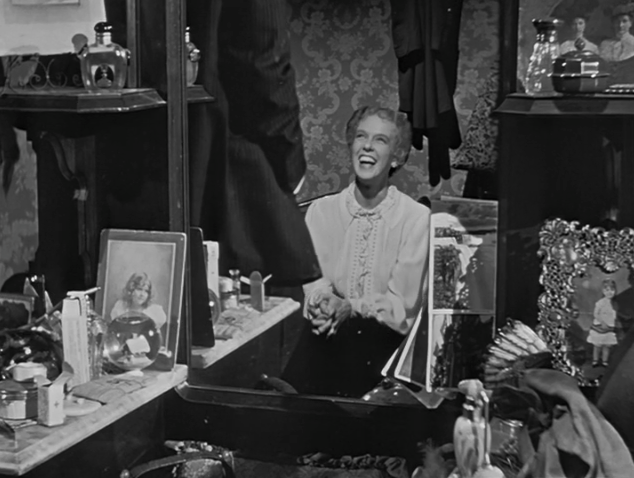
    The mirrors also offer a deep sense of isolation. In Kane’s final days, he spends time not surrounded by loved ones and friends, but by reflections of himself. He has spent years trying to surround himself with people who “love” him, accidentally surrounding himself with people who try and praise him in exchange for power. This isolation can be seen earlier in the film as well, when Susan Alexander sits at her wardrobe, we gaze at her reflection through a mirror. The reflection stands as a confrontation of her loneliness and isolation.

    In totality, mirrors and reflections are used throughout Citizen Kane to establish the distorted nature of life these characters are experiencing. Nothing is genuine, not the people they surround themselves with or the stories they tell. Even the story itself goes through multiple levels of connection (a friend, a manager, etc), leading to a convoluted tale that never truly lets us get a good look at who Charles Kane was. And in his final days, he understands that he doesn’t know either.

  • The Fragmented Truth of Memory: Narrative Form in Eternal Sunshine of the Spotless Mind

    I am writing this reader’s post after watching Citizen Kane, which gave me a lot of inspiration about how audiences and the movie interact. From Citizen Kane, we see narrative in forms of memory, in fact, in different aspects and versions of memory, such that they seem to piece together a story. Through such nonlinear narratives, why would the audience be able to understand what’s going on? Bordwell, Thompson, and Smith describe narrative as a chain of events linked by cause and effect occurred in time and space.

    However, they also remind us that narration can control what we know and when we know it (which ties back to Citizen Kane, as the story literally is about information control). In Eternal Sunshine of the Spotless Mind (Michel Gondry, 2004), this manipulation of time and information becomes the emotional core of the film.

    The space between who we are and who we think we are movie review (2004) |  Roger Ebert

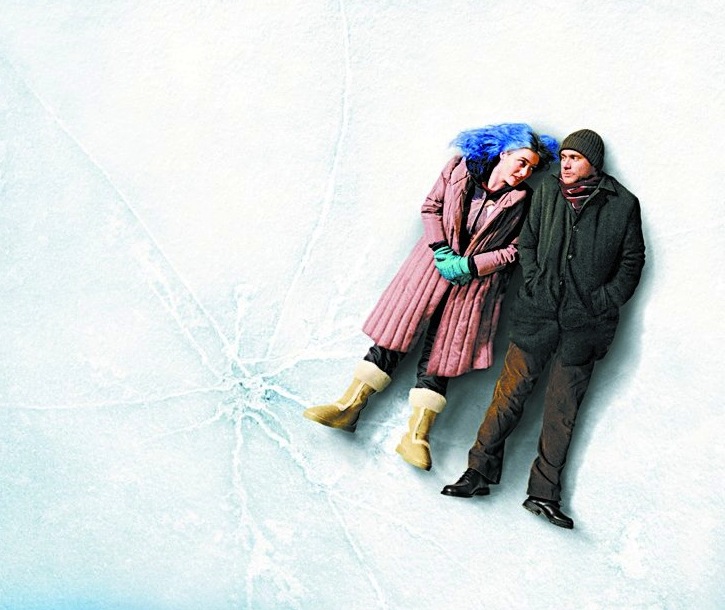
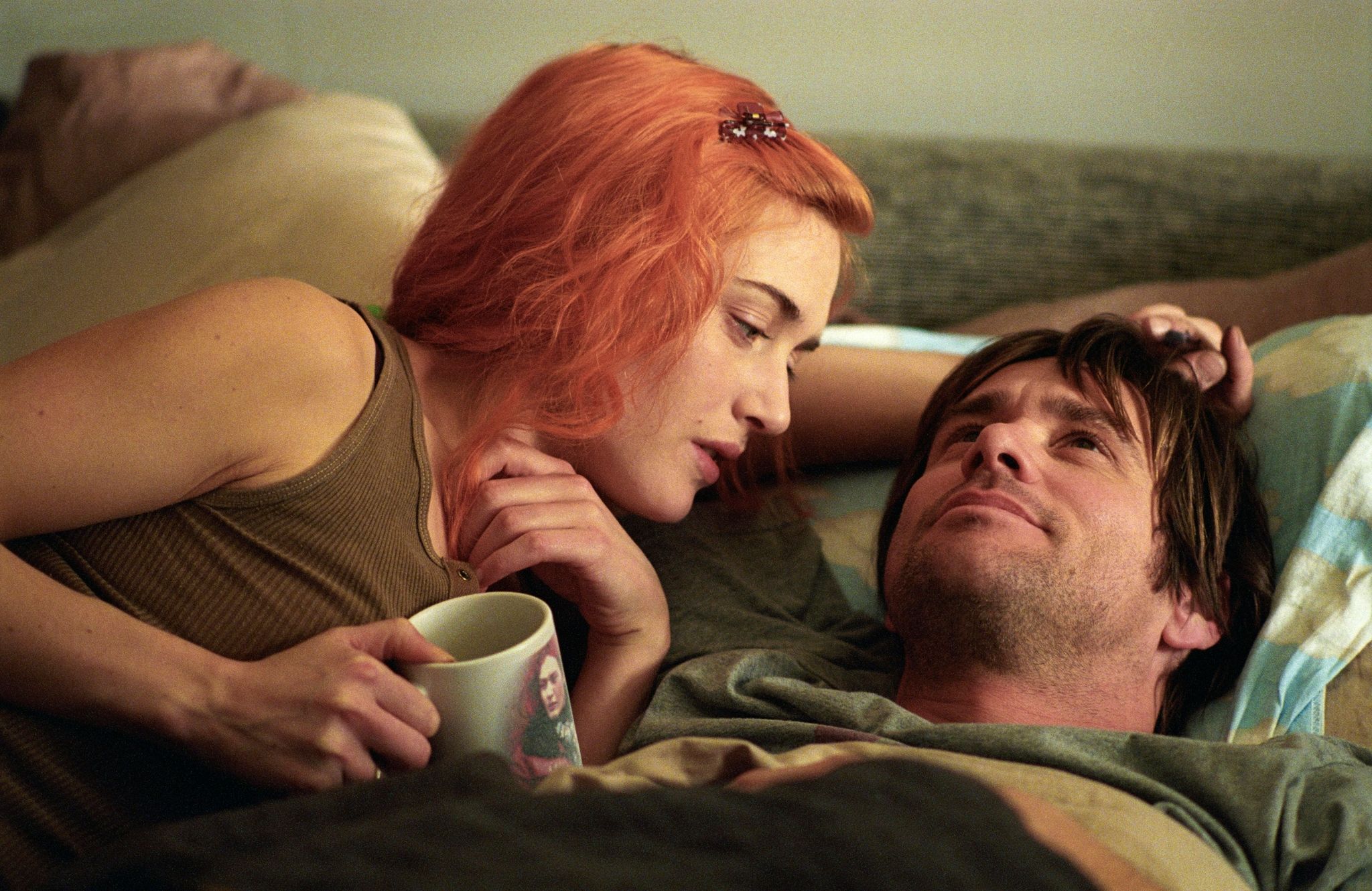
    The story itself is simple: about two people (Joel and Clementine) meeting and falling in love on a train. Eventually, they experienced a painful breakup due to miscommunication. Both decided to undergo a medical procedure at a company called Lacuna, Inc. to have each other’s memories erased. However, the erasing process forces them to relive their experiences with each other in reverse–so they ended up experiencing their final fight, and moving backward to their first moments of love. As Joel revisits these memories, he realizes that he didn’t actually want his memories of Clementine to be erased.

    Unfortunately, the erasing process was complete, and both of them forgot about each other. Although later by chance they met on a train and fell in love again, just like they first did, ending the movie merrily, what is more important is the narrative structure of this film.

    Dreaming of Lacuna, Inc.. When I first saw Eternal Sunshine of… | by  Christian Montoya | Applaudience | Medium

    The plot is nonlinear and disorienting by design. The film begins after Joel and Clementine’s relationship has already ended and been erased, but neither the audience nor Joel realizes this right away. By employing nonlinear storytelling and restricted narration, we learn Joel’s memories in reverse, mirroring the mind’s gradual erasure. The result is that the audience experiences forgetting alongside the character, and become trapped inside the narrative logic of memory rather than time.

    In this work that narrates time reversely, temporal order and causality are also mixed up. As memories collide into one another, spatial and continuity break down, forcing the audience to think hard piecing these scenes together. In one moment, Joel runs through his own memories to “save” Clementine, blending dream logic with narrative motivation. Bordwell would describe this as a manipulation of time and space that adheres to cause and effect–that the cause (Joel’s resistance to forgetting) to the effect (the reappearance of moments in the past).

    Eternal Sunshine of the Spotless Mind

    But even when the film bends time, the emotional coherence is maintained, which is the unity of meaning. During the final scene, the directors decide to end the film with an open-ended narration: Joel and Clementine listens to tapes of their past relationship. This provides neither a full disclosure nor disunity, but an open-ended interpretation which we do not know what will happen in the future.

    Revisiting this movie after reading through this chapter and watching Citizen Kane, I found a lot more fun in exploring the relationship between how the human mind absorbs information and how narration techniques could best serve the human mind in understanding what filmmakers are trying to tell. The emotional power of Eternal Sunshine of the Spotless Mind does not come from the story itself, but definitely from how it’s told, which is all the power of narrative form.

  • Citizen Kane’s Real Life Drama

    Citizen Kane was not just a drama shown on-screen, it was based on a real life newspaper tycoon William Randolph Hearst and thinly veiled by cinematic flourish. However, Hearst was a powerful man and Orson Welles, an arrogant yet brilliant rising star, had made himself a powerful enemy.

    According to PBS, Orson Welles was an ambitious young man who set out to dethrone Hearst, but Hearst would not take this lying down. He banned any mention of this film in his newspapers and intimidated theatre managers into refusing to show the movie. As such, Citizen Kane was initially a box office flop, failing to recoup its production costs. Despite the boycott, Citizen Kane still managed to get nominated for nine categories at the 14th Academy Awards, but only winning for Best Original Screenplay. Hearst’s influence managed to reach into the Academy voters, with many claiming that Citizen Kane was snubbed due to personal dislike of Welles among voters and Hearst’s supporters. The film was reportedly booed by audience members every time it was named at the Oscars.

    Although Citizen Kane was a less than flattering depiction of Hearst, there is an interesting theory about why Hearst was so adamant to obscure the film. According to the writer Gore Vidal, “Rosebud,” the phrase that the film centers around, was a nickname given by Hearst to his mistress Marion Davies’s clitoris. Marion Davies was an actress who was well liked in Hollywood, and the controversy over Citizen Kane was said to be “a fight over her honor” as her depiction in the movie as Susan Alexander was as Welles claimed himself– “a dirty trick.”

    Out of the three sources I used, only the PBS article seems to be based in fact and backed up by other sources. Although Far Out Magazine titles their article as “Why Citizen Kane was Booed at the 1942 Oscars,” the article clarifies that the booing was only account of Citizen Kane being booed came from Welles himself, who wasn’t even in attendance. Additionally, the Guardian article reads more as celebrity gossip with speculation about Welles and his co-writer Mankiewicz and their hidden motives.

    https://faroutmagazine.co.uk/why-citizen-kane-was-booed-at-the-1942-oscars

    https://www.theguardian.com/unsolvedmysteries/story/0,,1155656,00

    https://www.pbs.org/wgbh/americanexperience/features/kane-william-randolph-hearst-campaign-suppress-citizen-kane