Blog

  • An Idea vs. Realism: Biopics

    In Eisenstein’s A Dialectic Approach to Film Form, a large portion of this essay’s argument relates to conflict and surrealist portrayal. The essence of the tension and action, according to Eisenstein, is through stark contrast: “The incongruence in contour of the first picture-already impressed on the mind – with the
    subsequently perceived second picture engenders, in conflict, the feeling of motion.”

    Bazin’s argument, however, follows a much different path than Eisenstein. To Bazin, film is a manner of recreating our own reality itself. Bazin’s argument largely stems from his notion that the “cinematic illusion” had always existed in humans – even before the technology to produce film had been created. “In any case, there was not a single inventor who did not try to combine sound and relief with animation of the image – whether it be Edison
    with his kinetoscope made to be attached to a phonograph, or Demenay and his talking portraits…”

    In essence, these two point of views contrast against each other. Eisenstein is arguing for the complete intellectual intervention in film space to create tension and meaning, whereas Bazin attempts to create an environment that mimics reality to achieve tension and meaning.

    These two different point of views made me think of current-day biopics, or dramatizations of real-world people in the form of cinema. In concept, one might associate biopics with Bazin’s form of film creation, attempting to mimic a real-life counterpart to a historical figure in the form of film. However, modern biopics such as Oppenheimer and The Wolf of Wall Street integrate very specific and dramatic changes that portray the type of contrast that Eisenstein refers to. In Oppenheimer, monochrome scenes are placed all throughout the movie to express the harsh historical experiences that Oppenheimer went through, whereas the colorful imaging represented his goals and aspirations. Had the monochrome filter not been added, the viewer wouldn’t be able to understand the same feeling that Oppenheimer had been when encountering the dark aspects of his story.

    The same can be said for The Wolf of Wall Street. In the iconic scene where Jordan Belfort proclaims that he will not be leaving the company, he is portrayed as a “savior-like figure” with his arms in the shape of a cross, standing on a higher level than all of his subordinates. This artistic decision was specifically implemented by director Martin Scorsese to portray an overall narrative and meaning to the story that wouldn’t be present if the scene was simply based on accurate recounts.

    Overall, do you find more meaning in reality, or when an artistic decision is implemented to convey a narrative? Can a biopic be completely true if it decides to drastically dramatize its subject for a larger meaning?

  • Realism and Conflict in Toy Story

    In the movie Toy Story, the dialectic principle of dynamism is illustrated through the conflict between Woody and Buzz Lightyear. Andy’s old favorite toy, Woody, is being challenged by the new toy, Buzz Lightyear. This shows the conflict between the thesis (old authority) and the antithesis (newcomer).

    This tension is shown through constant shot-reverse shots between Woody and Buzz Lightyear. When Buzz Lightyear first appears, the viewers get a close shot of Woody, and then the camera shifts to an upward tilting shot to show his towering figure, ending with a close shot of Buzz. This camera movement and angle help depict Buzz as a big and powerful figure. Buzz’s body is vertically positioned, which is in conflict with Woody’s smaller horizontal posture. Eisenstein refers to this as the conflict of planes and volumes. This clash between Woody and Buzz gives rise to the meaning of film art, according to Eisenstein, who views cinema as conflict.

    While Toy Story lacks realism because it is an animated film, the toys act very realistically, having thoughts and emotions (like humans would). This goes against Bazin’s beliefs about total realism – “a recreation of the world in its own image, an image unburdened by the freedom of interpretation of the artist” (Bazin 236).

    I wonder what kind of technological advancements in cinematography would come about in the next decade (beyond the 3D cinema experience we currently have) and whether they will move the film form closer to realism. Would it resemble the “myth of total cinema” that Bazin imagines?

  • Cinema’s Essence- Conflict vs Realism in Everything Everywhere All at Once

    In Eisenstein’s essay, “A Dialectic Approach to Film Form,” he argues that cinema is “conflict,” as meaning comes through the “collision” of shots in the form of a montage. In “The Myth of Total Cinema” by Andre Bazin, he argues that cinema is myth, as humanity continuously tries to imitate life in a perfect form. In each of their theories, they strive to define what cinema is, in its true essence. In the movie Everything Everywhere All at Once directed by Daniel Kwan and Daniel Scheinert, both of these theories are utilized to create both a conflicting yet emotionally grounding experience.

    Eisenstein and Bazin’s position come across as almost complete opposites. Eisenstein believed that when two shots collided, they produced a new idea for the viewer to generate. This is seen everywhere in Everything Everywhere All at Once, as the rapid multiverse jumping creates a montage where images smash together to create another meaning. Evelyn is shown as a laundromat worker, then an opera singer, then a hibachi chef, and these rapid succession of images creates new ideas in the viewer for Evelyn’s identity and possibility. The chaotic editing creates conflict in between each shot, and through these conflicting shots a meaning is constructed. Much of this movie is conveyed through overstimulating and even absurd montages, but this only enhances the experience for the viewer.

    Meanwhile, Bazin believed that the shots are received by the viewer as a window to reality. Interestingly, the quiet, intimate scenes in between the chaos feels the most real. The scenes between Joy and Evelyn in their home universe as they fight and reconcile over real, human things hits the hardest to the viewer, as they are an almost perfect recreation of reality. Much of this movie’s praise comes from its relatability as the audience could see their own reality reflected clearly through the screen.

    Additionally, Bazin’s ideas that cinema is driven by a myth– human’s desire to recreate reality in its entirety– also shines through in this movie. Everything Everywhere All at Once attempts to literally recreate all of reality, in its countless multiverses, lives, and emotions all in one film. This is done through the use of technology (in its sound, color, CGI), as with each tool cinema progresses towards the myth of realism. It embodies the myth that cinema can capture everything, even every possible version of it.

  • Do You Want to Build a Snowman?

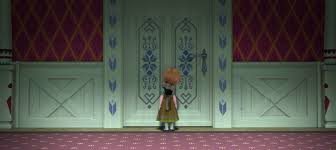
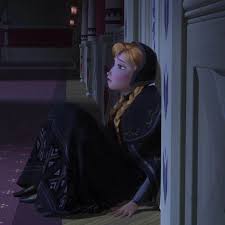
    Disney’s Frozen “Do You Want to Build A Snowman?” sequence is a perfect example of a montage that isn’t just shots put together, but a story telling of how these girls grew up. Though this montage is to a song, so there is actually a rhythmic sequence happening, unlike how Eisenstein argued it should be.

    Do You Want to Build a Snowman? (From "Frozen"/Sing-Along) - video  Dailymotion

    We can see that the montage is also dialectical. Anna persistently tries to get Ella to come play, but Elsa can’t due to her uncontrolled powers. Anna feels neglected and left in confusion. Both grow up in isolation but in the same house, and we follow them through their teen years and even the passing of their parents, together but separated by this wall.

    Frozen: Do You Want to Build a Snowman? Song Lyrics

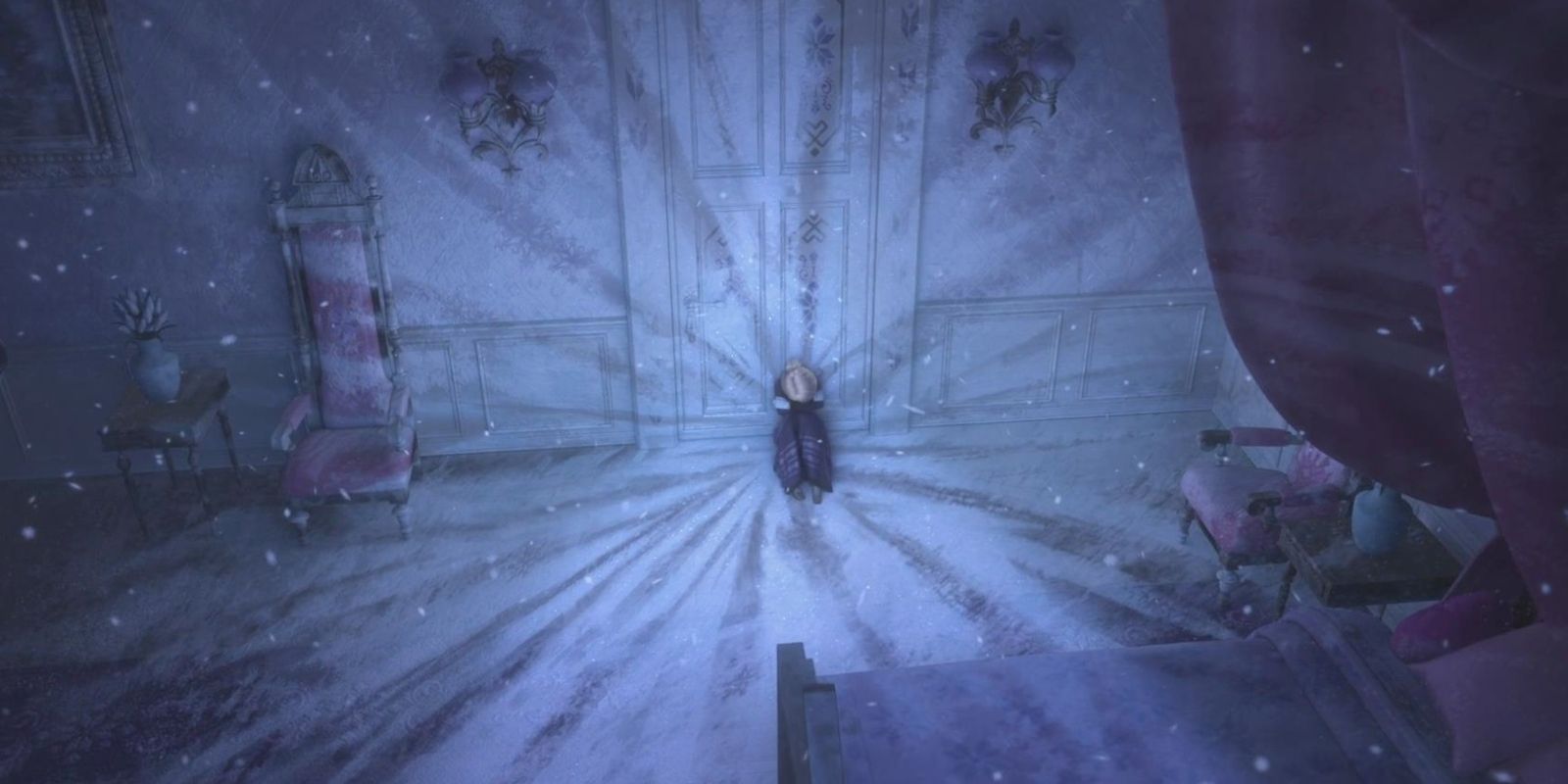
    We can see in this wide long shot of Elsa in her room, how she is still unable to control her powers. Everything being cold, iced, and “frozen”, related to the ideal purpose of the movie and how she feels after just losing her parents. She repeats this mantra which Bazin would consider an “Idee fixe”. Her constant obsession with her powers drives the narrative.

  • Montage vs Total Realism: Cruel Intentions

    This week’s readings, Sergei Eisenstein’s “A Dialectic Approach to Film Form” and Andre Bazin’s “The Myth of Total Cinema” both attempt to define the meaning of cinema. The two perspectives present very different ideas about the origins and purpose of film.

    In “A Dialectic Approach to Film Form”, Eisenstein argues that the essence of cinema is conflict. He writes about how all art (poetry, music, architecture, etc) expresses conflict, and in cinema this is created through montage. Eisenstein’s view is that rhythm, dynamism, and intellectual engagement arise not from perfect representation of reality on a screen, but from intentional juxtaposition. In the text he uses the example of how a shot of workers being killed crosscut with a bull’s slaughter in Strike is more powerful because it transforms, rather than simply replicates, reality.

    Bazin, on the other hand, believes that cinema is driven by the impulse to perfectly replicate reality, what is referred to as “the myth of total cinema”. His opinion is that each new technological development brings us one step closer to achieving total realism. He writes, “In short, cinema has not yet been invented!”. He claims that the better the technical aspects get, the closer cinema gets to its origins: the dream of recreating the world in its own image, with sound, color, and relief. So, in Bazin’s view, cinema’s history (silent film, black and white film) is a gradual fulfillment of this myth.

    When thinking about these theories in relation to a film I recently watched, Cruel Intentions (1999), I can see both perspectives at play. In line with Bazin’s notion of total realism, the movie leans heavily into aesthetics, attempting to completely immerse the viewer in the late-90s New York City prep school world. Lavish penthouses, Hamptons mansions, and the intricate webs of manipulation among characters create a convincing and recognizable social reality. The authenticity of the setting and behaviors allows viewers to feel as though they are peering into the ridiculous lives of the privileged elite.

    At the same time, the film’s editing and symbols throughout heighten the audience’s emotional responses and ideological tension while watching, underscoring Eisenstein’s idea of conflict and montage as the core of cinema. A representation of this is Sebastian’s journal which has many purposes throughout the movie. It functions as narration, revealing his manipulative schemes while also charting his vulnerability toward Annette. The film intercuts his reflections with images of his changing relationships, creating a clash between self-interest and sincerity that ultimately transforms his character.

    Overall, the movie embodies Bazin’s myth by immersing us in a believable social world, while simultaneously relying on Eisenstein’s principle of montage to provoke thought and sharpen the film’s critique of privilege, morality, and manipulation.

  • Montage vs. Total Cinema: Rethinking Film Form with Parasite

    In this week’s reading, “A Dialectic Approach to Film Form,” by Sergei Eisenstein, and “The Myth of Total Cinema,” by Andre Bazin, both answer the question “what is cinema?”. 

    Eisenstein believes that the essence of the cinema is the montage.

    Eisenstein defined montage as an idea that arose from the collision of independent shots. He believed that a new meaning is formed in the film when shots collide. Cinema is not just a record or a reenactment of reality, but rather an art form created through manipulation and composition via editing. In this sense, montage can extend beyond stirring emotions: Eisenstein argued that intellectual montage serves not only as an emotional stimulant but also as a vehicle for intellectual dynamization. It pushes people to reach abstract and conceptual ideas through the collision of images in film. 

    Bazin, on the other hand, stated that the essence of the cinema is people’s desire to reproduce reality in film. 

    Cinematic technology was developed to achieve the aspiration of reproducing reality. 

    Bazin argues “…an approximate and complicated visualization of an idea invariably precedes the industrial discovery which alone can open the way to its practical use.” (The Myth of Total Cinema). Total cinema, bringing the complete illusion of life and recreating the world in its own image, is what Bazin defined as the guiding myth that inspired the invention of cinema.

    Both Eisenstein’s and Bazin’s views toward the essence of cinema are shown in the movie Parasite.

    The director Bong Joon Ho recreated reality in film by designing houses and towns that appeared to be real. Each room, window, wall, and staircase was meticulously constructed to look authentic. The production team even recreated the smell of mold and garbage, making the set indistinguishable from reality. The camera could freely move around when characters walked in and out of the house, which made the viewers, as well as the actors, perceive the movie set as real. This corresponds to Bazin’s idea of people’s desire to reproduce reality in film.

    At the same time, new meaning is formed when each shot collides in this film, as Eisenstein argued. The shots for the wealthy family’s house and the Kim family’s semi-basement apartment are colliding throughout the entire movie. For example, the light that the Kim family sees from the street lamp dissolves into the sunlight that the wealthy family sees (Parasite 1:18:09 and 1:18:00). A new meaning is formed through the alternating shots between the semi-basement and the mansion, as it visualizes the conflict of social classes through montage.

    For a closer look at how the production team built the sets to appear almost indistinguishable from reality, see this production video. https://youtu.be/CdD2OnID6hQ?si=5UWGE5O641mZPj2q

  • Douglas Sirk: The Great Melodramatic Philosopher

    The moment the end credits rolled in, All That Heaven Allows, I was fixated on two aspects of the film. The first being the implementation of the deer, which seemed to keep reappearing when I least expected it, and the second being my amazement at how powerful this tale of female individualism told in the 1950s was. I was curious to learn of the creative who put this together, and decided to do so in a melodramatic fashion. In a 2015 article, film critic Richard Brody writes about Sirk’s work as a director Sirk’s work as a director in The New Yorker Magazine, highlighting his thematic contributions to history as “crackpot philosophers and identity-shifters” (Brody). Sirk built a world in his films in which his characters were outsiders to their societies, but made monumental changes that took a philosophical stance on society and all of its dysfunctions. Sirk was known for his melodramas, and his comedic ability. He creates movies about widows, career oriented women, children, and racial injustice, among others.

    His stories are presented in this melodramatic fashion as a way to express complex and underrepresented realities, but with a genuine lesson attached to them. Take All That Heaven Allows for example, a film seemingly about a love affair between an older widow and her younger gardener. The scene where the film’s protagonist, Cary, finds a copy of Henry David Thoreau’s “Walden” and not only reads but discusses a portion of the book’s message to march at the beat of her own drum displays how “Sirk doubles Thoreau on himself, showing American philosophy not as an academic discipline but as the residue of a way of life, a trace of vital and ongoing experience” (Brody). Sirk is not only imparting life lessons on his characters, but he is doing so to his audience in a way that is tangible and relatable. American philosophy would be easier understood from a melodrama, rather than a textbook. Sirk is also giving Cary a permanent solution in this film, one where she and Ron choose to live away from both of their lifestyles in their new home, rather than a temporary rebellious moment for a happy movie ending that the audience knows would realistically never work.

    As Brody describes the different films that Sirk has created, the consistent theme of self-determination is apparent. He focuses on an American dream tale that is not commonly told, but still possible. In Week-End with Father (1951) there is representation of a woman wanting to continue her career even after marriage and having children. In Imitation of Life (1959), Sirk addresses the racial inequities in Hollywood cinema and calls out codes of silence. Brody states that he does not simply contribute to cinematic history, but to the history of thought as a whole.

    I wonder if the political climate of his time made a lot of the messaging in his films more subtle, or if you think that the use of melodrama helped Sirk to make his messages almost too glaringly obvious? Was the dramatic storytelling a way to share his philosophical ideas, or were they a deeper layer in his film?

    Link to article:

    https://www.newyorker.com/culture/richard-brody/douglas-sirks-glorious-cinema-of-outsiders

  • Windows and Mirrors in All That Heaven Allows

    All That Heaven Allows, directed by Douglas Sirk, utilizes the window and mirror as tools to highlight the contrast between the two characters, Cary Scott and Ron Kirby.

    The window in Cary Scott’s house is small, and when Cary is depicted from outside the building, the window appears like a lattice. The window traps her in societal expectations, leaving her yearning for freedom from people’s gaze. People around her also leave her behind the window, and even push her back into her place whenever she tries to break free from it.

    Screenshot from the film

    However, the window in Ron Kirby’s house is different, starting from its size. It is larger and frames the beautiful scenery of nature. When any character stands in front of this window, we feel a sense of freedom rather than suffocation. The movie ends with Ron and Cary standing in front of the giant window, showing how Cary finally freed herself from the people’s gaze and made a choice for herself. The choices she had made up to now were always for others. However, by choosing to be with Ron, viewers can realize that Cary overcame her fear of society’s judgment and made a decision she truly wanted—for herself.

    The director also uses a mirror as a tool to show how Cary shapes herself to conform to societal expectations. She doesn’t look into her ego, but rather uses the mirror to see how others might view her. Every time she attempts self-reflection, external interference interrupts her, forcing her back into the role she is expected to play.

    Screenshot from the film

    The question that I want the class to pose is
    1. How does the eyeline match from the mirror scene highlight Cary’s character?
    2. How does the wide shot and deep space amplify Ron’s character?

  • All That Heaven Allows and its Title

    The film, All That Heaven Allows, was at first seen as a melodramatic love story that was catered to women during the 1950s. However, unlike many other romcom titles during the 1950s like Singin’ in the Rain (1952) and Roman Holiday (1953), the title All That Heaven Allows, poses narratives and societal questions that may not appear to the average viewer on first watch.

    With the film officially releasing in 1955, it is important to preface that All That Heaven Allows takes place within the 1950s. Just years following the Second World War, the United States saw a massive economic boom and a sense of optimism (Why the 1950s Are Called the Golden Era – Vintage Lifestyle). This sense of greatness that existed in 1950s America seems to be contrasted by the repressive and constraining narrative that is portrayed in All That Heaven Allows. The seemingly “perfect” society of the 1950s is portrayed in a toxic light according to Douglas Sirk. In this film, all instances of American society seem to be portrayed in a negative light. The love between Ron and Cary, an innately problematic relationship by 1950s standards, is only attacked when in an urban setting. When in the natural countryside, all members of Ron’s family are completely accepting of Cary’s relationship.

    A clear difference is established between the human experience of that in an urban and rural setting. In my point of view, Sirk establishes the natural countryside as a sort of “Heaven” where both Ron and Cary can choose to be themselves and live life to their fullest, whereas the urban lifestyle is resemblant of a “Hell” that represses Cary and her desires.

    Overall, even though it may be a stretch to compare the idea of optimism and greatness during the 1950s to a sort of “Hell,” how do you consider the dichotomy between nature and urban culture in relation to the title? Is Sirk making a broader commentary towards the culture of the 1950s?

  • All That Heaven Allows: Transitions and Themes

    Douglas Sirk’s All That Heaven Allows, set in a small New England town in the 1950s, tells the story of Cary, a wealthy widow, and her budding romance with Ron, a much younger, less well-off gardener. This love affair causes an uproar among Cary’s superficial country club friends and, more sensitively, her children, who deeply disapprove of Ron.

    The editing throughout the film is very impressive, especially considering the fact that the film was made decades before digital editing existed. Sirk employs plenty of continuity editing to maintain a clear, easy-to-follow narrative. I specifically noticed the use of elliptical editing to condense time. The film transitions us through season after season seamlessly, although the entire movie is only an hour and a half long.

    One specific example that stood out to me was the dissolve on a tree in Cary’s backyard. The shot focuses on the tree in the fall full of bright red leaves, and slowly dissolves into a shot of the same tree, now nearly bare, marking the shift from autumn to winter.

    It’s a subtle but effective way to cue viewers that time has passed, and, in addition, it is a satisfying visual for the audience.

    Beyond editing, the film raises many questions about gender roles. The entire movie is clearly a commentary of the role of being a woman and mother in 1950s society. On the surface, Cary is boxed in by the expectations of being a mother and a respectable, upper-class woman. However, to me, the message seems to goes beyond just pointing out the freedoms that Cary is limited to as a single woman and hypocrisy she is faced with by society.

    In an ironic way, within her relationship with Ron, Cary almost seems to be playing “the man”. She often seems to hold more power between the two of them. Cary is the is the one with money, and social status, not to mention she’s also actually older than Ron. Even though Ron doesn’t seem to care about these things, it still seemed to establish a slight dominance in the relationship. At one point she even asks him, “Do you want me to be a man?”, to which he replies (jokingly), “Only in one way.” This is even visually represented when Ron has his accident and is physically emasculated. He is bedridden, unable to move, while Cary is watches over and takes care of him.

    This scene reminded me of the ending of Rear Window, where Jeff is immobilized and Lisa becomes the active, capable partner. Overall, the ending of the film made me think about what Sirk is trying to suggest about happy endings/happy relationships. In this scene, the entire setting of the house looks like a fantasy world. This is enhanced by the deer in the snow right outside of the window looking in at them.