A few weeks ago, I watched Ex Machina. It is a sci-fi movie with an added psychological thriller element that keeps you guessing who is going to “win” the mind game of the Turing test – a human protagonist, Caleb, or Ava, a sexy female robot. The setting for this battle is the remote house of Nathan, a tech-savvy inventor-billionaire who is designing female robots and running an experiment on them and a human subject, Caleb. The house looks like a barn but is filled with high-end tech. When Caleb enters it, the door closes behind him as suspenseful music plays in the background, and it locks with a hissing sound, unlike a real barn door would.
The mise-en-scène inside the house is in sharp contrast to the lush green forest outside, in the mountains. Inside, there are long hallways, glass walls, cool lights, and locks that give a sense of entrapment. The glass walls form barriers that allow Caleb to watch Ava, for Ava to watch Caleb. Cameras are installed for Nathan to watch them both. This lack of privacy and lack of physical connection dehumanizes everyone because everyone is under surveillance, an object of observation. The viewers are watching others watching. That is a double voyeurism, and it can make one uncomfortable.
I was also interested in the themes of the male gaze, the creation of a female persona, and a gendered portrait of women. Nathan is building a very gendered portrait of a female robot persona in his basement. On the surface, it just looks like objectifying women robots (who are robots, after all). They are made to be pretty and obedient for their male owner. He designs them to look beautiful and serve him, but in the end, Ava outsmarts everyone (especially Caleb, who develops intense feelings for her). The movie is a male-controlled fantasy of the “ideal woman” (or even several versions of them, with interchangeable parts) that turns into a female empowering message that controlling a woman, even a female robot, is just an illusion.
First of all, wow we have seen some great films this semester. When I started making this list I hadn’t realized just how many fabulous movies we’ve gotten to watch this year, but I seriously loved all of them. With that being said, here’s my personal least favorite to favorite features that we have seen this semester!
#12 – All That Heaven Allows
All That Heaven Allows just wasn’t my cup of tea. I remember the colors being very pretty and fall-ish, so it was enjoyable to watch, but I just wasn’t a huge fan of the plot and the old lady falling for the young, hot tree man.
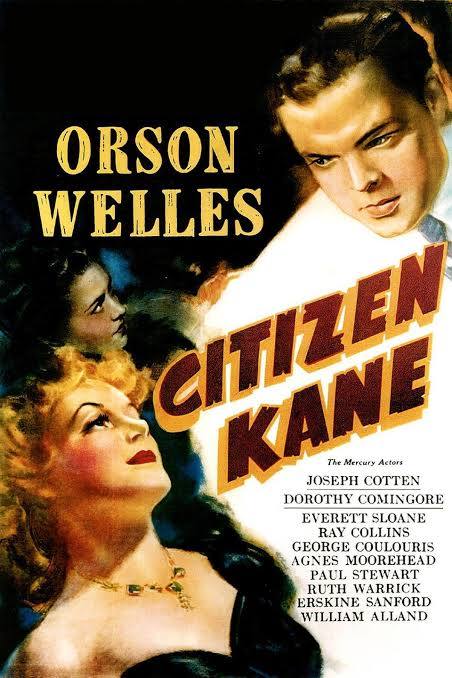
#11 – Citizen Kane
Citizen Kane has obviously had a huge impact on film and is seen as one of the greatest movies of all time. It was clear why it is held in such high regards, but it just wasn’t my personal favorite. The filming techniques and use of lightning were so good, but I just wouldn’t just at the chance to watch it again.
#10 – Portrait Of A Lady On Fire
Portrait Of A Lady On Fire was BEAUTIFUL. The cinematography and colors uses throughout the movie were absolutely incredible. It was very much so a slow burn kind of film, which was wonderful and they did a great job with it, but it was just a little too none eventful for me. Still very visually appealing though and it was also very nice to see a lesbian relationship as the main focus of a movie for once.
#9 – RRR
RRR was so good, those three hours flew by for me. I came in with a negative mindset towards the movie but by the end I did a complete 180. Even with all of the unrealistic parts, it was crazy entertaining and I couldn’t take my eyes off of the screen.
#8 – The Zone Of Interest
The Zone Of Interest was incredible. I loved how different it was from other Holocaust movies that I’ve seen, with the attention on the officer’s lives instead of the actual prisoners and how eerie and uncomfortable it felt the whole time because of that. With all of the horrible stuff happening in the background, it was just an amazing film that is still very much relevant to our world today.
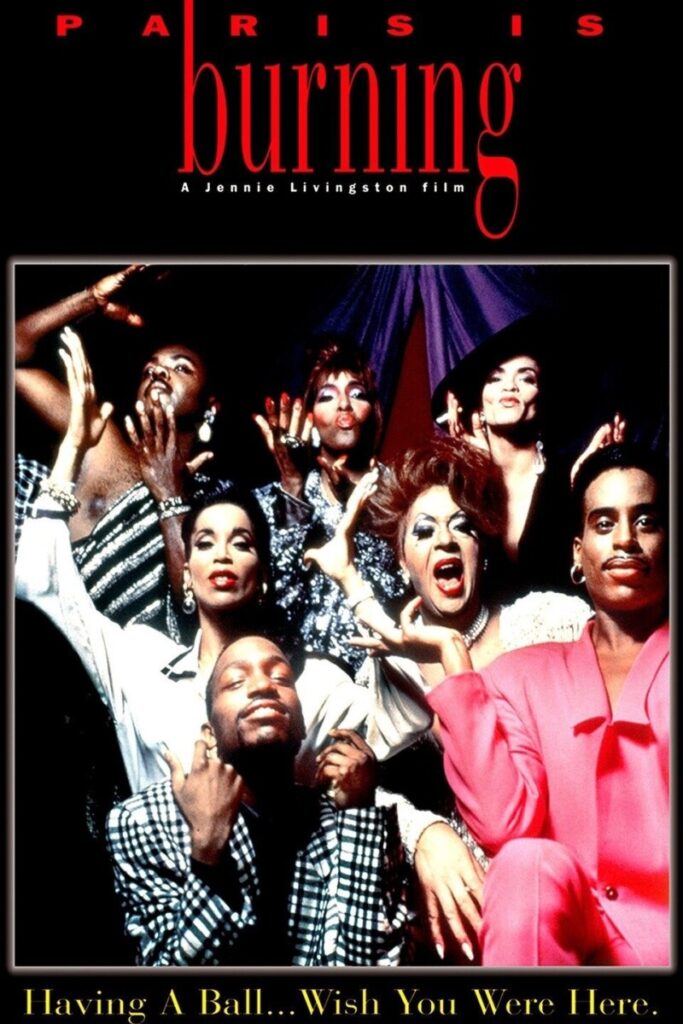
#7 – Paris Is Burning
Paris Is Burning took me from not knowing anything about ballroom culture to loving it within less than two hours. This documentary was an insight into a community that I otherwise would’ve never known about, and although it was exploitative and morally not great (invite the cast to the premieres, come on!), I still really really enjoyed seeing it.
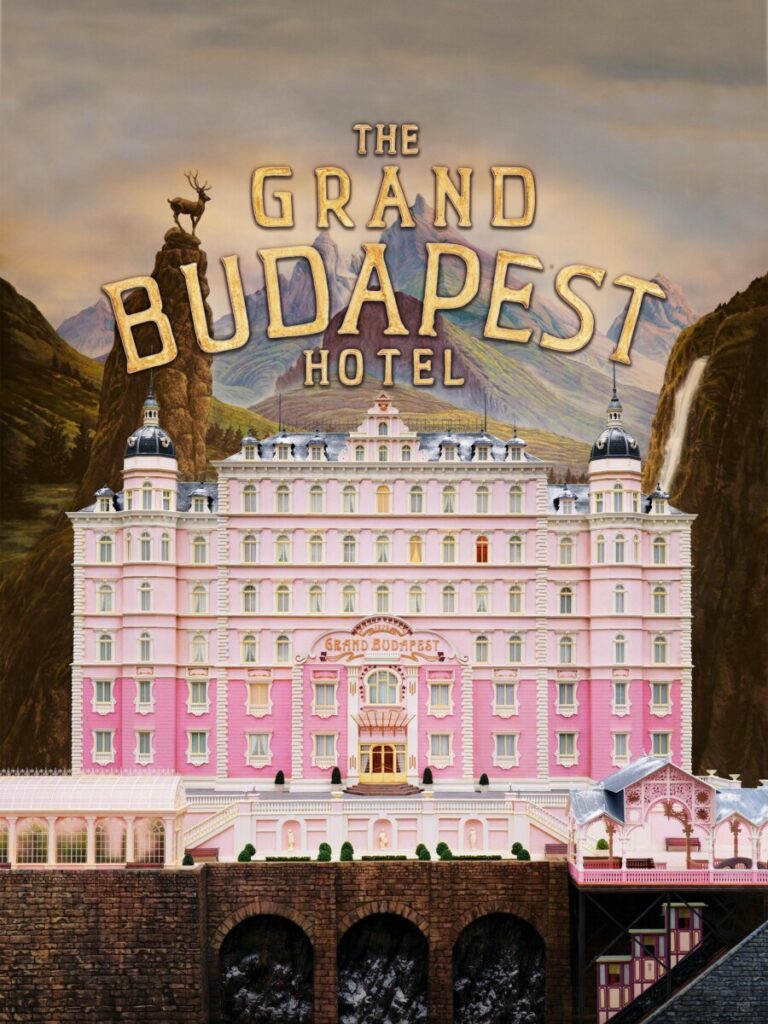
#6 – The Grand Budapest Hotel
The Grand Budapest Hotel was one of, if not the most visually appealing movie that we watched this semester. Wes Anderson is obviously the GOAT of making aesthetic and colorful movies with beautiful messages, and this film did exactly that.
#5 – Rear Window
Rear Window was such a great first movie to see for this class. The jump scare of Mr. Thorwald spotting Jeff will stay with me forever, so good.
#4 – NOPE
NOPE was just another classic by Jordan Peele. He is such an incredible director and I have never seen any kind of work of his that I didn’t absolutely love. I was literally on the edge of my seat the whole time.
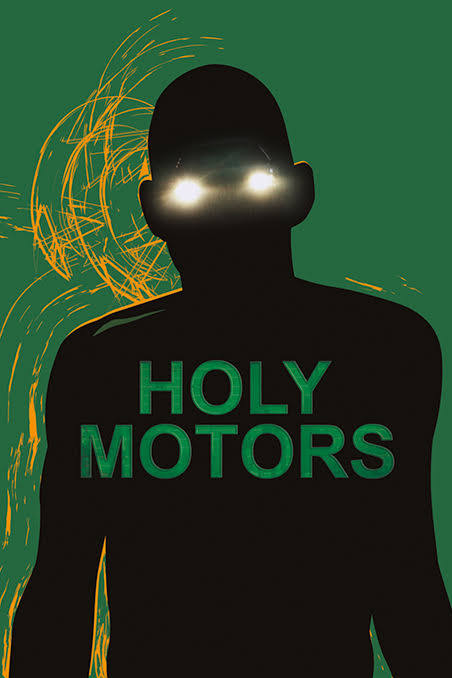
#3 – Holy Motors
Holy Motors was SO WEIRD and that is why I loved it so much. I had such a great time watching this movie and I have told so many people about it already. I haven’t laughed that much from a film in a while, and I genuinely just enjoyed every single crazy moment of it.
#2 – Do The Right Thing
Do The Right Thing was a masterpiece, no other way to describe it. I love all of Spike Lee’s movies and his messages in his films are always so important and still relevant today, and he always delivers it in the perfect way.
#1 – Singin’ In The Rain
Singin’ In The Rain is the musical of all musicals. I thought that this was going to be super corny and unenjoyable to watch, but wow I really really loved it. The singing and dancing was just so fun, and I had no idea that it would be as funny as it was either. I’ve already rewatched it several times and now that I’ve seen it, I’ve noticed how much of an influence that it has had on other musicals. Just simply amazing.
A few weeks ago, I watched the film The Boy (2016) for the first time. I have not watched horror movies, so I wanted to try one out, and I was recommended by a friend to watch this movie. While watching the movie, I found the doll very creepy, the way it just kept staring at the screen. And to make the movie even creepier, sound was used to make us feel like the doll is alive. You hear sounds, but you don’t ever see the doll move. It is implied to us that the doll is moving and making those sounds by the changes in its location after the door is closed. It is the creepier version of the moving toys in Toy Story because we are not let in on the doll’s movement; we are left out of its perspective. As humans, we are often scared of the unknown and of things that seem eerily similar to human functioning, such as dolls and robots. We fear that they will take over. That is why so many horror films are based on dolls/robots. Additionally, we discussed in class why so many horror films take place in homes. Similarly, this movie does as well. It causes greater distress in the viewers watching because homes are supposed to be a place of comfort.
Talking about the film with my friend made me notice how the movie constantly uses sound, camera angles, and off-screen space to keep us guessing. It doesn’t always show us what’s happening; it just lets us imagine it, which is usually scarier.
After watching the whole film with my friend, there were still parts I didn’t fully understand; it seemed to me that a lot was left unexplained. Now I realize that confusion is actually a big part of how horror works. The movie gives us just enough information to make us suspicious, but not enough to feel certain about anything. Viewers were given clues about whether the doll is alive or not in the film’s universe. However, there were also moments in the film that purposely made viewers doubt and rethink their suspicions. Nothing is certain, and that is scary to think about because if that were true in real life, it would be hard to tell what really matters and what doesn’t. We want answers, and horror films don’t always give them, so we are left wondering instead. I think that is why so many people love watching horror films. Yes, sure, the thrilling aspects of jump scares and plot twists are appealing due to the adrenaline rush you get from watching, but also the unsolved mystery and confusion you get at the end of the film make the film all the more memorable and creepy. People get to make their own reasoning about the film. And different theories are made about what the films could mean.
Jean Jacket from Jordan Peele’s NOPE is nothing like anything we have seen or could even imagine; quite literally an out-of-this-world kaiju creature. It is worth noting, however, that Jordan Peele consulted a plethora of scientific experts, such as marine biologist Kelsi Rutledge, to create the creature.
Rutledge used many existing marine animals as inspiration for Peele’s creative vision. The general saucer shape is inspired by sand dollars, it’s camouflage from cuttlefish, unfurling from bigfin squids, and it’s square shaped eyes from octopuses. Rutledge even grounded the creature in taxonomical nomenclature by giving it a name: Occulonimbus edoequus, meaning “hidden dark cloud stallion eater.”
So why does a mythical, otherworldly character need to be so grounded within earth’s limits? It is to be noted that such real-life elements are not blatantly associated with Jean Jacket within the confines of the film’s narration (OJ, for example, doesn’t say “it looks like a sand dollar” or anything of the sort). It is, however, interesting how real life elements come together to make something so strange that a human mind free from any grounded influences could not make something stranger. I think this speaks to human nature and psychology. Historically, familiar mythical creatures did not come straight from imagination, but the misinterpretation of real life animal remains. Dragons, serpents, and cyclopses all originate from strange fossil remains. Hybrid creatures, or chimeras (which Jean Jacket arguably is) have existed for millennia. I think it says something interesting about human nature: our thoughts in a vacuum are surprisingly grounded in reality, but when confronted and inspired by reality itself, they go to unimaginable places. It humorously reminds me of the idea that crazy things happen in movies, but some things in movies are so crazy, they have to be inspired by reality.
As interesting to think about as all of this is, I think it is also interesting to think about fact that Jean Jacket, a creature Peele intentionally wants to be ambiguous, has “lore.” Just reflecting on my own actions, I curiously went online after the movie to learn more about Jean Jacket, found all of this information, and found like minded people who were as interested in Jean Jacket as I was. I even found this creative depiction of Jean Jacket-like creatures created by @monstatron, inciting a Jean Jacket fandom.
Why do we try to make sense of Jean Jacket at all? Why does Jean Jacket even have a scientific name? I think that subliminally, Peele’s understanding of human nature allows him to manipulate audience’s understanding of the creature inside and outside of the theatre. People want to make sense of what is not meant to be understood, and will look for ways to re-enforce a stable point of understanding. I also think that it speaks to the creation of fandom and how ambiguity allows the audience to fill in the gaps.
Even though Spike Lee’s “Do The Right Thing” was released in 1989, the themes that occurred throughout the movie are still extremely relevant today in 2025. The fight scene in particular was obviously a very hard part to watch, but super important. This video that I found has Spike Lee talking through that scene and certain aspects and inspirations that helped it come together.
Radio Raheem and his death was based on the real murder of Michael Stewart, who was strangled to death by a group of 11 NYC police officers. But even though this film was made over 30 years ago, there are still multiple instances of black people getting killed by police in this exact same way. So while Do The Right Thing is a movie, it is also very real at the same time. The costume designer was tasked with making everyone super sweaty to emphasize the hot day and tension rising, and during the scene there wasn’t a great stunt coordinator so some actors actually got hurt. He talked about the moment of silence right after Sal smashed Radio Raheem’s radio as a “quiet before the storm” and how it felt like a personal attack at Radio Raheem since he had been carrying it around with him the entire movie. When the fight eventually went outside, they shot the rest of the block getting involved and did a crane shot from the fight to a view of the whole street. Then the cops came, and even though Sal was the one who started the fight, Spike comments “now you know if there’s a fight, who are they gonna grab”. The other thing about this scene that he talks about at the end of the video is the ground shot of Radio Raheem after he’s killed. It shows him laying on the concrete with the “Love” brass knuckle in the frame – I thought that that was an interesting choice between “Love” and “Hate” to put in the camera, especially after what just happened to him and everyone else in the community. I recommend watching this video because it’s a great highlight of the scene and showcases how important and relevant that it truly is.
I have been a practicing Hindu from birth, and growing up with Hindu parents and being surrounded by Hindu culture, much of its imagery and teachings have been familiar with me for a long time. I would not consider myself a deeply “religious” person, but I do follow my own type of Hindu faith and I am familiar with most elements of Hinduism.
Watching RRR, and following the discussion we had in class, made me think of the use of Hinduism in film and politics more critically, especially as a nationalist tool to promote discrimination and oppression. Hinduism has close ties with entertainment for years and years, but it is interesting how Hinduism, more so than any other practicing religion, is used in this manner. It is true that many films incorporate elements from other religions, even in fiction (one film that comes to mind is Ben-Hur 1959), but few films fictionalize the religious elements of the films themselves as much as Hinduism. For example, Ben-Hur‘s narrative sticks closely with recorded and accurate events of the divine even if the rest of the plot is fictional. In RRR however, both Bheem and Ram (both characters symbolically, metaphorically, or physically reincarnations of the Pandava prince Bheem and the avatar of Vishnu Ram) are put in stories never depicted or imagined in the Mahabharata or Ramayana (in fact, according to most agreed studies of mythology, the two lived at least a few thousand years apart from each other).
All of this raises the question of why Hinduism is so malleable, and I think a lot of it has to do with its formation, structure and practice. Being several thousand years old and without a founder and unifying text, Hindu has long fostered an idea of individual interpretation amongst a collective Hindu culture. This is especially highlighted in two elements outlined in Hinduism: the ambiguity of the Divine and the different schools of thought fostered by Hindus. Hinduism itself presents its subjects and texts with moral ambiguity.The Mahabharata is a great example of this, in which a story in which a clear dharma and outlinable “heroes” and “villains” are challenged with the ethically questionable actions of those on both sides; heroes sometimes commit villainous actions and tactics, and villains sometimes show more dignity and principle than their “good” counterparts. Physical ambiguity is also present in Hindu texts; the Vedas question the universe’s coming to existence and even god’s involvement or knowledge of it, stating “He knows— or maybe He does not know ” (Rig Veda, X. 1291). Different Vedas even frequently contradict each other, yet at the same time coexist in harmony as part of Hinduism as a whole. Within the very framework of Hinduism, ambiguity and different interpretations are established and welcome, encouraging individuals to find god and interpret faith in their own way through their own practices. This is further emphasized by the different schools of thought created through subcultures and interpreters, from Buddhism’s compassion and detachment to Charvaka’s material ambition and atheism, all of which are valid and accepted practices by Hinduism (it’s to be noted that Hinduism in practice and theory aligns with all other religions, including monotheistic religions such as Christianity and Islam, to co-exist as equals).
With all of this in mind, it is interesting to see how Hinduism in RRR develops in the larger sphere of Hinduism in India, including political nationalism. India’s population is a Hindu majority (roughly 80%) and the religion has developed alongside Indian society as part of a cultural ecosystem for over three thousand years. Along with the creative and interpretative fluidity of Hinduism, it is no surprise how Hinduism has embedded itself in almost everything, including art, storytelling, lifestyle and politics. It is exactly this fluidity that enables Hinduism to be transformed into a nationalist tool in the modern era. Its origins stem from colonialism, as it was a method to unite the Indian people under a single unifying influence. The irony, of course, is that Hinduism isn’t really a “unifying” religion; as mentioned before, its vast interpretive heterogeneity suggest a more personal than national connection. Since 2014, the Bharatiya Janata Party (BJP) and prime minister Narendra Modi have employed this religious nationalism as part of a superconservative agenda, most specifically in the Rashtriya Swayamsevak Sangh (RSS), a volunteer paramilitary organization that has extremely close ties with fascist ideology. By cherry picking elements and re-interpreting Hindu tradition to justify actions, Hinduism can be weaponized. One of the most telling principles is the idea of “Cow Politics.” The idea, stemming from the Hindu reverence toward the cow, is used to mask political insufficiencies through religion. It encourages practicers to ignore societal and political problems and instead worship god, which will “remove all problems,” blurring the line between mythology and reality. This effectively silences political opposition of wrongdoings with the misguided appeal of nationalism. I have also seen the “how dare you insult religion!” argument used to quell critics of the national regime as well. RSS has been involved in multiple terror attacks and riots against Muslims, and has been the forefront societal and political influence on Hindu supremacy.
Seeing the religion that I love be twisted in such a way is terrifying. Yet the incredible thing is that, despite it’s hateful nature, Hinduism in theory considers such nationalism as a valid way to practice the religion— it is simply another interpretation, amongst several others, that contributes to the collective Hindu manifold. As stated earlier, Hinduism is accepting of other religions such as Islam, yet is also accepting of ideologies that degrade and disavow Islam as well. It highlights a weakness of the religion; without a clear moral framework, it can be manipulated in a way that both divides people and creates an agenda backed unity. I think that it is important for people to recognize the prejudice laced within modern Hindu nationalism and remember the importance of individualism. People have the ability to believe what they want, and do not need someone else to tell us what they must believe in. In fact, millions of Hindus interpret the faith in ways rooted in empathy, coexistence, and personal spirituality rather than nationalism. Re-embracing these interpretations, and encouraging open conversations about how power distorts religious meaning, can counteract the narrow vision promoted by extremism. If more people approach Hinduism with critical awareness and a commitment to its pluralistic spirit, the religion can continue to evolve without becoming a vessel for oppression.
Considering the complex and divisive nature of this topic, I may have overlooked some elements, misinterpreted some events, or provided a narrow or biased viewpoint on some topics. If so, or if any clarification is needed, please leave a comment.
Meshes Of The Afternoon was one of my favorite things that we watched all semester, so I was curious to see what some of Maya Deren’s other work looks like. I decided to watch her 1944 short film, At Land, which did not disappoint.
There were a lot of similarities between At Land and Meshes Of The Afternoon. They both incorporate the ocean into their stories, At Land more so since she wakes up washed onto shore and is most shot at the beach, and there are multiple versions of Maya again. Instead of chasing a key like she was in Meshes Of The Afternoon, she was chasing the pawn of a chess set. The scene of the pawn falling down the cracks with water was just like the one of the key dropping down the stairs. I’m also not 100% sure if the music was part of the original film or if it was just added on by someone else, but the sound helped add to the suspense that I felt in both of her shorts that I’ve seen now too. You’re never totally sure what’s going to come next. There were also scenes in both films of a person walking or running away. The one scene that I was most curious about was when Maya came across two girls playing chess on the beach, and she ended up rubbing their hair and all of them were smiling (pretty sure she bit her lip in there at some point too). I know she was unhappy with her marriage in Meshes Of The Afternoon, so I was kind of curious what this part was saying. Another one of my favorite scenes was when she was crawling on the table and imagined moving the chess pieces at the end with her eyes – it was very Queen’s Gambit coded and I thought it was a very interesting moment. Overall, I really really liked it and I would highly recommend it to anyone else who enjoyed Meshes Of The Afternoon!
I recently watched the film The Diving Bell and the Butterfly both in its original language, French, and in English. The movie starts entirely from the perspective of the main character, Jean-Dominique Bauby, who has suffered a stroke and now finds himself disoriented and unable to move, but mentally as sharp as before. The camera captures the hospital surroundings as seen by a person with low/blurry vision, unable to move. There are extreme close-ups of the eyes and other physical parts of the onlookers as they occasionally come into his line of sight. This perspective creates the feeling of being locked in the body, separated from the world, unable to move or control the field of vision.
There is a recurring motif of eyes, eyesight, and dream-like visions. Later in the movie, he starts to communicate with the world, the only way he can communicate, as he discovers, by blinking an eye.
Bauby’s internal monologue adds psychological realism. Viewers can understand and feel compassion for his paralyzed state through the non-diegetic sound of his inner voice. Only viewers can hear his internal dialogue; other characters cannot. The heavy sounds of breathing that the main character makes create the illusion that you are very close to him.
Although Jean-Dominique Bauby is trapped in his body (as if in a diving bell), he is free to imagine and replay images from the past (his imagination is like a butterfly, hence the name of the movie). There is a sharp contrast between the immobility of the main character’s body and the liveliness of his mind that knows no constraints. The movie is extremely sad and, at the same time, liberating and powerful because it shows that even a person who can only use his imagination can still find a purpose in life as he dictates his memoir, one letter at a time, by blinking.
After watching RRR, I wanted to find something similar to watch during the pre-final week, and I ended up finding Avatar 1, which is similar to the RRR’s theme of revolution and resistance, but in someways different.
So it is set in 2154 on the moon Pandora, Avatar follows Jake Sully, a former Marine soldier set by the corporation (RDA) to help secure a rare mineral called unbotaium. Jake used a artifically designed Avatar body, infiltrates the Navi tribe, but eventually fall in love with Neytiri and the culture, and he had choose between the human corporation he serve or the world he loved. A very typical mode of the good beats the bad, but its political story behind is much more considerable.
(Like most Sci-Fi, high-tech enemy stuff always get beated)
THe director Cameron has admitted that the film is openly about imperialism, where technologically superior humans are tyring to uproot a native population for their precious resources and not care at all about the survival of the tribe. This echoed the European colonialism in the Americas and all the other empires. The RDA’s machines and ships are of the same role as the British cannons and rifles in RRR, a symbol of a system that only see the land, the people, the environment as accessible resources able to be turned into profit.
Stylistically, Avatar and RRR shared the use of large amounts of props. RRR has tigers, motorcycles, dance battles, guns, and large fights. Avatar has neon forests, floating mountains, air and ground combat, and all those high-tech machines and magical creatures. Both film use spectacle as it is realistic, and the CGI technology only make the battles look cooler. The final battle, where Pandora’s wildlife joins Navi against the human army, mirror the RRR’s final battle of Ram and Bheem (fire and water) against the British army. They both represent nature and people rising together against the empire and power.
Thematically, these two movies also rhyme. In RRR, Ram and Bheem are basically superman, the two basically killed a battalion of English soldiers with only arrows and spear. In Avatar, Jake’s body is also some kind of superman figure, where it allows him to connect with a new world that his human body cannot survive. Both film use physically strong heros as fantasy answers to a real historical question: what if the people are strong enough to fight back?
RRR is rooted on the Indian rebellion against the British in history, while Avatar abstractly framed the same event into a sci-fi story. The actual history and name are gone, but the main idea still exists, and the power difference still remains. This makes Avatar, the blue skinned epic story that turns anti imperial anger and grief into one gigantic battle, less specific but more universally applicable.
To me, it is interesting how we almost never looked at Chinese films. Chinese cinema emerged in the 1950s, which was during the founding of the People’s Republic of China in 1949s. Due to centralized government, film production also became centralized and was a tool for promoting socialist ideologies, collective values, and constructing new models of citizenship.
Hence, most films focused on the people’s collective lives, either throughout wars, factories, schools, houses, or a public place of gathering. With that said, the setting of these old Chinese films are mostly fixed among all scenes. I want to use a famous film called Golden Deer (Ke Na Dong, 1982) to demonstrate Chinese’s unique cinematography and mise-en-scene back then.
Above is the full movie available at YouTube, but unfortunately it does not contain English subtitles. I’ve searched on other Chinese native video platforms but they all lack English subtitles too.
The film follows Lu Jin, a young salesperson working in a state-run department store. At the beginning, Jin approaches her job with a somewhat indifferent attitude, reflecting remnants of pre-socialist individualism. Yet, as she encountered more customers from diverse backgrounds–workers, elders, mothers, disabled individuals–she confronts misunderstandings and confusions, and eventually reshaped her understanding in what it means to “serve the people,” which is the value that has been emphasized throughout China.
I want to talk about a specific, famous “candy-grabbing” scene from this movie (20:34-25:38 from the YouTube link pasted above). This excerpt is about Lu swiftly and tenderly scooping candy for a crowd of eager customers. 3 male customers wanted to test her abilities, so they ordered candies of each kind with different weights and asked them to be packaged separately (the context is that the line waiting to buy candies is long). To do this, Lu needs to grab candies onto the weights, package them, and charge. Yet, she is so fast that she is able to weight correctly in just one single grab.
As a Chinese, and after reviewing reviews of this scene, people all feel a certain way: that this movie carries such a unique, old-chinese vibe through its cinematography and mise-en-scene that it is almost impossible to replicate one today.
A major reason is the actresses’ accent. As the mandarin accent changes over time, what is considered a good accent today is quite different from the standard back then. Hence, just by hearing her words, the audience are able to feel a heavy, historical, nostalgic uniqueness that we were only able to hear in our elementary textbook’s passage recording. Apart from the sound (or say the actor), remember what I talked previously about the setting of the film taking primarily in one place. Older Chinese films loved to use a single setting filled with people (twenties or more, even almost to hundreds in extreme wide shots) walking around. This helps establish a socialist image.
If you observe closely from the film, you will also notice that most of the frames are medium or medium close ups, with each shot mainly stable and not moving. Instead of panning or tilting, zooms are actually used the most often to change the frame.
Another major difference from western concepts and movies is that the the film rarely uses low-key lighting. This is also related to culture as well. Films, as a propaganda tool, were aimed to tell people that the society they are living in is bright, hopeful, and optimistic. Hence, even where there were suspense, as long as it is a public space (where the people always are located), there would be a warm color scheme.
In sum, I just wanted to share that cultural values sometimes strongly influence media–the way it is produced, spread, and reviewed. It’s not that those filming techniques aren’t there, it’s just that with the cultural background, it would not make enough sense to use a certain camera angle, lighting, framing, and editing.