Blog

  • RRR: All about Shooting Naatu Naatu

    In this interview (RRR: Behind & Beyond)with Ram Charan & NTR, they talked about the process of shooting Naatu Naatu (the famous dance part of the film).
    RRR Review | Movie - Empire

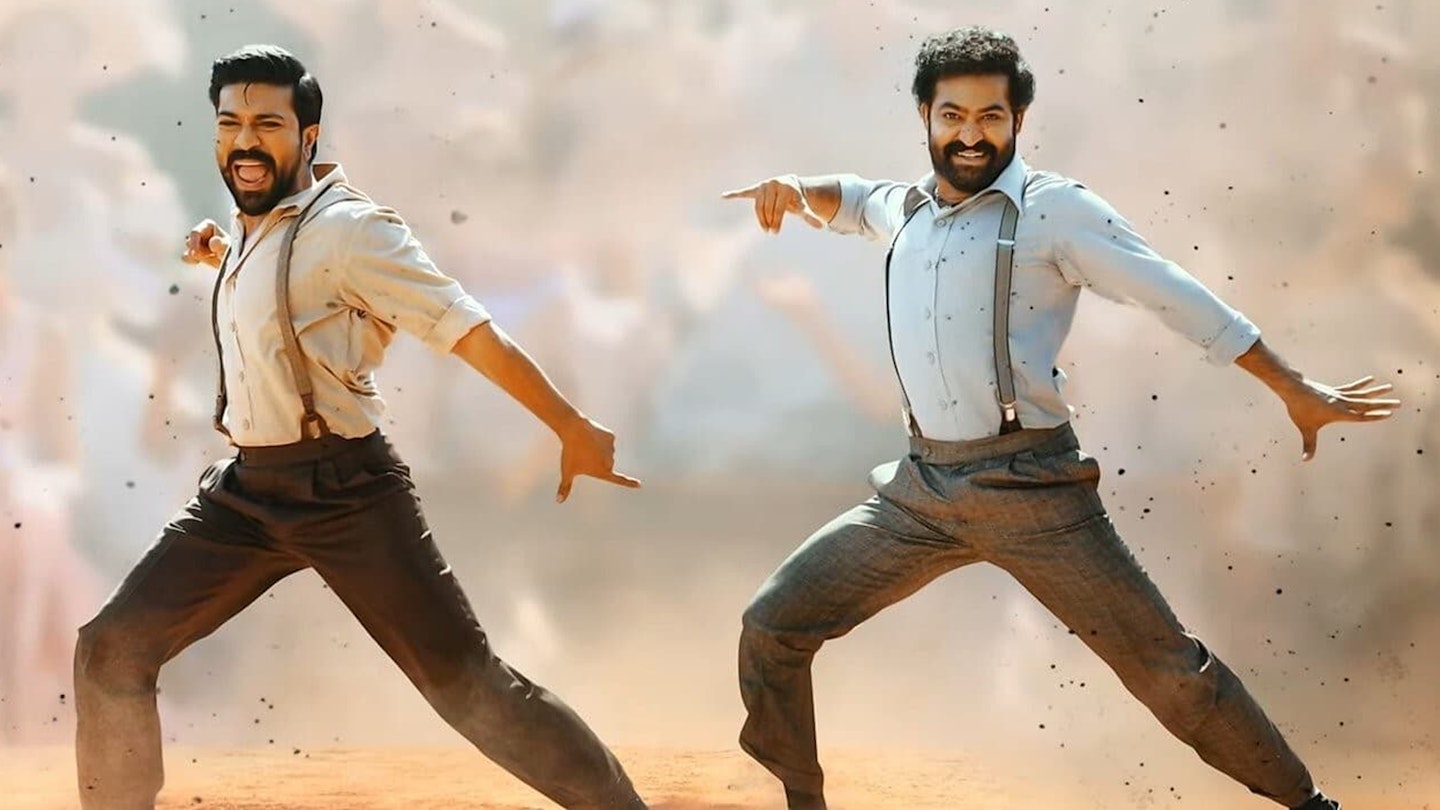
    Naatu Naatu is a 2021 Indian song that is composed by M. M. Keeravani, lyrics by Chandrabose, recorded by Rahul Sipligunj and Kaala Bhairava. The choreography was by Prem Rakshith, incorporating 110 moves for the sequence and featuring about 50 more dancers for the film.

    Already from the film we were able to see how Ram and Bheem danced very precisely alike. Now from the interview, they actually explained the reason to this. Rehearsing separately before they went to Ukraine, and practicing together for 7 days after they went to Ukraine, and ultimately taking 12 full days to film this part of the film, NTR questioned the reason why they were required to dance exactly the dance. Since they come from different backgrounds, it seems reasonable that their dance styles could differ by a bit.

    Rajamouli, the director of the film, simply answered that “No, NTR and Charan can have different styles but not Ram and Bheem. These are my heroes. They are supposed to dance the way I want them to dance.”
    RRR | Detroit Institute of Arts Museum

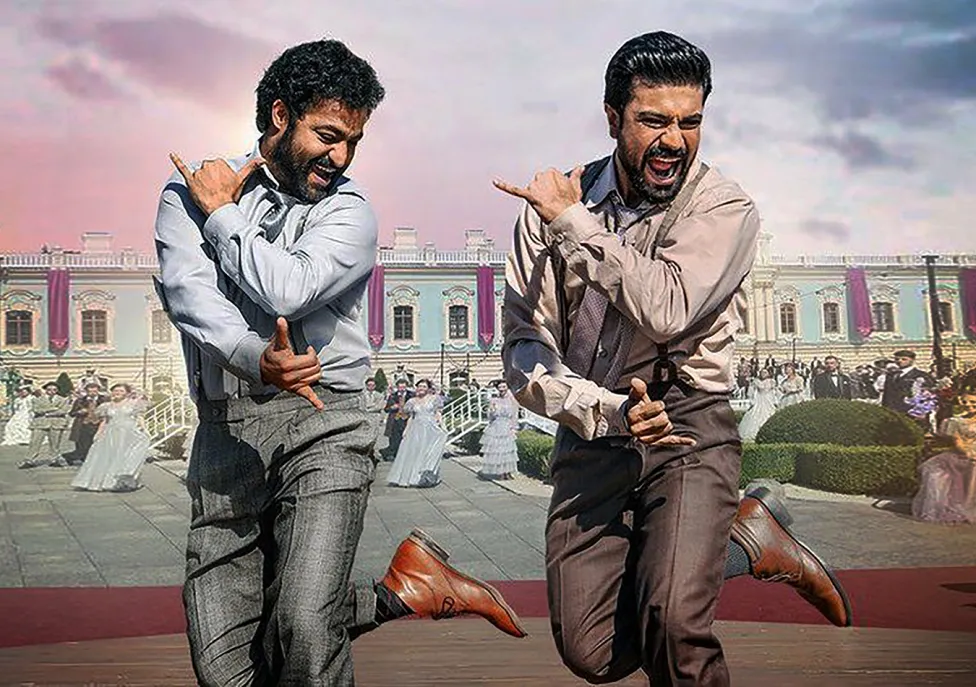
    Well, the more reasonable explanation that NTR explained from the interview was that, because Naatu Naatu is supposed to showcase how relationships look like when you’ve become true friends with one another. You know exactly how the other person thinks or move even without looking at them. You understand fully each other’s mind, heart, or spirit.

    Within 24 hours of the song’s release in 2021, the song crossed over 17 million views in Telegu, which also made it the first Telegu song to cross 1 million likes. Charan and NTR often recreated the visual portions of the dance for the film’s marketing, and made the dance too very popular and trending.

  • RRR in the West and in India

    After talking to my friend, who is Telegu and grew up watching Tollywood films, I was surprised to hear that he and his family was not a fan of the movie RRR. I wondered if it was because of historical inaccuracy or propoganda, but because he was born and raised in America, he claimed that he didn’t know much about Indian history or current events and didn’t feel strongly about the problematic sides of the movie. He simply thought that it was not the best and felt that there were many more Tollywood films that were worth watching and much shorter than the long 3 hour run time. I greatly enjoyed the film, and was under the impression that it was a hit in India as well. After doing some research, I found that his opinion is not alone.

    In a blog post titled “India Doesn’t Seem to Love ‘RRR’ as Much as the West,” negative opinions from regular Tollywood and Bollywood watchers were compiled. One critic explained that a foreigner watching RRR would feel extremely different from an Indian watching RRR, as a foreigner would be in awe over the effects, over the top action, music, and “masala” of the movie that is not normally seen in Hollywood movies, while a regular watcher would feel that it is another run-of-the-mill movie. I, as a foreigner, was hooked into the movie as it was nothing I had ever seen before, but I’m sure that my friend felt that he had seen many just like it or better.

    In another negative review I found, written by a critic from India, they also complained of the long run time of the movie and calls it “bloated and bombastic affair.” They say that this movie requires you to suspend your disbelief for far too long and “their invincibility is a given, and that’s a drag.” I had personally been invested into every minute of the film, with all its flashy effects and inhumane stunts and the actors’ charisma, but it is understandable that someone may find the action scenes dragging out for far too long, as it is nothing they haven’t seen already.

    Despite the less enthusastic reactions of watchers who are already extremely familiar with Indian films, most can agree that RRR has helped immensely with exposure and hope that the western audience will give other Tollywood films a try.

    https://gulfnews.com/entertainment/bollywood/film-review-rrr-is-high-on-action-long-on-time-1.86716477

    https://www.worldofreel.com/blog/2022/12/ps9oqq7cyzzybjajilm8oj4a9rwedy

  • S.S. Rajamouli’s Next Project: The Future of Indian Animation

    A few weeks ago, I came across an article talking about S.S. Rajamouli’s next big project: an animated feature film called Baahubali – The Eternal War. It’s slated to come out in 2027, and people are saying it will bring Indian animation to the next level.

    ‘Baahubali: The Eternal War’ Aims to Redefine Indian Animation

    After witnessing the absolute spectacle that was RRR (Rajamouli, 2022), I’m inclined to agree. Rajamouli’s special effects were a blast; it’s not everyday that I get to see a man punch a tiger with fire. I’m curious how much of the action was real and how much of it was computer generated. Several animation studios are working with Rajamouli, including Alcyde Studio, which has worked on Arcane in the past. The animation in the teaser trailer looks incredible, and I’m confident in the production quality for this project.

    The animation is expected to be on par with, if not surpassing, the animation in Arcane and Spiderman Into the Spiderverse. As a fan of both titles, I’m excited to see Baahubali raise the bar for animation through the roof. If this movie gets a theatrical release, I will definitely be going.

  • Bullying, Acceptance, and Zombies – Paranorman (Butler, Fell, 2012)

    Paranorman is a childhood classic of mine. It’s funny, honestly kind of scary, and beautifully animated. It took me until a recent rewatch, however, to truly uncover some of the messages that the film tries to send youth across the world. The film features many references to classic horror conventions and gives nods to many legends such as John Carpenter. However, as directors Chris Butler and Sam Fell discuss in this interview (https://www.starburstmagazine.com/features/interview-chris-butler-a-sam-fell-directors-of-paranorman/), the movie can’t be labeled as a horror movie or simply a kids movie. Instead, the film uses zombies as a way to look introspectively at Norman himself, turning the film into much more of a character study. The directors discuss how the zombies act as an unusual comfort in the life of Norman. While theoretically he should be scared of the undead, he has come to fear social pressures and bullying far more.

    Similarly, the directors choose to reveal towards the end of the film that one of the main characters, Mitch, is openly gay. This plays into the concept of misdirection since Mitch is initially portrayed as a classically straight, intimidating jock. This is a parallel to the misdirection of the zombies. What should be scary isn’t. What we assume to be true about Mitch’s identity isn’t either. The directors describe this as the ‘idea of making the audience complicit in [the film] and then pulling the rug out from under them.’ Overall, Paranorman, while cosplaying as a “horror” movie, really dives deep into the social anxiety of a high schooler through the unusual use of zombies.

  • RRR: Writing History through water and fire

    I really don’t know whether to classify it as a comedy or a serious movie discussing about independence. There are so many hilarious moments that just seemed so unrealistic but works fine in such a film.

    (ok this two dude just jump off a 5 level tall building like a horse)

    Although RRR is much like a mythic and exaggerated fantasy film, it is based on a very real and brutal British colonial rule in India during the early 20th century. The British ruled on a heavy racial hierarchy, exploitation, land seizure, and violent suppression to maintain control over the millions of people, like the Gond people that Bheem belonged to are often driven out of the forest. However, rebellion also exists. Activists such as Alluri Sitarama Raju resisted through guerrilla movements like the Rampa Rebellion of 1922–24 (ended when Raju was captured and killed). RRR simplifies this era into a clear good versus evil narrative, but it channels the anger and resistance that shaped the fight for independence..

    The coolest visual idea that I see in this film is the fire versus water motif. Ram is assigned with fire, and also framed in warm colors. Bheem is assigned with water, and is framed by cold colors. We often see Ram using fire and he literally blows everything up in the end of the film. And the intro sequence of Bheem is literally him unleasing animals out of a water tank. And we can follow the theme of how these two elements learn not to cancel each other out but combine into something stronger. Ram sacrifices himself to achieve the greater goal while Bheem focus more on achievable things such as rescuing his sister for the tribe.

    Another interesting part of this film is its music and dance. There is the “Naatu Naatu” dance. On the surface, it’s just a ridiculous, exhausting dance battle at a British garden party. But it became the first song from an Asian film to win the Oscar for Best Original Song, and the first Indian song to win both the Golden Globe and the Critics’ Choice awards. We see a lot of violence and gun and fights and killing throughout the movie, but here we see rhythm and music replace guns and bullets.

    What makes the scene compelling is the dance’s design: fast footwork derived from traditional Indian folk dance styles, matched with a competitive, almost combative structure. More deeply, it is not just a dance, but rather a form of fightback of colonial hierarchy. Every kick, jump, and step is a refusal to be humiliated by the British. Marking the moment of India’s cultural identity triumph at that moment right at the backyard of the British colonizers.


  • Understanding Continuity Editing

    The Film Art’s content on continuity editing emphasized my viewing of All that Heaven Allows as more than a melodrama but also as a film built through seamless and meticulous editing – almost invisible. The book’s chapter 6 specially emphasizes Hollywood concentrates their traditional editing means in maintaining spatial clarity across axis of action, using eyeline matches, and shot-reverse-shot patterns to anchor the viewer within that fictional world. To that end, Sirk’s movie is a great example of a film grounded in visual logic. 

    My overall impression of the movie and its editing was that Sirk uses continuity editing to preserve spatial and logical continuity but he uses the mise en scene and camera distance to create a contrast between freedom and confinement. This can be evidenced when comparing the framing of scenes inside Cary’s house ( full of mirrors, glass, rigid lines, feels claustrophobic) and Ron’s mill (openness and natural flow). 

    Chapter 6 also talks about graphic matches and rhythmic editing which Sirk uses for both clarity and emotional pacing (as tension builds up). The cutting rhythm in Ron’s scenes are slow and patient while they are noticeably tighter, more abrupt and faster paced when it comes to Cary’s scenes with her children specially. Match-on-action cuts ensure that Cary’s emotional journey remains smooth. 

    Richard Brody’s point that melodrama “risks laughter at the moments of greatest passion” finally made sense: continuity editing is what keeps those potentially “too much” moments sincere. It stabilizes melodrama so that emotional intensity reads as real rather than ridiculous. Laura Mulvey’s “dialectic between high art and trash” is literally visible: continuity gives the film its classical control, while the heightened emotions push it toward excess. 


    This week’s movie + reading reminded me of Challengers. Guadagnino’s film about a love triangle between three professional tennis players also relies on continuity editing principles. The axis of action is incredibly important in the match scenes. But what’s interesting is that Challengers often deliberately test the boundaries of continuity—using whip-pans, extreme close-ups, and rhythmic cutting to accelerate tension—whereas All That Heaven Allows uses continuity to smooth emotion.

  • Andre Bazin and the Documentary

    Many, many weeks earlier in the semester, we had discussed alternate forms of editing. In this discussion, we briefly learned about French film critic Andre Bazin, and his idea of “The Myth of Total Cinema”.

    In this idea, Bazin believed cinema strives for an objective and authentic capturing of reality. In other words, the goal of cinema is to portray reality as is, in a 1:1 representation. According to the film critic, reality would be captured through mainly long takes and deep focus. Though this idea itself is labeled as a myth, one of the reasons we haven’t obtained this goal yet (said by Bazin) is lack of technology to do so. As we make further advencements in tech, humanity will get closer and closer to total realism in cinema.

    Still from The Act of Killing (Oppenheimer, 2013), a documentary I am currently watching.

    After learning about documentaries a couple months later, I began to wonder: What does Bazin think of documentaries? This genre of film is meant to provide an objective view of reality, depicting actual events to educate the audience. In theory, would Bazin then prefer every film made to be a documentary?

    Though documentaries do embody Bazin’s idea of Total Cinema by showing real people/places/events and placing the audience in the place of an observer or fly on the wall, there’s still a caveat.

    As discussed in class, someone still needs to make the documentary. Each documentary requires choices, such as framing, editing, or point-of-view. No film in this genre can be truly objective, as Bazin intends. Some documentaries can also be completely false. For example, Nanook of the North, a documentary we watched in class, showed an Inuit man’s life in the Arctic. In reality, the entire film is staged. There is no Nanook, just a character played by a Inuit man. The costuming is staged as well, along with multiple scenes throughout the “documentary”. Though documentaries seem like the genre that aligns best with Bazin’s ideas, personal choices and views are still projected onto these films and affect them whether we know it or not. Including or not including just one cut could change the entire lesson we take away from the film.

    Though documentaries demonstrate our power to capture the world as it is, it does not meet the goal of Bazin’s Myth of Total Cinema. Documentaries are still riddled with choices that shape it’s message and meaning. What matters more is the filmmaker’s respect for reality and their attempt to keep their film as close to reality as possible.

    If you’re interested in this topic like me, here is some further reading from Bazin I found: https://www.mccc.edu/pdf/cmn107/the%20evolution%20of%20the%20language%20of%20cinema.pdf

    Please let me know if you agree or disagree!

  • Our Wizard Lies

    While scrolling through instagram after viewing Wicked: For Good, I stumbled upon a post that struck me. This film definitely reflects our current world whether intentional or not. It is interesting how similar things are.

    Did you find any similarities in the movie? Let me know your thoughts!

    Will Dorothy have a significant role in the Wicked movie?

    View this post on Instagram

    A post shared by Luis Cornejo (@luis_thee_lmft)

  • The Handmaiden and Sapphic Depictions

    I recently watched “The Handmaiden” directed by Park Chan-Wook and was struck by the differences and similarities to the other sapphic film we watched, “Portrait of a Lady on Fire.” Although very similar in its themes and plot points, “The Handmaiden” dives deeper into the effect of male centrism on queer relationships between women, which “Portrait of a Lady on Fire” keeps in the background instead of putting it front and center. Although I enjoyed both, I can recognize the differences between the two on its depictions on sapphic love.

    “The Handmaiden” focuses on a rich heiress who is set to marry a man, but instead falls in love with her handmaiden and tricks the abusive men around them to elope with her. This is similar to “Portrait of a Lady on Fire,” but the woman that Heliose is set to marry is never shown and the two women do not defy the arranged marriage. This shows the difference between the two films, as “Portrait of a Lady on Fire” seems to depict the patriarchy as unmoving, while “The Handmaiden” depicts it as stifling, but escapable.

    In the first parts of “The Handmaiden,” the two women are depicted beautifully, with respect to their characters and their quiet, intimate moments. As the movie progresses, their love becomes more and more dangerous and deceptive, culminating in a long and explicit sex scene. However, I as well as many other find issue with these scenes, as it feels like a performance for the audience, like pornography, instead of an intimate and personal relationship between the two characters. In the last part of the movie, the characters are clearly shot from the male gaze, focusing on their body parts in a voyeuristic way. This feels ironic considering the entire movie is about the two women escaping objectification by men. This notion is completely rejected in “Portrait of a Lady on Fire,” as the women’s nudity never feels objectifying or pornographic and their intimate scenes feel personal to them, instead of for the pleasure of the viewer.

    Despite this, I can agree with the widespread acclaim and acceptance of “The Handmaiden” as a classic in the LGBTQ+ genre. The characters are complex, the romance is passionate and unashamed, and the theme of two women finding solace in a deeply misogynistic society is extremely touching. And most satisfyingly, the women win in the end and escape the patriarchy.

  • The Ultimate Death Race: Consistent Narrative From 1975 to 2008

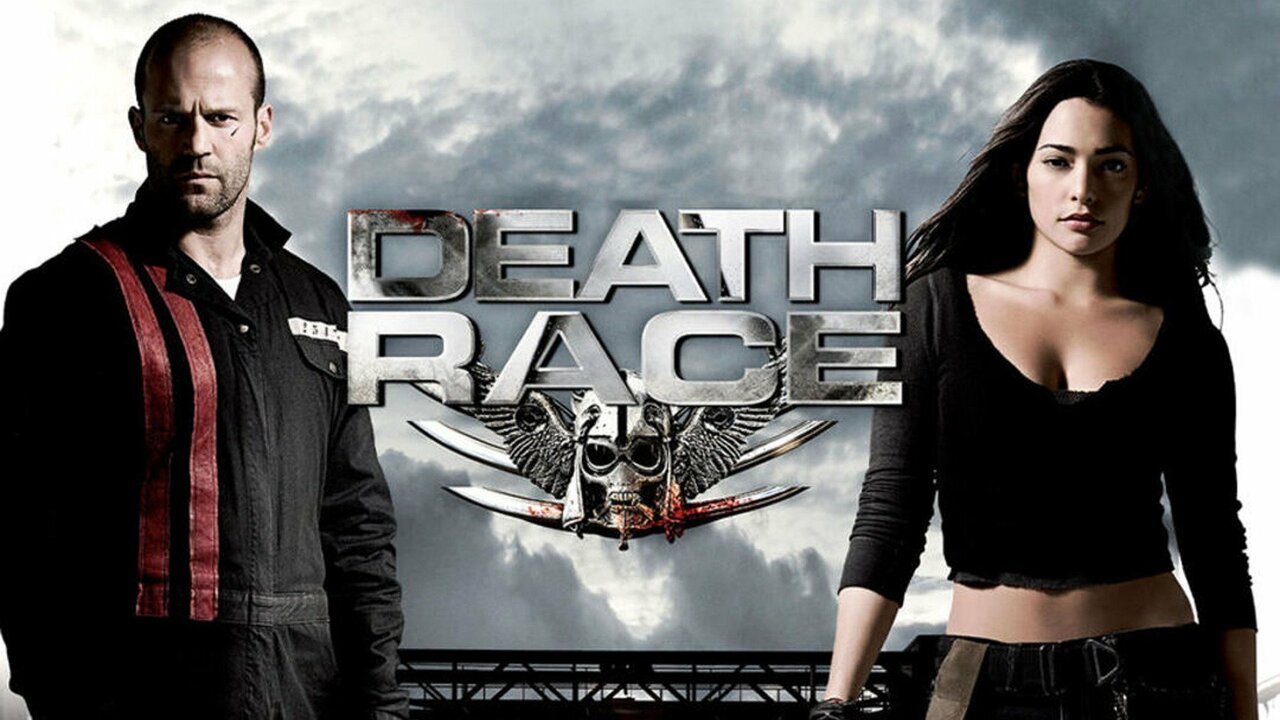
    When I first heard they were playing Death Race at the cinematheque, I was excited. Growing up, I always watched Death Race starring Jason Statham; however, I completely forgot that the cinematheque only shows movies from 1975. That’s when I realized we would be viewing a completely different movie, but I still remained hopeful about seeing similarities between the one released in 2008 and the one from 1975.

    When the movie first started, I was initially attracted to the general aesthetic and underlying theme. The play on a somewhat futuristic society focused on the horrific mutilation of civilians for the satisfaction of corporate giants and the wealthy is a theme that can be seen throughout various films in recent years. Its placement in the year 2000 shows the rather exaggerated expectations of what the future holds for society and the harsh displacement of current generations.

    Death Race 2000 (1975)

    The film uses the plot of race-car drivers equipped with weaponized vehicles rushing from the East Coast all the way to the West, gaining points from killing seemingly innocent individuals they encounter on the road. The car that crosses the finish line with the most points ultimately wins. In comparison to the 2008 depiction, the main character, named Frankenstein, is incarcerated on a murder charge and is facing life in prison. However, he is given a chance at freedom if he races against other criminals through a deadly track, also with weaponized vehicles, and whoever survives to the finish is set free. While all of this is playing out, the building of their cars, the prisoners’ contemplation, there remains the spectatorship of the wealthy, who gain a sense of fulfillment from such horrible destruction.

    The two storylines offer an entertaining experience of gore and thrill but still maintain the narrative of the wealthy’s disconnection from society and their over reliance on spectating dehumanizing events to gain satisfaction. This narrative can be seen through movies and TV shows like Squid Game, Get Out, Blink Twice, etc.

    Death Race - Movie - Where To Watch