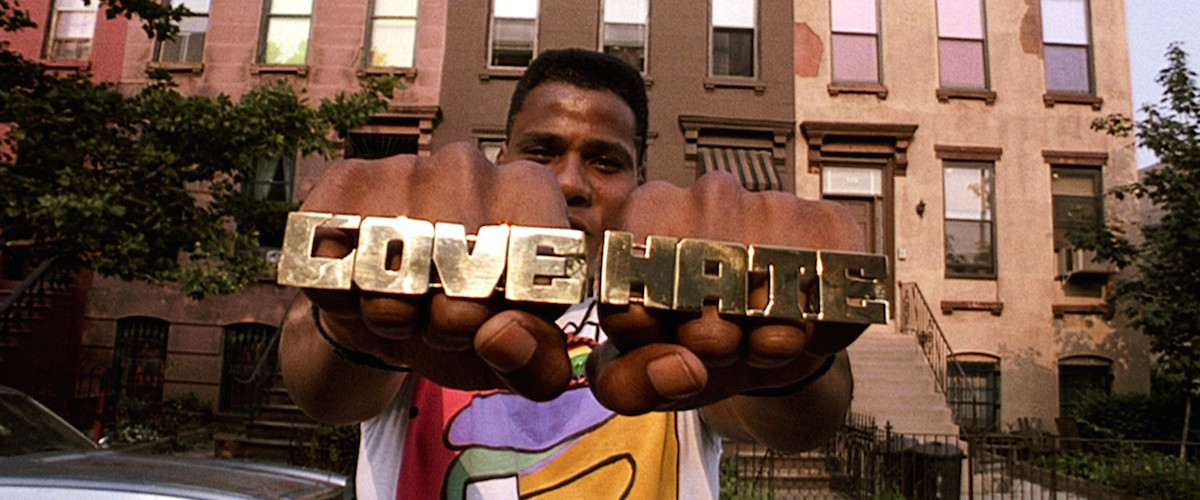
Blog

  • The Wizard Lied

    Recently, I watched Wicked: For Good and enjoyed the film overall, but one scene in particular stayed with me that I wanted to discuss. *Spoiler warning* During the moment when Elphaba considers joining forces with the Wizard, she challenges him to reveal to the citizens of Oz that he is essentially a fraud with no real magical power. His response was that he could admit to lying, and no one would care.

    After our class discussions on ideology and similar matters, this line stood out because it touches on ideological saturation. When the Wizard says no one would care if he admitted to lying, he’s acknowledging that people’s loyalty is not tied to truth, but to a worldview he created. The lie is the ideology. The people have internalized it so completely that reality doesn’t matter anymore.

    To break it down, his statement exposes one of ideology’s effects. Ideology can make people emotionally invested in beliefs regardless of whether they are true. The citizens don’t follow the Wizard because he is honest, they follow him because the version of reality he provides gives them comfort. In short, that emotional security is more compelling than the facts.

    This made me wonder about ideology in the real world, specifically questioning whether people need ideology to get through life. I would argue yes. Ideology gives us frameworks that allow us to understand how the world works. But if ideology is needed, why do some argue that ideology traps individuals and prevents them from discovering truth?

    People argue that ideology traps individuals because once a belief system becomes familiar and emotionally comforting, it becomes difficult to see beyond it. Ideology doesn’t always present itself as an option among many. It often disguises itself as common sense or the way things naturally are. When that happens, people stop noticing that they are operating within a constructed worldview. The comfort and stability ideology provides can make questioning it feel dangerous or “disloyal.” As a result, individuals may mistake the ideology for absolute truth rather than recognizing it as one interpretation of reality. This is where the “trap” begins and why some argue ideology is restricting. Ideology gives meaning, but it can also narrow perception, limiting what people are willing to consider true.

    In short, ideology helps people navigate life, but it becomes restrictive when it makes one filter out anything that challenges it. It is not the existence of ideology that is the problem. The danger appears when ideology becomes invisible and unquestionable, because that is when it stops guiding people and starts defining them. This is presented in Wicked: for good, as the film overall asks its audience to question the stories they inherit rather than just accept them.

  • Reading ideology through visual form in Do The Right Thing

    Resource: John Berger / Ways of Seeing , Episode 1 (1972)https://www.youtube.com/watch?v=P-4LwAuTw7k&t=1381

    For this week’s theme of ideology and critique I turned to John Berger BBC series Ways of Seeing, something I watched in middle school and never forgot. Even though it came out more than 10 years before Spike Lee’s movie, Berger’s central argument (that every image embodies a way of seeing) helped me understand the film not just as a narrative about a neighborhood but as an ideological construction that challenges how we read images, bodies and power on screen. 

    This first episode focuses on painting and photography but its core message applies directly to cinema: images are never neutral. This also reminds me of a second youtube video I watched as I searched something for this post that said “Every single film is political”. Images reinforce values, hierarchies, ideological assumptions of the society that produces them. Berger shows how perspective, framing, and even “realism” itself are cultural choices shaped by power. He says that every image contains an argument, as in Do the Right Thing Lee uses visual form not just to tell a story but to reshape the viewer’s way of seeing race, space, and conflict in America.

    Berger also talks about how images can be manipulated or recontextualized to change meaning — a point that immediately reminded me of the Wall of Fame in Sal’s pizzeria. The photographs are curated, selective, aspirational, and ideological: they reflect Sal’s claim to cultural authority in a space that is not culturally his. When Mookie pins the photograph of Malcolm and Martin at the end, it functions exactly the way Berger describes the “reframing” of images: it shifts the entire power dynamic of the space. A wall that once reinforced Sal’s control becomes a site of resistance, a new way of seeing public/private space through a Black political lens. 

    Beyond that, I found that  the cinematography and mise en scene of the movie do a great job together by creating such aesthetically pleasing images in a way that deepens its politics. Berger argues that style is never separate from meaning. The saturated reds and yellows, the symmetry of the block, the theatricality of the heat, the way the camera moves like it’s part of the neighborhood’s rhythm — these choices aren’t ornamental. They construct a world where tension is visible in the color palette.

    Finally, Berger’s insistence that viewing is always shaped by context made me rethink how Do the Right Thing ends. The film leaves us with two quotes — Malcolm X and Martin Luther King Jr. — that embody two different ideological “ways of seeing” violence and resistance. Berger would say that Lee is showing us the impossibility of a single, stable interpretation. The film, like an image, changes depending on where you stand. That ambiguity isn’t a flaw; it’s the film’s political strategy. This movie is an intervention on how we see American race relations,

  • Do the Right Thing: Veni, Vidi, Vito

    I recently had the pleasure of rewatching Spike Lee’s Do the Right Thing (1989). Amidst the comedy, heartbreak, and social commentary, I was left asking one question–what is going on with Vito (left)?

    Vito (played by Richard Edson) acts as a foil to his brother, Pino (played by John Turturro). Pino is brash, openly racist, and cruel to Mookie. He repeatedly says the n-word, bashes Bed-Stuy as a neighborhood, and more. Relatively soft-spoken Vito is the opposite: kind to Mookie, and defiantly anti-racist (by which I mean he is the one major white character in the film who never says the n-word).

    Pino bullies Vito constantly, sometimes physically harassing him. He pushes back, but never majorly, especially granted the advice he’s being given by Mookie (namely to beat up his brother).

    This refusal to push back is exemplified at the end of the movie–really, in this shot:

    As Mookie is about to cross into the rioting crowd, we get a glimpse of Vito, looking sullen more than angry, yes, but sandwiched comfortably between his brother and father, his allegiance to his group––his race––never in question. Despite his friendship with Mookie and more positive view of the neighborhood than his brother and father (being the only one of the family to actually leave the pizzeria during the events of the movie), Vito’s final placement falls along racial lines.

    This ties into the broader theme of the movie about race as an inescapable, inexplicable feature of personality and life. Vito may have been the best white person, but he was still a white person. I am curious, though, about what everyone else thinks––is that pivotal shot mostly an accident? Do I give Vito too much credit, even?

  • “Do the Right Thing”: Interviews with cast and crew

    While searching for relevant sources, I encountered an article that interviewed both the cinematographer Ernest R Dickerson and Giancarlo Esposito (who plays Buggin’ Out in the film). https://www.theguardian.com/culture/2014/jul/22/how-we-made-do-the-right-thing-spike-lee

    I found myself wondering while watching Do the Right Thing how a film is shot in one location and the challenges that accompany that. Dickerson answers this question in the interview, which I thought was really interesting:

    “I knew our biggest challenge was going to be shooting over eight weeks and making it look like one day. We looked for a street that ran north-south. Since the sun travels east to west, one side would always be in shade. That way, when we had to shoot on cloudy days, I could just make it look like we were in the shaded side of the street. That really saved us, because the first two weeks we had a lot of rain. Some shots where it looks sunny – you can actually see rain if you look really hard.”

    Dickerson also talked about the films that inspired him and Spike Lee in the making of this film: The Third Man (specifically for the canted angles), Black Narcissus, A Matter of Life and Death, and The Red Shoes. The final three movies were all worked on by cinematographer Jack Cardiff whose use of color inspired Dickerson.

    Canted angle in The Third Man
    Canted angle in Do the Right Thing

    On the other hand, Giancarlo Esposito speaks on the attitude of the film industry regarding race during the time of filming:

    “My background is half-Italian and in those days, being a lighter-skinned black man, I couldn’t get cast as a white person or a black person. So I was playing Spanish roles. This follows me to this day: a lot of people are shocked to realise Buggin’ Out and Gus Fring [from Breaking Bad] are the same person. So Spike gave me the opportunity to play black.”

    I thought this was particularly interesting as the film is about racial tension in two specific demographics but this highlights tensions and stereotypes beyond that.

  • Spike Lee Over the Years

    Do the Right Thing (Spike Lee, 1988) garnered critical acclaim and received an Academy Award nomination for Best Original Screenplay. As such, I was curious about the director behind such a celebrated movie. It was brought up in class that he made commercials for the Air Jordans before he made Do the Right Thing, so I found one of them, titled “It’s Gotta Be the Shoes”.

    This Nike Commercial (1991) stars Michael Jordan and Spike Lee as Mars Blackmon, a character from another of his movies She’s Gotta Have It (1986). In it, Mars asks MJ what makes him the best player in the universe, eventually concluding, “It’s gotta be the shoes!” It’s a question of why Spike Lee, a director primarily concerned with critiquing cultural ideology, made these types of commercials in the first place. Was it money? Exposure? Whatever the reason, Spike Lee’s commercials were credited as the main reason Nike and Air Jordans became so popular, with millions of dollars in shoe sales. One such article tells a fun anecdote about Lee’s time working with MJ: https://www.basketballnetwork.net/off-the-court/when-michael-jordan-called-spike-lee-an-mfer-in-1988

    Spike Lee founded a production company called 40 Acres and a Mule, and is still active in the film industry today. He has made several documentaries and a TV show called She’s Gotta Have It (2017-2018) based off of his earlier movie of the same name. He also taught a filmmaking course at Harvard in 1991, later joining NYU/Tisch as part of their faculty in 1993. He was appointed as Artistic Director in 2002, and still works there today a tenured professor in the graduate film program.

    Spike Lee’s Production Company/Main Source Used: https://www.40acres.com/new-landing/about/

  • Did the Community Really Love Sal’s?

    Before watching Do the Right Thing, I assumed the film would give a clear sense of who was “right” and who was “wrong” in the neighborhood’s conflicts. Instead, Spike Lee presents a community full of contradictions, loyalties, tensions, and shifting emotions. One moment that especially challenged me was the neighborhood’s relationship with Sal’s Pizzeria. Residents of the community called it a beloved staple of the block early in the day, yet later destroyed it. That raised a question: Did the residents ever truly value Sal and his business, or were they being hypocritical when everything turned violent?

    Early in the film, multiple residents discuss their affection for Sal, recalling how they grew up eating there and how his shop has been a part of the block for years. The loyalty and “love” feel genuine, supported when Buggin’ Out tries to start a boycott, and people brush him off. If the community was so committed to Sal’s, then why does everything flip at the end? Why do the same people who defended him early in the day watch his business burn?

    The more I thought about it, the more it became clear that the film is not showing hypocrisy, but rather the difference between everyday relationships and the deeper realities of power. The neighborhood did appreciate Sal’s, however, the film reveals how personal fondness can only stretch so far when a much larger system of racism, disrespect, and inequality erupts into view.

    Sal may have been part of the community, but he was not of the community. That difference matters. His success relied on Black residents’ money and presence, yet he still controlled the space, the rules, and the images on the walls. The community accepted this dynamic most of the time because nothing “major” challenged it. However, when the conflict escalates with Radio Raheem, that balance collapses. Sal’s violent outburst exposes a truth that was always simmering, which is that his respect for the community had limits.

    So were they hypocritical? I don’t think the film wants us to see it that way. The earlier “love” for Sal and the later destruction of his pizzeria are not contradictions. Both are true, as the community could appreciate his years on the block, and still recognize that his business existed within a structure that didn’t value them in the same way they valued it. Lee argues that people can maintain surface-level harmony within unequal systems until something exposes the imbalance too clearly to ignore. When pushed to their limit, the residents act not out of personal betrayal but out of collective grief and rage.

    In the end, I think the film pushes us to question the conditions that make such explosions inevitable, and why people must often choose between personal relationships and collective survival.

  • Did Mookie “Do the Right Thing”?

    Normally, after watching a movie, I would have some form of judgement towards it, whether by agreeing with the central arguments of the film, or at least have some understanding of which side of the moral dilemma I would stand on. However, “Do the Right Thing” is that one film that even after I understand what is happening, I could not really set my mind on a specific stance.

    Spike Lee demonstrated the complexity of humanity around the topic of racism so thoroughly but also so objectively that I see flaws with almost every character in the film such that I really dare not debate firmly who’s right or who’s wrong.

    Do the Right Thing movie review (2001) | Roger Ebert

    The narrative form is also not conventional, as it does not follow a single protagonist, but rather focuses on the ongoing interactions throughout the Brooklyn community, so that the audience see the life and personalities of so many different individuals. It also reminded me of the Aristotelian unities of action and time that I learned in high school, where the main plot should take place within a single day within a constant location. This “tragedy” follows such unities of action, starting from the start of a day to the morning of the next day, within the Brooklyn community (mainly focusing on Sal’s Famous Pizzeria).

    I guess one of the main questions I was reflecting on was whether Mookie did the right thing or not as he smacked the Pizzeria’s window panes with the trash can. What seemed absurd to me was how Mookie still asked for his $250 pay the next day, knowing it was him who started releasing fury onto Sal. Even though he said that the costs could be covered by insurances, I could not understand how that is a valid reason for him to destroy other’s property. But on the other hand, I also felt bad about the death of Radio Raheem.

    Sal’s destruction of his radio really is a symbolic provocation that challenges Raheem’s identity as a black man, but practically, it also is just a radio (given that Raheem did disturb other people in the restaurant and was not paying any respect to Sal).

    Radio Raheem - Do The Right Thing : Belief & Postmodernism

    The movie also did not just illustrate the conflict between Italians and the Black community, but also incorporated perspectives from the Latino and Korean residents of the neighborhood. There is no heroes of this story, and I guess Spike intended to leave the decision to the audience of this film. What do we think? Did people “do the right thing”? Was the development of the plot inevitable?

  • Reading the Ending of Do the Right Thing

    The ending of Do the Right Thing feels deliberately unresolved, and I think that uncertainty is the point. Instead of offering a clear moment of reconciliation between Sal and Mookie, Spike Lee frames their final interaction as something uneasy yet realistic considering the violence that had just occurred. They start on opposite sides of the frame, both carrying the weight of the night before, and they only move toward each other when Mookie requests his paycheck. Their proximity at the end feels like it’s out of necessity rather than forgiveness. The blocking further suggests that survival in this neighborhood depends on navigating relationships that are never fully repaired but still necessary, showing how daily life will continue even when trust has been broken. 

    The decision to show the photo of Malcolm X and Martin Luther King Jr. being pinned on the Wall of Fame deepens this tension but does offer a slight sense of resolve in my opinion. Sal’s wall has functioned as a literal barrier between understanding and representation throughout the film and was the actual trigger for the violent and unjust ending. By adding the photo, the pizzeria, despite having been burned down, is finally acknowledging the broader cultural reality that Sal and his family resisted: that different cultures can coexist in the same space, and that tension does not always have to escalate into violence. It becomes a quiet but powerful image that complicates the idea of whose stories get displayed and validated.

    Because of this, I do not read the ending as Spike Lee successfully working the system. It feels more like an honest recognition that harmony is difficult to achieve and takes time, even when people of different races and backgrounds are living and working alongside one another. I’m still left wondering: does the film go against a complete sense of closure because repairing systemic harm is never simple/straightforward, or is it asking us to rethink why we expect reconciliation in the first place?

  • Do The Right Thing: A Masterclass in Historical Subjectivity

    Spike Lee exhibits the simple manipulation of truth in a less than three minute sequence in Do The Right Thing (Lee, 1989) that barely stands out in a film rich in commentary on American race relations. The scene unfolds as a young boy runs in front of a car excited for ice cream, and Da Mayor jumps out to save him, toppling both the child and himself. What the boy’s mother and other viewers of the incident see is the drunk mayor attacking a small child, and when the mother asks her son what happened, he does not want to admit that he ran in front of a car, so he lies and allows the belief that he was attacked to ensue. Da Mayor defends himself, and to his luck the mother believes him, but this simple scene represents exactly what historians, or anyone listening to a story for that matter, have to grapple with when understanding the past. The third party viewer, the mother, has to examine the evidence given to her, one that is true and one that is not, and determine what she believes to be true. If she believed her son, than that would be known as the perceived truth, regardless of what the actual truth of the story was.

    Da Mayor in Do The Right Thing

    This filmed is filled with examples of stories that can be easily manipulated, and have been. Each character’s perception, biases, and lived experiences influence how their outlook on society is. This is why Lee so urgently addresses throughout the film that the notion of a monolithic African American experience is not true, and that the idea of the “right thing” to do varies in generation, gender, class, age, and relation to those around you. It can be argued that many of the actions throughout this film were not the correct thing to do, because of what they led up to, but it can very well be argued with the contextualization of their singular perspective that they did the only “right” thing that they could in that moment.

    Furthermore, Spike Lee shows the manipulation of truth and justice through music, physical objects, and celebrities in media. The distinct differences in how characters view the world around them, both contrasted between races and within races, highlights how stereotypes are harmfully used to categorize groups, while remaining inaccurate. One person cannot represent all stereotypes at once. Still, this film is brimming with a multitude of themes and representation. There are moments of action and tension coupled with moments of connection and romance. This display of African American representation in film is still rare in today’s standards, and incredibly rare at the time of this film’s release. Lee is able to “fight the power” in his own medium, film, by directly addressing the large extent of experiences and attitudes held by communities in this neighborhood.

    My questions while watching this film were: what do you think the public reaction to this film was after its initial release, and how do you think that it translates to today’s society? Do you think that watching this film a second time would lead to a different perspective or clearer understanding on the character’s internal motivations, especially regarding the incidents leading up to the riot at the end? When do you know something in history is a complete objective truth, and when does this film feel like a commentary on the objective truths of its time and subjective truths of its time?

  • Conspiracy Theories in Bugonia

    During class today, we discussed the idea of ideology and how present it is in every aspect of our lives. Directors have, and will continue to voice their own ideologies and opinions through their films.

    There were two things I wanted to talk about today, both stemming from this morning’s conversation. We also touched on conspiracy theories and how, though extreme, they can reinforce current beliefs or stem from past experiences.

    Spoiler warning for Bugonia.

    Bugonia, which I watched last week, is a movie oozing with ideology. Teddy, a rural bee farmer, manipulates his mentally disabled cousin, Don, into helping him kidnap a pharmaceutical CEO. He believes the CEO, Michelle Fuller, is an Andromedan alien sent to destroy Earth.

    At first, I felt Teddy’s methods were outlandish and cruel. He was so insistent that Fuller was an alien, he went at lengths to prove it. For example, he shaved her head and even lathered her in antihistamine cream to prevent her from “communicating with the mothership”.

    But as the film goes on, we start to understand where he’s coming from, and even sympathize with him a little. We realize that Auxolith, Fuller’s company, was developing a medication to fight opioid addiction. Teddy’s mother was a voluntary test subject for this product and was sent into a coma as a result. Multiple other childhood incidents are mentioned throughout the movie offhandedly, often through a single line that never gets addressed again. Teddy mentions how he and Don have been “chemically castrated” by Auxolith while talking with Fuller. The town sheriff (also Teddy’s childhood babysitter), Casey, continuously tries to befriend Teddy, apologetically referencing a sexual assault he had committed against Teddy as a child.

    All of this childhood trauma acts as a weight on Teddy’s shoulders. As far as we know, he never sought any assistance for his presumably unstable mental state. Trying to figure out why all these things are happening to him, Teddy turns to the internet. He falls into the rabbit hole of conspiracy theories, and because of internet algorithms, finds himself in an ideological echo chamber. This echo chamber feeds him more and more conspiracies, ultimately turning him into the man he is today.

    What’s interesting to me is as weird as this film’s premise is, Teddy’s conspiracy theory transformation happens to people every day on a smaller scale. Because of past experiences and their interactions with other people, people’s worldviews change (albeit usually not as extreme as Teddy’s).

    Bugonia’s director, Yorgos Lanthimos, even talks about this himself in this interview (https://www.rogerebert.com/interviews/bugonia-interview-2025) with film critic Roger Ebert. He says how he’s ” always interested in the ways people’s interactions with themselves or others affect their nature.” He also says this about Teddy: “…he’s someone who has created a story, which is, by the way, not entirely untrue–but I think he’s someone who, like a lot of us, has not been told a better story that’s true from the powers that be…He’s been abused by the system that keeps talking without doing anything–or at least doing anything that’s helping him in some way.” This film could also be Lanthimos heeding us a warning about the slippery slope of politics, and how one can easily find themselves in an echo chamber and alienate themselves from the other side of the political spectrum.

    All-in-all, Bugonia is a wonderfully bizarre film about how one’s past can shape their current worldviews. It satirizes the modern internet-conspiracy culture and is hilariously unpredictable at times.