Nowadays when we watch a film in a theater, or on Netflix or any other media published for public access, they are likely a finalized, polished version that could not have existed without the efforts of a team of talented filmmakers. We are fully immersed in some actors’ emotional expressions, certainly aware of some of its music, and are constantly being driven by our own expectations towards what will happen next. However, we might not have fully appreciated how the actors’ clothing and makeup aided their expressions, how computer technology adjusted the color scheme of the film, or the dozens of lighting that might have been used for the effects of a single shot. What is all that happened behind the scenes that eventually enabled us such wonderful, enjoyable viewing experience?
The answer to this question lies in mise-en-scène, which, originated in French, means “putting into the scene.” This includes all the elements that work towards the harmonized end result that aligns with the director’s vision and is powerful enough to resonate the audience. 4 main pillars describe mise-en-scène: setting, costumes & makeup, lighting, and staging.
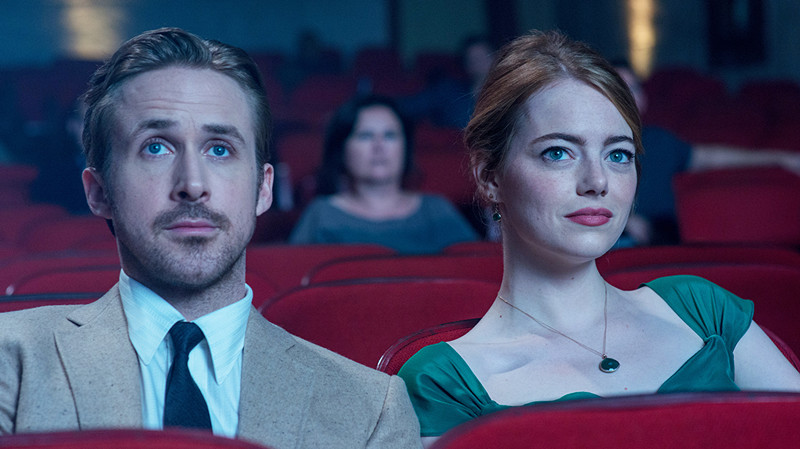
Do digital technologies in film production encourage bolder mise-en-scène? Or does it risk contradicting with the physical principles of reality? In each fundamental element of mise-en-scène, we seem to find evidence of technology, such as simulated lighting, CGI’s (computer-generated imagery) motion capture, and color grading, etc. Indeed, their usage greatly improved film qualities, but would it happen to be that more and more productions treat raw footages less importantly because “we’ll fix it later on computer”? It potentially could be the case, but for filmmakers treating their works seriously and dedicated to perfection, technologies should not at all be harmful.
A major part of technology use in mise-en-scène is accounted by lighting, which is also a major aspect of film that a lot of people would under-appreciate, probably because it is so intricate and natural that it becomes a neglected part of an image. However, the truth is that lighting is crucial to every scene we see in a film, contributing to character features, emotional delivery, and contrasts with surrounding objects.
The most basic arrangement of lighting could be the traditional three-point lighting, which includes at least a key light, a fill light, and a backlight. Key lights are usually placed directly in front of the actor, functioning as the primary light source that enables us to see their features. A fill light, which is an assisting light source that weakens the shadows created by the key light while softening the actor’s features would possibly be placed at a position near the camera, directed diagonally against the actor. Lastly a backlight would come from behind and above the actor, to lighten up the setting and surrounding features.
![Three-Point Lighting Ideas for Portraits [with Lighting Diagrams] | Visual Education](https://cdn-bjpdk.nitrocdn.com/dyjDRTumiVVFLKEpXMADzKdEUUbypNrL/assets/images/optimized/rev-142a2bb/visualeducation.com/wp-content/uploads/2019/06/Three-Light-High-key-flash.jpg)
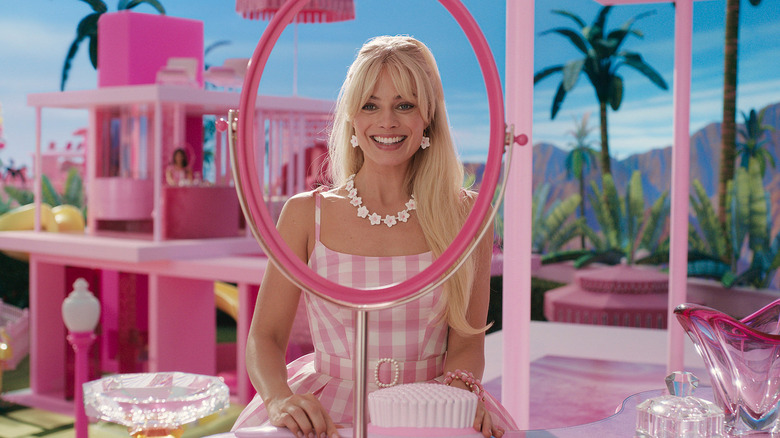
For example, in Greta Gerwig’s Barbie (2023), we see the use of three-point lighting in the fictional, idealized Barbie Land. The “sun” functions as the backlight, as evidenced by the glowing edges of Barbie’s hair. Yet, we still see Barbie’s face softly because of the fill light, and eventually bounces off her bedroom and other vibrant set pieces. Such lighting creates an overall bright, cheerful, and shadowless environment, which demonstrates the concept of high-key lighting. High-key lighting uses fill light and back light to create relatively low contrast between brighter and darker areas.
Apart from lighting, setting, costumes & makeup, and staging are also involved with technology in today’s film production. Softwares are able to add features to characters’ faces. For instance, in Dave Gibbons’s Watchmen (2009), a digital simulation of ink that flows through the superhero Rorschach’s face was imposed during postproduction.

The existence of such technology expands the possibility of film, and somehow changes the goal from appealing to realism into allowing for fantasy and fictional elements. When the technology strengthens lighting, rehearses blocking, and emphasizes coherent prop motifs, it expands what a filmmaker can stage. However, if it tempts a “we’ll fix it later” mentality, it’s probably getting in the way, despite it is true that a lot of productions were limited on budget and time such that technology becomes a convenient method to reach towards the ideal effects.