Tag: #narrative form

  • What We See: Restrictive Knowledge in The Truman Show

    One of the most important elements within narrative is the degree of knowledge we as an audience are given as the plot progresses. This degree of knowledge often falls between restrictive, knowing as much as a character, and unrestrictive, seeing and understanding more than they do.

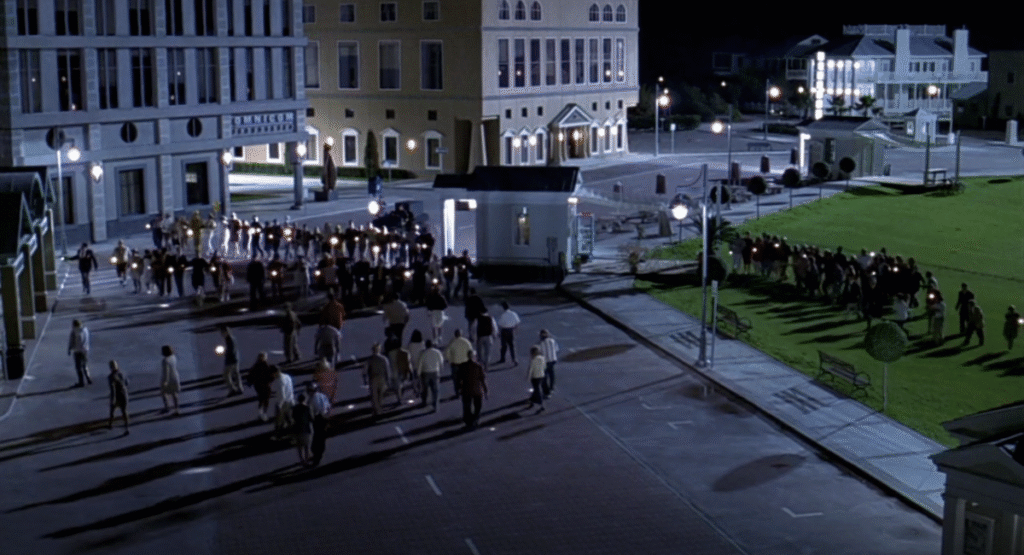
    The film begins with a relatively restrictive plot centered around the main character, Truman. We as an audience are aware that he is in a television show through mild exposition in the opening, but for the first half of the film, we experience what Truman experiences. The film invites the audience to piece together the world of Seahaven and it’s intricacies by ourselves rather than exposition; from the sitcom-like interactions between Truman and the cast, to the oddities of glitching radios and falling lights hinting at the artifice. We are active participants of Truman’s gradual discovery that the world around him isn’t real.

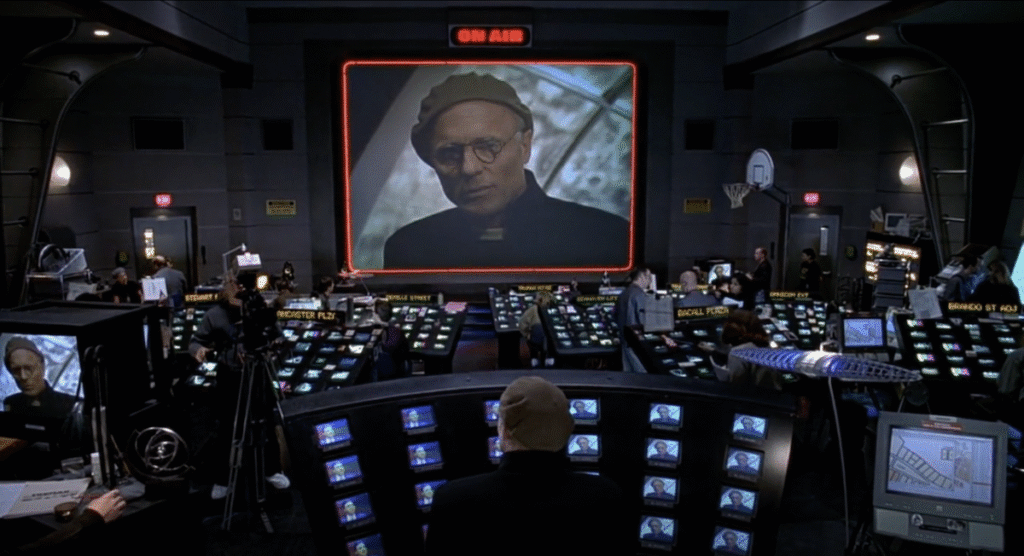
    Around halfway through the movie, the degree of restriction drastically changes. During Truman and his “father’s” reunion, the film intercuts the perspective of Truman and the show’s control room. We meet Christof, the creator of the show, and his show-runners as they improvise the direction in real time. Shortly after, a news reel acts as exposition, fully fleshing out how The Truman Show came to be and operates. During an interview phone call between Christof and a former cast member Lauren, Christof tells her “we accept the world that is presented to us” when Lauren calls out the ethical injustice done to Truman.
    Had the story began with an unrestrictive lens, Seahaven would simply appear less real from the beginning, and Christof’s thematic stance would appear more intellectual rather than emotional. Instead, the restrictivity allows us to emphasize with Truman, and make the central conflict –control verses freedom– grounded in Truman’s personal struggle instead of overarching ideology. For example, despite the Christof and the showrunners’ numerous attempts to present Seahaven and Truman’s life as “perfect,” we clearly see Truman’s emotional distress and desire for authenticity.

    The climax of the film makes the most creative and powerful use of restriction. Truman decides to leave the island and conquers his fear of water as he sets sail. During the night, he sneaks out of the house, and none of the cameras –and by extension, we the audience– know where he is. The story is suddenly restrictive again, but with a reversal of power. We don’t follow Truman’s ignorance; we share the showrunners’. The film itself weaponizes restrictive narration against the audience, implicating us of the same voyeurism that it critiques.
    The Truman Show ‘s manipulation of narrative perspective throughout its runtime ultimately becomes both its central storytelling device and its strongest moral statement.

  • The Fragmented Truth of Memory: Narrative Form in Eternal Sunshine of the Spotless Mind

    I am writing this reader’s post after watching Citizen Kane, which gave me a lot of inspiration about how audiences and the movie interact. From Citizen Kane, we see narrative in forms of memory, in fact, in different aspects and versions of memory, such that they seem to piece together a story. Through such nonlinear narratives, why would the audience be able to understand what’s going on? Bordwell, Thompson, and Smith describe narrative as a chain of events linked by cause and effect occurred in time and space.

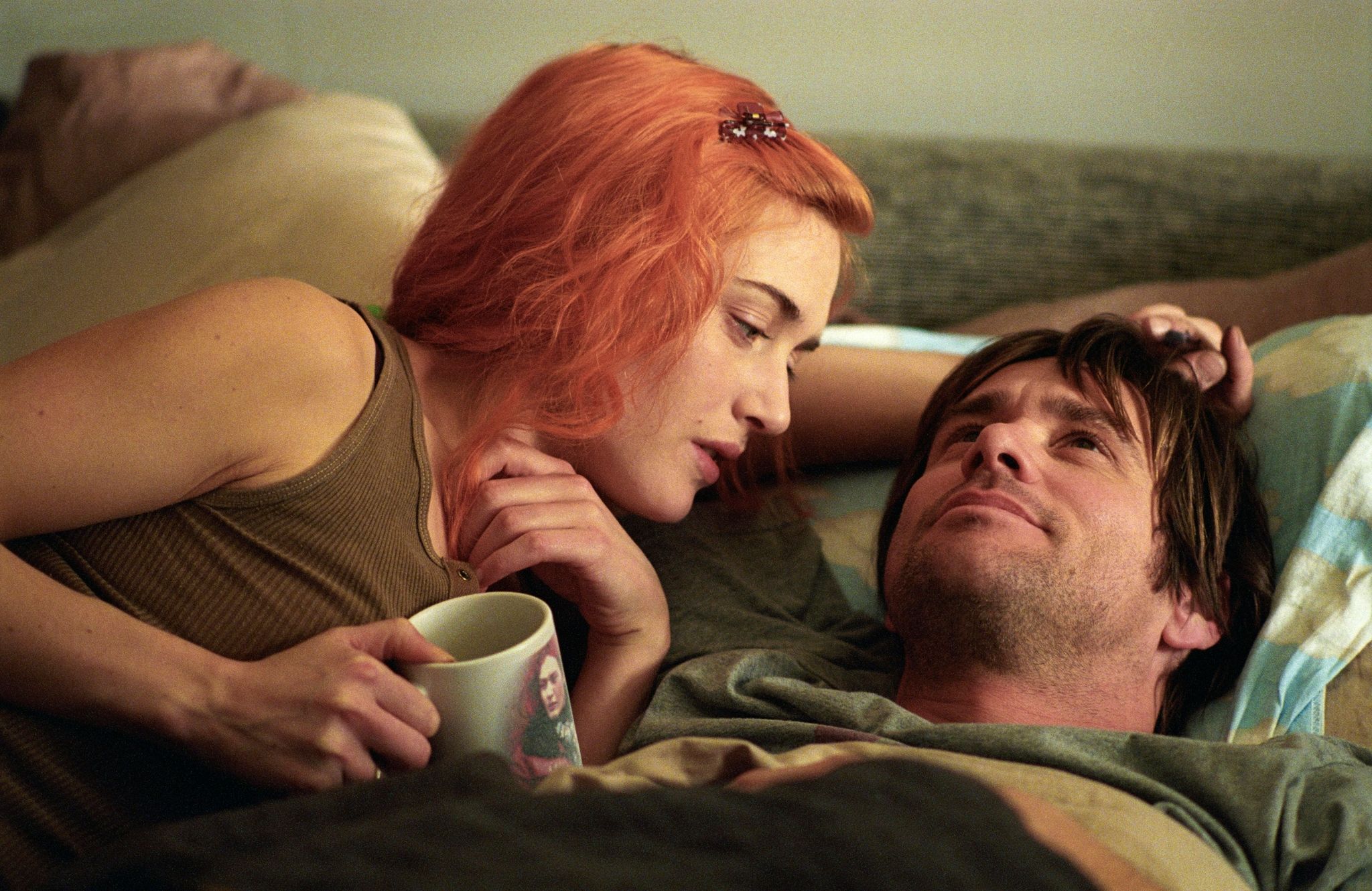
    However, they also remind us that narration can control what we know and when we know it (which ties back to Citizen Kane, as the story literally is about information control). In Eternal Sunshine of the Spotless Mind (Michel Gondry, 2004), this manipulation of time and information becomes the emotional core of the film.

    The space between who we are and who we think we are movie review (2004) |  Roger Ebert

    The story itself is simple: about two people (Joel and Clementine) meeting and falling in love on a train. Eventually, they experienced a painful breakup due to miscommunication. Both decided to undergo a medical procedure at a company called Lacuna, Inc. to have each other’s memories erased. However, the erasing process forces them to relive their experiences with each other in reverse–so they ended up experiencing their final fight, and moving backward to their first moments of love. As Joel revisits these memories, he realizes that he didn’t actually want his memories of Clementine to be erased.

    Unfortunately, the erasing process was complete, and both of them forgot about each other. Although later by chance they met on a train and fell in love again, just like they first did, ending the movie merrily, what is more important is the narrative structure of this film.

    Dreaming of Lacuna, Inc.. When I first saw Eternal Sunshine of… | by  Christian Montoya | Applaudience | Medium

    The plot is nonlinear and disorienting by design. The film begins after Joel and Clementine’s relationship has already ended and been erased, but neither the audience nor Joel realizes this right away. By employing nonlinear storytelling and restricted narration, we learn Joel’s memories in reverse, mirroring the mind’s gradual erasure. The result is that the audience experiences forgetting alongside the character, and become trapped inside the narrative logic of memory rather than time.

    In this work that narrates time reversely, temporal order and causality are also mixed up. As memories collide into one another, spatial and continuity break down, forcing the audience to think hard piecing these scenes together. In one moment, Joel runs through his own memories to “save” Clementine, blending dream logic with narrative motivation. Bordwell would describe this as a manipulation of time and space that adheres to cause and effect–that the cause (Joel’s resistance to forgetting) to the effect (the reappearance of moments in the past).

    Eternal Sunshine of the Spotless Mind

    But even when the film bends time, the emotional coherence is maintained, which is the unity of meaning. During the final scene, the directors decide to end the film with an open-ended narration: Joel and Clementine listens to tapes of their past relationship. This provides neither a full disclosure nor disunity, but an open-ended interpretation which we do not know what will happen in the future.

    Revisiting this movie after reading through this chapter and watching Citizen Kane, I found a lot more fun in exploring the relationship between how the human mind absorbs information and how narration techniques could best serve the human mind in understanding what filmmakers are trying to tell. The emotional power of Eternal Sunshine of the Spotless Mind does not come from the story itself, but definitely from how it’s told, which is all the power of narrative form.

  • Narrative Form and Cinema of Attractions in About Time

    In this weeks reading on narrative form, we learn how events in film unfold through causality, time, and space within a coherent diegesis, the film’s world of story action. Temporal relations, such as order and duration, also guide how audiences process the story such as whether events are shown chronologically or through flashbacks and repetitions. This structure provides clarity, creates emotional and thematic unity, and leads viewers toward resolution and meaning.

    In my favorite film, About Time (Curtis, 2013), narrative form is approached in a unique way, because the main character, Tim, is able to time travel to points in his life. The film plays with temporal order by repeating events in new variations, allowing viewers to compare how choices shape meaning. Duration, or how time is represented, varies across the film from quick rewinds to long stretches of lived experience. By the end, when Tim stops time traveling and embraces the present, the pacing slows. The audience feels the emotional weight of time by the end because the narrative stops manipulating it.

    Tim’s narration unifies these shifts in time and space. His reflective voiceover anchors the audience during a nonlinear storyline, shaping understanding of both the story itself and his internal transformation throughout.

    In Tom Gunning’s essay, he looks at an earlier stage of cinema before narrative form became dominant. He defines early film as a “cinema of attractions,” where the emphasis was on showing rather than telling. These films directly addressed the audience, highlighting spectacle, novelty, and surprise rather than character development or plot. Gunning argues that while later narrative cinema wanted to immerse viewers in a continuous story, the cinema of attractions invites awareness of the act of looking. Cinema was about the experience of seeing and being amazed by motion and illusion.

    About Time also contains moments of cinematic attraction in Gunning’s sense. The time-travel sequences momentarily pull viewers out of the story to look at the visual spectacle of time manipulation itself. These instances seem to pause narrative progression for the purpose of emotional spectacle.

    For example, when Tim relives an ordinary childhood day on the beach with his father after learning of his death, the scene functions less as narrative advancement and more as what Gunning would call a “cinema of attractions”: a moment of direct emotional address to the viewer. The slow pacing, golden lighting, and sense of suspended time invite viewers to live in the experience and be in awe of the ocean’s beauty with them, rather than think about the future. It’s an attraction not of shock, as in early cinema, but of sentiment—a spectacle of feeling. The story pauses and time itself seems to hold still. It’s not about narrative logic anymore but about emotion, the beauty of the moment, and the connection between father and son. These scenes remind viewers of film’s power to manipulate and reshape time and shape, creating a sense of wonder that is distinct from the plot’s emotional or overarching “romcom” narrative arc. It reminds viewers that Tim is not on a quest to fall in love with a woman, but rather on a quest to fall in love with life itself.

  • Cause and Effect in Fantastic Mr. Fox

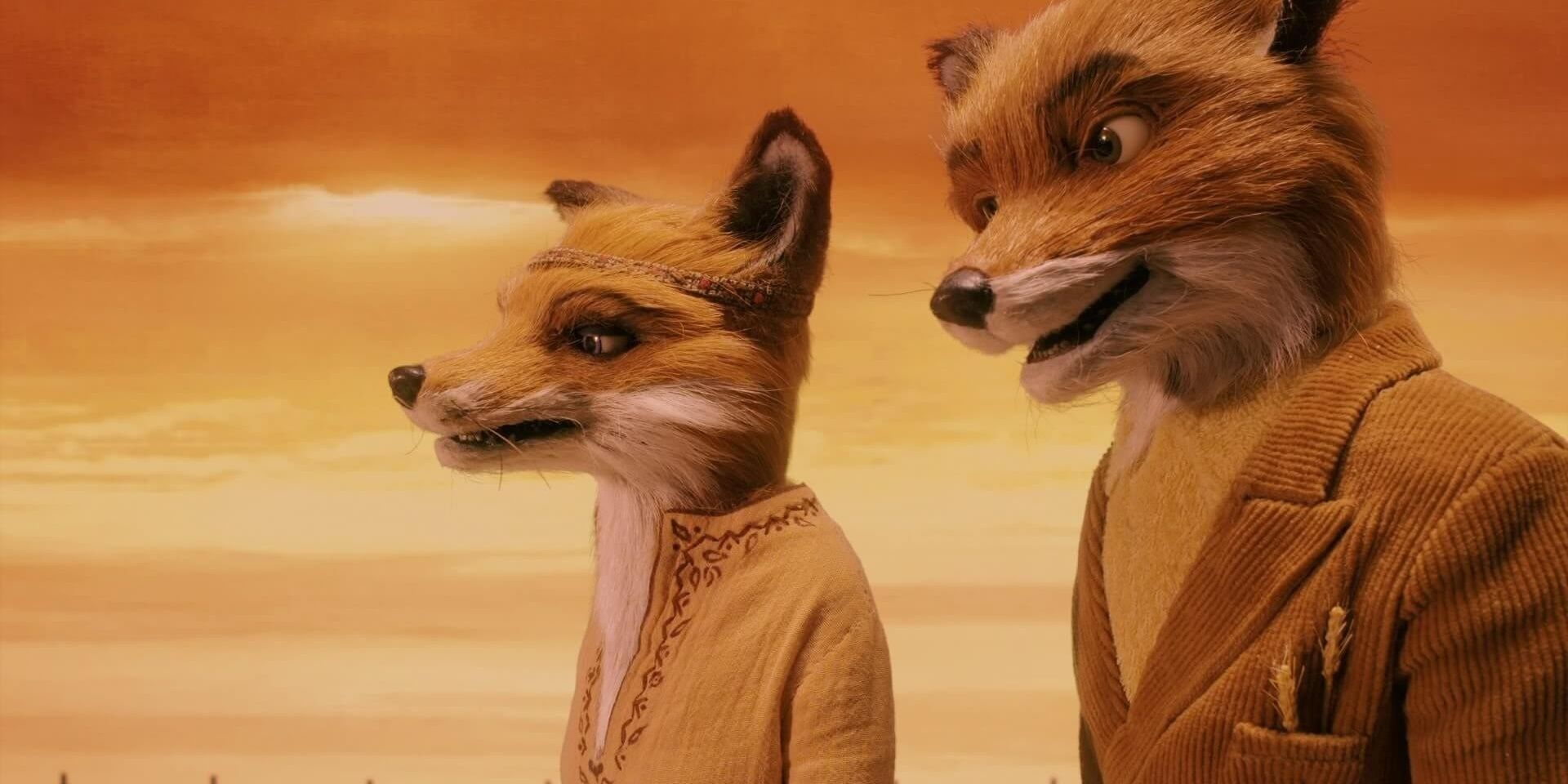
    This weekend, I sat down and finally watched Fantastic Mr. Fox (Wes Anderson 2009). This marks the second Wes Anderson film I have ever seen, and I must say, it was a delight to watch. As I sat through the film, it was impossible to ignore the causal role the characters played throughout the film.

    The plot is centered around Mr. Fox, a charismatic fellow who conspires to steal chickens and cider from the three mean farmers Boggis, Bunce, and Bean. This course of action directly goes against the promise Mr. Fox made to his wife, that he would never steal chickens again and find a new occupation.

    Fantastic Mr. Fox: 10 Behind-The-Scenes Facts About Wes Anderson's Movie
    Colorful Animation Expressions: Fantastic Mr. Fox: The Book (1/5)

    Robbing Boggis, Bunce, and Bean has consequences. In response to Mr. Fox’s thefts, the farmers go to his home and try to kill him, shooting off his tail and blowing up his house. Mr. Fox’s choices backfire on him. His lavish life is short-lived, and his family is forced back underground. Rather than call it quits, however, Mr. Fox decides to escalate the situation and steal everything from the farmers. The rest of the movie is spent dealing with the fallout of Mr. Fox’s thefts.

    wes anderson title cards | Title card, Fantastic mr fox, Wes anderson

    Fantastic Mr. Fox has an interesting way of showing the audience the passage of time. Usually, there will be a title card with text displaying how much time has passed. The way time is counted, however, varies. Sometimes, the time is displayed in normal hours or days, other times, in a special passage of time the movies calls “fox time”. These differences in the way the passage of time is shown convey the animals’ perception of time and contrast with the humans’ perception of time. It’s a gentle reminder that no matter how anthropomorphic the animals seem, they are not human.

    The idea that their true nature is that of a wild animal and that they can’t escape their natures is an overall theme woven into the action. We see this struggle particularly in Mr. Fox. He always wants more out of life, the desire to not live underground, the desire to steal chickens. His internal desires drive the story, and his actions affect his relationships. When his son barely escapes the farmers when trying to steal back his tail, Mr. Fox realizes his child is emulating him to try to gain his approval at the cost of his own safety. In some ways, Fantastic Mr. Fox is about selflessness vs. selfishness, putting the needs of others before yourself or giving into your desires. Mr. Fox’s choices connect the events of the film and create continuity by giving a clear line of cause and effect in the action and the narrative of the story.