Tag: #Nope

  • Jean Jacket – NOPE

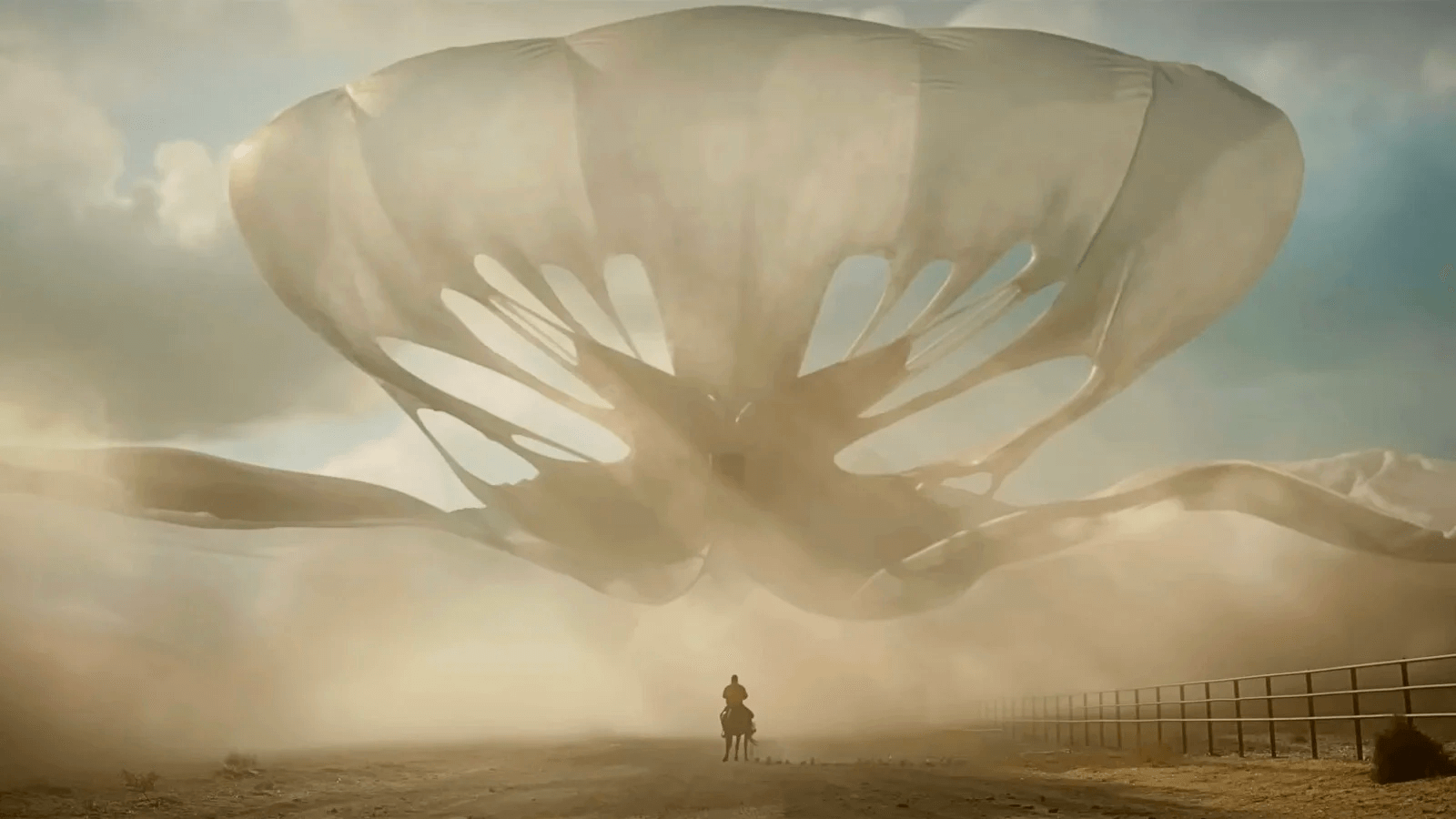
    Jean Jacket from Jordan Peele’s NOPE is nothing like anything we have seen or could even imagine; quite literally an out-of-this-world kaiju creature. It is worth noting, however, that Jordan Peele consulted a plethora of scientific experts, such as marine biologist Kelsi Rutledge, to create the creature.
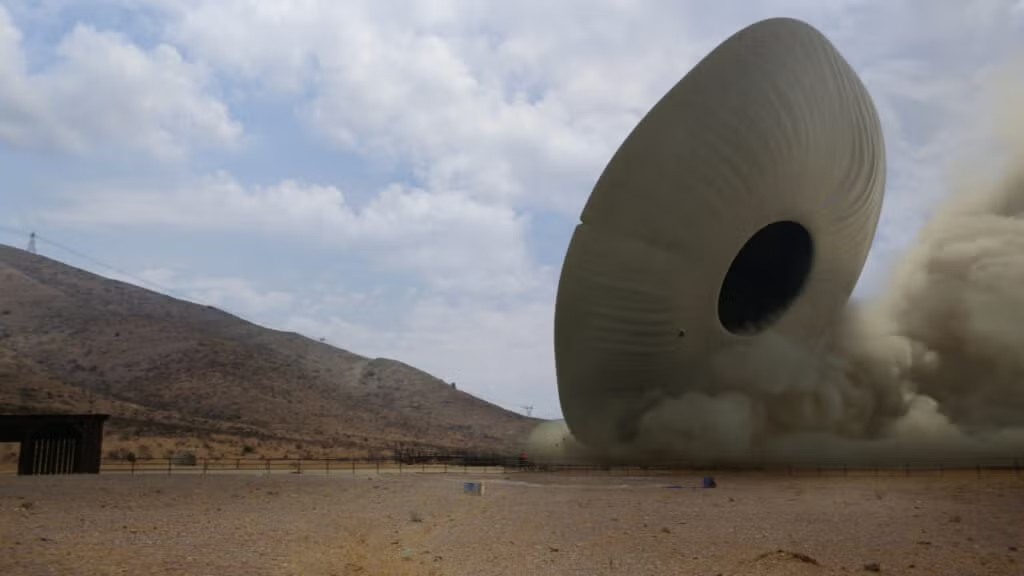
    Rutledge used many existing marine animals as inspiration for Peele’s creative vision. The general saucer shape is inspired by sand dollars, it’s camouflage from cuttlefish, unfurling from bigfin squids, and it’s square shaped eyes from octopuses. Rutledge even grounded the creature in taxonomical nomenclature by giving it a name: Occulonimbus edoequus, meaning “hidden dark cloud stallion eater.”

    So why does a mythical, otherworldly character need to be so grounded within earth’s limits? It is to be noted that such real-life elements are not blatantly associated with Jean Jacket within the confines of the film’s narration (OJ, for example, doesn’t say “it looks like a sand dollar” or anything of the sort). It is, however, interesting how real life elements come together to make something so strange that a human mind free from any grounded influences could not make something stranger. I think this speaks to human nature and psychology. Historically, familiar mythical creatures did not come straight from imagination, but the misinterpretation of real life animal remains. Dragons, serpents, and cyclopses all originate from strange fossil remains. Hybrid creatures, or chimeras (which Jean Jacket arguably is) have existed for millennia. I think it says something interesting about human nature: our thoughts in a vacuum are surprisingly grounded in reality, but when confronted and inspired by reality itself, they go to unimaginable places. It humorously reminds me of the idea that crazy things happen in movies, but some things in movies are so crazy, they have to be inspired by reality.

    As interesting to think about as all of this is, I think it is also interesting to think about fact that Jean Jacket, a creature Peele intentionally wants to be ambiguous, has “lore.” Just reflecting on my own actions, I curiously went online after the movie to learn more about Jean Jacket, found all of this information, and found like minded people who were as interested in Jean Jacket as I was. I even found this creative depiction of Jean Jacket-like creatures created by @monstatron, inciting a Jean Jacket fandom.


    Why do we try to make sense of Jean Jacket at all? Why does Jean Jacket even have a scientific name? I think that subliminally, Peele’s understanding of human nature allows him to manipulate audience’s understanding of the creature inside and outside of the theatre. People want to make sense of what is not meant to be understood, and will look for ways to re-enforce a stable point of understanding. I also think that it speaks to the creation of fandom and how ambiguity allows the audience to fill in the gaps.

  • Sound & The Influence of Steven Spielberg’s “Jaws” on “Nope”

    In one of his interviews, Jordan Peele claims that he got a lot of inspiration from Steven Spielberg’s “Jaws” for his movie “Nope”. The correlation between the two films didn’t quite register with me at first, but after watching this YouTube video that breaks down specific scenes and sounds from both movies, it’s a super cool comparison and you can definitely see the similarities that they share.

    A major focus of the video is the sound aspect of Nope – it consists of mostly diegetic sound throughout the film, which adds to the realistic feel of the movie and makes us feel more immersed in the events that take place. During the beach scene in Jaws, the audience is on edge knowing that there is a shark attack brewing. The background noise consists of normal sounds that you would hear on a beach, people talking, waves crashing, radios playing, etc. But then we hear a scream coming from the water and our anxiety rises, thinking that it’s the shark’s new victim. We quickly find out that it’s just a girl screaming because her boyfriend lifted her up out of the water, but that sound triggers us to think of the worst and adds to the suspense. The same can be said about the scene in Nope where OJ is standing outside in the dark with Ghost. It has an eerie wind sound, the horse sneezing, and overall it’s quiet but diegetic and normal; then a loud noise comes from the house, which again makes us frightened about what that means. We see that it’s just Emerald playing music to dance to, but that sudden introduction of a new sound scares the audience and keeps them on edge for something horrible to occur. The diegetic sound and focus on otherwise overlooked day-to-day noises heightens our senses and gives us a “calm before the storm”.

    Another cool part of the sound in Nope was the creation of the noise coming from the alien thing (I’m still not exactly sure what to call that creature). It was supposedly a combination of screams like you are on a roller coaster, and screams like you are getting eaten by some mysterious entity that flies around like a hungry UFO, which makes for a very uncomfortable noise. At first from a distance the sound could be interpreted as just wind, or the normal noise that a flying saucer would make, but as the story goes on, we learn that it’s much more than that and gives the sound more attention and meaning. It eventually conditions the audience to start to feel anxious whenever that noise sounds in the film and it’s a super cool addition to the already creepy creature.

    Overall, the video has great insight into the movie and certain elements that I definitely missed on the first watch, so I highly recommend watching it!

  • The Wizard of Oz and the Birth of Genre Hybridity

    This week’s reading described genres as living systems that balance convention and innovation. That idea came to mind while reading Alex Sergeant’s essay “Scrutinizing the Rainbow: Fantastic Space in The Wizard of Oz (1939)” (Alphaville: Journal of Film and Screen Media). Sergeant argues that The Wizard of Oz didn’t just use genre conventions, but that it invented the grammar of hybrid genre filmmaking. The film’s split between Kansas and Oz, realism and fantasy, black-and-white and Technicolor, turns genre into a kind of motion. Its “dual spatial focus,” as Sergeant calls it, grounds the viewer in the familiar before releasing them into wonder. That structure became Hollywood’s model for how to blend fantasy, musical, and adventure without losing coherence.

    Sergeant’s analysis captures what our reading describes as the “interplay of convention and innovation.” Oz takes familiar ingredients—the musical number, the quest, the fairytale moral—and merges them into one story of transformation. We recognize the comfort of genre, yet feel its edges blur. Looking at Oz in this way, I realized it’s the blueprint for so many “journey” films that bridge worlds: Star Wars, Pan’s Labyrinth, Harry Potter. Each one restages Dorothy’s passage through spectacle toward self-discovery. Sergeant calls Oz “perhaps the most watched example of classical Hollywood cinema,” but what keeps it alive is how it shows that genre moves. It isn’t a fixed category. It’s a rainbow that bends meaning across forms.

    That insight also ties directly to our feature, Nope (2022). Jordan Peele reworks genre the way Oz once did. He fuses the Western’s open landscape, the sci-fi invasion, and the horror monster movie into a single story about spectacle and control. Both films ask: what happens when wonder turns on the spectator? Sergeant’s essay, though written about 1939, helps explain why Nope feels familiar yet new. It’s the same path Dorothy walked, only now it’s lined with clouds and cameras instead of poppies and tin men. Genre, for Peele and Fleming alike, isn’t a set of boundaries, but a language that keeps rewriting itself.

  • “Nope”: How Its Cliches Make the Movie

    Nope(Jordan Peele, 2022) is a movie that has been on my watchlist since it came out. Many people have told me it’s one of their favorite movies, and I get it now. This is a film that is very good as creating feelings of tension with genuinely good jump scares, truly spine-chilling suspense, and beautifully disturbing imagery.

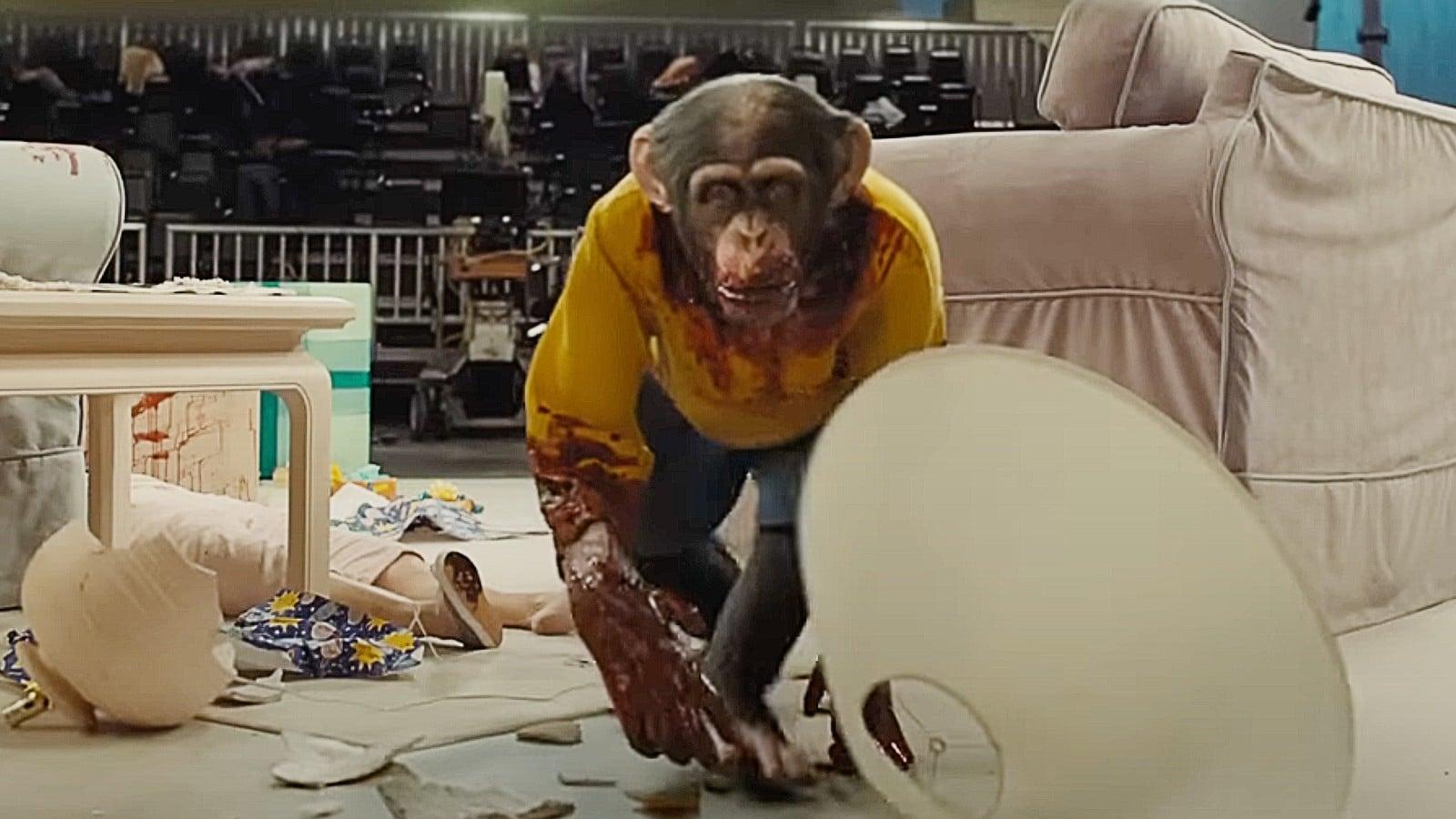
    In Nope, there are so many of the tropes we’ve come to know from horror. Danger at a house, a fake out scene, the final girl, and jump scares are just some examples of such cliches. The conventions drive our expectations as viewers and present some familiarity to grasp onto. It’s the subject content of the horror, however, that really draws out those feelings of dread. Peele doesn’t rely on cheap scares; he draws out the suspense and lets the audience stew in the disturbing events onscreen. The scene of Gordy’s Birthday Massacre and the Raining Blood scene leave particularly strong impressions, mainly due to the copious amount of onscreen blood. This contrasts with the rest of the film, which has almost no gore at all.

    Jordan Peele explains meaning of Gordy chimp sequence in Nope - Dexerto

    The relatively slow cutting allows the audience to slowly take in the scene, as the realization of what is actually happening hits. Furthermore, the long takes and sound design work together to keep the audience in a suspended state of tension. During Gordy’s Birthday Massacre, it was truly terrifying to watch the ape, blood on its face and hands, kill the people on set in such an animalistic way. No emotion, no remorse. Just violence. The fact that we saw the slaughter through the eyes of a young Ricky Park just added to the fear factor. To top it off, the gunshot at the end of the scene was so jarring it actually jolted me out of my seat. I’ll mark the experience down as another success of the horror genre.

    I can’t just lump it in with all of the other horror movies I’ve seen though. While Nope hits all of the beats of the horror genre, it also shows elements of westerns and sci fi. The warm color tones and California ranch setting are reminiscent of the western genre, and the conspiracy theories and extraterrestrial presence bring the monstrous energy of something otherworldly to the film. Rather than a scary climax, the final confrontation with the alien gives the invokes the essence of the classic western showdown. Tense, yes, but not horrific. There’s a commentary about the lengths people will go to create a spectacle and the dangers of tampering with the unknown.

    WATCH: NOPE — VFX & Cinematography Breakdown (2023)

    I wonder if the context in which Nope was made gives it a deeper or different meaning? What is the significance of seeing Gordy’s story?