Tag: #Portrait of a Lady on Fire

  • Utopia

    Celine Sciamma’s Portrait of a Lady on Fire (2019) is a wonderfully wistful film, following the painter Marianne as she paints and begins a love affair with the reclusive bride-to-be, Heloise. Through long takes and the almost exclusive usage of diegetic sound, we viewers are transported into this quiet world of longing.

    Typically, a utopian film portrays “a setting that is idyllic or a society that strives for perfection” (Hellerman, No Film School – https://nofilmschool.com/utopian-fiction). A good example of a utopia within a film is The Truman Show, where Truman lives in a perfect, scenic neighborhood. Though Portrait of a Woman on Fire doesn’t depict a perfect society –

    (sidebar) In fact, Sciamma makes a point of highlighting the imperfections of the society in the film, especially when Marianne discusses her inability to paint male nudes due to her gender.

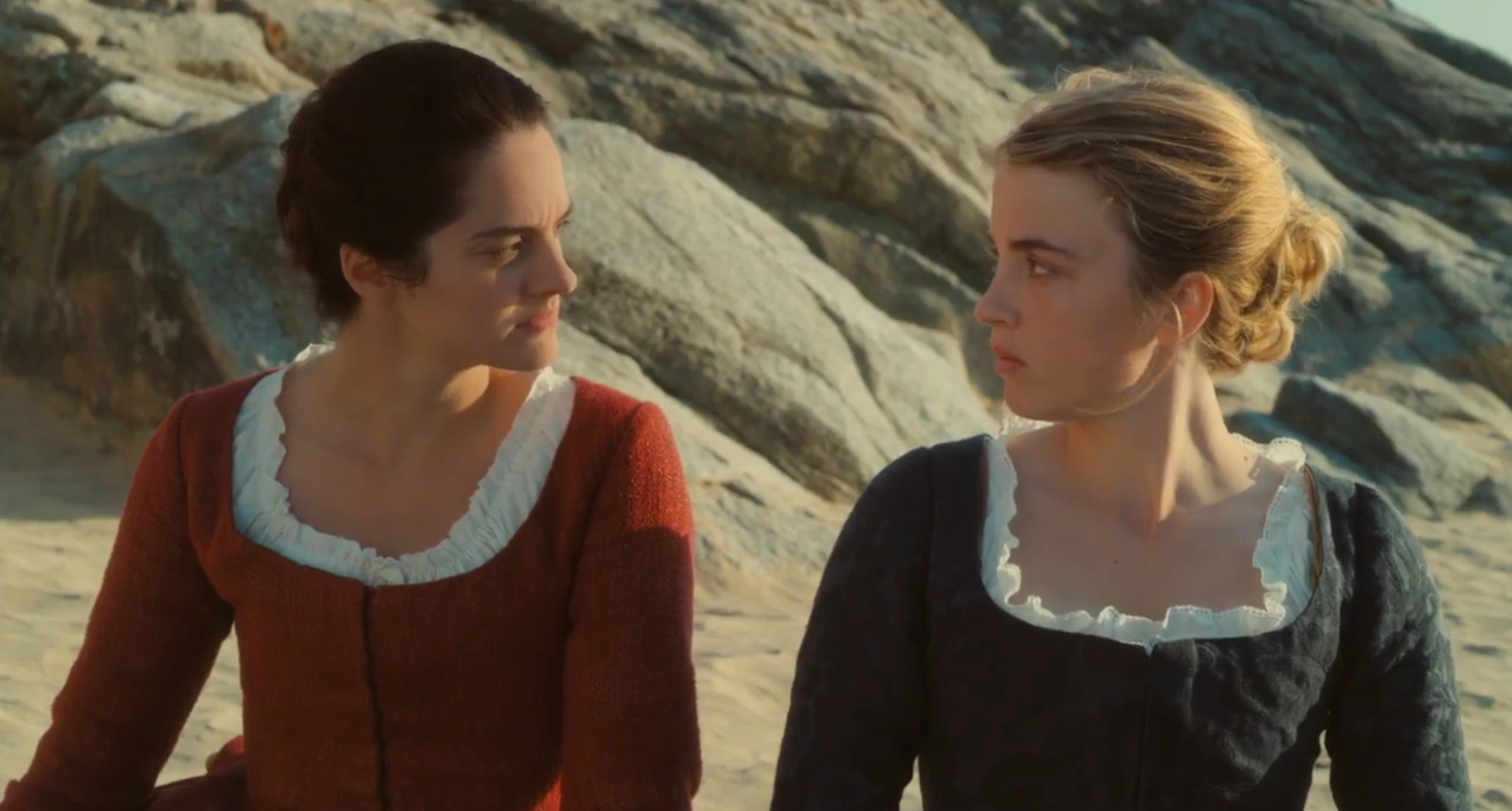
    – The film does take place in the idyllic setting of an isolated island off the coast of France. The color and mise-en-scène of this film reinforce this picturesque setting as well. Sciamma utilizes many softer colors throughout the film, such as the blues, reds, and greens of the women’s dresses, or the offwhite/cream colored walls of the mansion. This muted color scheme is often associated with feelings of gentleness and tranquility. The sound design is the same, with the avoidance of non-diegetic sound. We’re fully immersed in the story and feel as though we’re walking the cliffs with Marienne and Heloise ourselves. This also makes the scenes that utilize non-diegetic sound more meaningful and attention-grabbing, such as the bonfire scene. Lastly, each character’s positioning and blocking is done so intentionally in this film, and makes every frame a painting. These three aspects of the movie make Portrait of a Lady on Fire as utopian as possible.

    The utopia is also shown through the film’s material. Left alone on their own island, Marienne and Heloise are given a utopian freedom like never before. As Michael Brzezinski writes for The DePaulia, “she [Sciamma] makes a utopia of femininity for her characters in this world…even though it’s temporary…it’s almost elegiac in that nature”(https://depauliaonline.com/46466/artslife/film-tv/review-portrait-of-a-lady-on-fire-is-utopia-of-femininity/).

    An example that stands out to me is the unwanted pregnancy section of the film, where Sophie (the maid) chooses between keeping or aborting her baby. It was very meaningful to see a world in the 1700s where woman could make their own choices regarding their body and sexuality. Ultimately, this utopia is shown as temporary when Marianne leaves her room on her last day on the island and sees a man eating at the dinner table while Sophie serves him.

    Ultimately, the two women must leave their feminist utopia and return to the oppressive patriarchal society that they came from, where women lack autonomy and equality.

    Portrait of a Lady on Fire provides us with a look into a utopian world, where women are given freedom over their own decisions and health. Sciamma further emphasizes this through using almost unrealistic, picturesque colors in setting, set, and costume to make this world feel perfect and otherworldly.

  • Cinematography, Sound, and Symbolism in Portrait of a Lady on Fire

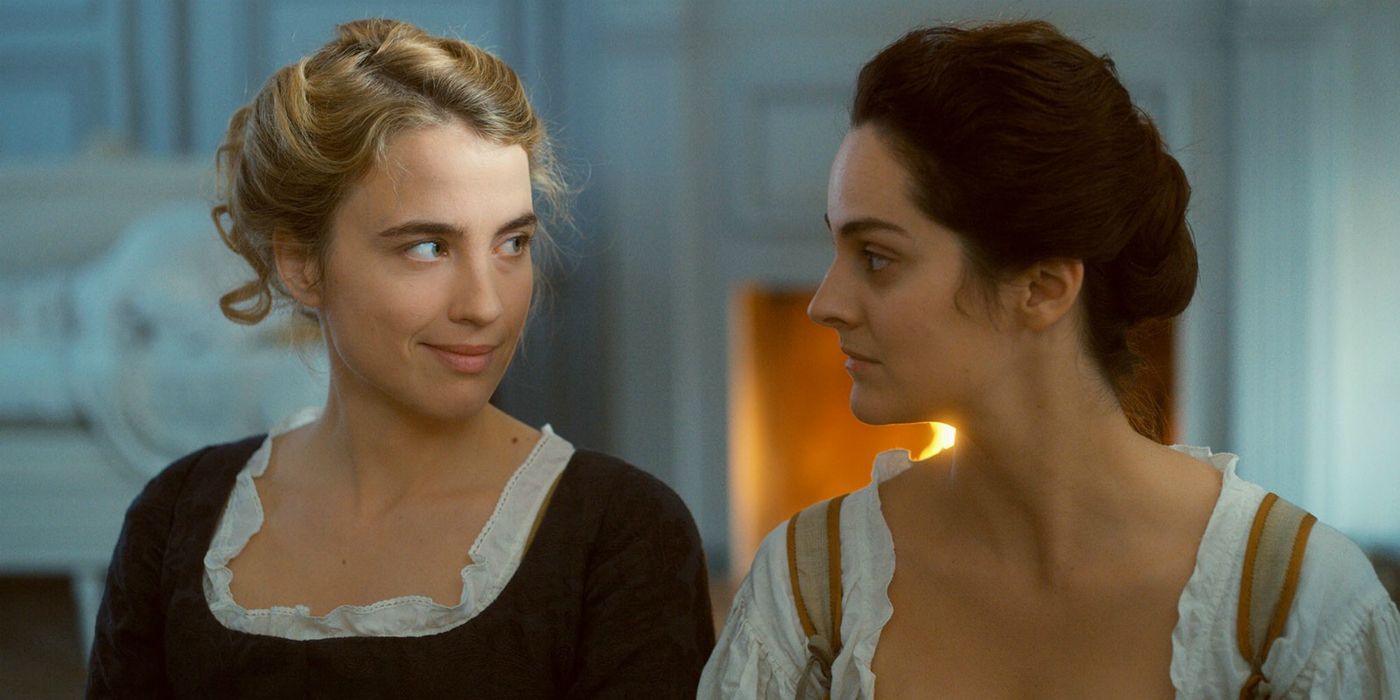
    Portrait of a Lady on Fire (2019), directed by Céline Sciamma, is a wonderfully beautiful film, capturing the longing and searching looks shared between the two main characters, Marianne and Héloïse. The film has long takes that give the story room to breathe and establish a quiet, poignant atmosphere. The framing of the shots is usually focused on the two women and their shifts in facial expression and emotion. In the scenes where Marianne and Héloïse are playing the harpsichord and playing a card game, the framing is deliberate, only showing their faces in medium close ups and close ups.

    Review portrait of a lady on fire is a sumptuous devastating film – Artofit
    Portrait Of A Lady On Fire Ending & Final Scene Meaning Explained

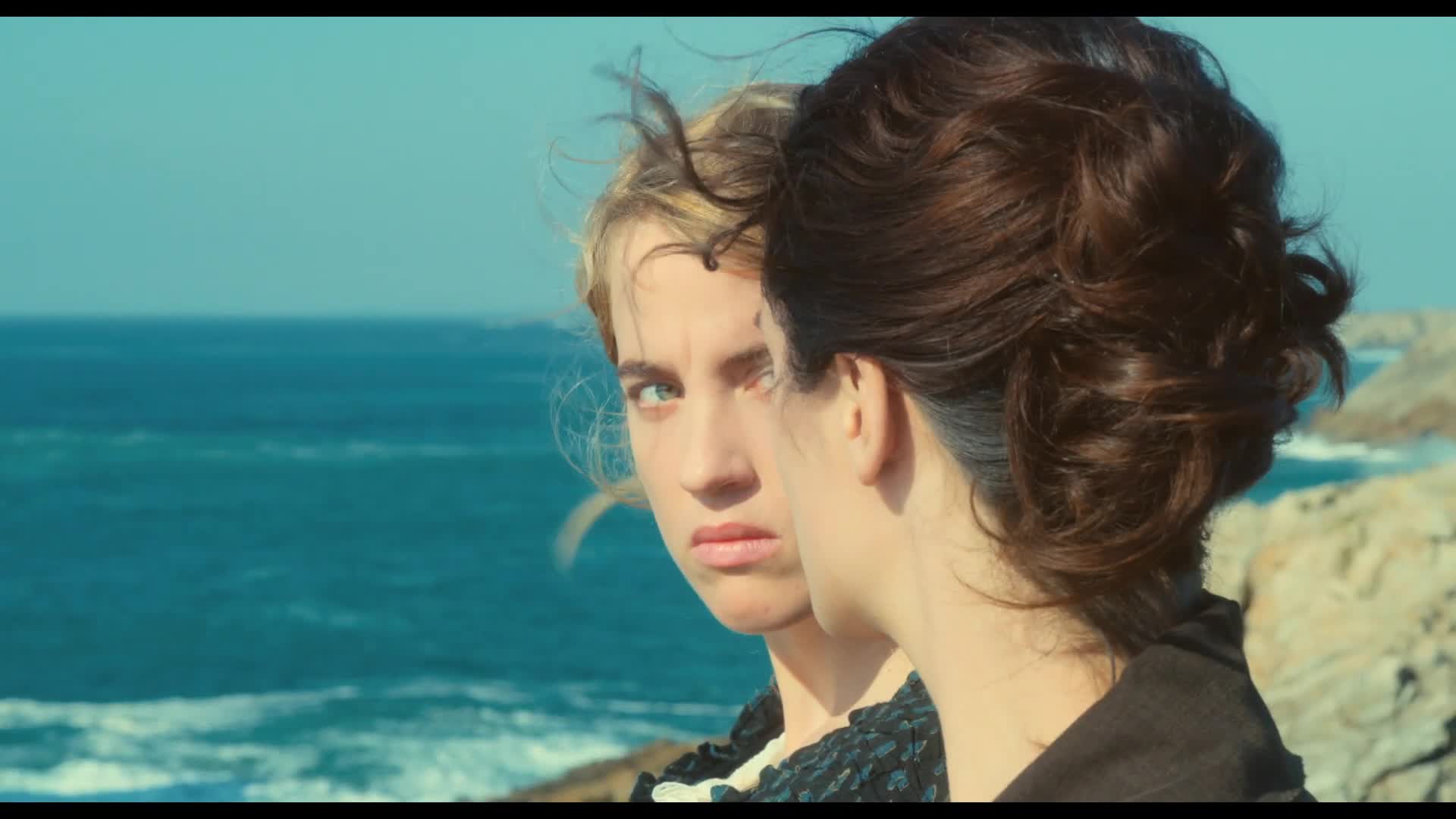
    The intentional framing drives the narrative by showing the viewers the emotional journey of the characters. In one scene by the coastline, Marianne and Héloïse are standing side by side. Marianne’s face is covering Héloïse’s face in the frame but reveals Héloïse’s face every time she turns her head to look at her. I thought this was a genius use of framing because it cues the audience in on Marianne’s inner thoughts and her curiosity about Héloïse. We glimpse Héloïse as Marianne does, quick and fleeting.

    Portrait Of A Lady On Fire Wallpapers - Top Free Portrait Of A Lady On ...

    The long shots throughout Portrait of a Lady on Fire are broken up by a generous helping of close ups, most notably used to emphasize important props. One example is the insert shot on the vase of flowers the maid is using as a subject for her needle work. An earlier shot shows the flowers blooming and flourishing with vibrant colors, but towards the end of the film, the flowers are shown in another shot as dead and withering.

    Portrait of a Lady on Fire (2019)

    We can take the flowers and extend their physical status to the relationship status of Marianne and Héloïse. Mise-en-scene and cinematography are working in tandem to enforce the mood and themes presented. It’s also worth noting that Marianne is in red throughout the duration of the film, indicating her as the object of desire for Héloïse.

    Portrait of a Lady on Fire: the act of looking - peachful - Medium

    The distinct lack of non-diegetic sound emphasizes the current action and brings the viewer into the fold of the setting. When there is music, however, the emotional effect is greatly increased and has a greater symbolic meaning when taken in the context of the relationship between the two women. The bonfire scene is an emotional moment for both women, and the fire acts as a metaphor for their attraction and desire.

    Portrait of a Lady on Fire Bonfire Song Explained: Best Musical Moment
    From Cannes: Céline Sciamma Paints a Captivating Romance in ‘Portrait ...

    The ending of the film was especially interesting because Marianne and Héloïse were both at the same orchestra concert listening to a piece that held emotional significance during their relationship. Héloïse was lost in the beauty of the orchestra, oblivious to Marianne sitting on the other side of the room. The camera moves in, and we see tears roll down Héloïse’s face.

    Portrait of a Lady on Fire – [FILMGRAB]

    While talking with several people about this scene, they mentioned being thinking Héloïse would look over and see Marianne or acknowledge the audience in some way. It was an interesting take, especially if you take the story of Orpheus and Eurydice, as told earlier in the film, as a metaphor for the affair.

    Was Héloïse truly ignorant to Marianne or was she instead choosing to keep the memory of Marianne that she created? How does the cinematography cater to the feminine gaze? What do you think of how the cinematography impacted the pacing of the film?