Tag: #RRR

  • Hindu Mythology in Film and Politics – RRR

    I have been a practicing Hindu from birth, and growing up with Hindu parents and being surrounded by Hindu culture, much of its imagery and teachings have been familiar with me for a long time. I would not consider myself a deeply “religious” person, but I do follow my own type of Hindu faith and I am familiar with most elements of Hinduism.

    Watching RRR, and following the discussion we had in class, made me think of the use of Hinduism in film and politics more critically, especially as a nationalist tool to promote discrimination and oppression. Hinduism has close ties with entertainment for years and years, but it is interesting how Hinduism, more so than any other practicing religion, is used in this manner. It is true that many films incorporate elements from other religions, even in fiction (one film that comes to mind is Ben-Hur 1959), but few films fictionalize the religious elements of the films themselves as much as Hinduism. For example, Ben-Hur‘s narrative sticks closely with recorded and accurate events of the divine even if the rest of the plot is fictional. In RRR however, both Bheem and Ram (both characters symbolically, metaphorically, or physically reincarnations of the Pandava prince Bheem and the avatar of Vishnu Ram) are put in stories never depicted or imagined in the Mahabharata or Ramayana (in fact, according to most agreed studies of mythology, the two lived at least a few thousand years apart from each other).

    All of this raises the question of why Hinduism is so malleable, and I think a lot of it has to do with its formation, structure and practice. Being several thousand years old and without a founder and unifying text, Hindu has long fostered an idea of individual interpretation amongst a collective Hindu culture. This is especially highlighted in two elements outlined in Hinduism: the ambiguity of the Divine and the different schools of thought fostered by Hindus. Hinduism itself presents its subjects and texts with moral ambiguity.The Mahabharata is a great example of this, in which a story in which a clear dharma and outlinable “heroes” and “villains” are challenged with the ethically questionable actions of those on both sides; heroes sometimes commit villainous actions and tactics, and villains sometimes show more dignity and principle than their “good” counterparts. Physical ambiguity is also present in Hindu texts; the Vedas question the universe’s coming to existence and even god’s involvement or knowledge of it, stating “He knows— or maybe He does not know ” (Rig Veda, X. 1291). Different Vedas even frequently contradict each other, yet at the same time coexist in harmony as part of Hinduism as a whole. Within the very framework of Hinduism, ambiguity and different interpretations are established and welcome, encouraging individuals to find god and interpret faith in their own way through their own practices. This is further emphasized by the different schools of thought created through subcultures and interpreters, from Buddhism’s compassion and detachment to Charvaka’s material ambition and atheism, all of which are valid and accepted practices by Hinduism (it’s to be noted that Hinduism in practice and theory aligns with all other religions, including monotheistic religions such as Christianity and Islam, to co-exist as equals).

    With all of this in mind, it is interesting to see how Hinduism in RRR develops in the larger sphere of Hinduism in India, including political nationalism. India’s population is a Hindu majority (roughly 80%) and the religion has developed alongside Indian society as part of a cultural ecosystem for over three thousand years. Along with the creative and interpretative fluidity of Hinduism, it is no surprise how Hinduism has embedded itself in almost everything, including art, storytelling, lifestyle and politics. It is exactly this fluidity that enables Hinduism to be transformed into a nationalist tool in the modern era. Its origins stem from colonialism, as it was a method to unite the Indian people under a single unifying influence. The irony, of course, is that Hinduism isn’t really a “unifying” religion; as mentioned before, its vast interpretive heterogeneity suggest a more personal than national connection. Since 2014, the Bharatiya Janata Party (BJP) and prime minister Narendra Modi have employed this religious nationalism as part of a superconservative agenda, most specifically in the Rashtriya Swayamsevak Sangh (RSS), a volunteer paramilitary organization that has extremely close ties with fascist ideology. By cherry picking elements and re-interpreting Hindu tradition to justify actions, Hinduism can be weaponized. One of the most telling principles is the idea of “Cow Politics.” The idea, stemming from the Hindu reverence toward the cow, is used to mask political insufficiencies through religion. It encourages practicers to ignore societal and political problems and instead worship god, which will “remove all problems,” blurring the line between mythology and reality. This effectively silences political opposition of wrongdoings with the misguided appeal of nationalism. I have also seen the “how dare you insult religion!” argument used to quell critics of the national regime as well. RSS has been involved in multiple terror attacks and riots against Muslims, and has been the forefront societal and political influence on Hindu supremacy.


    Seeing the religion that I love be twisted in such a way is terrifying. Yet the incredible thing is that, despite it’s hateful nature, Hinduism in theory considers such nationalism as a valid way to practice the religion— it is simply another interpretation, amongst several others, that contributes to the collective Hindu manifold. As stated earlier, Hinduism is accepting of other religions such as Islam, yet is also accepting of ideologies that degrade and disavow Islam as well. It highlights a weakness of the religion; without a clear moral framework, it can be manipulated in a way that both divides people and creates an agenda backed unity. I think that it is important for people to recognize the prejudice laced within modern Hindu nationalism and remember the importance of individualism. People have the ability to believe what they want, and do not need someone else to tell us what they must believe in. In fact, millions of Hindus interpret the faith in ways rooted in empathy, coexistence, and personal spirituality rather than nationalism. Re-embracing these interpretations, and encouraging open conversations about how power distorts religious meaning, can counteract the narrow vision promoted by extremism. If more people approach Hinduism with critical awareness and a commitment to its pluralistic spirit, the religion can continue to evolve without becoming a vessel for oppression.

    Considering the complex and divisive nature of this topic, I may have overlooked some elements, misinterpreted some events, or provided a narrow or biased viewpoint on some topics. If so, or if any clarification is needed, please leave a comment.

  • RRR: Really Really Really Not What I Was Expecting (In The Best Way)

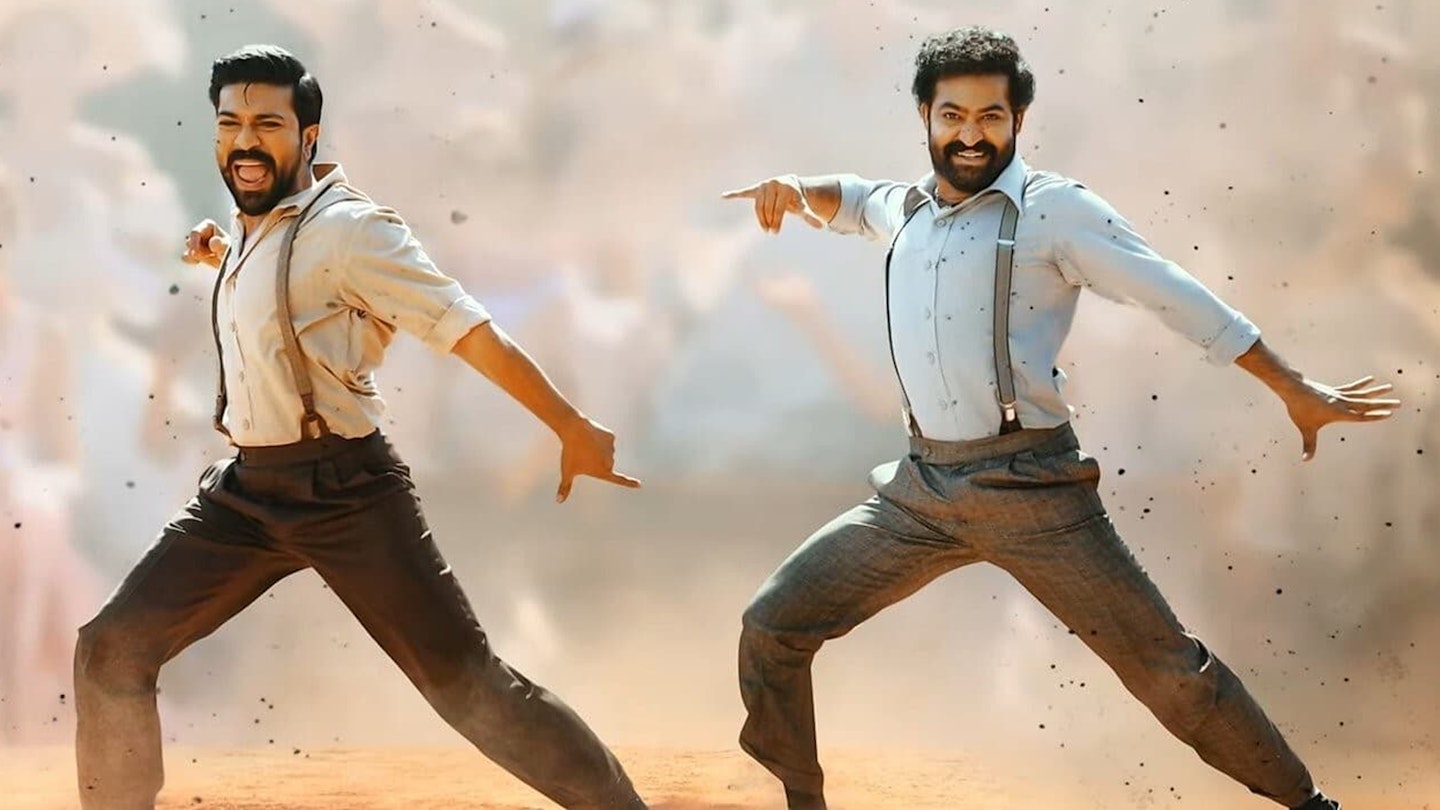
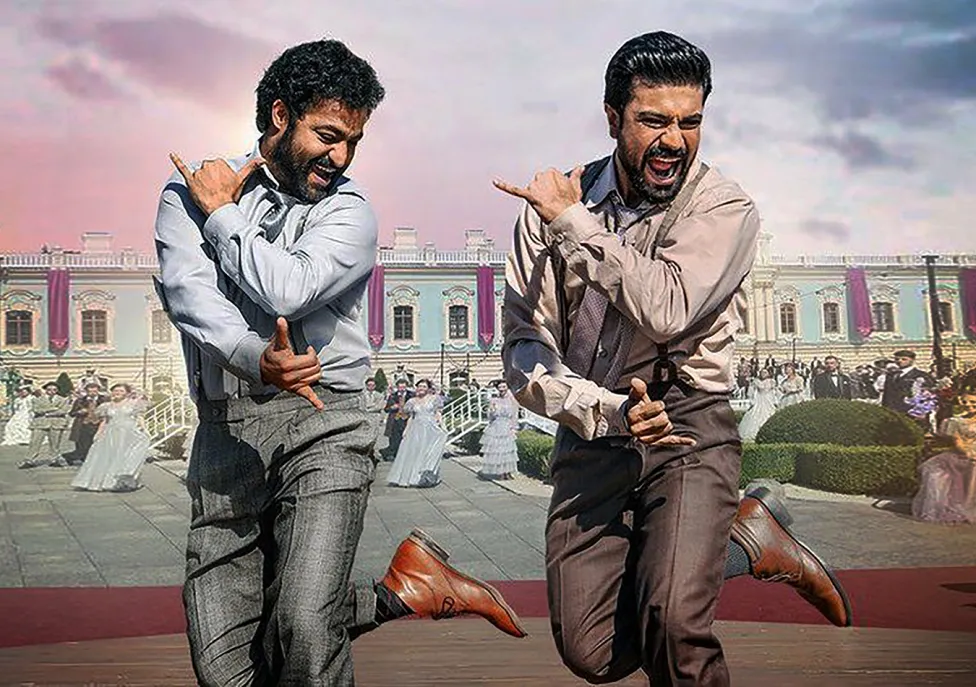
    In all honesty, I did not come into the screening for RRR with an open mind. Professor Zinman tried his best to hype the movie up to us in class but I already knew that there was no way that I would like, or more importantly even stay awake, during a three hour long film in a foreign language; so I brought a full water bottle of Diet Coke with me to help me try to get through it with caffeine. Little did I know how much of a banger this movie was going to be. Once again, Professor Zinman gave us an absolute gem and I loved all 187 minutes of it. I had a very skeptical idea of what the movie would be like, especially after the video we watched in class of the two men singing a song in another Indian film… wasn’t my cup of tea, and I didn’t think I could handle a whole screening of that. But every song and dance, war scene, bad CGI, everything was so beyond entertaining in RRR. I was smiling the whole time, and in hindsight, I would’ve been just fine without my caffeine. One of my favorite scenes was their big dance performance at the castle party, so for my searcher research I found a video of the director talking about the process of putting the Naatu Naatu scene together. It was so elaborate and exciting to watch, so I think it was super interesting to hear about the choreography and thoughts behind the creation of that specific scene. He talked about the use of costumes, like snapping the suspenders, and how even though it was a great upbeat song for the audience, that it was also a fight scene between the groups and how the choreographer used that concept. Just an incredibly interesting video about how much effort went into that moment and how many different aspects were intertwined to make it such a great movie.

  • RRR: It’s A Lot, But It Works.

    https://www.newyorker.com/culture/the-front-row/the-netflix-hit-rrr-is-a-political-screed-an-action-bonanza-and-an-exhilarating-musical

    As I went in to watch RRR, I was expecting to see a fun action movie, which it was in some parts, but it was also so much more. It felt bigger, louder, and more emotionally direct than most blockbusters I have seen, completely open about its political purpose. The New Yorker review I read points out that “blatant is better than insidious” when it comes to political filmmaking, and I completely agree after watching this. RRR never hides what it is trying to say. It embraces its message of resistance, unity, and national pride with over-the-top energy, and that makes it more honest and interesting compared to other movies that try to slip politics in quietly. The article also explains that RRR “turns history into legend,” which is exactly how it feels. The story is not meant to be accurate, but instead takes the real history of colonial oppression and brings out the emotions behind it so strongly and obviously that the message can’t be ignored. At first I thought the exaggerated fight scenes and the personality-heavy villains were too unrealistic, but after reading the review, I agree with the idea that the exaggeration is the point. It shows the intensity of the struggle artistically rather than telling a more literal version of it.

    What stood out to me most was the way RRR mixes its political intensity with pure, wild entertainment. The feral action sequences, huge dance numbers, and dramatic plot twists keep the movie fun, but they also work to reinforce its message about resistance and perseverance. The review calls the film “giddy, exhilarating hyperbole,” and I think that captures the spirit of it exactly. In the end, RRR works because it refuses to tone anything down. It breaks out of the boxes that other action movies are inclined to stay within. It is emotional, loud, and confidently extravagant. Even though so much of it is unrealistic, the feelings behind it come across as completely genuine. This blend of fantasy and raw emotion is what will ensure that I will never forget the film.

  • Rajamouli, Baahubali, and the Politics of Myth

    This week, I revisited Baahubali in light of my earlier conversation about RRR and the troubling politics in the work of S. S. Rajamouli. I found a critical essay titled “The Problem With Baahubali’s Casteist, Supremacist Logic” in The Quint that argues the film normalizes hierarchy and caste-based supremacy. The writer claims the film portrays its fair-skinned heroes and heroines as civilized defenders of order, while dark-skinned tribal villains evoke “savage” barbarism. That contrast signals a clear racial and caste gradient embedded in the fantasy world. The article helped me see how spectacle and visual design in Baahubali do more than create fantasy: they reinforce a social order that treats inequality as natural.

    The critique points out how the “tribal” Kalakeyas appear as monstrous, dark-skinned, and “other,” while protagonists align with Aryan-supremacist tropes. The film reportedly uses a harsh invented language for the Kalakeyas, modeled after Tamil, to imply primitiveness. Even female characters like the warrior heroine and the queen mother end up having their power defined by caste or by their role in supporting male lineage. Watching Baahubali again with this context made me realize how visuals, casting, and narrative all shape viewers’ sympathies toward “civilized” rulers and away from the “barbaric” outsiders.

    The article does not engage much with the economic or production-side politics behind Baahubali, though that would be a valuable angle. Still, as someone from a Telugu background who has admired Rajamouli’s films for years without noticing casteism, I find this critique important. It provides a lens to question what I once accepted as mythic or heroic spectacle. After our class discussion of RRR’s politics, this piece shows that Baahubali too deserves scrutiny: behind its grandeur lies an inherited hierarchy that cinema packages in the name of myth and entertainment.

  • RRR: All about Shooting Naatu Naatu

    In this interview (RRR: Behind & Beyond)with Ram Charan & NTR, they talked about the process of shooting Naatu Naatu (the famous dance part of the film).

    RRR Review | Movie - Empire

    Naatu Naatu is a 2021 Indian song that is composed by M. M. Keeravani, lyrics by Chandrabose, recorded by Rahul Sipligunj and Kaala Bhairava. The choreography was by Prem Rakshith, incorporating 110 moves for the sequence and featuring about 50 more dancers for the film.

    Already from the film we were able to see how Ram and Bheem danced very precisely alike. Now from the interview, they actually explained the reason to this. Rehearsing separately before they went to Ukraine, and practicing together for 7 days after they went to Ukraine, and ultimately taking 12 full days to film this part of the film, NTR questioned the reason why they were required to dance exactly the dance. Since they come from different backgrounds, it seems reasonable that their dance styles could differ by a bit.

    Rajamouli, the director of the film, simply answered that “No, NTR and Charan can have different styles but not Ram and Bheem. These are my heroes. They are supposed to dance the way I want them to dance.”

    RRR | Detroit Institute of Arts Museum

    Well, the more reasonable explanation that NTR explained from the interview was that, because Naatu Naatu is supposed to showcase how relationships look like when you’ve become true friends with one another. You know exactly how the other person thinks or move even without looking at them. You understand fully each other’s mind, heart, or spirit.

    Within 24 hours of the song’s release in 2021, the song crossed over 17 million views in Telegu, which also made it the first Telegu song to cross 1 million likes. Charan and NTR often recreated the visual portions of the dance for the film’s marketing, and made the dance too very popular and trending.

  • S.S. Rajamouli’s Next Project: The Future of Indian Animation

    A few weeks ago, I came across an article talking about S.S. Rajamouli’s next big project: an animated feature film called Baahubali – The Eternal War. It’s slated to come out in 2027, and people are saying it will bring Indian animation to the next level.

    ‘Baahubali: The Eternal War’ Aims to Redefine Indian Animation

    After witnessing the absolute spectacle that was RRR (Rajamouli, 2022), I’m inclined to agree. Rajamouli’s special effects were a blast; it’s not everyday that I get to see a man punch a tiger with fire. I’m curious how much of the action was real and how much of it was computer generated. Several animation studios are working with Rajamouli, including Alcyde Studio, which has worked on Arcane in the past. The animation in the teaser trailer looks incredible, and I’m confident in the production quality for this project.

    The animation is expected to be on par with, if not surpassing, the animation in Arcane and Spiderman Into the Spiderverse. As a fan of both titles, I’m excited to see Baahubali raise the bar for animation through the roof. If this movie gets a theatrical release, I will definitely be going.