Tag: #sound

  • Comedic Elements and the Bitter Truth in Singin’ in the Rain

    While watching Singin’ in the Rain, I couldn’t help but feel as If I were watching a live-action version of a Looney Tunes cartoon. The film’s vibrant colors and playful energy evoke that same exaggerated, animated feeling. In a lot of scenes movement and facial expression seem exaggerated to a cartoonish degree—whether it’s Don’s happy walk after his “Singin’ in the Rain” performance or Cosmo’s slapstick attempt to “fix” his face after crashing into a brick wall during “Make ’Em Laugh.”

    But most importantly, the sound design adds to this cartoon-like feeling. Realistic ambient sounds are rare in the film, and when they do appear, they’re almost muted. The best example of this is when Don and Cosmo walk through the studio set early in the movie. Multiple films are being shot on the same stage while new sets are being built, creating an extremely busy environment—yet we don’t hear a single background noise unless the focus briefly shifts to it. This choice draws all attention to Don and Cosmo’s conversation and pulls the audience out of reality. The scene feels deliberately staged, almost like a performance within a performance. In the end, that’s what Singin’ in the Rain is—a performance within a performance.
    During several musical numbers—but most prominently in Cosmo’s “Make ’Em Laugh” performance—sound is used to emphasize movement and add an extra layer of comedy. Each time he falls, a brief drum roll and crash punctuate the action, transforming his stumbles into part of the rhythm.. Even small gestures, like when he sits on the couch and adjusts his legs, are matched with exaggerated cracking noises.

    Yet, besides all the fun musical numbers and slapstick comedy, the film also addresses the harsh reality faced by some actors when sound was introduced to cinema. Lina Lamont, once a major silent film star, is unable to adapt to the new technology of sound. In the end—though unwillingly—she is forced to end her career. The most famous real-life parallel is probably John Gilbert, whose career declined for similar reasons.
    In this sense, Singin’ in the Rain reminded me a lot of Babylon (Damien Chazelle, 2022), which likewise explores the industry’s transition to sound and the downfall of an actor unable to adjust to it.

  • Sound fabrication as a choreographed dance

    As we began to overview sound it is interesting to understand the extent to which it is naturally occurring or if its being artificially fabricated. The mini documentary “The unsung art of Foley” https://www.youtube.com/watch?v=UO3N_PRIgX0 exposes how foley artists replicate noises in such a realistic manner. The mixer Mary Jo Lang refers to this process as a dance which made me think of how sound is not purely recorded, rather, it is performed. The so-called “natural” sounds we hear in a movie are just a combination of layers meticulously thought of. 

    This idea directly resonates with the week’s feature Singin in the rain that exposes Hollywood’s obsession with synchronization and illusion. Additionally the sound in the movie is hyperbolized in every sense and there would be no way to grasp that solely from recording the movie. for example: even though the iconic song was recorded on a real water flooded set, the audio was recorded separately. Foley artists lend authenticity to images that would otherwise feel empty or flat — just like Kathy Selden “ghost-voices” Lina Lamont. 

    In the documentary, Alyson Moore says: “People take sound for granted, but you would miss it if it wasn’t there”. This emphasizes how if well done, sound is meant to be unnoticed. The layering process is an effort towards achieving  the most natural noise possible, and in musicals, layering parallels harmony as multiple elements bled together in a single experience. In musicals layering is exaggerated through dialogue, song, dance, ambient sound, rhythm and more. 

    In essence, both dancers and foley artists rely on rhythm, timing and a combination of movements to succeed. Foley artists dance behind the scenes mirroring the dances on the screen (as exposed on the documentary). By recognizing sound as a choreography we begin to understand that what feels natural in films is sometimes the most artificially constructed elements.

  • Singin’ in the Rain: Encapsulating a Feeling

    While regarded as “pure entertainment” without much substance, musicals are equipped with capabilities that traditional films are not. The characters in musicals can express themselves fully through song and dance, in a way that is unnatural in any other setting. They can profess their love, declare their passions, and reveal their innermost thoughts. Throughout Singin’ in the Rain (1952), the use of musical numbers is vital to contrasting the theme of superficiality and allows characters to translate their innermost feelings through song and dance.

    From “Good Morning,” a number key to signifying the optimistic outcome of the film

    As a group of performers, the characters in this film know how to best express themselves through the extravagant means of large sets, flashy costumes, or big show-stopping numbers. When Don Lockwood expresses his love for Kathy Selden during “You Were Meant For Me” he takes her to an empty soundstage, illuminating her with lights, a blowing wind, and a hazy pinkish purple background. The mise-en-scene is vital in this scene, as it places the viewer into the consciousness of the film being a film, reminding them of the aspects of a soundstage. The sound, however, works to transform this conscious realization, as the song takes over and the couple then sings together and dances as if their romance had been a choreographed routine that feels just right. The contrast of the soundstage to the genuine feelings of Don and Kathy represent the films overarching theme of being “in” and “out” of sync, they dance in sync, yet Don still needs his artificial setting to express his authentic emotions to Kathy.

    From “You Were Meant For Me”

    Later in the movie, during the over-the-top “Broadway Melody” that reflects on Don’s past career, a ballet dream sequence is employed, and is incredibly similar to that of “You Were Meant For Me.” What is noticeably different in this number is the lack of sound stage equipment. This could be because this is how Don remembers this moment in his past, not as a scene in a film but a true representation of his love for Kathy. It could also serve as a way to remind viewers of this scene, without reminding them of the film within a film aspect at all, and let themselves get swept away in the theatrics and emotions of it all. Regardless, this entire sequence of the film is supposed to take place in the mind of Don, showing his true memories of his success story, his love story, and how he envisions himself.

    From “Broadway Melody”

    Feelings of true love are not the only ones evoked through song throughout this film. The slapstick number “Make ‘Em Laugh” utilizes sound effects to both provide comedic effect and help the viewers visualization. Using Cosmo’s language of song to give a pep talk to his friend, and make the actual film viewers laugh, actor Donald O’Connor is able to express through his character and himself a translation of comedy. The non-diegetic implementation of music throughout the film both reminds the viewers of the artificial element that this film has in its nature, being a film, but evokes feelings throughout that allow viewers to forget these realizations and again lose themselves in the entertainment.

    What can we learn about the significance of movie musicals after watching Singin’ in the Rain? How would Singin’ in the Rain have been changed if not for the dramatic, cheesy songs and dance numbers, and had instead focused on a more realistic interpretation of reality?

  • The Comedy and Critique of Sound in Singin’ in the Rain

    Singin’ in the Rain (1952) is a musical about making a musical, using sound to express the ironic elements of cinema. The biggest joke of the film is that it exposes how deceptive show business really is, using sound itself as the tool of critique. This is clear in the disastrous preview of The Dueling Cavalier, where every element of sound is transformed into a punchline. For example, the dialogue is out of sync, the microphone is awkwardly hidden in Lina’s costume, and even her high-pitched voice makes us question the concept of fidelity: was this sound what we expected? The mismatched timing between sound and image makes the scene feel chaotic, but that chaos is literally the point.

    The audience’s laughter within the film mirrors our own. We are invited to find pleasure in the failure of movie magic, to enjoy the breakdown of the very systems that usually keep us immersed in a fictional world. This self-awareness turns Singin’ in the Rain into both a celebration and a critique of sound’s role in film, showing how cinema can use its own tools to question the illusion it depends on.

    Furthermore, the irony continues in the scene where Kathy secretly provides the singing voice for Lina. The timbre of Kathy’s warm and smooth tone is a stark contrast against Lina’s shrill, artificial one. The scene not only jokes about vocal authenticity and giving artists credit, but it also hints at a deeper truth: what audiences perceive as “real” emotion in many films is often a construction of layered sound, synchronization, and careful editing designed to produce the most pleasing result.

    Singin’ in the Rain turns what was once seen as cinematic progress—the introduction of sound in pictures—into both a source of comedy and a form of commentary. It’s a movie that makes us laugh at the errors of sound while also making us listen more closely to how those sounds shape our experience of film itself. This leaves us with a question: does our idea of an “authentic performance” lie in the voice we hear or in the illusion we believe?

  • Singing’ in the Rain–A Satirical (?) Revisit of the Birth of Sound Film

    As an all-time musical-lover, Singin’ in the Rain is perhaps the most entertaining and enjoyable film I watched so far through the semester. I remembered how in class today we discussed that one of the major approaches of musicals is pure entertainment. It is not only an escape from reality, but an exploration of what humanity could potentially look like.

    However, as the film progresses, I started sensing something deep within the film, something that did not just make me laugh over–the narration over film’s development from silent to sound.

    Screenshot from Singin’ in the Rain, beginning scene screening The Royal Rascal

    Silent Films

    We could take a peek at how silent movies were screened from an establishing shot in the film. This picture is from the beginning of Singin’ in the Rain, where audiences watch The Royal Rascal casted by Don and Lina. Beneath the cinema stage, we see an ensemble instrumenting for the silent film, which is displayed on a large screen. This was a classic characteristic when silent films were popular, where the cinema’s director would hire a playlist to be played during screening that does not necessarily has to be related to the film. I suppose that its primary purpose is to block the noises generated by the projector during screening.

    As film develops, there comes a special playroom for projectors, which separates its loud noises from the audience, which was also when people started realizing how sound could be incorporated in film.

    In Singin’ in the Rain, we see that starting to appear when the first talking picture, The Jazz Singer, gains popularity, forcing The Duelling Cavalier to also be changed to a talking picture. Prior to that, the actors have been utilizing the privileges of a silent picture to make films.

    In this scene when Don and Lina acts out The Duelling Cavalier as a silent picture, they were having an argument over Kathy Seldon, despite acting as romantic lovers. They both know that their conversation would not be in the final film version, exploiting that particular advantage. Later, we know that Don’s repeated “I love you”‘s and Lina’s odd voice pickup would make the movie to be commented as “the worst picture ever made.”

    Of course, the film shows us a lot of other difficult issues encountered with talking picture productions in its beginning: voice synchronization, the balance of sound between volume of dialogue, props, and noises, as well as the training required for actors and the need for scriptwriters, etc. The birth of talking pictures allows a greater degree to approach realism, but raises the bar of work for almost every part of production.

    The Satire

    All this eventually makes me recall how Don and Cosmo were treated before they were discovered by Mr. Simpson, along with that Don’s repeated motto, “Dignity. Always dignity.”

    Screenshot from the film, Don describes his road to fame.

    Don and Cosmo had been practicing dancing, singing, and performance from a very young age. As the only true audience that are able to understand his true stories, we know that he has been ironic about his stories because of maintaining his dignity with the current trend in the film industry. He was not well-treated before being heard by Mr. Simpson. People cared less about his music performances, but more on Lina, who we know is the actual actress who doesn’t know how to sing or speak formally. Yet, when talking pictures become trending, which is also when Don has decided to turn The Dancing Cavalier into a musical, he starts to pick up what he used to do as a teen–singing and dancing to music.

    I think this mirrors how the public commentaries on sound film were when it first came out. In class Professor Zinman talked about how critics challenged the integration of picture and sound, as if sound would destroy the “original” meaning of film as a newer medium at that time. However, when people started liking it, the films start to earn money, and the entire film industry would operate toward this more profitable goal, which many times contradict with our wish to really explore the bounds of film.

    Before, I did only enjoy musical in a more entertaining way. But from now on, I guess I want to treat each musical film more seriously, as there would always be something in its sound that reminds me of Singin’ in the Rain, and the histories that it is trying to teach.

  • Cinematography, Sound, and Symbolism in Portrait of a Lady on Fire

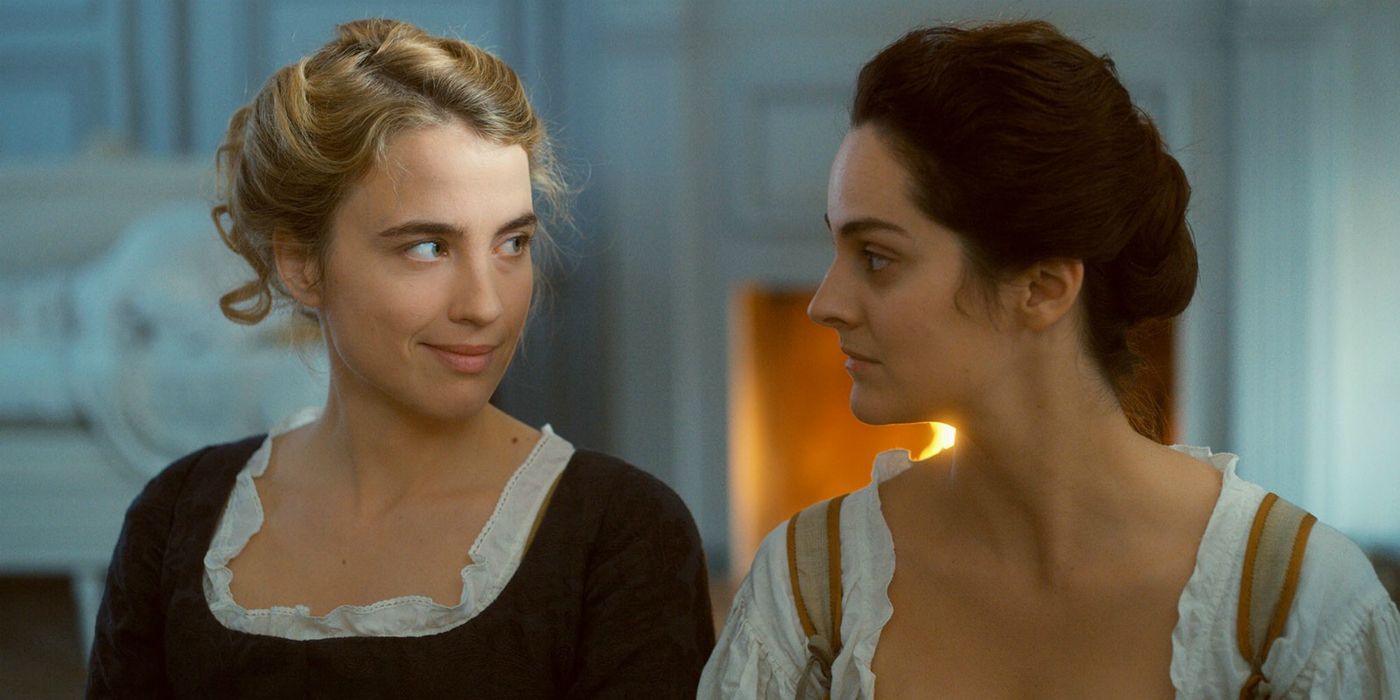
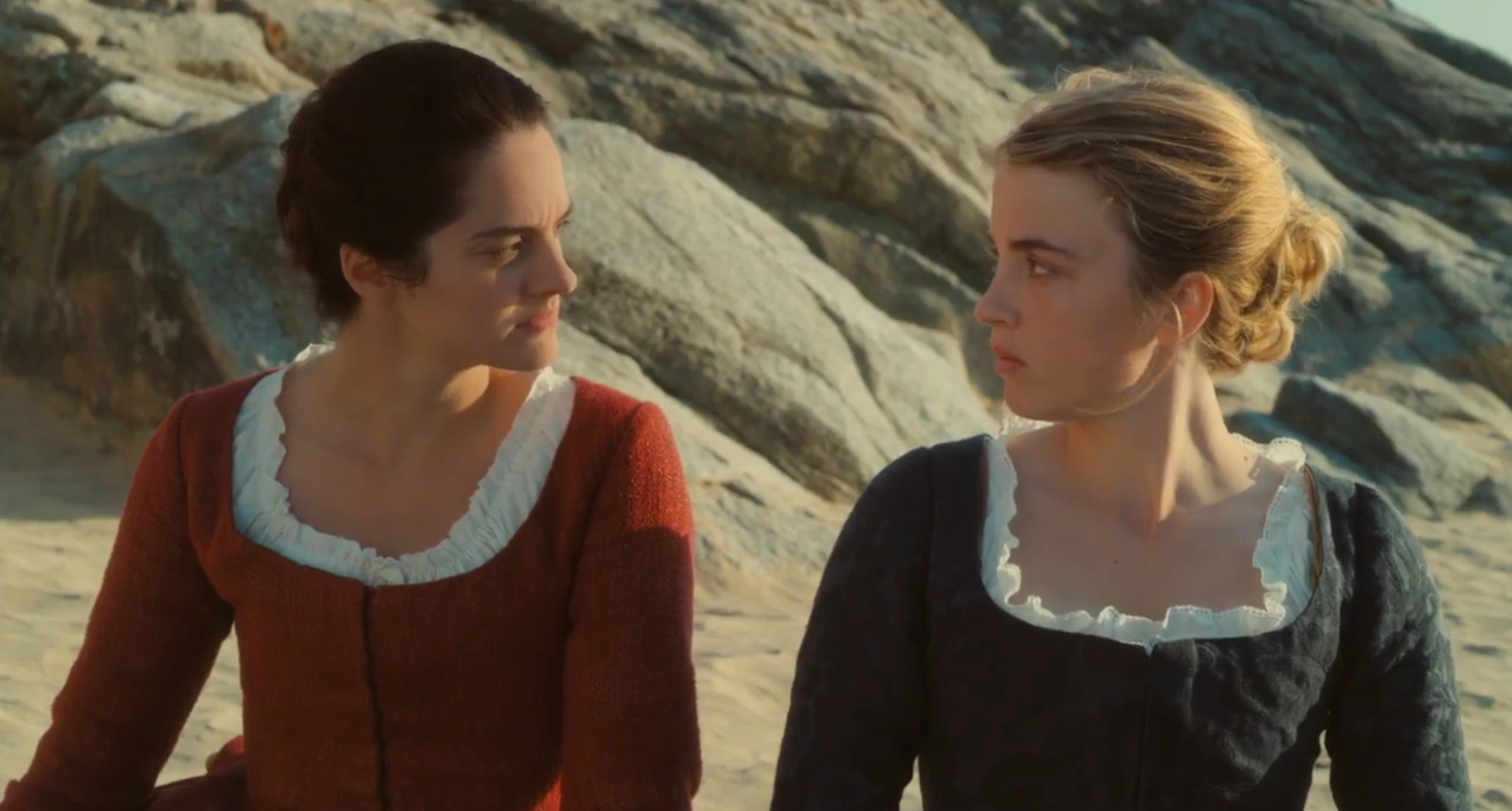
    Portrait of a Lady on Fire (2019), directed by Céline Sciamma, is a wonderfully beautiful film, capturing the longing and searching looks shared between the two main characters, Marianne and Héloïse. The film has long takes that give the story room to breathe and establish a quiet, poignant atmosphere. The framing of the shots is usually focused on the two women and their shifts in facial expression and emotion. In the scenes where Marianne and Héloïse are playing the harpsichord and playing a card game, the framing is deliberate, only showing their faces in medium close ups and close ups.

    Review portrait of a lady on fire is a sumptuous devastating film – Artofit
    Portrait Of A Lady On Fire Ending & Final Scene Meaning Explained

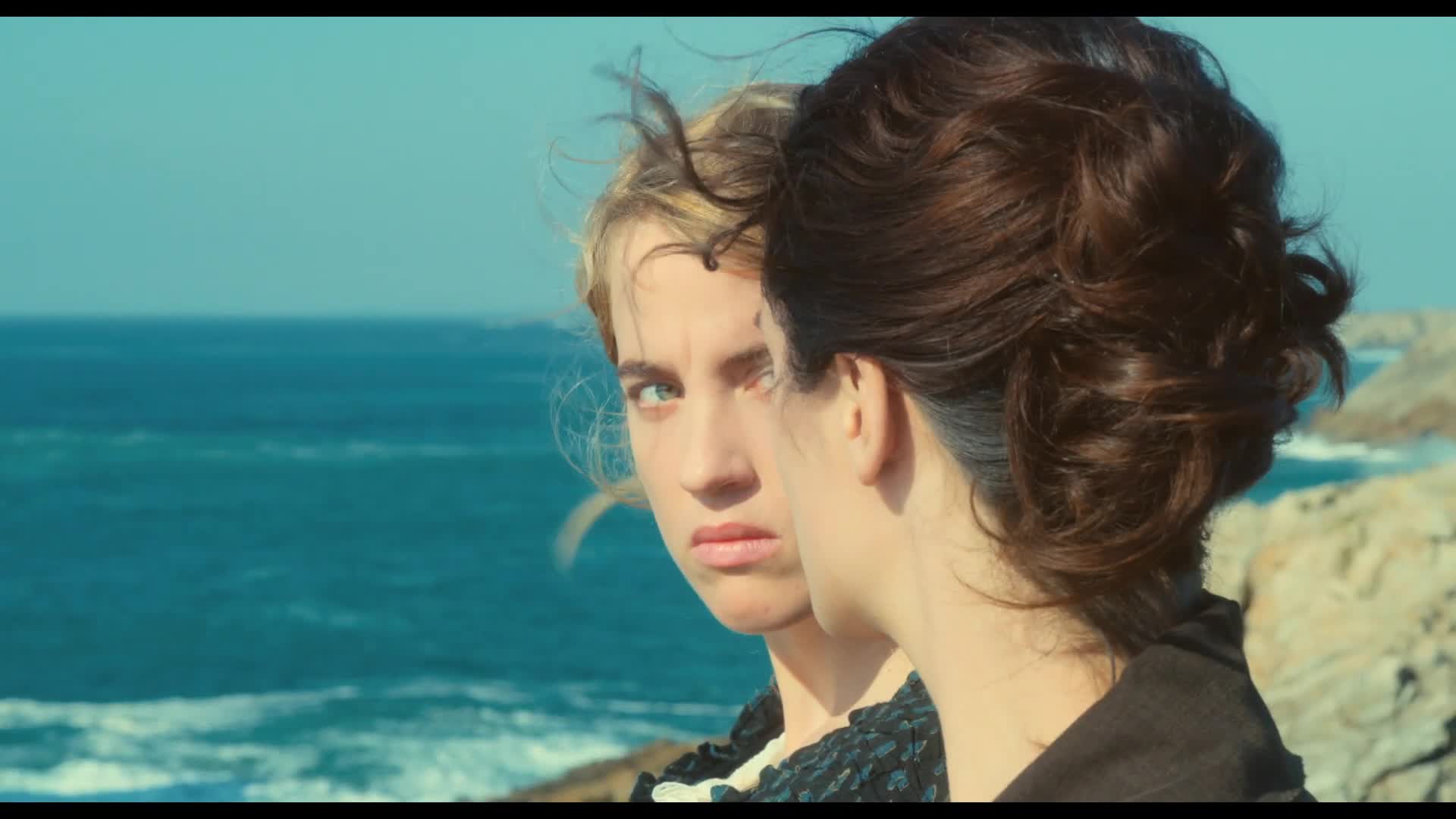
    The intentional framing drives the narrative by showing the viewers the emotional journey of the characters. In one scene by the coastline, Marianne and Héloïse are standing side by side. Marianne’s face is covering Héloïse’s face in the frame but reveals Héloïse’s face every time she turns her head to look at her. I thought this was a genius use of framing because it cues the audience in on Marianne’s inner thoughts and her curiosity about Héloïse. We glimpse Héloïse as Marianne does, quick and fleeting.

    Portrait Of A Lady On Fire Wallpapers - Top Free Portrait Of A Lady On ...

    The long shots throughout Portrait of a Lady on Fire are broken up by a generous helping of close ups, most notably used to emphasize important props. One example is the insert shot on the vase of flowers the maid is using as a subject for her needle work. An earlier shot shows the flowers blooming and flourishing with vibrant colors, but towards the end of the film, the flowers are shown in another shot as dead and withering.

    Portrait of a Lady on Fire (2019)

    We can take the flowers and extend their physical status to the relationship status of Marianne and Héloïse. Mise-en-scene and cinematography are working in tandem to enforce the mood and themes presented. It’s also worth noting that Marianne is in red throughout the duration of the film, indicating her as the object of desire for Héloïse.

    Portrait of a Lady on Fire: the act of looking - peachful - Medium

    The distinct lack of non-diegetic sound emphasizes the current action and brings the viewer into the fold of the setting. When there is music, however, the emotional effect is greatly increased and has a greater symbolic meaning when taken in the context of the relationship between the two women. The bonfire scene is an emotional moment for both women, and the fire acts as a metaphor for their attraction and desire.

    Portrait of a Lady on Fire Bonfire Song Explained: Best Musical Moment
    From Cannes: Céline Sciamma Paints a Captivating Romance in ‘Portrait ...

    The ending of the film was especially interesting because Marianne and Héloïse were both at the same orchestra concert listening to a piece that held emotional significance during their relationship. Héloïse was lost in the beauty of the orchestra, oblivious to Marianne sitting on the other side of the room. The camera moves in, and we see tears roll down Héloïse’s face.

    Portrait of a Lady on Fire – [FILMGRAB]

    While talking with several people about this scene, they mentioned being thinking Héloïse would look over and see Marianne or acknowledge the audience in some way. It was an interesting take, especially if you take the story of Orpheus and Eurydice, as told earlier in the film, as a metaphor for the affair.

    Was Héloïse truly ignorant to Marianne or was she instead choosing to keep the memory of Marianne that she created? How does the cinematography cater to the feminine gaze? What do you think of how the cinematography impacted the pacing of the film?