
January 19th is Martin Luther King, Jr. Day. The Rev. Dr. Martin Luther King, Jr. was a Baptist minister, globally admired ethicist, and Civil Rights leader whose prominent work in the 1950s and 60s preaching and teaching on the equality of human persons was a significant factor in the passing of the Civil Rights Act of 1964. As a Baptist minister, King often preached on the power of love to change hearts and minds. “Love,” proclaimed King in a 1956 sermon, is “the highest good … this principle stands at the center of the cosmos … He who loves is a participant in the being of God.”
King’s leadership in the Civil Rights movement pointed to non-violent resistance as the necessary means of putting love into activism. Only through activism characterized by non-violence could the universal principle of love be demonstrated. “When you rise to love on this level, you love all [people] not because you like them, not because their ways appeal to you, but you love them because God loves them. This is what Jesus meant when he said, ‘Love your enemies.’” In his 1967 “A Christmas Sermon on Peace,” King expanded further on this impetus to love from Jesus’s Sermon on the Mount: “If there is to be peace on earth and good will toward [people], we must finally believe in the ultimate morality of the universe, and believe that all reality hinges on moral foundations.” The Sermon on the Mount was a foundational text for King’s movement, one he would return to frequently in his preaching and writing.
Dr. King worked for social justice at local and national levels, but by the end of his life King wrote often on his hopes for an international moral vision. King’s moral vision reached its fullest articulation in his description of the great “World House”, an appeal for shared international social justice initiatives because “all inhabitants of the globe are now neighbors” (Where Do We Go From Here?). Dr. King left a legacy for future activists with a moral vision global in scope and grassroots in application. King reminds us that in our modern era, the choices we make in our local communities have ripple effects across international borders. In our pursuit of large-scale social justice initiatives, let us not forget the essential first step of loving our neighbors well.
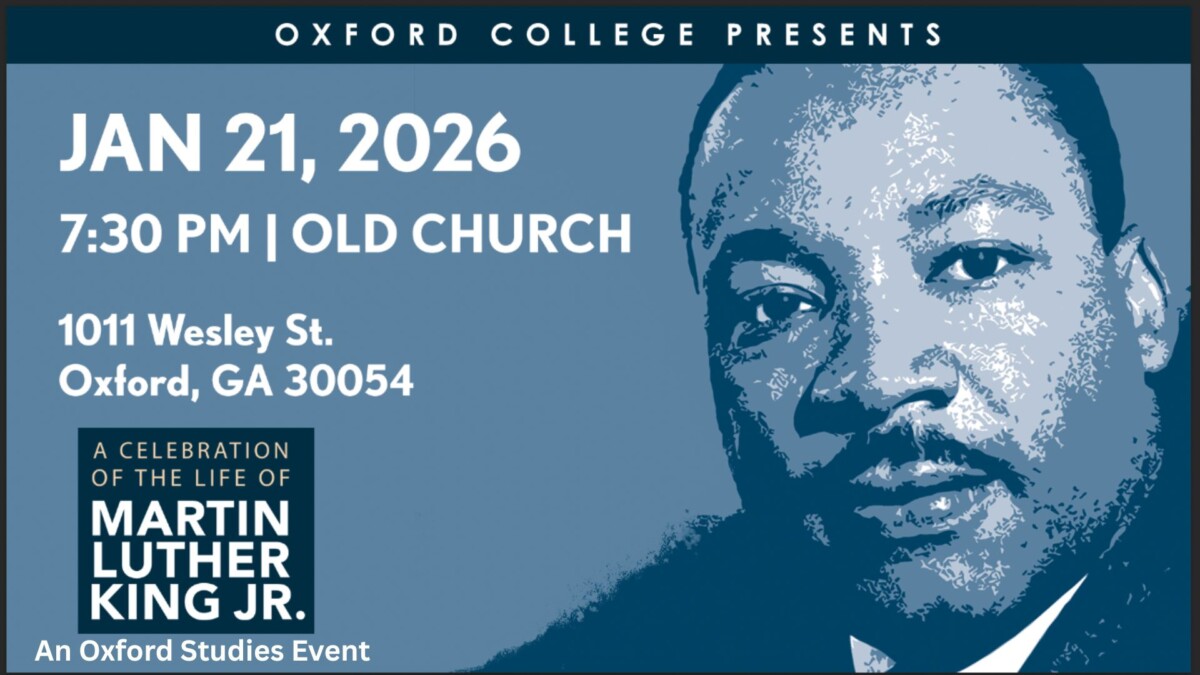
Be sure to stop by the Oxford Library to see our display dedicated to the life and writings of the Rev. Dr. Martin Luther King, Jr. This year, King Week at Emory has a full calendar of opportunities to engage with the work and legacy of Dr. King. Click here to see the scheduled list of events, including an Oxford Studies event on January 21st at the Old Church.