Author: Carol Wilkins-Hall, Associate Director, Industrial Hygiene Manager, EHSO
Protecting Your Hearing for a Healthier Future
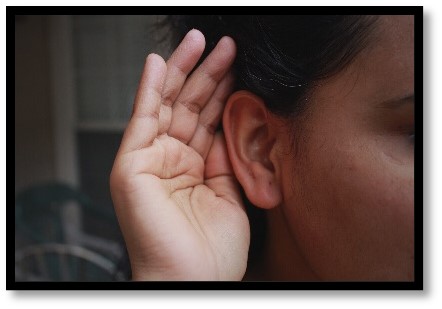
Have you ever caught yourself saying “What?” more times than you’d like to admit? Or noticed that you’re turning up the volume just a little higher than everyone else in the room? If you answered yes, you’re not alone. Hearing loss is one of the most common health concerns as we age—but here’s the good news: many causes of hearing loss are preventable!
Let’s explore simple, everyday ways to keep your ears (and your health) in top shape.
Everyday Causes of Hearing Loss
You don’t have to work in high-noise environment to be at risk of damaging your hearing.
Everyday life and environments can be surprisingly loud. Our ears collect sound waves, convert them into vibrations, turn those vibrations into electrical signals, and send them to the brain, where we actually “hear.” Common culprits include:
Earbuds and headphones cranked up too high
Many of us love getting lost in our favorite playlist, podcast, or audiobook—but turning the volume up too high can do lasting damage to your hearing. Sound from earbuds and headphones is delivered directly into your ear canal, which makes it even more harmful than sound from external speakers. A good rule of thumb: if someone else can hear your music while you’re wearing earbuds, it’s too loud.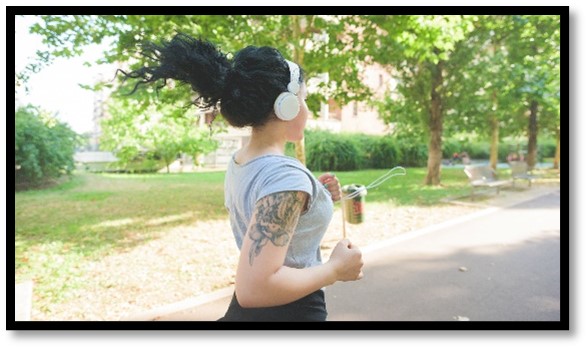
To protect your hearing, experts recommend following the 60/60 rule—listen at no more than 60% of the maximum volume for no longer than 60 minutes at a time. After that, give your ears a break, at least 5 to 10 minutes. Choosing over-the-ear headphones instead of in-ear buds can also help reduce the risk since they don’t sit as close to your eardrum. Noise-canceling headphones are another smart choice because they block background noise, so you don’t feel the need to crank up the volume.
Lawn equipment and power tools
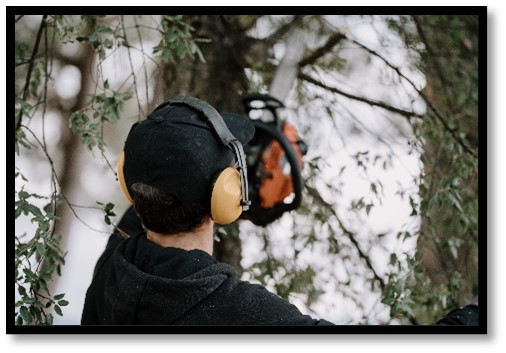
Leaf blowers, lawnmowers, drills, and other power tools may seem like everyday household helpers, but they often operate at 85–100 decibels—loud enough to cause permanent hearing damage with extended use. Decibels (dB) measure how loud a sound is, and because the scale is logarithmic, even small increases in dB mean a big jump in intensity. Power saws and drills can spike even higher. For comparison, normal conversation is about 60 dB, while a rock concert can hit 110 dB or more.
If you find yourself raising your voice to be heard while using equipment, your ears are being stressed. Wearing proper hearing protection, like foam earplugs or earmuff-style protectors, can reduce noise exposure by 15–30 dB, giving your ears the break they need.
Think of it this way: just as you wouldn’t mow the lawn without sunscreen to protect your skin, you shouldn’t do it without hearing protection to safeguard your ears.
Concerts, sporting events, and even fitness classes
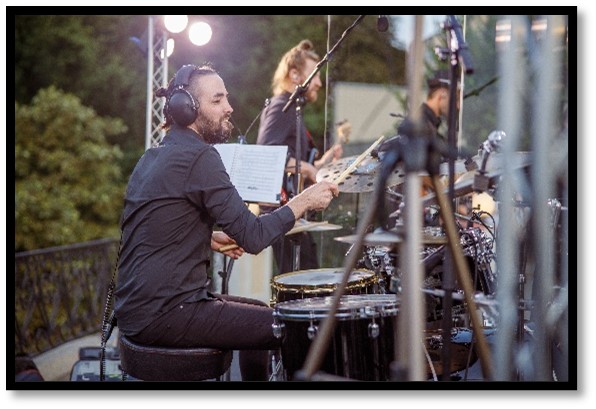
It’s not just mowing the lawn or wearing air buds or heavy machinery that can damage your hearing—fun activities can be just as risky. Live concerts, sports arenas, and even some group fitness classes regularly reach 100–120 decibels (dB). That’s about the same level as standing next to a jet engine. At those levels, hearing damage can occur in as little as 15 minutes of unprotected exposure.
The problem is that noise in these settings is constant and often feels exciting rather than dangerous, so most people don’t think twice about it. But leaving with “ringing ears” after an event is actually a sign of noise-induced hearing damage.
The good news: you don’t have to skip the fun. Simple steps like wearing musician’s earplugs (which lower volume without distorting the music), taking breaks away from speakers, or giving your ears downtime after a loud event can make a big difference. Your future self will thank you for protecting your hearing now.
Workplace noise
When most people think of noisy jobs, they picture construction sites or factories. But even on a university campus, there can be surprising sources of harmful noise. At Emory, labs with loud ventilation systems, autoclaves, or centrifuges, workshops with saws or grinders, and mechanical rooms with pumps, fans, or compressors can all reach noise levels high enough to cause long-term damage. Because these sounds are part of the daily background, they often go unnoticed—yet they may still be stressing your ears.
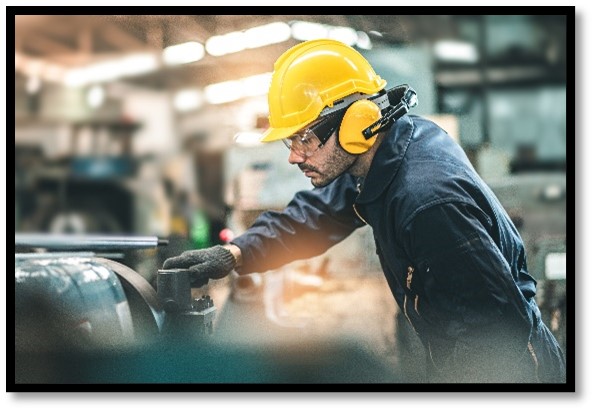
OSHA considers 85 decibels (dB) over an 8-hour day the threshold where hearing protection becomes important. Many of our campus machine rooms, carpentry shops, and maintenance areas have been identified as high noise areas where hearing protection is required. The challenge is that hearing damage from workplace noise happens gradually—you may not notice it until communication becomes difficult.
The smart move: If you ever need to raise your voice to be heard at arm’s length, chances are the noise level is unsafe. That’s your cue to grab hearing protection or request a noise assessment through the Environmental Health and Safety Office (EHSO). Protecting your ears at work is just as important as wearing safety glasses or gloves—it’s Personal Protective Equipment (PPE) for your hearing.
Why Hearing Health Matters Beyond Your Ears
Hearing loss isn’t just about sound. Research shows it’s linked to:
- Cognitive decline and dementia – your brain works overtime to fill in missing words.
- Balance problems and falls – hearing helps with spatial awareness.
- Social isolation and depression – it’s harder to join conversations when you can’t hear clearly.
Protecting your hearing means protecting your overall well-being.
The Takeaway
Simple Ways to Protect Your Hearing
Protecting your hearing doesn’t mean giving up fun (or music). Small habits make a big difference:
- Follow the 60/60 rule: Listen at no more than 60% volume for no more than 60 minutes at a time.
- Wear ear protection: Earplugs or earmuffs aren’t just for rock stars or construction workers—keep a pair handy.
- Take “quiet breaks”: Step outside during loud events to give your ears a rest.
- Turn down the background noise: Instead of raising the TV volume, use captions or sit closer.
- Get your hearing checked: Just like vision or dental checkups, a hearing test can catch early changes.
Hearing is precious—and once it’s gone, it doesn’t come back. Whether you’re teaching in a lecture hall, working in a lab, running facilities, or studying in the library, a few small changes can help keep the music of life playing clearly for years to come. Protecting your ears now means you’ll still be able to enjoy music, conversations, and everyday sounds for years to come!
So next time you reach for the volume knob, ask yourself: Can you hear what I hear?