“The relation between what we see and what we know is never settled.”
John Berger, Ways of Seeing
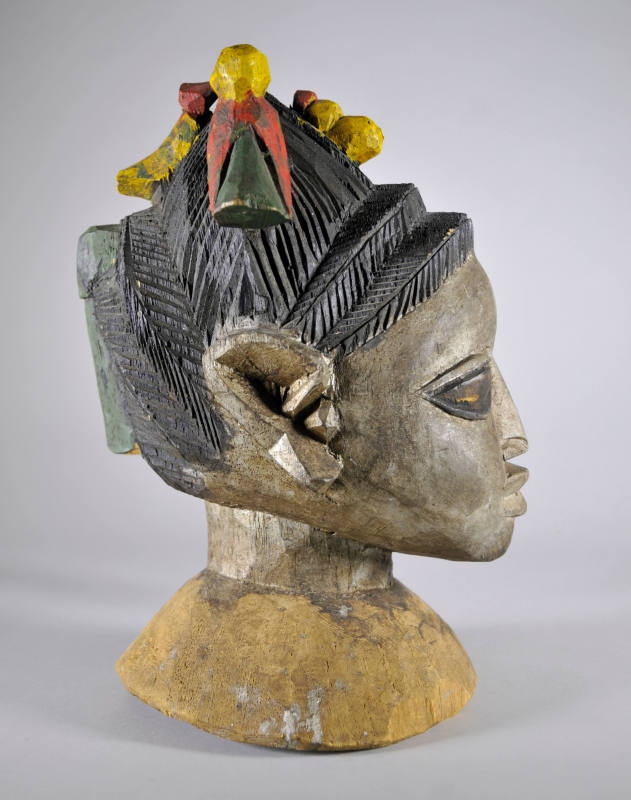
This project is a reimagining of select African art objects from the Michael C. Carlos Museum’s (digital) collection. In this space, they are re-contextualized and brought into a form of dialogue and context. Drawing inspiration from André Malraux’s Musée Imaginaire,1 this virtual space returns to, and expands on the notion of the traditional museum, museum objects (art/artifacts), and the idea of a “digital museum.” It seeks to challenge the frame—both literal and conceptual within which African art objects exist in museum settings. Each object featured here is digitally re-situated: paired with similar objects and open-access images related to the theme. This project lies at the intersection of digital art history, anthropology, and curatorial practice. The aim is to look more closely at the objects—what are their histories and what connections might we need to form to better understand them.
Image from Walter Grasskamp, The Book on the Floor: André Malraux and the Imaginary Museum
———————————————————————————————————–
Note on License:
Images reused on this site are licensed under the Creative Commons Attribution–NonCommercial–ShareAlike 4.0 International License. This license supports open cultural and academic exchange while protecting the integrity of the work. These images are attributed to their original creators and are used here in accordance with the license’s terms: for non-commercial purposes, with proper credit, and under the same license.
You are free to share and adapt the materials on this blog for non-commercial purposes
Please check individual image captions for attribution and licensing where applicable.
Footnote:
Malraux, a French writer, philosopher, and cultural theorist, introduced the idea in his 1947 book Le Musée Imaginaire(translated as The Museum Without Walls). He argued that the way we engage with art had fundamentally changed due to photographic reproduction. In the past, one could only see artworks in their original locations—cathedrals, temples, or royal collections—but with photography, images of artworks could be easily disseminated, allowing people to mentally “curate” their own imaginary collections. ↩︎