Initially, the two of us were planning to cover separate events for this week’s blog posts. However, through a series of unanticipated events, what started as two posts became one. Here is our story.
Jared:
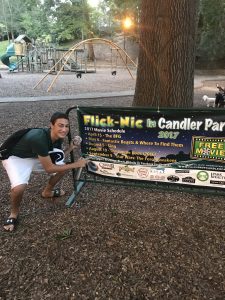
Though this may come as a shock, I have never seen Star Wars. Sure, I know that the little green creature called Yoda talks weirdly, and I know that someone is Luke’s father; I’ve just never understood the hype behind some odd space phenomenon. Nonetheless, this past Saturday, September 9, I ventured to Candler Park to see Star Wars: The Force Awakens, and even did some research about the previous films to have some prior knowledge. Upon arrival, I found the park deserted. However, there was an older gentleman taking down a nearby stage. I asked him if he knew where Star Wars was being played, but he angrily replied that he had no idea what I was talking about. Alarmed, after digging through the park’s website, Facebook page, and recently uploaded newsletter, I discovered that the film was postponed until next weekend. I couldn’t believe it. Frustrated but eager to find a new topic for my blog post, I remembered that there was a lantern festival starting at Ponce City Market very shortly. I knew that Hannah was covering the event, so I called her frantically and explained my situation. Before I knew it, I was ordering a Lyft to the parade.
Hannah:
When I found a magnet listing unique Atlanta events plastered on the entrance to my dorm room, I noticed one that peaked my interest: the Atlanta BeltLine Lantern Parade. Upon research, I learned that this was an annual, community-wide tradition that kicks off a series of art exhibitions on the BeltLine. After looking through a series of beautiful photos of the event, I enthusiastically gathered a group of friends to attend it with me.
On Saturday, we met at Woodruff Circle to catch the free Emory Experience Shuttle, but to our surprise, we were not the only ones eager to leave campus and capitalize on this free opportunity. As 6:15 p.m. approached, students around the circle started congregating at the shuttle stop. My friends and I assertively forced our way onto the shuttle, refusing to wait for the next one.
Twenty minutes later, we arrived at Ponce City Market. I immediately felt a sense of relief. It was a pleasant day, and was freeing to briefly escape the sometimes confining “Emory bubble.” We walked around the market, which had a very clean and rustic aesthetic. Almost simultaneously, we all commented on how refreshing it was to see families with younger kids and dogs. Our company was not just restricted to students between the ages of 18 and 22.
The restaurant area was crowded, but gave off a positive energy. After exploring a number of dining options, from fresh to-go food to acai bowls to pizza to southern barbeque, we settled on a Chinese restaurant that certainly outshined the quality of the food at the DUCling. In the middle of my meal, I received a call from Jared, anxiously asking if he could join us at the parade. Minutes later, we met him at the top of the BeltLine.

Together at the Parade:
We made our way down the BeltLine, passing crowds of people sitting on folding chairs and blankets, others watching from the windows of their high-rise apartments. Without something comfortable to sit on, we begrudgingly settled for an empty space on the cement floor and dug into Jared’s unopened movie snacks. People were walking down the BeltLine holding their lanterns, and we joked that this was the actual parade, since we had no idea when it would start.
A small marching band wearing “Krew of Grateful Gluttons” shirts began walking, finally signaling the official start of the parade. We later discovered that this group, under the leadership of a woman named Chantelle Rytter, founded the Lantern Parade to bring people together and celebrate an otherwise ordinary landmark. The event fulfilled this objective.
The band was followed by a parade of individuals, families, couples and groups of friends. Members varied in age, from kids fighting sleep in their strollers to rowdier adults with beer breath. Anyone was welcomed in the parade, as long as they carried their own lantern. The designs ranged from Harry Potter to life-size dragons to a whole group of coordinated emoji lanterns. No matter the theme, the bright lights and creativity never failed to catch our eyes.
When it was time to catch the shuttle back, we approached the exit, fighting the huge influx of people who were simultaneously entering and leaving the parade. The crowds were highly unpleasant, as people were shoving their way through the lines and yelling at each other in frustration. We both fell, victims to the merciless crowd.
After finally breaking free and reaching the shuttle, we found that it was at its full capacity. We, along with half of the student population, waited impatiently for the next ride. As the shuttle came to a stop, the driver shielded her eyes from the students flooding the seats, aisle, and everything in between. She even generously let a few desperate stragglers sit on the bare floor.
On the unpleasant ride back to campus, we each reflected on our eventful nights. Though our initiation into the greater Atlanta community on the scenic BeltLine was certainly worthwhile, we both agreed that this was a one time feat.
Check out our highlights from the Lantern Parade below:
http://youtube.com/watch?v=CwlBE3zp6Rs&feature=youtu.be
Sources:
Cox, Caroline. “Lighting the BeltLine: How a Motley Krewe Created an Atlanta Tradition.”Choose ATL, www.chooseatl.com/features/beltline-lantern-parade.
Parade, Lantern. “Help Illuminate One of Atlanta’s Great New Traditions!” The Atlanta BeltLine, 2017, art.beltline.org/lantern-parade/.
Kellee Maize. “Crown.” CROWN, J. Glaze, 2017.







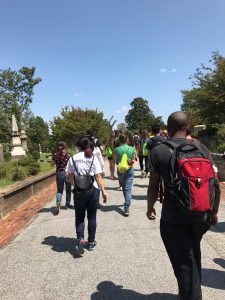 After heading down to the Ducling for breakfast with a few of my friends, we were on our way to the WoodPec where all the volunteers were
 After we arrived at our destination we were met by a few tour guides who led us to the groundskeeper of the cemetery, they then gave us a speech speaking to the importance of what we were doing and how they genuinely wouldn’t be able to keep the cemetery in as good of a shape as it was, if it wasn’t for all the volunteers.
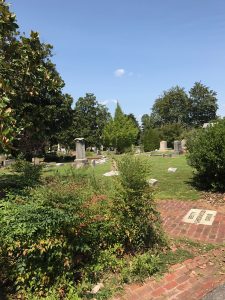 group, I decided that I would be of most help to the cemetery by shoveling the mulch into wheelbarrows, that would then be spread out on different sites at the cemetery to work towards the end goal: enriching the soil that was starting to decay. 4 hours after shoveling the mulch under the excruciating heat, we had finally gone through over 3/4s of the huge pile that was there when we first arrived.