The Grand Budapest Hotel is an incredible example of what we read about mise-en-scène. The shapes and actions performed by the actors and set pieces contribute significantly to the film’s themes of culture, violence, and absurdism. I noticed great contrasts between costume and setting that made the experience of watching The Grand Budapest Hotel that much more engaging. The designers, in tandem with Wes Anderson’s directorial vision, created an incredible, avant-garde world that draws audiences in more and more with each frame.
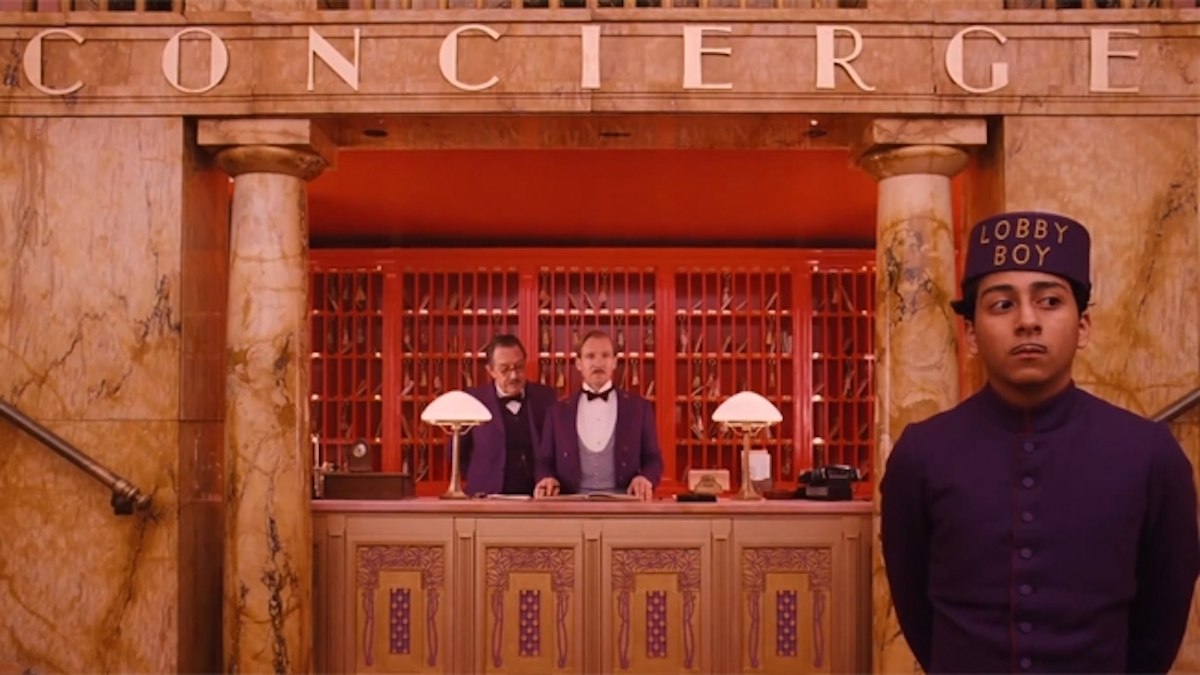
Watching this movie, I, much like every other viewer, was immediately drawn to the color schemes present in each shot. The titular Grand Budapest Hotel is filled with oranges of different shades, interspersed by hotel staff and Monsieur Gustave’s consistently purple clothing. The narrator outside of M. Gustave’s story wears a pale pink suit, himself. All of this shows vibrancy–and perhaps happiness or lightheartedness. As we progress through the film, we are introduced to a much more contrastive and brooding color palette. With the introduction of Dmitri in his home, the viewer is inundated with brown, black, and dark red, all of which denoting danger. Dmitri himself wears black, blending in with his surroundings while Gustave and Zero stick out wherever they go. The world of the film dips further into an ever-increasing fascist government as we see the beginning of the Lutz Blitz. By this point, the film is in black and white. It is reminiscent of the story of The Giver, both in the novel and the film adaptation. Both of these works depict the loss of ROY G. BIV colors as a loss of freedom, joy and individuality, being replaced by grayscale hues as conformity and evil dominate the world.
I also noted the minuteness of action on-screen. I remember the particular act of creating the escape tunnel through the prison’s floor being so small by volume: none of the escapees wanted to be heard. Additionally, when Zero and M. Gustave reach Checkpoint 19 and they are met by a giant wall. Outside of the frame, we hear a guard whistling to them. The camera pans to his relatively microscopic body as he motions them through the once non-visible door.
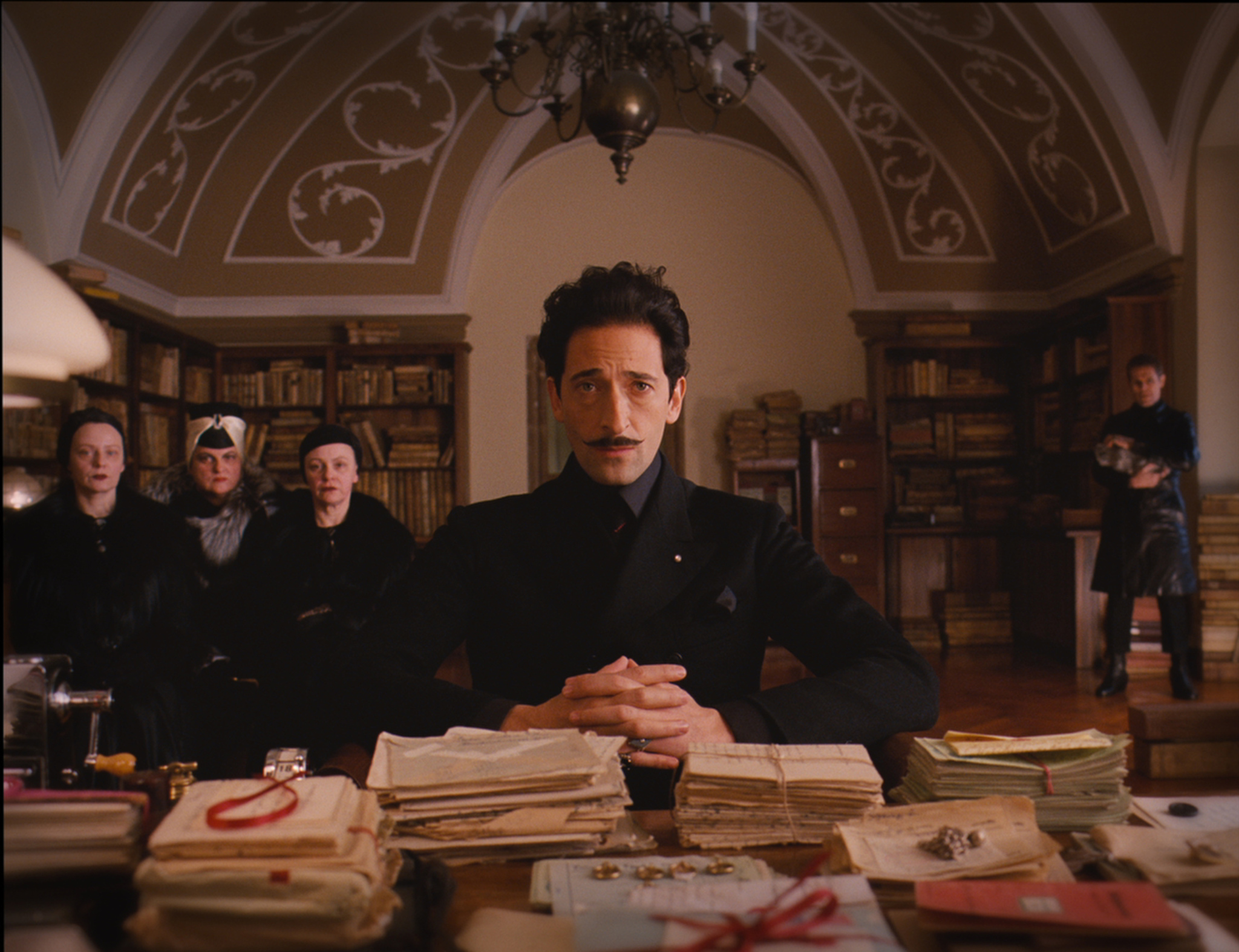
In directing this film, Anderson paid great attention to detail–particularly the tiny ones. It is through this work that films like The Grand Budapest Hotel captivate audiences. In watching this, the viewer, too, pays attention to even the smallest details.

Leave a Reply to Beatriz Cancel reply