Category: Faculty Resources

What is AI? Workshop Reflection

In the fall of 2025 Candler’s Office of Digital Learning offered a series of faculty workshops on artificial intelligence. It was important for us to be clear that a rapidly changing educational and technological environment, no conversation on generative AI will ever be complete. In the four months since we originally offered the “What is …

Continue reading

Workshop Series Fall 2024: Untangling Grading and Assessments

Untangling Grading and Assessments Workshop Fall 2024 📝 Simplify your grading process! Watch our Untangling Grading and Assessment workshop recording to learn practical strategies for clear and effective grading. Discover tips on creating transparent rubrics, saving time on assessments, and boosting student engagement. #CandlerDigitalLearning #GradingTips #EffectiveAssessment

Workshop Series Fall 2024: Practical AI Tools

Practical AI Workshop Fall 2024 🤖 Unleashing the power of AI in the classroom! This Candler workshop dives into practical ways to integrate AI tools into teaching, from brainstorming and grading support to interactive discussions. Learn how AI can streamline your workload and enrich the student experience. #CandlerDigitalLearning #AIinTeaching #EdTechInnovation”

Workshop Series Fall 2024: Video Resources

Video Resources at Candler Workshop Fall 2024 🎥 Enhance your teaching with video! This fall, Candler Digital Learning hosted a workshop exploring creative ways to use video in Canvas courses. From VoiceThread to video quizzes, we discussed practical tools to engage students and enrich their learning experience. Check out these highlights to bring more interactivity …

Continue reading

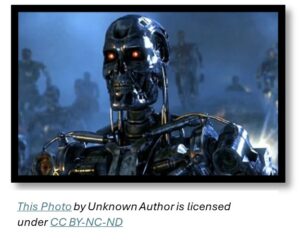
The Rise of AI, Judgment Day? Exploring Artificial Intelligence in Theological Education

As conversations about Artificial Intelligence (AI) became ubiquitous with the launch of ChatGPT in November 2022, my mind immediately recalled the film franchise, Terminator. The movies are centered on a dystopian future where machines, in becoming self-aware, formulate a plan to wipe out humanity. As this recall suggests, my immediate reaction to ChatGPT was one …

Continue reading

Collaborative Annotation with Hypothes.is

Have you ever researched a topic online and wished you could add something to a page or an article for others to read? Have you had a course reading assignment and wondered what your classmates have noted, highlighted, or written in the margins of their own copy?  A non-profit based in San Francisco has created …

Continue reading

Dr. Kemp’s HyFlex Best Practices

In the dynamic realm of education, Hy-Flex (Hybrid-Flexible) teaching has emerged as a transformative approach to cater to diverse learning needs. As we navigate this new era of education, understanding the various elements needed to embrace the new teaching environment is crucial.   Dr. Joel Kemp, one of our most respected and well-liked faculty at Candler …

Continue reading

An Online Education in Belonging

In After Whiteness: An Education in Belonging, Willie James Jennings explores the implications of white supremacy and racial identity on American Christianity and education. He argues that white supremacy has profoundly impacted American society and religion and created a culture of segregation and exclusion. For Jennings, American Christianity must embrace a new theology of belonging …

Continue reading

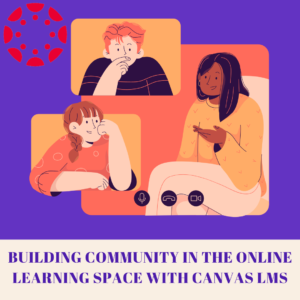
Building Community in the Online Learning Environment Using Canvas LMS

As online learning becomes more and more accessible, so does the possibility of a more isolated educational experience. Building community, especially in theological education, is essential to student learning.  It is important that the online environment be just as welcoming, hospitable, and supportive for online students as it is in the in-person classroom. A well-designed …

Continue reading

Mapping Out Our Assessment Ecologies as a Theological Practice

By: Ryan Runager and Dr. Sarah Bogue Often, for many classes, getting a particular grade or simply completing the assignment is more important than the learning of class material.  Asao B. Inoue, Professor of Rhetoric and Composition at Arizona State University, writes: Classroom writing assessment is more important than pedagogy because it always trumps what …

Continue reading